How Popes Speak — and What Politicians Hear
COMMENTARY: Any preaching, especially papal preaching, can be universal in language but personal in effect — an examination of conscience conducted by the listener.
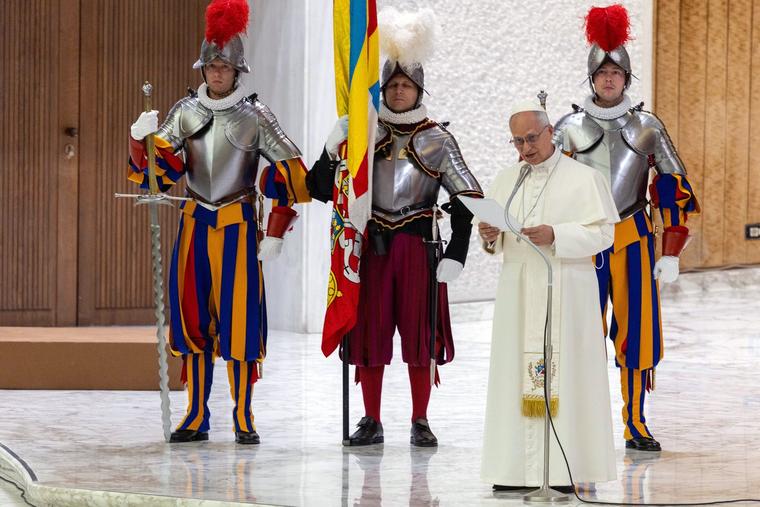
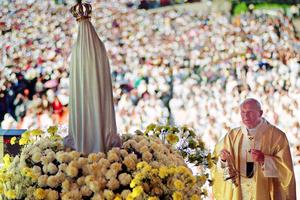
Pope Leo XIV visited Pompeii for the first anniversary of his election, as May 8 is the feast of the “supplication” to Our Lady of the Holy Rosary of Pompeii. The Holy Father mentioned the feast in his first Urbi et Orbi address from the balcony of St. Peter’s Basilica a year ago.
In Kraków, Poland, May 8 is the feast of the city’s martyr-bishop, St. Stanislaus. That martyrdom was linked to the first visit of St. John Paul II to Poland in 1979, and is important in understanding how popes are to be understood when they speak. That is highly relevant to the last few weeks of Leo’s first year, in which the Trump administration — led by the president himself — delivered unprecedented rhetorical attacks on the Holy Father.
President Donald Trump and others assumed that Pope Leo was speaking critically about the Trump administration. Was he? Perhaps so. Or was he speaking, as popes usually do, more broadly, permitting others to apply his words to particular personalities and policies?
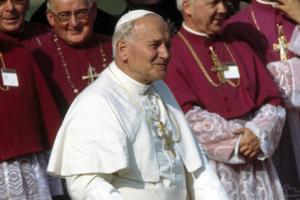
Go back to 1979. John Paul wanted to make his first visit to his homeland for two days in May, for the feast of St. Stanislaus — which that year marked the 900th anniversary of his martyrdom. The communist authorities flatly refused to have the Polish pope celebrate this milestone personally in Kraków. Stanislaus had been killed on orders of the king; the parallels to communist persecution of the Church were too strong.
In the negotiations over the visit, John Paul traded two days in May for nine days in June. The communists would come to regret that.
Everyone remembers that John Paul fiercely denounced communism upon his triumphant return. Except he didn’t. He did not speak of it. Those who listened to him thought he was speaking about communism, but it was they who made the application. Popes speak clearly, but diplomatically, even elliptically.
In his great sermon in Warsaw’s Victory Square, the most important address of the visit, John Paul denounced atheistic communism — or all present thought he did:
Therefore Christ cannot be kept out of the history of man in any part of the globe, at any longitude or latitude of geography. The exclusion of Christ from the history of man is an act against man. Without Christ it is impossible to understand the history of Poland, especially the history of the people who have passed or are passing through this land.
The Holy Father did not say that the Polish communist regime was excluding Christ from the history of man. He did not have to. He said that it should not be done, and everyone applied his words to those who were in fact doing it.
Apply this same principle to Pope Leo. On Palm Sunday, he preached, quoting the prophet Isaiah:
Brothers and sisters, this is our God: Jesus, King of Peace, who rejects war, whom no one can use to justify war. He does not listen to the prayers of those who wage war, but rejects them, saying: ‘Even though you make many prayers, I will not listen: your hands are full of blood’ (Isaiah 1:15).
Pope Leo did not make reference to the Israeli-American war against Iran. He said nothing about Israel or the United States or Iran.
It would be easy to apply the Holy Father’s words to the Islamist regime in Iran itself, which has waged war and terror against those near and far, all the while invoking the name of Allah. That would be a reasonable understanding.
Most commentators presumed that Leo was talking about U.S. Secretary of Defense Pete Hegseth, who had offered Christian prayers that carried a certain holy war quality. Jihad is holy war for Muslims, but the concept is not only an Islamic one.
Was the Holy Father speaking about how the Trump administration speaks and prays about the war? Perhaps. It is not an implausible reading.
Consider a second example, at the Rosary for peace on the vigil of Divine Mercy Sunday. There the Holy Father delivered a standard papal denunciation of war and plea for peace, denouncing “delusions of omnipotence.”
Was he referring to President Trump’s genocidal threat to destroy Iranian civilization? Perhaps, but he did not say so.
The Associated Press report on the prayer vigil began:
In his strongest words yet, Pope Leo XIV on Saturday denounced the “delusion of omnipotence” that is fueling the U.S.-Israel war in Iran and demanded political leaders stop and negotiate peace.
The Associated Press account then immediately added that Leo “didn’t mention the United States or President Donald Trump in his prayer,” but that his words, “appeared directed at Trump and U.S. officials, who have boasted of U.S. military superiority and justified the war in religious terms.”
Appeared to whom?
The Holy Father’s words could have been applied to the U.S. in Iran, but perhaps to Israel in Gaza, or to Iran and its tentacles of global terror, or to Vladimir Putin in Ukraine.
Just as parish priests do not denounce particular people from the pulpit, but preach about situations, leaving individuals to make applications to their own lives, so, too, do popes. If Trump administration officials concluded that Leo thought that they were suffering from “delusions of omnipotence,” so be it, just as the Polish communists may well have concluded in 1979 that they were being accused of “excluding Christ from the history of man.”
Any preaching, especially papal preaching, can be something of an examination of conscience — the questions are general and the personal application is particular.
John Paul did not denounce communism in Poland in 1979. But the communists were not wrong to feel denounced.
Similarly, Leo in recent weeks has not denounced the administration, even as President Trump has denounced him personally. But if some in the Trump administration are sensitive to charges of “delusions of omnipotence” or of offering the kinds of prayer castigated by Isaiah, then they are accusing themselves more than being accused.
Pope Leo did speak directly about the president one time, though: “I have no fear of the Trump administration.”
Preachers — from Stanislaus in Kraków to John Paul in Warsaw to Leo in Rome — should fear no political power.
- Keywords:
- pope john paul ii
- pope leo xiv