Pope Leo’s Embrace of Beirut Blast Victims Brings Comfort, but Deep Wounds Remain
‘The Pope’s visit, his words, everything he has done here, will move things forward toward eventual justice. How, exactly, is in God’s hands, but this was a very important visit.’
On a warm, clear August day in Beirut, Lebanon, five years ago, the lives of countless residents of the Middle Eastern coastal metropolis — including the city’s numerous Christians — changed forever.
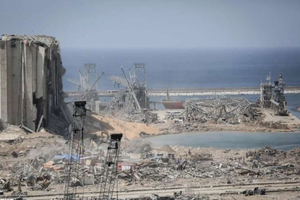
On that day in 2020, a neglected store of several thousand tons of military-grade ammonium nitrate triggered a massive explosion at the port, which leveled entire neighborhoods and shattered windows miles away. All told, 236 people were killed and more than 7,000 were wounded that day. Many of the worst-hit areas were solidly Christian neighborhoods, many of them lower-middle class, which were destroyed.
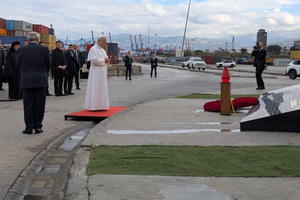
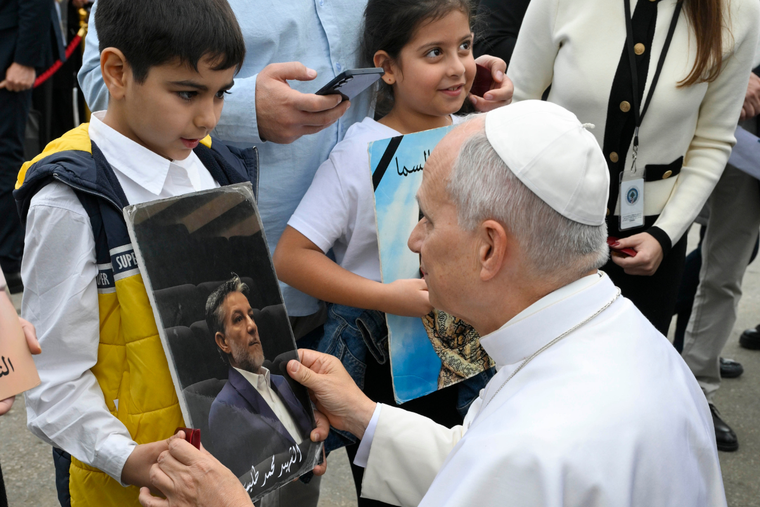
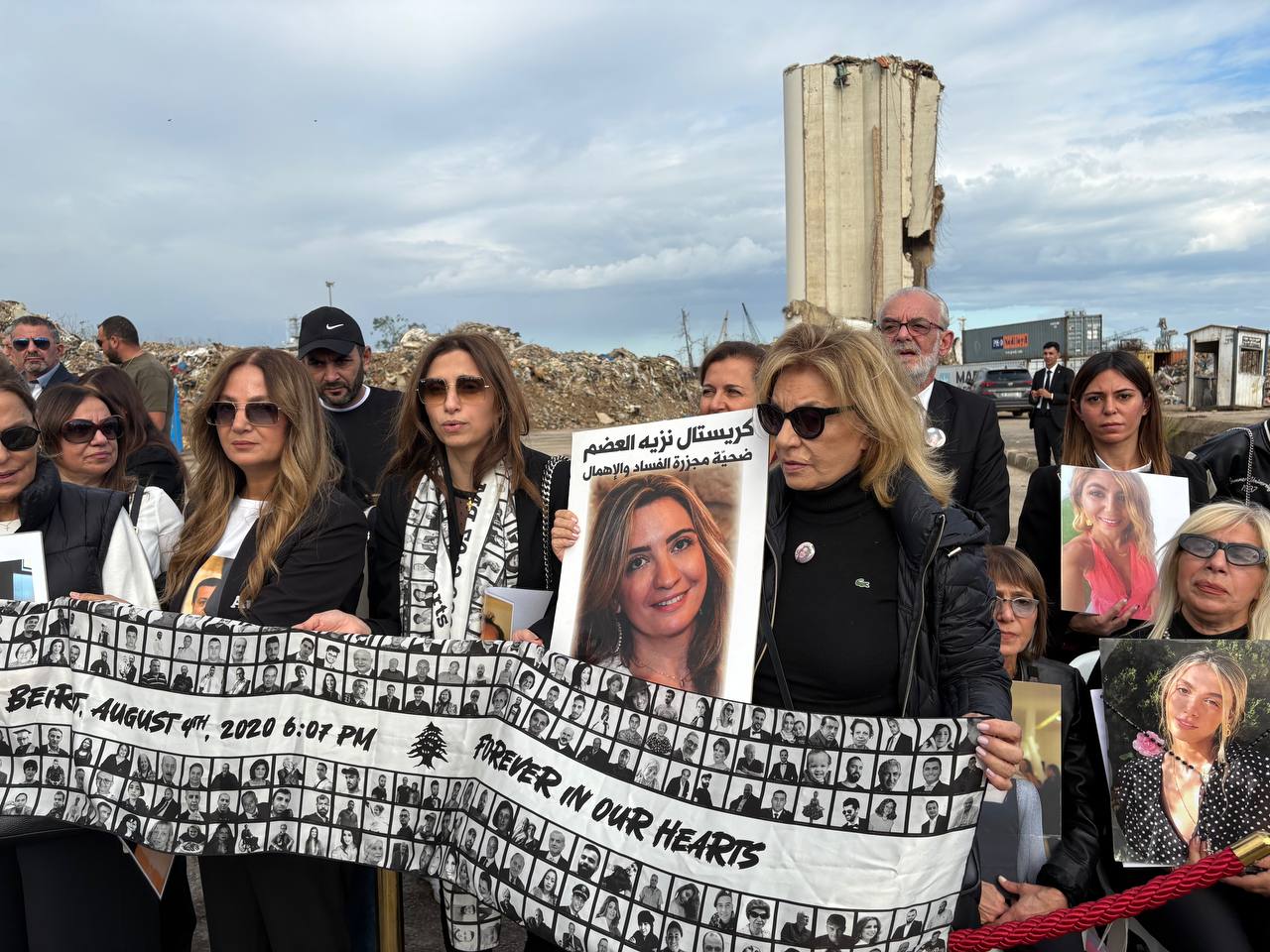
Half a decade and a handful of months later, in one of the final events of his first papal trip abroad, Pope Leo XIV met and prayed with family members of victims of the blast. On the morning of Dec. 2, he lit a candle and laid down a wreath of red flowers at the blast site, speaking afterwards with family members as they held photographs of their deceased relatives.
Though the city and country of Lebanon have begun to rebuild after the explosion, the lives lost and the lack of accountability for the explosion — which has never been officially clarified as an accident, an attack or sabotage — remains an open wound.
Habib Malik, a Roman Catholic, scholar and a retired professor of history at Lebanese American University, told the Register that although the Pope’s compassionate embrace of the victims’ families was touching and very welcome, it pains him that those families are still mired in uncertainty and a lack of closure, as the official investigation into the cause of the explosion has been severely hampered by political interference.
Successive Lebanese governments have largely failed to ensure an independent and impartial process, and although the official probe formally resumed in 2025 after a two-year break, it has since stalled again.
As reported by Catholic News Agency, the Register’s news partner, several senior Lebanese officials summoned by lead investigative Judge Tarek Bitar have resisted cooperation, invoking immunity or filing legal challenges that repeatedly halted the inquiry. Bitar was able to resume work in February as a number of figures, including former Prime Minister Hassan Diab and Major Gen. Abbas Ibrahim, responded to summonses, while others, including members of parliament, continue to refuse cooperation.
Malik said the main reason for the lack of accountability regarding the explosion is the same reason the disaster happened in the first place: endemic corruption and the continued influence of the hardline Shiite political party Hezbollah, which the United States has designated a terrorist organization. Hezbollah is backed by Iran and, though largely existing in a weakened state, continues to wield influence in the country.
Many Lebanese people continue to live in fear of an impending war between Hezbollah and Israel in Lebanon’s south, he continued, amid the simmering tension of “unfinished business” between them.
Still, Malik said he appreciated how Pope Leo emphasized Lebanon’s distinct role in the Middle East as a country where, historically, Christians have enjoyed much more societal freedom and respect than Christians in other nations in the region, such as the Copts in Egypt and the Chaldeans in Iraq.
The latest estimates show that Lebanon remains about 70% Muslim and about 30% Christian, according to a 2023 international religious freedom report by the U.S. Department of State. This represents a far higher percentage of Christians than many other neighboring nations.
About half of Lebanon’s Christians belong to the Maronite Church, an Eastern Catholic rite in full communion with the pope. Catholics play a significant political role in Lebanon due to the country’s system that allocates political power based on religious affiliation.
But Malik cautioned that Lebanon cannot be held up as a model to other nations unless its Christians remain free. The 2020 explosion exacerbated an exodus of Christians from the country, which had already been taking place amid the country’s financial and societal woes even before the blast.
At the end of the day, Malik said, “There is no model, no message, unless it is undergirded by free existence. … What kind of a model is Lebanon to anybody when Lebanon is breaking apart?”
And while closure for the blast victims’ families can only happen when justice is served, a visit like this by the Holy Father can “only do good,” said Malik, who attended the Holy Father’s Dec. 2 Mass on the Beirut waterfront.
“I think those families, despite their terrible grief, were consoled by seeing the Holy Father come and visit them right there, on the spot [where the explosion happened],” he said.
“The Pope’s visit, his words, everything he has done here, will move things forward toward eventual justice. How, exactly, is in God’s hands, but this was a very important visit.”
‘A Piece of Me Healed’
Christianity in Lebanon traces its roots to the dawn of Christianity itself — Christ himself visited Lebanon, and the Bible frequently mentions places that still exist there today, such as Tyre and Sidon. For the country’s Christians, it was deeply moving to know that Pope Leo wanted to prioritize and celebrate Lebanon by making it one of the first countries he ever visited as head of the universal Church.
Julie Tegho, a university researcher and Catholic who lives in Beirut, went on foot with her young daughter to see the Pope as he drove by. She described it as a joyful and healing experience for her country to have the Pope there, adding that she was amazed at how well he prayed in French, the native language of about 40% of the country.
“I posted on my Instagram that a piece of me healed after the Pope’s visit, and a friend commented the same. … The reason we feel this renewed sense of hope — not that we lost hope — is I feel that for the first time in seven years the coverage in Lebanon is positive; it’s full of hope and energy, and it’s showing the true face of what the Lebanese are,” Tegho told the Register.
Tegho and her husband were at the local mall about a mile from the blast epicenter on that fateful day, and like thousands of others in Beirut, they suffered a terrifying ordeal amid the chaos. Though they escaped without serious injury or lasting damage to their home, they carried the trauma with them.
Pope Francis had earnestly desired to visit Lebanon following the blast and even planned a trip, but he was prevented from coming by his failing health. The event with Pope Leo, who succeed Francis May 8, did not erase the country’s challenges or its complex regional context, of course, but it highlighted a widely held desire for stability and dignity in daily life, Tegho said.
“I remember when Pope John Paul II came to Lebanon; I was 9 years old at the time, and I still have it etched in my memory. I was just so happy that my daughter was able also to witness this beautiful day,” she said.
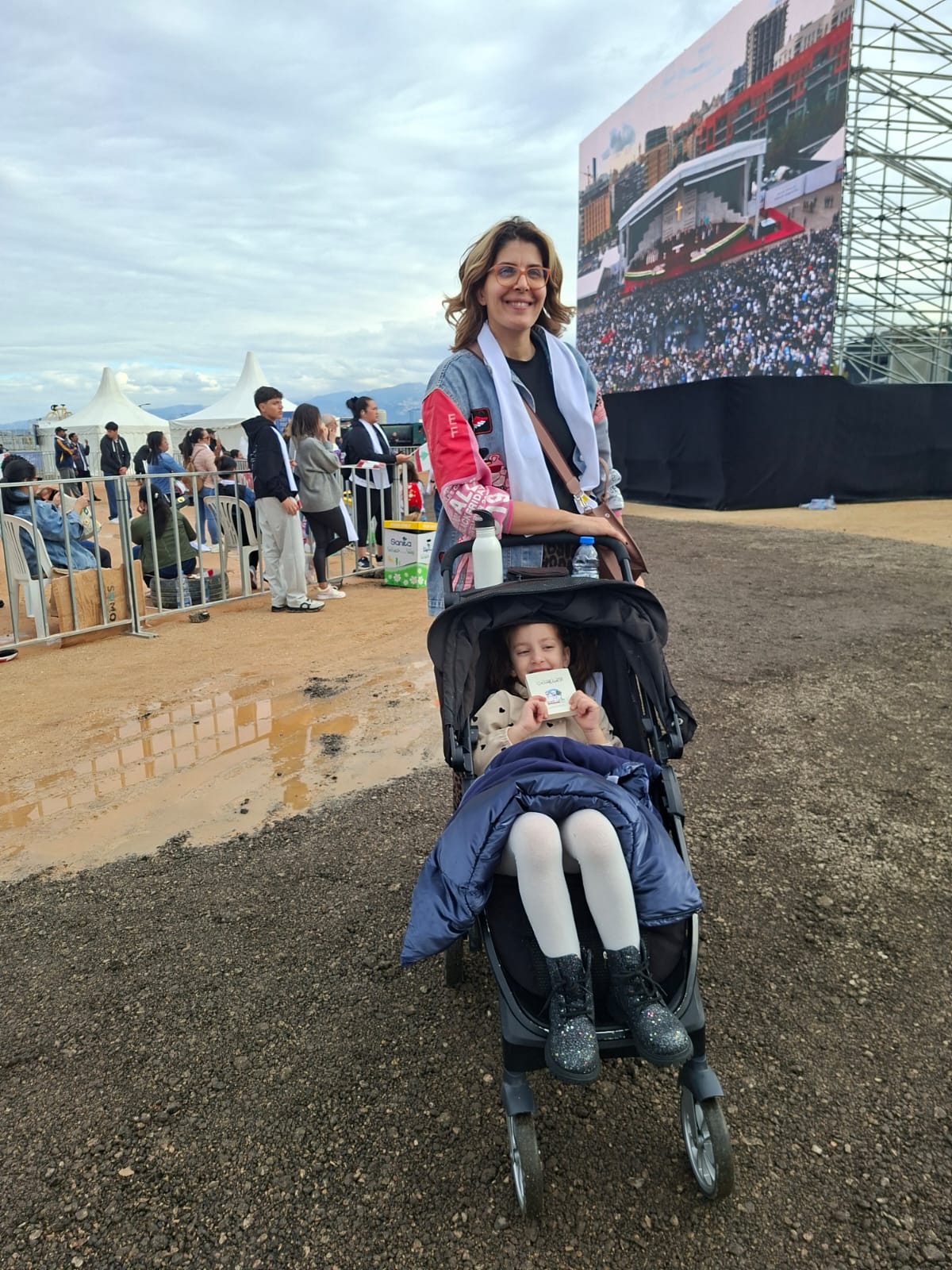
She said, “To choose Lebanon as part of [his first] international visit, it means that we, Lebanese Christians, are here to stay. We’re not going anywhere. This is our land, this is our home, and this is the message that we carry.”
- Keywords:
- beirut blast
- beirut explosion