Oklahoma Catholic Charter School Loses Funding Bid After SCOTUS Deadlock, Future Legal Battle Looms
The Supreme Court’s deadlock in the Oklahoma case keeps a lower-court ruling in place, but advocates on both sides expect a rematch that could reshape school-choice law nationwide.

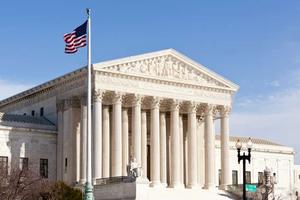
The U.S. Supreme Court’s unexpected deadlock in an Oklahoma Catholic charter school’s bid to secure public funds leaves unfinished business and may invite a similar legal challenge in the future, experts say.
The 4-4 tie announced Thursday — which became possible because Justice Amy Coney Barrett recused herself — means that the Catholic charter school can’t get funds from the state government, because a state court ruling denying the funds remains in place.
“Since Justice Barrett recused herself in this case, it is likely that the court will take up the issues in another case, although it is unclear what that case will be. I think most legal observers believe that she will not recuse herself in other cases presenting the same legal questions, and she can provide the deciding vote,” said David Tryon, director of litigation for the Buckeye Institute, a pro-free-market think tank in Ohio that filed a friend-of-the-court brief in the case supporting the Catholic charter school.
Different Lawyer, Different Result?
Barrett hasn’t said publicly why she recused herself from the case when the court agreed to hear it Jan. 24, but many observers believe she did so because of her longtime friendship with a lawyer who has advised the Archdiocese of Oklahoma City and the Diocese of Tulsa — Nicole Garnett, a law professor at Notre Dame Law School, where Barrett taught full-time before she became a federal judge in November 2017.
The bishops of the two dioceses formed the online school, St. Isidore of Seville Catholic Virtual School, in 2023. The school then applied to the Oklahoma Charter School Board for approval as a charter school, which would entitle it to state funding. The board voted 3-2 to approve it, but the state attorney general challenged the decision in state court.
In June 2024 the Oklahoma Supreme Court decided that the state can’t “establish or fund” a Catholic school because, in the opinion of the court, it would violate the state constitution, a state statute, and the First Amendment of the U.S. Constitution, which states that “Congress shall make no law respecting an establishment of religion, or prohibiting the free exercise thereof …”
In 1947, the U.S. Supreme Court extended the amendment’s reference to “Congress” to include state and local governments, in a New Jersey case called Everson v. Board of Education, in which the court found that a state “cannot, consistently with the ‘establishment of religion’ clause of the First Amendment, contribute tax raised funds to the support of an institution which teaches the tenets and faith of any church.”
The court also said, “The First Amendment has erected a wall between church and state. That wall must be kept high and impregnable. We could not approve the slightest breach.”
But in recent years, the high court has tended to side with the free-exercise-of-religion portion of the First Amendment, as the Register has reported.
In a June 2020 case called Espinoza v. Montana Department of Revenue, for instance, the U.S. Supreme Court, ruling 5-4, found that a state program that offered tax credits for tuition at schools that are private but not religious violated the free-exercise-of-religion clause of the First Amendment.
Surprise
That’s what made the decision Thursday surprising. Many observers — including two law professors not connected to the case — thought the Catholic charter school would win. Both spoke by telephone with the Register on Thursday.
“I think most people thought that even with Justice Barrett’s recusal there were five votes for the charter school,” said Michael Moreland, professor of law and religion at Villanova University’s Charles Widger School of Law.
“The expectation was that they had a religious-freedom majority,” said Dwight Duncan, a constitutional law professor at the University of Massachusetts School of Law.
Most observers assume that Justices Elena Kagan, Sonia Sotomayor and Ketanji Brown Jackson voted against the Catholic charter school, and many suspect that Chief Justice John Roberts joined them.
“He asked a couple of questions at oral arguments that seemed somewhat skeptical, and he’s considered more of a swing vote,” Moreland said.
Roberts has demonstrated concern about the high court’s current reputation in opinion polls and press stories, Duncan noted.
“And therefore he wants to proceed very cautiously and gingerly when it comes to overturning precedent,” Duncan said.
The U.S. Supreme Court didn’t explain how the deadlock came about in the Oklahoma case. In tie votes, the court typically doesn’t issue an opinion or a breakdown of which justices voted which way, although the court could do so if it wanted.
“They probably want to keep their powder dry for the next round of litigation involving this,” Moreland said.
No Lasting Clarity
Opponents of St. Isidore’s side say the government shouldn’t provide public funds to religious schools, and they hailed at least the short-term result of the U.S. Supreme Court’s deadlock Thursday.
“Today’s decision from the Supreme Court leaves the lower Court’s ruling in place and sends an important message: Public charter schools are just that, public. This case may not be the last time the Court takes up the question of religious charter schools, but today’s outcome offers clarity for families and educators,” said Starlee Coleman, president and chief executive officer of the National Alliance for Public Charter Schools, which filed a friend-of-the-court brief in the case supporting the state supreme court’s decision denying funds to St. Isidore’s.
Coleman argued charter schools are inherently public.
“Charter schools were launched to offer more public-school options,” Coleman said in a written statement provided to the Register by email Thursday. “Families choose public charter schools because they provide innovative, student-centered learning environments tailored to students’ unique needs and because they are accountable to families and taxpayers. That’s what makes them special, and that’s what we’re here to protect. With this legal clarity, we can move forward with renewed focus on expanding access to high-quality public charter schools for every family nationwide."
Supporters of St. Isidore’s say publicly funded school choice is a worthy goal that requires access to all forms of education — including religious schools — in order to work.
“Virtually all states have struggled to correct the deficiencies in traditional public education. As a result, many have greatly expanded educational choice. And, as in the Oklahoma Catholic Charter School case, there is confusion about whether charter schools, particularly those in Oklahoma, are state actors and whether those and other ‘public’ charter schools can constitutionally be prevented from providing sectarian instruction,” Tryon, of the Buckeye Institute, told the Register by email.
“Unfortunately, the Supreme Court did not resolve these questions. It needs to, and eventually, it must,” Tryon said.
“Educational choice provides parents and students with a meaningful solution to failing public schools, and charter schools have been effective in many instances. The Catholic Church has been a large part of those successes,” he said.
It’s not clear if another religious charter school will emerge to bring a similar case to the courts —and possibly, eventually, to the U.S. Supreme Court.
Moreland told the Register a similar case wouldn’t surprise him, but he also suggested that religious-school advocates may stop pursuing charter schools and focus instead on school-choice government vouchers in states that allow public funds to go to nonpublic schools.
If a similar religious-charter-school court case emerges, it’s not clear which way it would go, assuming the justices who voted in the Oklahoma case split evenly again.
Barrett would then be the deciding justice — and while she was nominated to the U.S. Supreme Court by President Donald Trump in 2020 with the support of conservatives, it’s not obvious which way she would vote if a similar case came before the court.
Duncan told the Register, “She has shown a little bit of a tendency to side with Roberts in kind of lining up with the liberals to avoid rocking the boat.”