Supreme Court Preserves Birthright Citizenship, Blocking Trump Order
U.S. bishops opposed Trump's executive order, saying the "immoral" directive undermined long‑standing constitutional protections and risked harming families and communities.
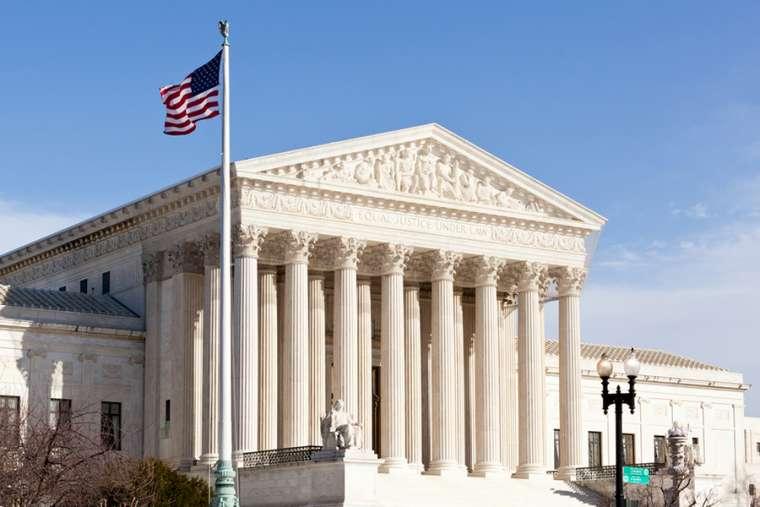
WASHINGTON — The U.S. Supreme Court ruled on June 30 that President Donald Trump exceeded his authority when he signed an executive order to deny citizenship to children born in the country to parents who lack legal immigration status.
Trump signed the order on his first day in office, prompting immediate legal challenges based on the 14th Amendment, which guarantees automatic citizenship to anyone born in the country and “subject to the jurisdiction thereof.” The U.S. bishops opposed Trump’s directive, saying the “immoral” order would harm families, destabilize communities, and undermine human dignity.
The executive order was blocked by courts before it went into effect, so children born to parents who lack legal immigration status were not being denied citizenship. The Supreme Court ruling in Trump v. Barbara maintains the legal framework that existed before Trump’s executive order, essentially voiding the president’s actions.
In a 6-3 decision, the court held that the order violated the 14th Amendment’s citizenship clause and exceeded presidential authority. The ruling leaves intact the long‑standing practice of granting citizenship to nearly all children born in the United States.
The opinion states that children born to parents who lack legal immigration status are indeed “amenable to the jurisdiction of the country” and therefore their U.S.-born children are citizens under the 14th Amendment.
The ruling reaffirmed the 1898 precedent set in U.S. v. Wong Kim Ark, which found there to be only a small number of limited exceptions to birthright citizenship: those born to foreign diplomats and occupying enemy forces.
Wong Kim Ark also rejected birthright citizenship for certain Indigenous Americans, although this exception became irrelevant after every Indigenous American was granted citizenship with the Indian Citizenship Act of 1924.
The administration’s legal team had argued that birthright citizenship only applied to those who were legally in the country and “domiciled” with the intent to remain. The executive order was part of Trump’s broader immigration crackdown, which includes mass deportations of people in the country unlawfully and extends beyond people accused of violent crimes.
In February, the U.S. Conference of Catholic Bishops petitioned the Supreme Court to protect birthright citizenship, urging the court to preserve long‑standing constitutional interpretation to protect human dignity and social cohesion.
“At its core, this case is not solely a question about citizenship status or the 14th Amendment,” the court filing read. “It is a question of whether the law will affirm or deny the equal worth of those born within our common community — whether the law will protect the human dignity of all God’s children.”
- Keywords:
- supreme court