Focolare’s Fruits in Africa Flow from a Remote Forest Outpost
How a Catholic movement saved a village and spread across Africa.
Editor’s Note: This is the third in a series of articles based on the author’s recent reporting trip to Africa. Previous articles looked at the Catholic Church’s presence in Cameroon and Togo.
NAIROBI, Kenya — Even before Chiara Lubich received Vatican recognition for the lay movement she founded in 1943 in Trent, Italy — Pope Paul VI granted formal approval — men and women committed to the Focolare “spirituality of unity” were trekking to remote southwest Cameroon to help save babies born to the Bangwa people. Ninety percent of children under age 10 were dying from sleeping sickness and malaria.
Miracle in the Forest is a documentary describing Mary Health of Africa hospital in Fontem, Cameroon, the first little town in Africa planted by Lubich at the request of a local missionary bishop. She came to inaugurate it in 1966.
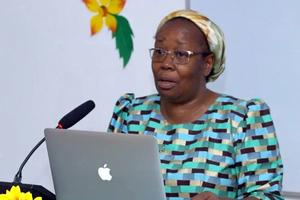
“Focolare saved me and my village,” recounted Cameroon-born Nkem Khumbah, a mathematician and director at the African Academy of Sciences in Nairobi.
“They opened a hospital when tsetse flies were killing children. The mortality rate was astronomical. I was born in 1968. My mother had eight children, and we all survived,” said Khumbah.
The movement in Fontem has influenced the continent, although the community’s location in a war-torn region required many members to relocate.
Zone Center
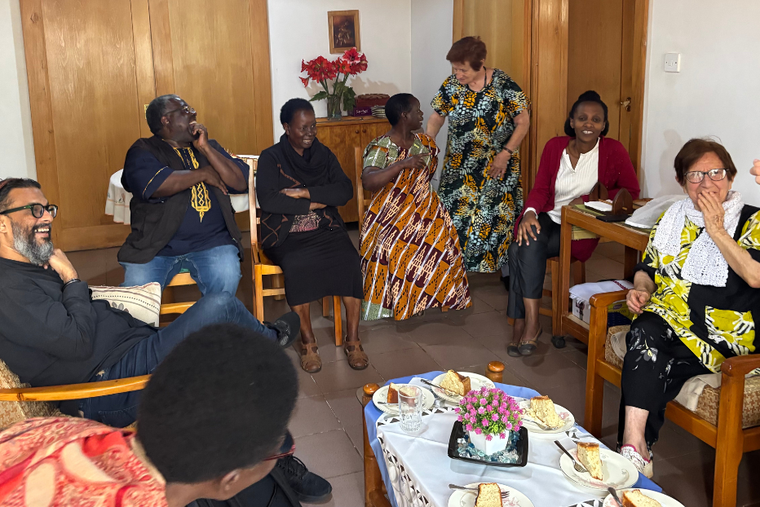
A house for the “Focolarini” in Nairobi, Kenya, serves as a “zone center,” coordinating activities for 25 countries in Eastern and Southern Africa. (The movement has members in each country, not necessarily a consecrated community of men or women; the center helps link members between countries while organizing national activities.) Two consecrated women in the house have direct connections with Fontem.
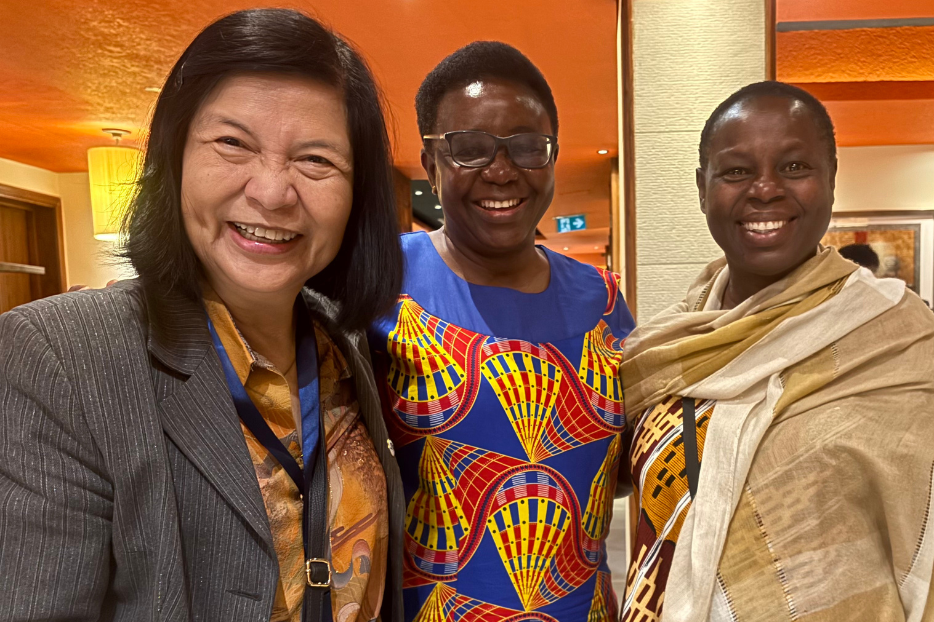
Anne Plantard was at a youth meeting in Brittany, France, where a young man showed pictures of the hospital in Fontem, which needed a nurse, Plantard’s profession.
“I felt a call to humanitarian service without knowing much about the Focolare Movement,” she told the Register.
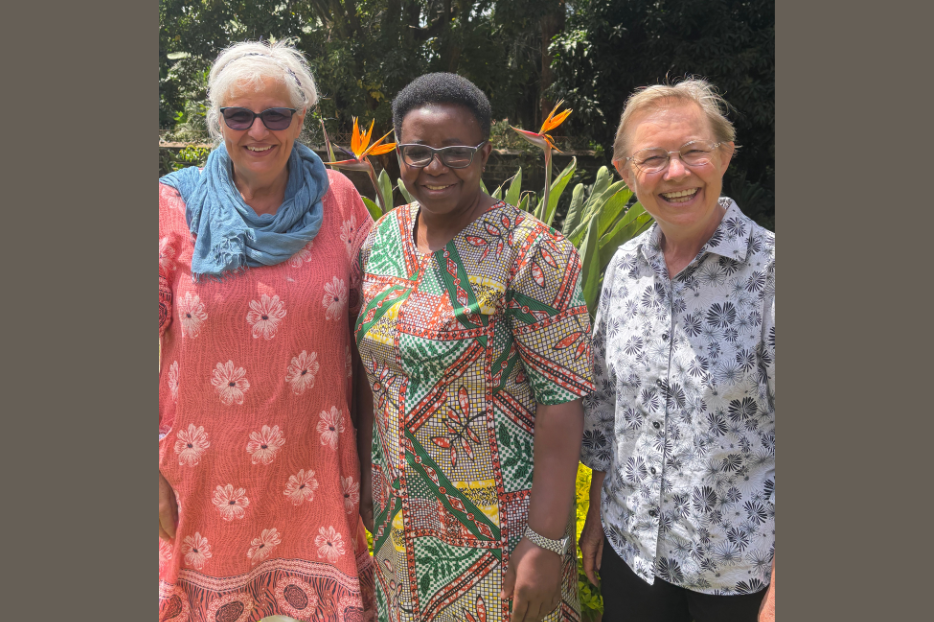
She moved to Fontem in 1984 with a one-year commitment, leaving behind her fiancé, Pascal, a pilot. In Africa, Anne “met God in a different way,” without distractions.
To confirm she should commit herself long term, Plantard wrote a letter to Chiara — within the movement, Lubich is always referred to by her first name, as though she’s around the corner or just a phone call away — asking her advice.
The founder replied, “Pray that you and Pascal discover what God wants. To have unity with the people will give you the Light.”
Plantard lived in Fontem for 20 years — “the most beautiful years of my life” — then went on to a Focolare community in Madagascar for 11 years. She served as Lubich’s nurse for the last months of her life. Pascal became a Catholic monk.
Impact and Disruption
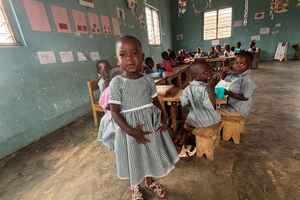
Besides the hospital, the movement built the region’s first secondary school, Our Lady Seat of Wisdom College, in Fontem.
Consecrated Focolare member Mariline Nkafu remembers that she prayed for three years, from age 10 to 13, that she would be accepted at the school, which was in her village, “a pearl for the whole tribe,” but very competitive. Not only was she accepted, she developed personal correspondence with Chiara.
At age 18, her commitment to becoming a consecrated member brought her to Nigeria, Kenya, and then Italy for formation.
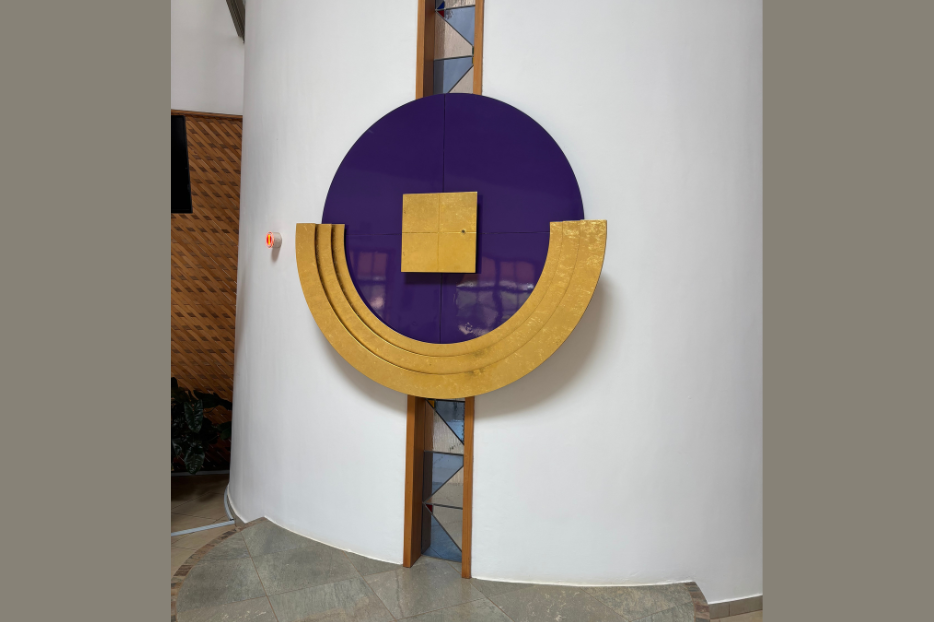
“I discovered that the Gospel is Life — it can be lived, it is Light, and it is a guide to life,” she said.
Eventually, Nkafu returned to Fontem, where she taught at Seat of Wisdom College for 15 years, eventually rising to be school principal. But the tragedy of political violence ripped her from that community: in 2016, conflict between southwest Cameroon (an Anglophone region), where Fontem is located, and the Francophone central government compelled the school to close for eight years. It only reopened in 2024.
‘Mariapolis’ Communities
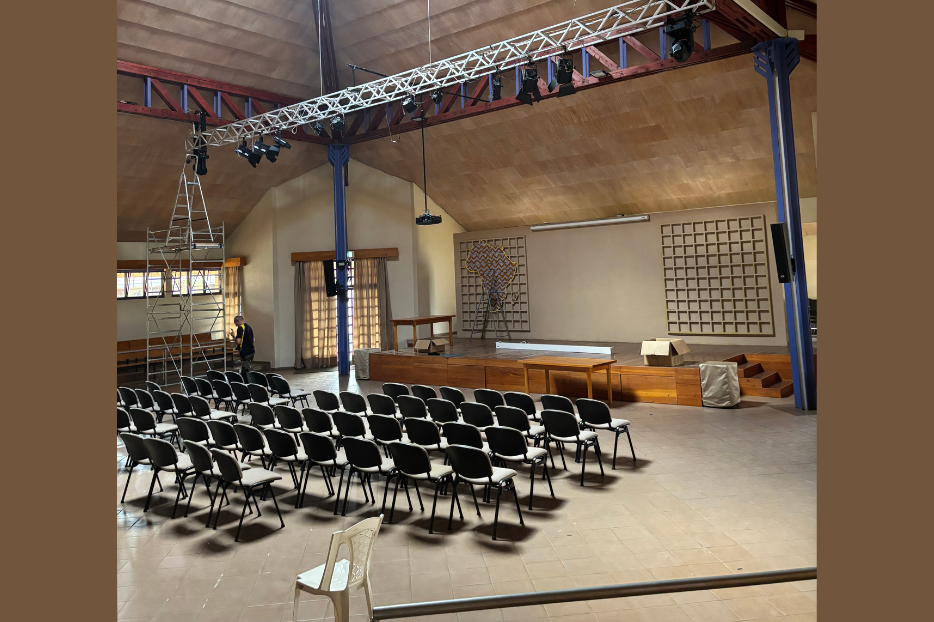
In Juja, Kenya, about 40 minutes northwest of Nairobi is Mariapolis Piero, inaugurated by Lubich in 1992. The community’s homes, chapel, auditorium and common areas are designed to look like a traditional African village.
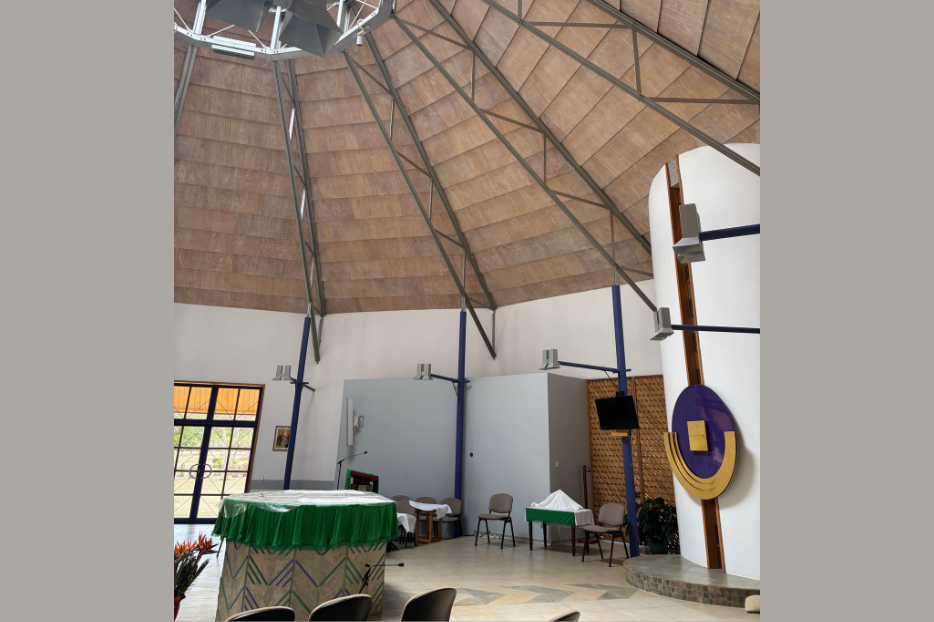
I toured the grounds with 87-year-old Belgian Anny Keymeulen, a teacher who met Lubich in Rome in 1960, who told me, “I could feel that she was full of God.”
Keymeulen wanted to be one of the first to take vows of consecration once the movement gained recognition from the Holy See. She arrived in Fontem in 1964 then moved to Kenya in 2010. She is excited that the community just started a new primary school for boys.
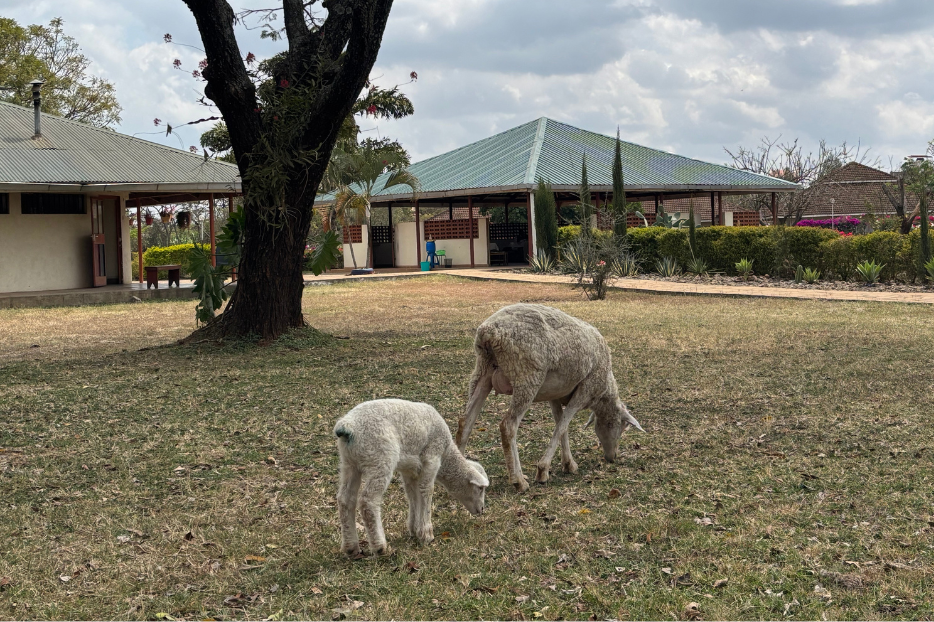
“That they all may be one — John 17:21 — we live for that,” Keymeulen explained as we left the chapel and she cautioned, “Close the door tight or the sheep will get in.”
Some 60 people live together at Mariapolis Piero, old and young, white and black. “We love one another so we have peace in our heart, and this you can’t buy from Carrefour,” said Anny.
Indigenous Focolarini
Even before Mariapolis Piero was created, the movement was growing in East Africa.
In Burundi, Triphonie Barumwete was a youngster at a Catholic school, compelled to join a lay movement. What intrigued her about Focolare, was its emphasis on unity because her family, although Catholic, was divided.
While helping at a center for children with Hansen’s disease (leprosy), a religious brother explained the Gospel idea that what you do for the least of us, you do for Christ: “And when I touched that leper, I saw Jesus in his smile, and that transformed me,” she recalled.
Barumwete got her nursing degree and went to work at the Focolare hospital in Fontem for two years. Next, she went to Italy for two years of formation, where she met Lubich. Then she went to Douala, Cameroon, and then Kinshasa, capital of Zaire (1971-1997, today, Democratic Republic of Congo), where she had a traumatic experience. When war broke out in 1996 between Zaire and Burundi, the Holy See’s nuncio (ambassador) insisted she escape, with just a passport in her pocket, by boat from Kinshasa across the river to Brazzaville, Congo.
“Many on the boat were thrown into the water and drowned,” she recalled solemnly. But God blessed her passage, and she flew from Brazzaville to Rome — leaving behind certifications proving she was a nurse.
“For two years, I helped old people in their homes in Trent. It was a very nice experience. Then, they needed me in Ivory Coast, to open an activity for malnourished children. I remained there for 12 years — 10 years living in Mariapolis Victoria,” Barumwete recounted.
In Ivory Coast, she again had a high-stress experience: Islamist insurgents took over a Focolare formation center and the French military told all the white Focolare to evacuate but because of their “pact of reciprocal love,” they did not want to go, Barumwete told the Register.
The Red Cross came, and some 4,000 people took refuge with the Focolare. “Chiara said, ‘You are free to leave. Follow your heart,’ but we could not leave so we began teaching the children. Refugees remained for nine months,” Barumwete recalled. Later, she helped reopen a major hospital.
For over a decade, Barumwete has lived at Mariapolis Piro in Kenya, where the explicit focus is inculturation and interreligious dialogue.
Back to Cameroon
Once you enter the Focolare circle, you feel lifted and carried aloft like crowd surfing. My new Focolarini friends in Kenya connected me to “the heart of our movement” in Cameroon: Marcellus Nkafu Nkeze.
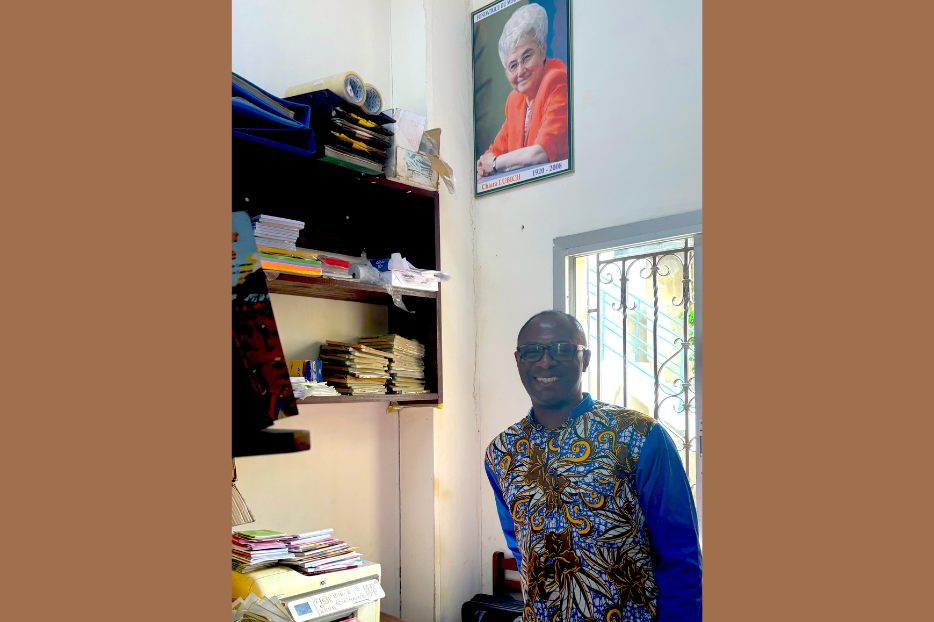
Among other responsibilities, Nkeze runs a religious bookstore in Douala, Cameroon’s economic hub, its largest city, and Central Africa’s most valuable port. It’s located in the cathedral’s courtyard. A picture of Chiara Lubich is posted over his desk in the bookstore’s back corner. [NOTE to Focolare HQ in Rocca di Papa, Italy: Marcellus deserves more space!]
He insisted on meeting me at the airport when I arrived in Douala and rearranged his schedule to help me all week. It’s evidence of this exceptional selflessness I repeatedly observed among movement members.
Nkeze grew up, the son of Christian government workers, near Fontem. One evening his parents sent the teenager to a Focolare meeting: “They were so joyful, talking about unity, and putting the Gospel into practice,” he recalled. “I told myself I wanted to deepen my knowledge of this group.”
After two years in Fontem for pre-formation, Nkeze went with three others to Florence, Italy, where, after learning Italian, they studied spirituality and the social doctrine of the church.
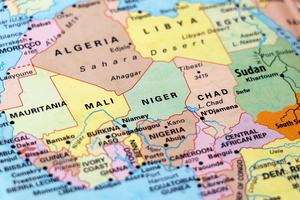
His itinerary included 10 years in Kenya coordinating humanitarian aid destined for South Sudan; two-and-a-half years in Switzerland as a Focolare spiritual instructor for new male members; nine years in Burundi managing, New Hope, a program for AIDS patients; then Douala, where he is “co-responsible” for the movement in Central Africa (mainly, in Cameroon, Chad, Equatorial Guinea, Gabon, and São Tomé and Príncipe).
Nkeze is a sharp analyst of African political and social trends, with connections ranging from church leadership to the street’s best Muslim moneychanger. But when I press him on strife in the country’s southwest region, he reminds me. “I come from the southwest, but I am beyond that. I’m a consecrated man,” he said. “Ask me today to go to Egypt and I will. If I follow Jesus, the world is mine.”
That’s exactly what I witnessed in the Focolare movement: love beyond limit, dedication without end. May this fascinating miracle of human connection continue to thrive.
- Keywords:
- african catholics