New Israeli Land Reforms Raise Fears Among West Bank Christians
The Security Cabinet’s reforms would alter long-standing land rules in the West Bank, shifting authority in ways critics say could weaken prospects for a two-state solution.
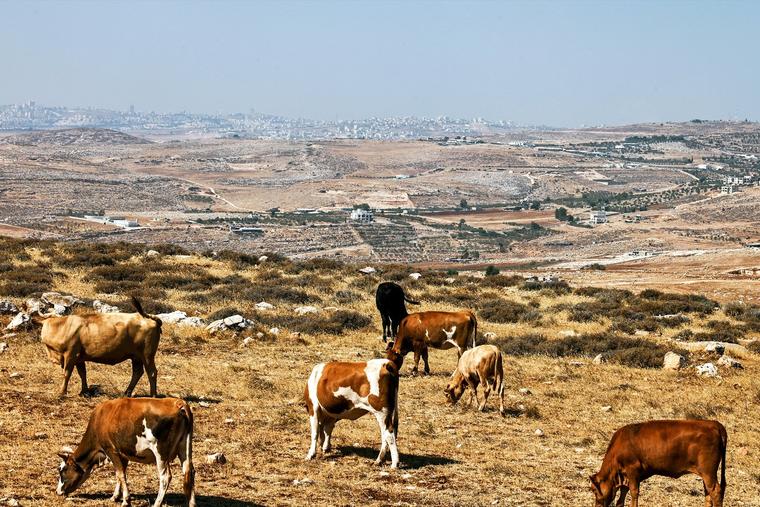
JERUSALEM — Over the past month, Israel’s Security Cabinet has approved sweeping changes that will affect the purchase and use of land in the West Bank.
Palestinians — including the approximately 1% of Christians who live in the West Bank — fear that the new provisions will boost the construction and expansion of Israeli settlements and ultimately prevent the creation of a Palestinian state.
The first provision will enable individual Israelis to purchase land in Area C — the 60% of the West Bank already ruled by Israel as agreed upon in the Oslo Accords, which are a series of agreements that Israel and the Palestine Liberation Organization signed in the 1990s to create a framework for Palestinian self-government and pave the way toward a final peace settlement and a two-state solution.
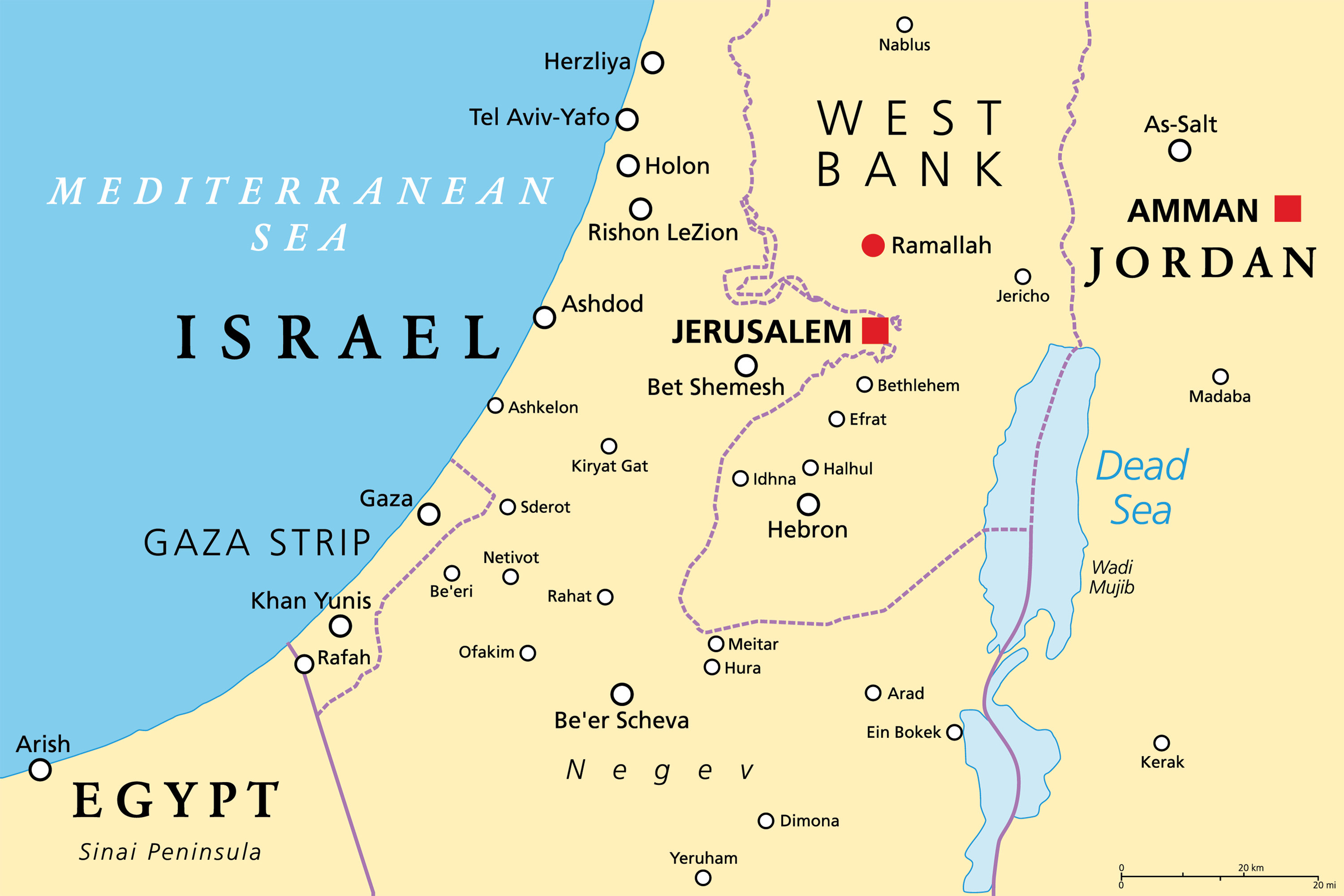
Under these accords, West Bank territory was divided into three administrative areas: Area A consists mainly of the major Palestinian cities — such as Bethlehem and Ramallah — and is under Palestinian civil and security control. Area B includes many Palestinian towns and villages scattered throughout the central parts of the West Bank and is under Palestinian civil control and joint Israeli-Palestinian security control. Area C, which surrounds and separates Areas A and B, remains under full Israeli civil and security control. This is where the majority of Israeli settlers live.
When Israel captured the West Bank from Jordan in the 1967 Middle East War, it adopted Jordanian land regulations that prohibited non-Palestinians from individually purchasing property. That’s about to change.
The second provision will enable Israeli authorities to ban construction in the Palestinian-ruled parts of the West Bank (Areas A and B) if they determine that the construction will harm the environment, water resources or archaeological heritage. Until now, these decisions were in the hands of the Palestinian Authority, which governs the territories according to Oslo.
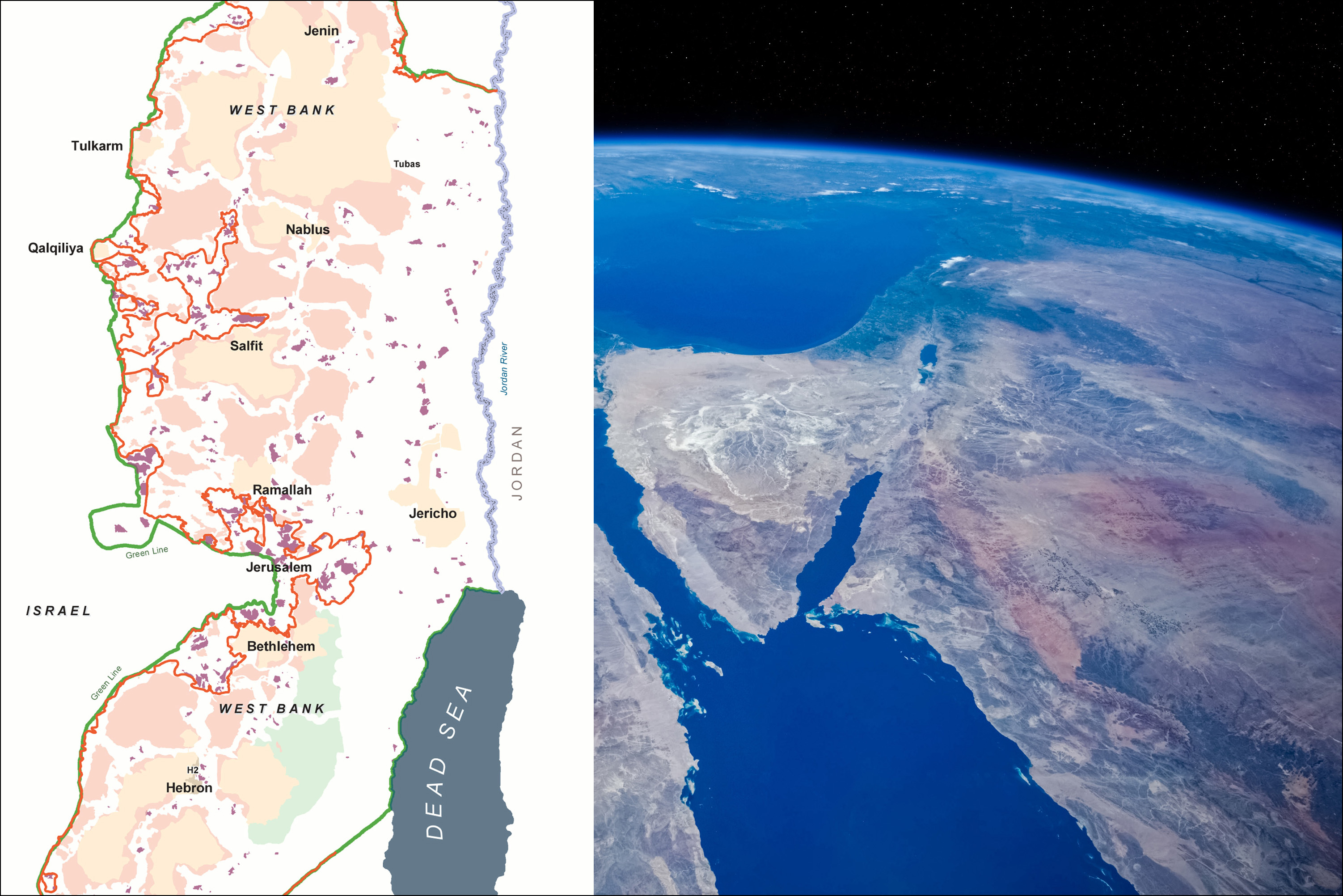
The changes, which do not require parliamentary approval and could be implemented within days or weeks, were spearheaded by far-right members of Israel’s security cabinet, who, like Prime Minister Benjamin Netanyahu, are dead-set against the formation of an independent Palestinian state.
Finance Minister Bezalel Smotrich did not mince words about the new directives.
“The days of settlers being second-class citizens under racist Jordanian laws are over,” he said. “We are normalizing life in Judea and Samaria, removing bureaucratic barriers, fighting for the land, fighting on the ground and deepening our grip throughout the Land of Israel.
Judea and Samaria is the biblical term for the West Bank.
Supporters of the new land policies say they are long overdue, given the fact that the Oslo Accords granted Israel the right to rule Area C, where most Israeli settlements are located. They also reject the claim that Israel is an occupying power, since it won the territory in a defensive war, and because East Jerusalem and the West Bank are part of the biblical and ancestral homeland of the Jewish people.
“Before this proposal, the sale and purchase of land in all of Judea and Samaria, with a few exceptions, was governed by Jordanian law,” said attorney Marc Zell, an expert in Israeli and American law. “Israel’s policy was to follow international law regarding ‘belligerent occupation.’”
While Jordanian land-purchase laws will continue in Areas A and B, the new policy will allow individual Jews in Area C to buy land from Palestinians — something that until now has been done secretly and illegally. Under Palestinian law, selling real estate to a Jew is a crime punishable by death.
Zell said that “Palestinians have been attempting to damage and erase ancient Jewish connections” to the West Bank and East Jerusalem, “so protecting such sites throughout the West Bank is critical.” As global antisemitism soars, many Palestinians and their allies are claiming that Jews are white colonizers with no religious or historical link to the biblical land of Israel.
Hagit Ofran, director of the Settlement Watch project at the left-wing Israeli NGO Peace Now, asserted that requiring residents of Area C to provide written proof that they own their land amounts to an “act of Israeli sovereignty.” She said the Israeli government “is deciding about land ownership in a way that a temporary occupation authority is not supposed to do.”
Sovereignty aside, Ofran said there are inaccuracies in the way the Ottomans, the British and the Jordanians — all of whom preceded Israel — registered land ownership, and that this will make it impossible for many Palestinians to prove ownership of their property. In such a scenario, the Israeli government will claim “ownerless” land as “state land,” to use as it wishes.
“This land is almost always used for Israelis, not Palestinians,” Ofran said.
Cardinal Pierbattista Pizzaballa, Latin Patriarch of Jerusalem, has not yet commented on the land reforms, but is deeply concerned by what he considers to be a refusal by the Israeli government to protect Palestinians in the West Bank. Speaking to an audience at the Basilica of San Francesco in Arezzo, Italy, on Feb. 2, the patriarch spoke about the “gradual and slow erosion of Palestinian rights.”
“We have 23 parishes in the West Bank, and every day I receive requests for help because of the violations and acts of violence they have suffered, but we don't know who to turn to,” Pizzaballa said.
Father Bashar Fawadleh, parish priest of Christ the Redeemer Catholic Church in Taybeh, said the Christian village of 1,200 people has experienced many settler incursions, so he is deeply concerned by the new land policies. The village itself is in Palestinian-ruled Area B, but 70% of the town’s 4,000 acres of agricultural land sits in Israel-ruled Area C.
“I consider this one of the most dangerous decisions since 1967,” Father Fawadleh told the Register. “People see this as the beginning of the official Israeli takeover of the West Bank.”
Father Fawadleh ticked off four main concerns: that Israel is removing administrative powers from the Palestinian Authority; that settlers will be able to purchase more land and create or enlarge existing settlements; that Israel will take administrative control of holy sites like the Tomb of the Patriarchs (Abraham Mosque) in Hebron, where Jews and Muslims both pray; and that Israeli authorities will take possession of Palestinian property where ownership cannot be proven.
Already, the parish priest said, restrictions are increasing, due to checkpoints and other obstacles.
“This decision is not just political. It directly affects people’s lives in these zones. It removes all signs of Oslo. Workers cannot reach their jobs, and students from neighboring villages are having a difficult time reaching their schools. Farmers cannot easily reach their land. The Israeli government allows fanatic settlers to do whatever they want and that will increase even more now,” Father Fawadleh warned. “This will motivate our people to leave.”
Anton Salman, who served as mayor of Bethlehem from 2017-2022 and 2024-2025, said only 30,000 or so Christians remain in the Bethlehem region, alongside 220,000 Muslims. Successive wars, religious extremism, and dreams of finding greater stability abroad have all contributed to the 100-year-long exodus of Christians.
Salman predicted, “Now, the situation will only deteriorate.”