What’s Driving Anti-Christian Extremism in Israel?
Experts say education and law enforcement are needed to stem such incidences.
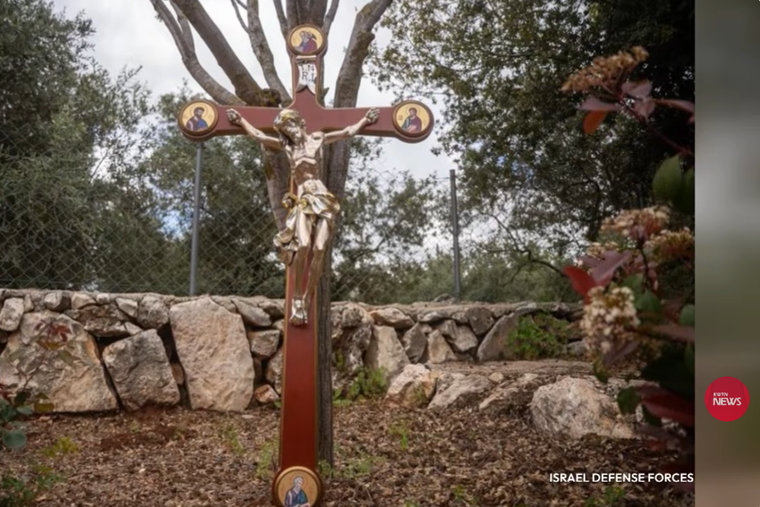
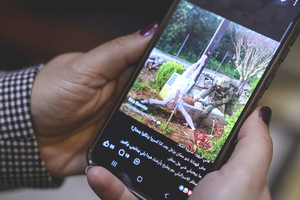
JERUSALEM — A photo of an Israel Defense Forces (IDF) soldier hacking a statue of Jesus with a hammer in a south Lebanese village quickly went viral on April 20. Although Israeli Prime Minister Benjamin Netanyahu apologized for the shocking incident, and the Israeli army replaced the statue, the episode has sparked a difficult reckoning within Israeli society about the rise of religious intolerance in a country that prides itself on its democratic and Jewish values.
Critics of Israel’s current right-wing government blame its leaders for fostering extremism, especially among some ultra-Orthodox and religious/ultranationalistic Jews. Schools in these insular communities do not teach their students about religious pluralism, mutual respect or coexistence.
About 185,000 of Israel’s 10.2 million citizens are Christian. Most live in northern Israel or religiously diverse cities like Jerusalem, Tel Aviv-Jaffa and Ramleh. Another 1.8 million citizens are Muslim.
Although few mainstream ultra-Orthodox Jews serve in the Israeli military, and the IDF tries to weed out fervently religious ultranationalists during the conscription vetting process, two and a half years of war triggered by the Oct. 7, 2023, Hamas massacre has left the military scrambling for additional soldiers.
“The soldier didn’t smash the Jesus statue accidentally, and his actions didn’t take place in a vacuum,” Lazar Berman, diplomatic correspondent for The Times of Israel, wrote in a Times of Israel op-ed. “Somewhere in his education or social milieu, he likely learned that Christian shrines and icons are not to be respected, or even that they are to be destroyed.”
Although the “vast majority” of Israelis do not support persecuting the country’s religious minorities, Berman said, “there are enough extremists and religious fanatics in the country who do support such actions that the soldier has plenty of potential sources of inspiration for his crime.”
Tomer Persico, a research fellow at the Shalom Hartman Institute, blames Netanyahu for inviting extremists like Bezalel Smotrich and Itamar Ben-Gvir into his government, which took office in January 2023.
The makeup of the government, which includes not only far-right-wing political parties but also ultra-Orthodox Jewish parties, “shapes and colors a lot of the relationship between Jews and non-Jews in Israel and even in general,” Persico told the Register. “When a war breaks out, you can see how their religious, messianic fervor informs their proclamations.”
Persico noted that some of these fundamentalists wear patches on their IDF uniforms depicting the Third Temple, in violation of army regulations. “Nobody stops them,” he said.
In a statement, the IDF said that “procedures regarding conduct with religious institutions and symbols were reinforced to troops prior to the entry into relevant areas, and will be reinforced again for all troops in the area following the incident.”
The Al-Aqsa Mosque, the third-holiest site in Islam, stands where the first two ancient Jewish temples once stood (Jesus visited the Second Temple). Muslims fear that fundamentalist Jews want to replace the mosque with a Third Temple.
The soldiers who destroyed the statue and photographed him doing it have been removed from combat duty and will serve 30 days in detention. As of April 22, Israel had not identified the religious background of either soldier.
In an essay entitled “Israel Has a Growing Intolerance Problem,” journalist Nadav Eyal said the influence of religious and messianic currents in the IDF “has been unfolding for years.” He cited an increase in acts of hostility toward Christians in Israel, including spitting incidents and verbal abuse against clergy, as well as defacing churches and church property.
“Israel does maintain a comparatively thriving Christian community relative to neighboring countries,” which Christians have been fleeing for decades due to Muslim persecution. In Israel, freedom of worship for all faiths is guaranteed by law, Eyal said.
“Yet religious intolerance is on the rise across society, and the military is no exception,” he said. In addition to the desecration of the statue, the IDF recently imprisoned Jewish soldiers for barbecuing on the Jewish sabbath because it violates Jewish law; forced female soldiers, but not male soldiers, to wear long pants while running the Jerusalem marathon in extreme heat; and withheld pay from female soldiers on their last day of service because they were dressed “immodestly.”
Yisca Harani, an Israeli expert in Holy Land Christians, traces the roots of anti-Christian behavior in Israel to poor education and ignorance. The subject of Christianity is rarely taught in Jewish Israeli schools, and when it is, the focus is usually on antisemitic events perpetrated by Christians and not on the Christian religion.
“An education that completely ignores anything to do with Christianity will lead to ignorance,” Harani told the Register. “If this was 70 or even 50 years ago, we might understand why Israelis would not want to talk about a civilization that hurt Jews so badly. But we’re now three generations from these events, and people don’t know anything about Christianity except for the pogroms, the blood libels and the Holocaust.” If this is the only thing children learn, “they feel angry.”
The soldier who destroyed the statue in Lebanon may have thought he was commanded by the Bible to do so, she said. In Deuteronomy 7:5, when the Israelites enter the Land of Israel and encounter the pagan kingdoms, God commands them to “tear down their altars, smash their sacred stones, cut down their Asherah poles, and burn their idols in the fire."
Harani, who is the director of the Religious Freedom Data Center, said there were 180 anti-Christian incidents reported in Israel in 2025. Most of these incidents were reported via the center’s hotline. Dozens of Jewish volunteers operate the center.
“There is no persecution of minorities in Israel, but we do have a growing number of incidents,” Harani said, “and we must stop them before they become attacks.” Every one of those reported incidents was committed by a religious Jew: ultra-Orthodox, national religious and religious Zionists in Jerusalem and around the Sea of Galilee, among other places.
Harani said the only solution to the problem is education and law enforcement.
When a Coptic procession was weaving its way through Jerusalem during Easter week, she said, some Jews spat at the participants. When the secretary to the archbishop called Harani, she contacted the police and the Ministry of Foreign Affairs.
“I sent them the location, the time of the incident, a photo of the back of the spitter, but so far, no one has contacted me or the Coptic secretary,” she said.
As for education, Harani said, the IDF should have done more to educate its soldiers, perhaps by emphasizing that the Maronites in south Lebanon were close allies during the 18 years Israel was fighting the Palestine Liberation Organization.
- Keywords:
- anti-christian attacks
- israel
- lebanon