Evaluation Before Encounter: Why Young Catholic Men and Women Are Struggling to Connect
Many young Catholics describe dating experiences that feel shaped by expectations, fears and assumptions that leave both sides feeling misunderstood.

At first, Liz Conway thought her date had gone well.
The two young Catholics met and, by all appearances, had enjoyed an easy first evening together. Nothing awkward. Plenty in common. The kind of date that could have naturally led to a second.
But after not being asked for a second date, Conway later learned something from mutual friends that changed how she read the entire night: the man had quietly spent much of it evaluating her against an internal checklist for a future wife.
“He asked questions about my parish and job,” said Conway, 28, who lives in the Washington, D.C. area. “But later I realized he wasn’t really trying to know me. He was trying to figure out if I passed the ‘secret wife test.’”
She laughed when she said it, but the phrase has stuck with her.
“I’ve been on a lot of first dates, but not a lot of second dates,” she said. “It can feel demeaning a lot of the time.”
Conway’s experience reflects a broader tension playing out across Catholic dating culture. At a time when young men and women in general find themselves deeply divided — over politics, religion, marriage, gender expectations and commitment itself — many young Catholics say they are encountering another kind of disconnect within their own faith communities.
The divide between Catholic men and women is often less about shared beliefs than interpretation and preference, shaped in part by different Catholic subcultures, online influencers and exacting expectations about what a future spouse should be like.
Women describe feeling scrutinized before they are known. Men describe uncertainty about how they will be received. Both sides talk about pressure, assumptions and the sense that dating begins with analysis rather than encounter.
Many young adults, along with Catholic speakers and ministry leaders, say the result is a widening gap in perception between men and women who share many of the same values but often experience modern dating in strikingly different ways.
“I think we’ve put a lot of pressure on dating itself,” said Eve Rosemary, a 22-year-old chastity speaker based in Washington, D.C. “People treat a first date almost as an interview rather than just enjoying getting to know someone.”
Evaluation Before Encounter
For many Catholics, that pressure emerges in the earliest conversations.
“We [Catholics] tend to overthink things,” said Peter Zappia, a 24-year-old mechanical engineer in Madison, Wisconsin. “We’re looking into the future immediately and trying to match up all these qualities in this person you’ve just met.”
What some men describe as responsible discernment toward marriage, some women experience as evaluation.
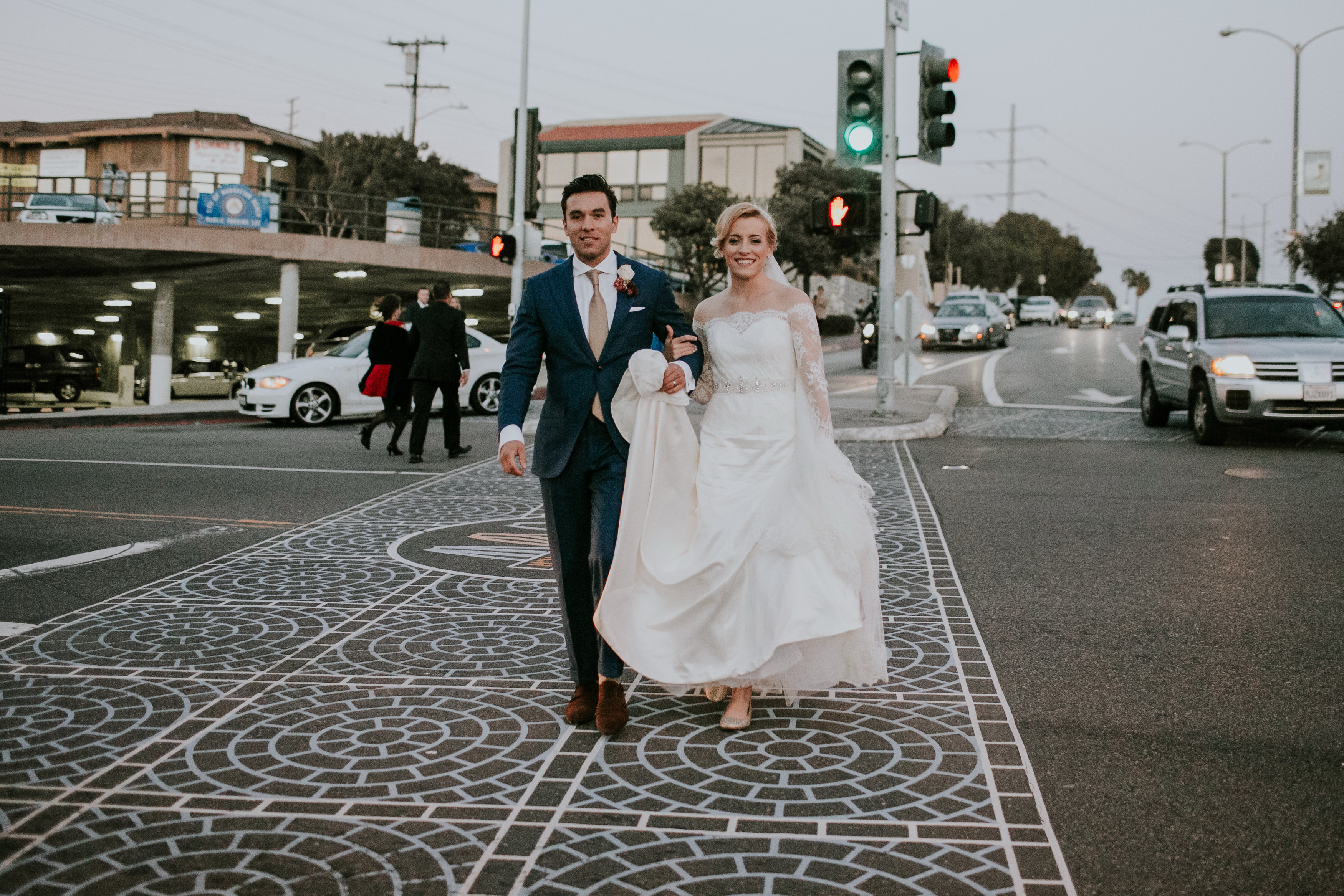
Merrill Mikolajczyk, a 23-year-old graduate student at Coastal Carolina University, said she sometimes senses men arrive at dates already carrying fixed expectations about what a Catholic wife should be.
“[Some men] have all these boxes that need to be checked off,” said Mikolajczyk. “It feels like every little thing must be perfectly aligned.”
One of the most common early flashpoints is career.
“I am not willing to give up my career,” she said. “I’ve spent too much time in school to do that. While I do want a family someday, I would also love to work for a long time.”
And in some cases, the fact that a single woman has a career now can be an automatic disqualifier for some Catholic men, even if she’s open to staying at home when kids come along.
Even among Catholics who share beliefs, Mikolajczyk said, assumptions about family roles — shaped by online “trad wife” stereotypes, for instance — and uncompromising liturgical preferences for things like the Traditional Latin Mass can surface before a real conversation about life together has begun.
A Difficult Approach
Yet if women often describe feeling scrutinized, many men describe a different challenge: uncertainty about whether approaching a woman will be well received.
“Most of the Catholic women I know don’t seem to make themselves approachable,” Zappia added, describing his male friends’ experiences of women either leaving immediately after Mass rather than staying to socialize, or responding dismissively when approached while standing with female friends.
That perception, he noted, can create hesitation before conversations even begin, narrowing the chances for connection between men and women altogether.
“Girls are like, ‘Why don’t guys approach anymore?’” said Luke Parker, a 29-year-old architect in Washington, D.C. “But a lot of guys have a hard time approaching.”
The fear, he said, is not only rejection but social fallout.
In close-knit Catholic communities, he said, there is often a heightened awareness of reputation and how behavior will be interpreted.
“If one guy asks a bunch of girls out at his parish over time, then suddenly he’s desperate,” said Parker, who navigated dating through parish events, informal introductions and Catholic matchmaking spaces, including CatholicMatch, where he met his current girlfriend. “Maybe he’s just interested in getting to know people.”
Some men also describe feeling evaluated in more concrete ways early in dating, including questions about career direction or financial stability — questions they experience as premature markers of worth.
Both sides, Parker emphasized, often underestimate what the other is experiencing.
“I think for both guys as the pursuers and women as the deciders, [they] need to be more empathetic,” he said. “It’s so easy to misread everything.”
The Lack of a ‘Common Language’
That sense of mutual misunderstanding surfaced repeatedly in the Register’s conversations with nine Catholic singles.
Jason Craig, executive director of Fraternus — a Catholic mentoring organization for boys and fathers — distilled the divide into a single sentence.
“In the simplest terms,” he said, “girls think guys are weird, and guys think girls are cold.”
Conway described the evaluative climate of the Catholic dating scene as “demeaning and dehumanizing the other person.” But she doesn’t think it’s due to bad intentions. Rather, she points to a “lack of common language between men and women” when it comes to dating today.
Relatedly, Craig points to a structural flaw in the Catholic dating scene.
“Back in the day, young men and women would have been guided by their local community, by their family,” he said. “Now a lot of them are completely without help.”
Instead, many turn to influencers and internet personalities. Craig pointed to figures like Nick Fuentes, a far-right provocateur, and other online voices whose commentary circulates in some Catholic-adjacent spaces.

“These guys are sitting there giving advice to young men about how women should be treated,” he said, “and most of them are young, often childless, and not even in relationships themselves.”
With these many “endless voices with opinions and tips and tidbits,” Craig noted, young people are “scared they’re going to do it wrong.”
And without a shared dating culture, men and women instead are relying upon abstract ideals of what a good husband or wife looks like, that seem to be shaped more by the internet than by real-life witnesses.
“Having these expectations and checklists right away screams to me that you’ve been reading too many blog posts,” said Ayden Eddings, a 24-year-old PhD student in mathematics at the University of Nebraska.
He added that, for Catholics, the line between authentic dating and performative gender roles can sometimes blur.
“If a Catholic woman wants to be a stay-at-home mom, then that’s great,” he said. “But the idea of having a wife who always just does what I say without any opinions of her own sounds awful to me. I know I’m not perfect; I need someone who’s going to hold me accountable.”
Beyond the Algorithm
For Catholic relationship experts, the broader issue is a cultural instinct toward customization.
“We’ve lived in a curated culture,” said Emily Wilson, a Catholic speaker, author and co-founder of the Catholic dating app SacredSpark. “You can customize your burrito exactly how you want it. You can say, ‘I want extra sour cream, I want a little less rice, I want chicken.’ We’ve been conditioned to customize everything.”
But “you cannot “customize your future spouse,” Wilson emphasized, like you “can customize your burrito.”
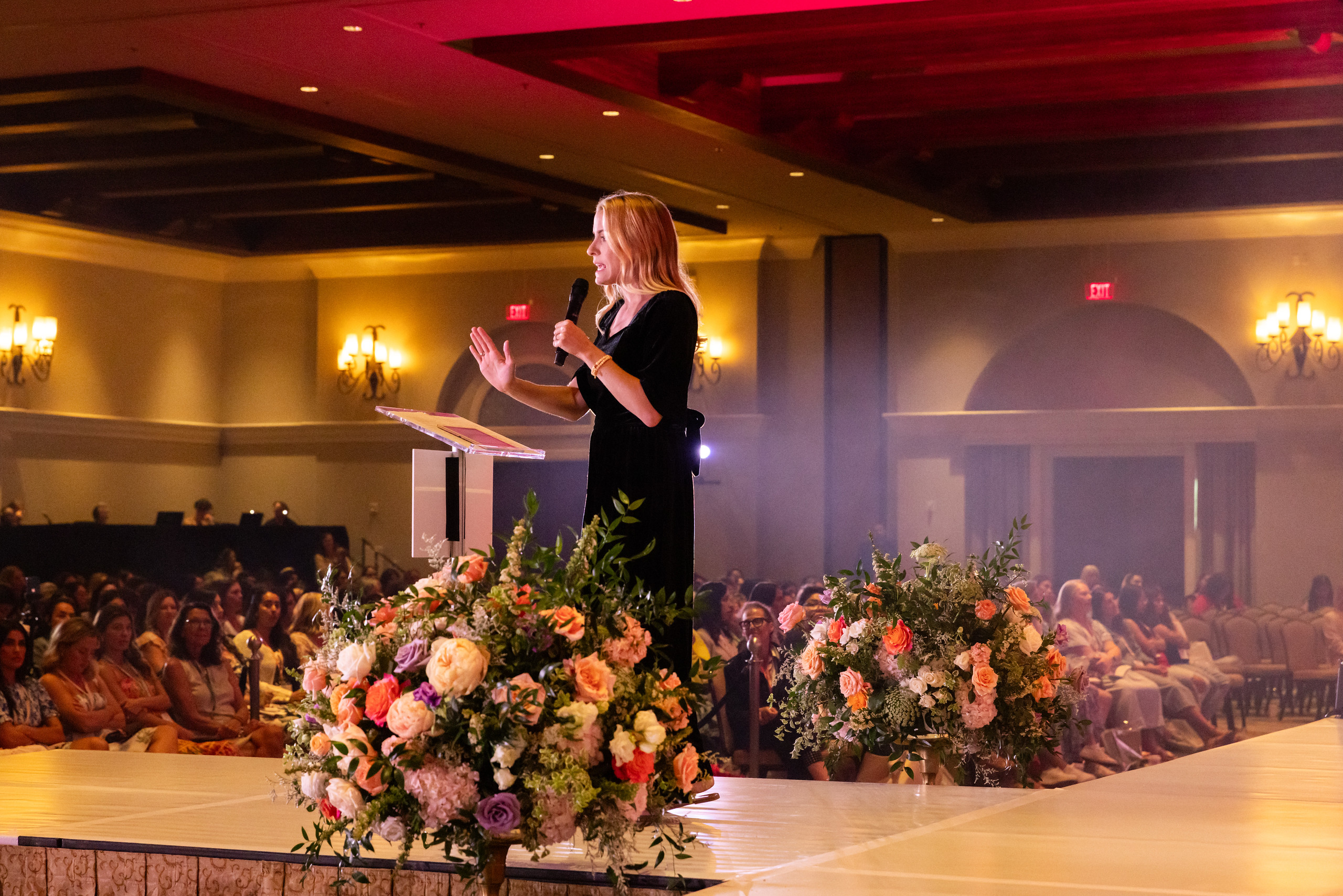
“Having standards is a good thing,” she added. “But we’re all humans, and we’re flawed. You have to be open to God’s type for you instead of your type for yourself if you want to move toward the vocation of marriage.”
Dr. Mario Sacasa, a Catholic marriage counselor and dating coach, said many young Catholics assume the other sex does not value marriage as much as they do, which can create a climate of mistrust and over-analysis.
For Sacasa, the solution is not “better rules” in dating strategy but a healthier way of relating to others that involves letting go of the “script that’s been written for me based on my algorithm.”

That lines up with the experience of the young adult Catholics who spoke with the Register. Many said the healthiest environments are often those where relationships develop through ordinary community life rather than under the weight of constant expectation.
“We talk about all kinds of things in my young adult group,” said Eddings. “When you’re already used to being open with people and spending time with them, asking someone on a date becomes easy.”
In other words, several suggested, the answer may not be finding better formulas for Catholic dating, but creating more opportunities for Catholic men and women to encounter one another as people before they encounter one another as potential spouses.
For Conway, that lesson comes back to the date that inspired her “secret wife test” theory.
Looking back, she said, what disappointed her was not that someone was discerning marriage; rather, it was feeling that evaluation had replaced curiosity and sincerity.
As Conway put it, “Being Catholic underpins my life, but it shouldn’t squash my personhood to a single checklist.”
But for all her frustrations with Catholic dating culture, Conway said she remains hopeful.
“The Lord cares for us and our hearts individually,” she said. “He would not give men and women these good desires for marriage if he didn’t want to bring something from them.”
- Keywords:
- catholic dating