Young Catholics at Eastern African Assembly Welcome Opportunity to Engage Directly With Bishops
At the Association of Member Episcopal Conferences in Eastern Africa plenary assembly this week, young delegates are sharing their concerns and offering recommendations to Church leaders.
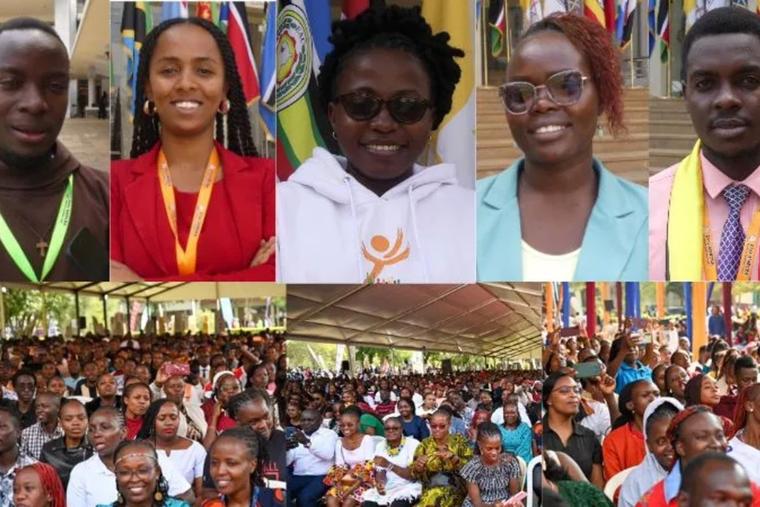
NAIROBI, Kenya — Young Catholics participating in the 21st assembly of the Association of Member Episcopal Conferences in Eastern Africa (AMECEA) are welcoming the opportunity to engage directly with Catholic bishops at the event, saying they appreciate the bishops’ efforts to strengthen youth participation in the life and mission of the Church in the region.
The July 19–26 plenary assembly has brought together over 100 bishops from AMECEAʼs eight member episcopal conferences, affiliated institutions, and other groups. The AMECEA is comprised of nine countries, including Eritrea, Ethiopia, Kenya, Malawi, South Sudan, Sudan, Tanzania, Uganda, and Zambia. Djibouti and Somalia are affiliate members.
Speaking to ACI Africa, the sister service of EWTN News in Africa, on July 20 at the eight-day event centered on the theme “AMECEA’S Synodal Journey with Young People: Building Bridges of Communion, Hope, Justice, and Good Governance,” youth participants said the assembly has provided a platform for them to present their concerns, share their experiences, and contribute recommendations to Church leaders.
Georgette George Wani, a youth delegate representing the Sudan and South Sudan Catholic Bishops’ Conference, expressed gratitude to the Catholic leaders in the AMECEA region for creating space for young people at their plenary assembly.
“I am grateful to our bishops for giving us this opportunity to engage with them, to share our experiences, and to discuss the challenges we face both in the Church and in our countries,” Wani said.
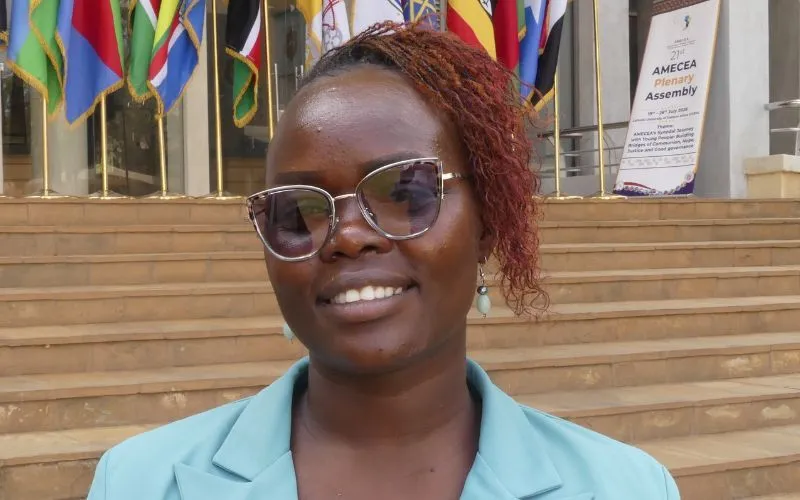
A member of the Archdiocese of Juba in South Sudan, she noted that young people are grappling with challenges brought about by digitalization, modernization, and changing social realities, adding that the Church has an important responsibility to accompany them.
"If we are the majority, it means that they have to take care of us, give us the space, and actually teach us, guide us, and accompany us on our journey, because time is going, and they will not be around for much longer, but it is us who are going to stay for a longer period,” she said.
“We have to be guided, and we have to be taught, and yes, I am happy that we are here today,” Wani added, expressing hope that the dialogue would strengthen harmony between the Catholic bishops and young people.
‘Continue Listening to Us’
For Olwormudu Tonny Blair, a delegate from the Uganda Episcopal Conference, the plenary assembly reflects the vision of the late Pope Francis' March 2019 postsynodal apostolic exhortation to young people and the entire people of God, Christus Vivit, which says young people are not merely the future of the Church but its present.
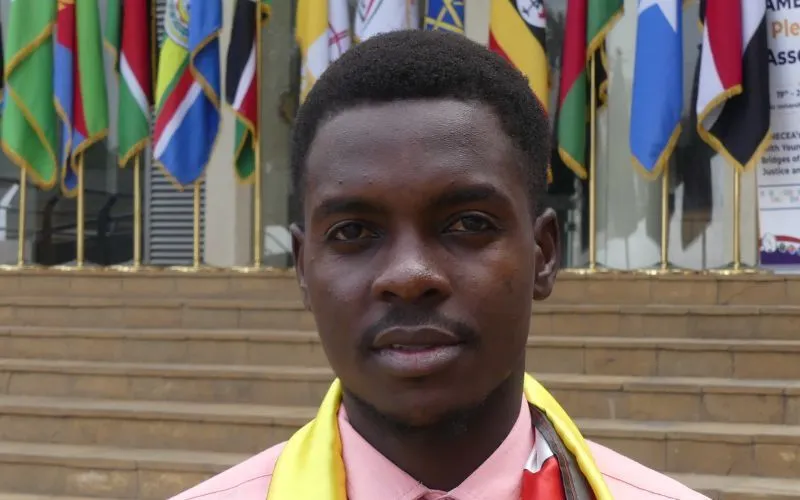
“I now see that the Church is bringing to life what Pope Francis expressed in his message of Christus Vivit, that the young people are the ‘now’ of the Church. The Church is focusing on young people because they adapt quickly to change and influence many others. By investing in young people, the Church strengthens evangelization and prepares future generations of faithful leaders," Olwormundu told ACI Africa.
Balir, from the Diocese of Nebbi in Uganda, noted that the assembly has given youth a platform to present the challenges affecting them across the region, including political instability and social unrest.
“Whenever there is unrest, young people are often blamed or become the most affected. That is why we ask the Church to continue listening to us and to work with us in finding solutions to these challenges,” he said.
“We now see that we have that platform where we can express ourselves easily because we shall get spiritual nourishment, and we shall get ideas from our elders, especially from our bishops, our priests, and our animators who are always there guiding us. The Church giving us this platform is an opportunity that we look at as distinct.”
Blair encouraged young Catholics across the AMECEA region to remain hopeful and prayerful, saying: “Let us keep hope, let us keep praying. The Church is here to listen to us, and we are here to represent your views. We are here to present all your views to our bishops so that we can get an answer, build a better youth, and a better Church.”
Representing the Catholic youth of Ethiopia, Hayat Abdi from the Archdiocese of Addis Ababa described the assembly as a historic opportunity for young delegates to speak directly to Church leaders.
"I am here … representing our countryʼs youth. For the past two days, we have had a lot of discussions with the youth from different AMECEA countries,” she told ACI Africa.
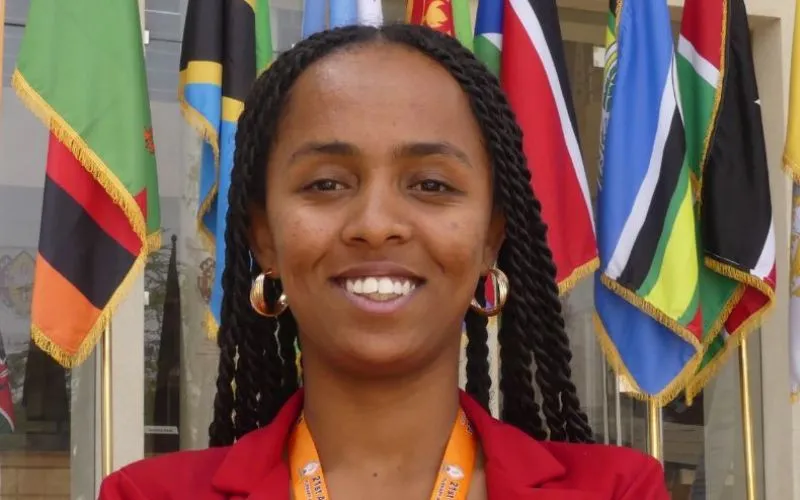
“We are so excited to have a discussion with our bishops because this is our first time to be represented directly — we are the ones who represent our issues directly to the bishops.”
Abdi added: “We expect them to deliberate on these resolutions and recommendations throughout all the AMECEA countries, including our own, to give an order or direction for the youth on how things should continue or move forward.”
‘Listen to Young People’
Brother Janivier Kagayo Theophile, a member of the Franciscan Missionaries of Hope from the Democratic Republic of Congo (DRC), currently studying in Kenya, said the bishops have delivered a message that the Church must continue listening to young people.
“It is time to listen to young people because for a long time our voices have often been ignored,” Brother Kagayo said, recalling Christʼs teaching that the kingdom of God belongs to the little ones.
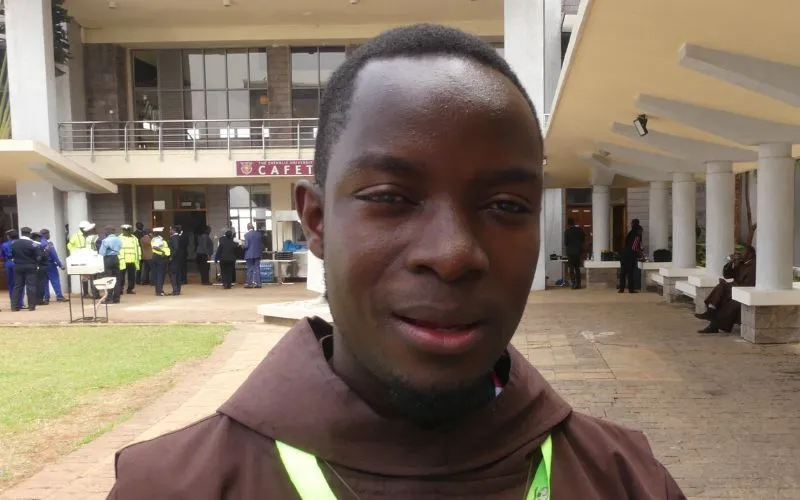
He emphasized that building a better future requires collaboration between the Church, governments, and young people.
“It is not enough to keep saying that young people are the leaders of tomorrow — tomorrow is shaped by how we live today. If we live well today, we will have a better Church tomorrow, a better country tomorrow, and a better society tomorrow," he said
Brother Kagayo, who is representing his religious congregation at the assembly, proposed institutionalizing youth participation by establishing structures at parish, diocesan, and Small Christian Communities — levels where young people can contribute to pastoral life and decision-making.
He also proposed that every parish create a dedicated youth office or designate a youth representative within parish pastoral councils to ensure that young Catholics have a recognized platform through which they can make their voices heard.
Study sessions during the plenary assembly on July 20 examined key pastoral and social issues affecting young people, including governance, unemployment, migration, social exclusion, safeguarding, mental health, evangelization in the digital age, and missionary vocations.
‘A Great Privilege’
Juanitha Pastory from Tanzania’s Archdiocese of Dar es Salaam said she was grateful for the opportunity to talk with the bishops.
“It is a great privilege to share the challenges facing young people and to speak openly about our hopes and concerns,” Pastory said, adding that the gathering demonstrated the bishops' willingness to understand the experiences of the youth.
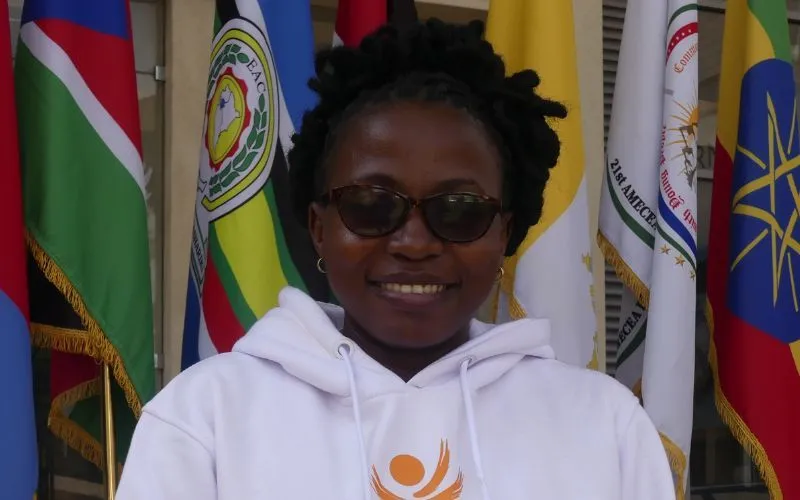
She added: “I sincerely thank the bishops for creating this space for dialogue. By understanding our realities, they will be better placed to accompany and support young people in the Church.”
This story was first published by ACI Africa, the sister service of EWTN News in Africa, and has been adapted by EWTN News.
- Keywords:
- church in africa
- african bishops