Should Exorcists Step Into the Spotlight?
As exorcists attract millions of online viewers, priests and Church leaders weigh the benefits and dangers of speaking publicly about the ministry.
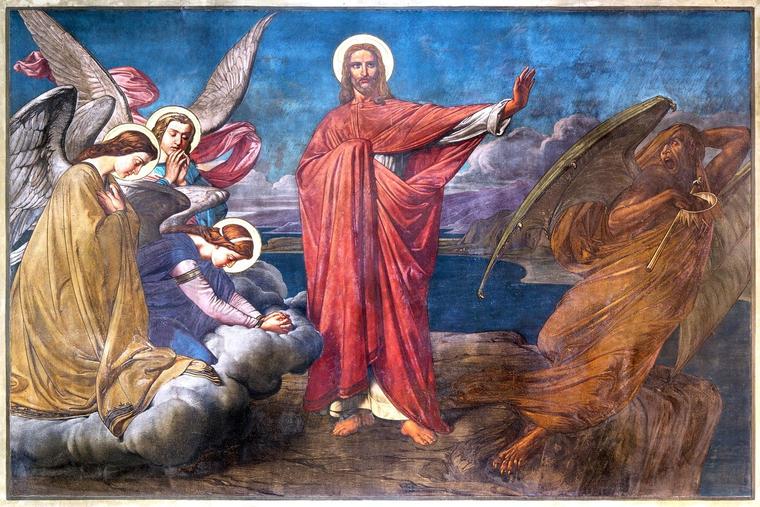
Among today’s most popular videos and podcasts, for Catholic and secular audiences alike, are those featuring priests discussing demons.
Prominent exorcists, such as Father Chad Ripperger, Father Carlos Martins and Father Dan Reehil, have gained widespread attention through frequent media appearances, often garnering millions of views. Some exorcists have even launched their own public-facing deliverance apostolates, including Msgr. Stephen Rossetti’s St. Michael Center for Spiritual Renewal.
But while their online content generates plenty of attention, not everyone approves of these so-called “celebrity exorcists” speaking publicly about their ministry.
Earlier this summer, Cardinal Robert McElroy of the Archdiocese of Washington, D.C., made headlines when he dismissed Msgr. Rossetti from his post as archdiocesan exorcist. The move came after the popular exorcist had made public comments linking UFOs to demons. But Cardinal McElroy said his decision was based less on the monsignor’s opinions than on his high-profile persona.
“My major objection is that I think the traditional role of an exorcist is a very private one,” explained the D.C. cardinal on July 8. “It’s a sacred one.”
Cardinal McElroy’s view is shared by many. For instance, the U.S. Conference of Catholic Bishops recommends on its website that dioceses keep the identity of their exorcists a secret, “so as not to overwhelm the exorcist with random calls and inquiries.”
But in Church law, there is no universal norm governing whether an exorcist may speak publicly about his ministry. Instead, the question is often left to the local bishop, who oversees exorcisms in his local diocese and can also restrict a priest’s public appearances.
This has led to a patchwork of approaches — and an ongoing debate about whether exorcists with public platforms are helping raise awareness of the Church’s ministry against the demonic or are sensationalizing a sacred office.
In the Spotlight
The debate underscores the relatively recent surge in public interest in exorcisms. A key moment was the publication of William Peter Blatty’s The Exorcist in 1971, which was turned into a feature film two years later, sparking a public fascination with demons and the priests tasked with driving them out that continues today.
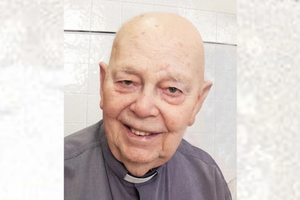
Exorcists themselves have contributed to the ministry’s rising profile. The late Father Gabriele Amorth, for instance, wrote more than 30 books based on his experience as an exorcist of the Diocese of Rome from 1986 to 2016 and was dubbed “the Pope’s exorcist” by the media.
Today, both the internet and a resurgence of interest in the spiritual realm have fueled the public prominence of some exorcists. The combination of online reach and the ability to go viral provides a level of visibility for certain exorcists today that would have been unthinkable in previous generations.
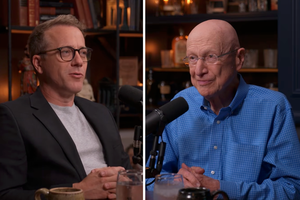
Msgr. Rossetti, Father Ripperger, Father Martins and Father Reehil each have enormous online audiences. For instance, the “Sensus Fidelium” YouTube account that distributes Father Ripperger’s videos has 391,000 subscribers, while Father Reehil has 260,000 followers on Instagram.
Their online exorcism-related content includes everything from Msgr. Rossetti’s running journal of alleged demonic experiences, to Father Ripperger’s speculation about the role of demons in American politics, to Father Martins’ dramatized reenactments of exorcisms he has performed.
And their digital platform allows them to reach listeners well beyond the dioceses in which they serve. Father Reehil is a priest of the Archdiocese of Nashville; Father Ripperger and Father Martins, who belong to different religious communities, are based in the Archdioceses of Denver and Detroit, respectively.
Msgr. Rossetti declined to comment for the Register and Fathers Ripperger, Martins and Reehil did not respond to the Register’s request for comment.
Public Outreach
Supporters of public engagement argue that while exorcists must be prudent about their public appearances, the ministry is not an inherently private one.
“The ministry of exorcism is part of the Church’s public life, at the service of those who suffer,” said Father Francesco Bamonte, vice president of the International Association of Exorcists, a Vatican-recognized group co-founded by Father Amorth. “As such, it is right and proper that it be presented to the people of God, but certainly in accordance with criteria that do not seek visibility for its own sake but rather educate and form through accurate information.”
In fact, with so much general interest in spiritual warfare in the culture these days, some argue that the Church can make things worse by not publicly addressing the topic.
“When we make [exorcisms and the demonic] super-secret, it only adds to the mystique of this thing,” said Father Glenn Sudano, the former exorcist of the Archdiocese of Newark and a co-founder of the Franciscan Friars of the Renewal.
This doesn’t mean that an exorcist should accept every invitation to make a public appearance. A former exorcist from a Midwestern diocese, who requested anonymity because he is no longer authorized to address exorcism-related ministry requests, told the Register that he evaluated each media invitation ahead of time to ensure that the Church’s teaching would be treated fairly.
At the same time, he said media appearances can be helpful for both correcting Hollywood-style depictions of exorcisms and making sure people know they can turn to the Church when they have a genuine encounter with evil spiritual forces.
“Otherwise, people don’t know who to turn to,” he said, and may instead “turn to the so-called professional exorcist or the psychic who says that they can make all your problems go away.”
And while the appearance of an exorcist on social media may strike some as ill-fitting, some involved in the ministry say that there is nothing wrong with exorcists sharing information via online venues.
“Podcasts and YouTube videos are popular forms of media today, and there is no reason that exorcists should avoid them as long as they present themselves properly,” said Catholic author and speaker Jimmy Akin, who stressed that “exorcists provide a service that goes back to the ministry of Christ himself and that brings relief to numerous people oppressed by the devil.”
Real Risks
But even those who see a genuine role for exorcists to speak publicly are critical of the way some popular exorcists talk about their ministry and the demonic.
“Exorcists — particularly celebrity exorcists — can make sensationalistic claims that are not backed up by evidence,” said Akin, who has consulted and advised exorcists and those working in exorcist ministry. “They can present their own theological opinions as if they were settled facts or Church teaching.”
Examples of this practice include Msgr. Rossetti’s comments on UFOs and the demonic, or Father Ripperger’s assertion that J.K. Rowling was inspired by demons when writing the Harry Potter books.
Akin said another serious danger is when high-profile exorcists “make the mistake of giving credence to things reportedly said by demons” and then make the further mistake of repeating these claims in public.
“Demons are lying liars who are working for the father of lies,” said Akin. “Nothing they say can be trusted.”
Those involved in exorcism ministry told the Register that a broader problem is today’s media landscape, which trades on sensationalism and scandal. Often, when exorcists appear on secular podcasts, interviewers pose provocative questions designed to elicit answers likely to go viral.
Father Sudano cautioned that these kinds of approaches can “feed an adolescent interest in these things” and “can distract people from the real call to holiness.”
Adam Blai, a psychological expert with the Diocese of Pittsburgh, warned that the danger isn’t limited to distraction. He said that sensationalistic exorcists with big public platforms can also lead people to misunderstand the spiritual life in harmful ways.
“In some interviews the demonic are linked with physical ailments, psychological problems or family problems,” said Blai, who has assisted priests and taught seminarians and priests about exorcisms and demonology since 2005. “This can lead to anxiety and a spiritual life centered on the demonic and defending against it. This is not healthy.”
Blai added that many of these videos can be dangerous because most viewers lack the theological formation needed to properly understand such discussions and can lose sight of the mercy and power of God.
While Akin said that it is natural for people to want to know about the demonic and how to protect themselves, he agreed that some exorcists “can unintentionally scare people and lead them to suspect they are oppressed by demons when they are not.”
He also cautioned that overemphasis on the demonic can have consequences in the opposite direction.
“If exorcists ignore natural causes and attribute everything to demons,” said Akin, “they make Christianity look foolish and lead people to refuse to consider the demonic as a possibility.”
The Perils of Pride
But the risks posed by high-profile exorcists aren’t just limited to their listeners. They also apply to the priests themselves.
Blai told the Register that “the primary danger to the exorcist is pride.”
“The public tends to focus on the exorcist priest as an individual,” he said, “and ascribe gifts and specialness to him.”
Father Bamonte said that every exorcist must first remember that he works as a “minister of Jesus Christ” and on “behalf of the Church.” Thus, an exorcist should never be looking for the limelight, but should use his platform to glorify God.
“An exorcist must avoid any form of self-promotion, as St. John said: ‘[Jesus] must increase, but I must decrease,’” said the Italian priest, referring to St. John the Baptist’s words from Scripture. “Any attitude that does not reflect this disposition of heart is wrong, and the priest-exorcist must not expose himself through imprudent and harmful statements.”
The former exorcist from the Midwest said the pitfalls of pride were a focal point during his own preparation for the ministry.
“The priest that trained me, the last thing he told me was, ‘If you’re ever doing an exorcism, and even for a split moment, think, wow, look at what I’m doing, you just walked on unholy ground,’” he said. “Even in public, stories and conversations should always be pointing back to God. When it starts to point to self, that’s a dangerous thing.”
Bishop-Led, Christ-Centered
While different theologians and priests may reach different prudential conclusions about the merit of exorcists making public appearances, Church law is clear about who oversees an exorcist’s ministry: the local bishop. “No one can perform exorcisms legitimately upon the possessed unless he has obtained special and express permission from the local ordinary,” states Canon 1172.
Other canons give an ordinary the authority to restrict a priest’s public presentation of Catholic doctrine.
The former exorcist from the Midwest told the Register that whenever he made a public appearance or gave an interview about his ministry as an exorcist, he asked his bishop for permission.
“It’s important to always have the backing of the local bishop to make sure that the ministry is in line with what the bishop wants, because ultimately the bishop is the exorcist in the diocese,” he explained.
Beyond the debate over exorcists speaking publicly, Father Sudano stressed that the Church must find a “healthy way” to speak of the reality of the devil.
“A lot of people are involved in various forms of occult, and that should be talked about,” he said. “The Church should be and needs to be warning people to not get involved in these things.”
Whether a public role becomes part of an exorcist’s ministry, those who spoke with the Register stressed that every exorcist must keep his focus on Jesus Christ. When a talk, podcast or video strays from Christ, spiritual dangers follow.
“People need to recognize that in an exorcism, Jesus is not a bystander,” said the former exorcist from the Midwest. “He’s the main actor.”
- Keywords:
- exorcism
- exorcists
- demonic possession
- priesthood
- father dan reehil
- father carlos martins
- father chad ripperger
- msgr. stephen j. rossetti