75 Years After His Death, Cardinal Sapieha’s Example Endures in Ukraine
COMMENTARY: The wartime archbishop of Kraków shaped St. John Paul II and became a model of episcopal courage whose witness finds a striking echo today in Major Archbishop Sviatoslav Shevchuk of Ukraine.
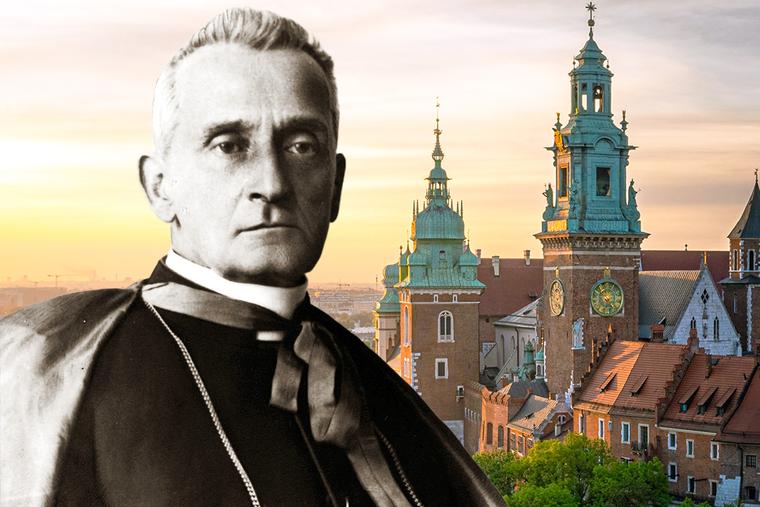
One of the great bishops of the 20th century died 75 years ago, on July 23, 1951. The heroic witness of Cardinal Adam Sapieha does not belong only to the past; it has an echo today in one of the bravest bishops of the 21st century, Major Archbishop Sviatoslav Shevchuk, head of the Ukrainian Greek Catholic Church. Indeed, given the changing political geography of Sapieha’s life, it could be argued that Shevchuk is one of his heirs.
Cardinal Sapieha served the see of Kraków for an astonishing 40 years, 1911-1951, the longest tenure in the thousand-year history of the diocese-then archdiocese. It was the most tormented of times, including two world wars, short-lived Polish independence, Polish occupation by the Nazis (Auschwitz was in his diocese) and then the Soviets, who imposed post-World War II Stalinization. No bishop of the “bloodlands” — the territories between Berlin and Moscow — saw so much carnage.
Every year in Kraków, the Tertio Millennio Seminar on the Free Society, led by George Weigel, unfolds for three weeks in Sapieha’s city. This year, as is common, we had Ukrainian participants, including one whose father was killed during the current Russian war against Ukraine.
The concluding Mass of the seminar is usually offered in the chapel of the historic residence of the archbishops of Kraków. I have celebrated that Mass for many years now. The chapel is most famous for being the place where Cardinal Sapieha ordained Karol Wojtyła in 1946. While it is remembered now for Wojtyła, future archbishop of Kraków and bishop of Rome, Sapieha’s memory merits particular remembrance in that holy place.
During the Nazi occupation of Poland, the primate of Poland, Cardinal August Hlond, went into exile in France.
“I stay,” Sapieha replied when asked what he would do.
“It had long been the tradition that the Cracovian bishop was the defensor civitatis — the ultimate defender of the city, its citizens, and their rights — in a line of episcopal heroism that ran back to the eleventh century and the martyrdom of St. Stanisław by King Bolesław the Bold,” wrote Weigel, in his book City of Saints: A Pilgrimage to John Paul II’s Kraków. “In the twentieth century, that role had been brilliantly played by Cardinal Sapieha, who defied Nazi gangster Hans Frank during the German Occupation of 1939-45.”
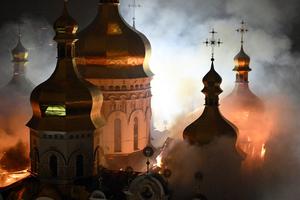
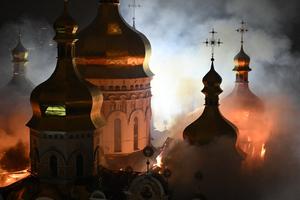
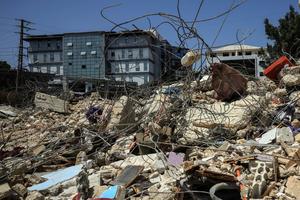
There is something of the defensor civitatis — and defender of the nation — in Major Archbishop Shevchuk. He remains in his city, Kyiv, leading and comforting his people, many nights himself trying to sleep in an underground bunker when Russian missile attacks are underway.
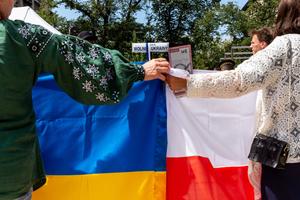
Sapieha’s life invites thoughts about Ukraine, along with Poland, the other great victim of the bloodlands.
When Sapieha was born in 1867, Kraków and Lviv, Ukraine, were both part of the Habsburg Empire, which, along with Russia and Prussia, had carved up Poland, eliminating it from the map of Europe. Sapieha studied in the seminary of the Latin Rite Diocese of Lviv, the same city that was then the seat of the head of the Ukrainian Greek Catholic Church. He was ordained for Lviv in 1893 and later served on the seminary faculty. He was in Lviv when the long episcopate of Venerable Andrey Sheptytsky began, the great lion of the Ukrainian Greek Catholic Church.
Sapieha was born into the European aristocracy, a prince in his own right; the current queen of Belgium is the great-granddaughter of his brother. But there was no soft luxury about him — he became known as the “unbreakable prince” for his ministry in Kraków. Cardinal Wojtyła would install a statue of Sapieha outside the residence with another title: “Archbishop of the Long, Dark Night of Occupation.”
When the Nazi occupiers began arresting and killing the clandestine seminarians of Kraków during World War II, Sapieha took them, including Wojtyła, into his own residence. There, they lived until the end of the war in the presence of the heroic cardinal. They would see him, each evening, go to his chapel, where he would pray, seeking wisdom and courage to care for his flock.
That witness made a deep impression upon Wojtyła, who would recall it 50 years later in his memoir of his priestly vocation, Gift and Mystery. But it was widely known even at the time. When Sapieha died in 1951, Cardinal Stefan Wyszyński, now beatified, preached of that same witness, the pastor alone every night in his chapel, seeking to recover his spiritual strength after long days of bearing the crushing burden upon his shoulders.
“He was full of strength and courage, fearless of any persecution,” Pope Pius XII wrote to the Polish bishops after Sapieha’s death, applying to him the biblical praise that “he supported the house and in his days he strengthened the temple … [and that] he took care of his people and saved them from perdition.”
“This man was an unshakeable tree, and the sight of him filled the hearts of not only Poles with confidence, but the entire Christian community,” Pius XII wrote.
There is another echo of Sapieha’s life in that of Major Archbishop Shevchuk. For a time, his many admirers did not include Rome.
During the initial years of Polish independence after World War I, Sapieha took a firm position that the Polish future should be determined by Poles. At a meeting of the Polish bishops in 1919, he insisted that the apostolic nuncio, Achille Ratti, leave the meeting, permitting the Polish bishops to tend to their own affairs without Roman interference, as Sapieha saw it.
Ratti never forgot what he regarded as the impertinence and, after his election as Pope Pius XI, refused to create Sapieha a cardinal, even though it was customary for the bishops of Kraków. Pope Pius XII would remedy that at his first consistory for new cardinals in 1946, when Sapieha was already 79 years old.
Similarly, the late Pope Francis did not create Shevchuk a cardinal, despite his heroic role in Ukraine. It might be expected that Pope Leo XIV will remedy that at his first opportunity.
The bloodlands are a place of memories, often painful ones, where anniversaries are kept to honor the fidelity of their most noble countrymen. The day after his ordination in 1946, Father Wojtyła went to the crypt of Wawel Cathedral to offer his first Mass amid the heroes of Polish history. Less than five years later, Cardinal Sapieha would be buried in that same cathedral, near to the relics of his first predecessor, the martyr St. Stanisław, joining the heroes of Poland’s millennium of Christian witness.