Diocesan Bankruptcies Are a Messy Business For the Catholic Church
Inside the $4.4 billion Chapter 11 crisis many dioceses are facing across the U.S.
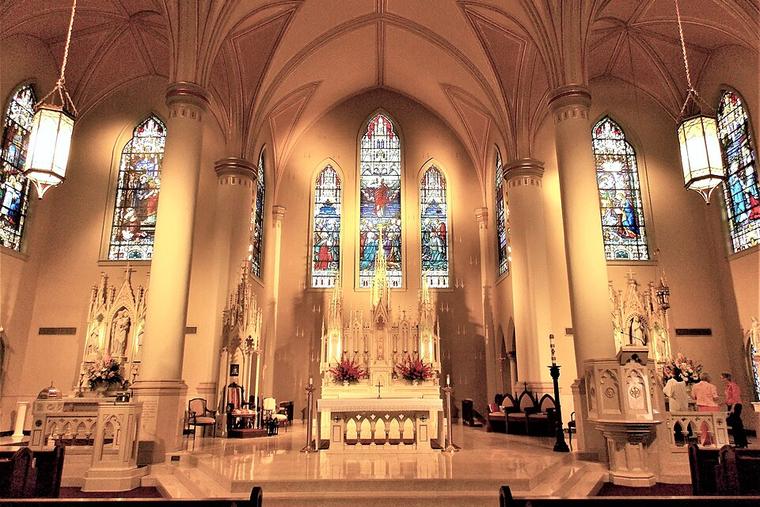
Diocesan Chapter 11 bankruptcies are a contemporary reality that has been forced on an ever-increasing number of U.S. dioceses, as a direct consequence of the huge cost of settling historical claims of clergy sexual abuse.
But as a spate of recent news articles has highlighted, these bankruptcy procedures are never smooth processes — and they don’t guarantee an end to the legal problems generated by the Church’s earlier failures to address the scourge of sexual abuse adequately.
According to the Catholic Project, which utilizes data compiled by University of Pennsylvania law professor Marie Reilly, a total of 39 dioceses have filed for bankruptcy since the Archdiocese of Portland initiated the first diocesan Chapter 11 proceeding in 2004. Of these, 18 dioceses currently remain in bankruptcy, with the most recent filing taking place on Oct. 31 in the Diocese of Alexandria in Louisiana, while the other 21 have emerged from the process.
Unlike the liquidations employed in most bankruptcy filings, Chapter 11 bankruptcy exists to allow entities to try to survive by reorganizing and securing debt settlements with various groups of creditors — primarily with sexual assault claimants, in the case of diocesan bankruptcy filings. Indeed, diocesan Chapter 11 bankruptcies have always been focused on negotiations with lawyers for the sexual-abuse claimants, and reaching a mutually acceptable agreement is the centerpiece of the legal process.
The negotiations are fraught with complex legal arguments. One key issue is the total amount of available diocesan assets in play. From the time of the first diocesan filings, courts have wrestled with whether property belonging to individual parishes should be considered as diocesan assets that can be targeted for abuse settlement payouts. Other bankruptcy-related litigation has centered around religious-freedom assertions, with some dioceses arguing in court that the First Amendment and the federal Religious Freedom Restoration Act protect them from the application of some aspects of bankruptcy law.
Consideration of these legal arguments has contributed to the lengthy duration of most diocesan Chapter 11 filings, which on average have taken three years to be resolved. In terms of compensation to victims, dioceses have paid out nearly $4.4 billion since 2004, according to a report released in January by Georgetown University’s Center for Applied Research in the Apostolate (the total amount of settlements is slightly over $5 billion, when payments by religious orders is included). Insurance has only covered about one-sixth of the total cost.
According to the report, 75% of the compensation provided by U.S. Church authorities has been paid directly to the victims. But it’s also been highly lucrative for the claimants’ lawyers, who have pocketed 16% of the multibillion-dollar revenue stream.
Church leaders point to this massive collective expenditure, mostly paid out through Chapter 11 settlements, as evidence of their determination to compensate victims and prevent such abuse in the future. Critics, by contrast, contend that Chapter 11 filings are employed by dioceses instead as a means to duck away from paying victims as much compensation as they deserve, and as a means to avoid disclosing information about diocesan failures to take appropriate action against clergy abusers.
Archdiocese of New Orleans
One of the longest-running Chapter 11 processes has been playing out in the Archdiocese since 2020. The archdiocese announced on Sept. 8 that it had finally reached an agreement to pay a settlement of $230 million to more than 500 sexual abuse claimants, who had rejected a lower $179 million offer extended by the archdiocese in May.
In June, a jury in New Orleans awarded a single claimant $2.4 million for sexual abuse that occurred in the 1960s when he attended a summer camp overseen by the Congregation of Holy Cross. While the religious order is liable for the damages, not the Archdiocese of New Orleans, it was a pointed reminder of how much more money could be in play if a Chapter 11 settlement was not achieved.
A group of 10 lawyers representing the claimants hailed the increased settlement agreement. “The ‘power of ‘no’ forced the Archdiocese to come up with significantly more money,” they said, the Associated Press reported.
However, although the draft agreement was given preliminary approval by a federal bankruptcy court in August, it’s not yet a done deal. Chapter 11 requires the bankrupt party to win approval of its settlement terms from each of its classes of its creditors. While the archdiocese announced in September that diocesan insurers and a committee representing unsecured creditors had signed off on the settlement proposal, alongside of the sexual abuse claimants, a group of bondholders that lent the archdiocese $40 million to finance a debt restructuring in 2017 has filed a legal action against the deal, objecting to its provision of only a 10% repayment of the $30 million that’s still owed to them.
If the bankruptcy court concludes the current offer to bondholders is equitable, it can force them to accept the settlement despite their opposition via a Chapter 11 mechanism known as a “cramdown.”
Another potential obstacle emerged Nov. 6, when the U.S. Trustee’s Office, a branch of the federal Department of Justice, filed an objection with the bankruptcy court. According to the U.S. Trustee’s filing, the proposed settlement improperly prohibits additional damage claims against other non-bankrupt parties including insurers and other Catholic entities, Bloomberg Law reported.
Possibly partly in response to this legal action, the Archdiocese of New Orleans announced Nov. 11 that its parishes as well as an array of archdiocesan agencies with links to the archdiocese will file bankruptcy this week, in advance of approval of the proposed settlement. The bankruptcy court’s final confirmation hearing for the settlement is scheduled to begin Nov. 17.
“We are continuing to work through the court processes,” the archdiocese said in a statement, wdsu.com reported.
According to the archdiocese, “Neither the contributions to the settlement trust nor the prepackaged bankruptcies will have a significant impact on the operations of the parishes and agencies.”
Tensions in California
California is the current U.S. epicenter for diocesan bankruptcies, with 6 of the state’s 12 archdioceses and dioceses now embroiled in Chapter 11 proceedings. That’s a direct consequence of the state’s decision in 2019 to open a new three-year window for historical sexual abuse lawsuits against the Catholic Church, on top of an earlier one-year state litigation window in 2002 that resulted in payouts of more than a billion dollars to sexual abuse claimants.
Along with provoking the current wave of diocesan bankruptcies, the new California window has also resulted in the Archdiocese of Los Angeles’ $880-million settlement with sexual abuse claimants, which was negotiated through mediations overseen by a retired California judge instead of Chapter 11 proceedings.
Another California diocese moved recently to extricate itself from Chapter 11 bankruptcy, without first reaching a settlement. After its offer of $165 million to settle approximately 350 claims of sexual abuse was rejected, the Diocese of Oakland filed a motion last month to exit its Chapter 11 proceedings.
In its filing, the diocese projected that it will have no cash as of this month and a negative cash flow by December, the chapter11cases.com website reported. The diocese said it had incurred $37 million in professional fees in bankruptcy related costs since it had filed for Chapter 11 protection in 2023, and another $1.65 million to address “the costly litigation strategy” of the committee of lawyers representing sexual abuse claimants.
“The cost is too high, and the survivors in this Chapter 11 Case — and the 500,000+ faithful Catholics in the Diocese of Oakland — deserve better,” attorney Shane Moses wrote in the filing, The Mercury News reported.
In August, Oakland Bishop Michael Barber warned that the settlements with abuse victims would impose deep hardships on his diocese. He advised that the diocese was starting to sell off “non-essential” real estate to fund the settlements, as part of an initiative that “will require sacrifice from every single parish in our diocese.”
On Oct. 29, a bankruptcy judge advised he would grant the Diocese of Oakland’s request to exit its Chapter 11 proceedings by no later than Nov. 12, law360.com reported.
Vatican Engagement
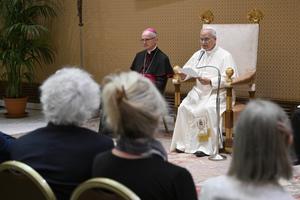
U.S. diocesan bankruptcy proceedings are not subject to direct Vatican oversight, but Rome recently communicated that reparations for the victims of clergy sexual abuse is a high priority of Pope Leo XIV’s pontificate.
The Pontifical Commission for the Protection of Minors focused on that issue in its second annual report, released Oct. 17. “The Church bears a moral and spiritual obligation to heal the deep wounds inflicted from sexual violence perpetrated, enabled, mishandled, or covered up by anyone holding a position of authority in the church,” the report stated.
And on Oct. 20, Pope Leo met with the leadership of Ending Clergy Abuse, an international organization of sexual abuse victims and human rights advocates.
“The Church has a moral responsibility to support survivors and prevent future harm,” Tim Law, ECA co-founder and board member, said following the meeting. “Our goal is not confrontation, but accountability, transparency, and a willingness to walk together toward solutions.”
- Keywords:
- new orleans