Amy Coney Barrett Discusses Charlie Kirk, Motherhood, Originalism at Notre Dame
Speaking at her alma mater, Barrett urged students to model civil discourse while sharing personal insights on family life and judicial philosophy.
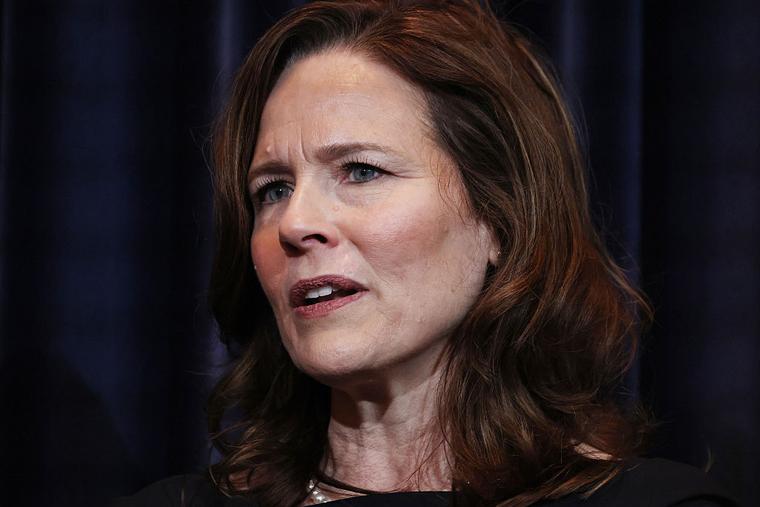
Following the assassination of conservative political activist Charlie Kirk, Supreme Court Justice Amy Coney Barrett’s visit to Notre Dame — scheduled for Sept. 12, just two days after — was in jeopardy. The assassination, Notre Dame Professor Phillip Muñoz wrote on X, was “an attack on all of us who believe in argument and debate, free speech and the clash of ideas.”
But Muñoz, who had organized Justice Barrett’s visit, insisted that it continue as planned, because, he said, “our democracy, our ability to govern ourselves as the American people, will perish if violence silences us.”
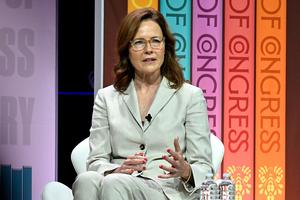
Barrett’s appearance was part of a tour of her newly published book, Listening to the Law. The form of the event was a public conversation between Barrett and Muñoz, who serves as director of Notre Dame’s Center for Citizenship and Constitutional Government (CCCG). Muñoz asked his own questions for about 40 minutes, followed by 20 minutes of audience submissions. The public conversation drew more than 800 attendees to a packed Leighton Concert Hall auditorium in the DeBartolo Performing Arts Center, Notre Dame’s largest event space.
The tone was clouded by Kirk’s death, and Holy Cross Father Robert Dowd, the president of Notre Dame, led the auditorium in prayer to begin the event. He called on the university community to “rededicate ourselves to respectful dialogue across differences, and to rededicate ourselves to being peacemakers and peacebuilders.”
Barrett herself addressed the assassination directly, urging that “we learn to have disagreements in a civil and collegial way, and that is in the DNA here [at Notre Dame]. … I think that you at Notre Dame, and especially you students, can model a different way to be.”
Later in the conversation, Barrett again discussed civil discourse in reference to friendship between justices on the court: “It’s a lot harder to dislike people or to treat them badly when you know them. … You can much more easily debate heatedly with people when you know not to take it personally because you are personally warm to them, when you actually have relationships with them.”

“Give each other space, and I think a little humility on both sides helps too,” she concluded.
The conversation also highlighted the balance between Barrett’s family life and her professional duties. Barrett has seven children, with two children adopted from Haiti and one child with special needs. She is the first mother with school-age children to be confirmed to the Supreme Court.
Muñoz reflected on this fact, saying, “I don’t know if any woman in American history with kids at home has had so much civic responsibility as you.”
He asked, “What’s your advice to … our Notre Dame women who have professional ambitions, but also think they might have a vocation to be a mother?”
“You can pursue both things, but the family piece is always the most important,” Barrett responded. “I’ve always placed my family first, and so I always had a posture that I would be willing to walk away from a career if it was not the best thing for my children for me to keep working.”
Barrett also shared her own experience with adoption, and how she found out that she was pregnant on the same day that the adoption was confirmed. In the moment, she reflected that “the most important legacy I can leave is my children. Both moms and dads should think that way about building their families and their careers, and the children should not take the backseat to career advancement.”
In addition to her family life, Barrett added that Notre Dame and her Catholic faith “shape how I treat other people, and have helped my integrity.” Barrett is one of six Catholic justices currently on the Supreme Court.
Notre Dame senior Rocco Giannotti appreciated Barrett’s discussion of her personal life. “Justice Amy Coney Barrett’s return to Notre Dame underscored the importance of open dialogue and debate for our republic’s durability and success,” Giannotti said.
“Her illumination of the inner workings of the court and insight into her personal life was profoundly inspiring for the next generation of public servants who seek to promote the common good while grounded in obligations to faith and family.”
According to Barrett, she wrote her new book, in part, to promote confidence in the court: “I love the court, and I love the Constitution, and I want to share it with people. I want to invite people in, and I think it’s easier to have confidence in institutions when you understand them and you know what happens in them,” she said.
Another part of the discussion centered around Barrett’s judicial philosophy of originalism, which she defined as an approach to constitutional interpretation that stresses “the text of the Constitution” as law, “consistent with its original public meaning.” She explained, “To understand what the text of the Constitution means, much like to understand what any text means — what or what it communicates — one must understand what it meant to those who lived at the time it was ratified.”
Barrett added that this philosophy sometimes clashes with her own opinions, remarking, “I don’t just look at a situation and then figure out what I think the fairest result would be … drawing from my own wisdom or my own sense of justice. … You really have to learn to put aside your personal preferences and follow the law where it leads.”
Notre Dame senior Ryan Lally reflected on the event: “From explanations of her jurisprudential philosophy to sage advice regarding daunting life decisions, Justice Barrett was able to respond to even the most provocative questions with eloquence, grace and humor. To do so in light of our nation’s recent tragedies demonstrated Justice Barrett’s profound courage, which, as she describes, has been crucial for her and her family during her tenure on the court.”
In addition to the public conversation, Barrett also talked with undergraduate students during lunch and dinner.
Lally added, “The opportunity to meet with Justice Barrett served as a wonderful reminder that underneath the decisions, opinions, and headlines, the Court is, at its heart, a human institution.”
The full conversation can be viewed on YouTube:
- Keywords:
- amy coney barrett
- charlie kirk
- supreme court
- notre dame