Seeing ‘The Odyssey’ Through the Eyes of St. Augustine
COMMENTARY: As Homer’s epic returns to the big screen, Augustine shows why every great journey is ultimately a search for our true home.
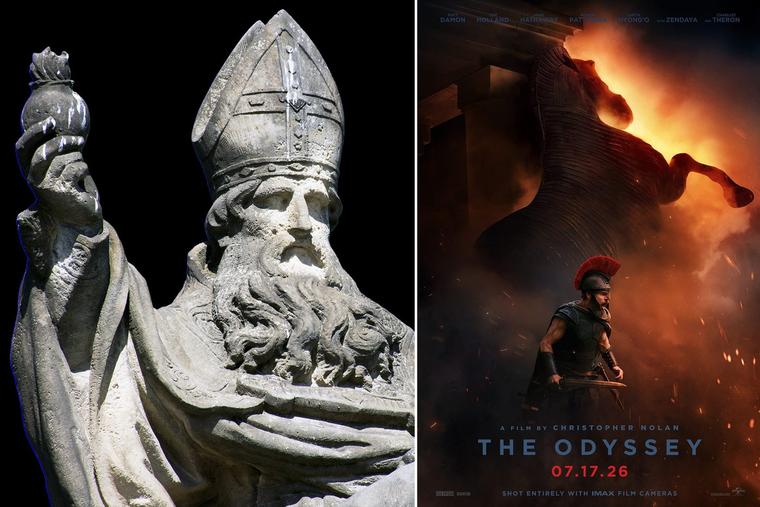
Christopher Nolan’s film The Odyssey is generating enormous excitement. The cast alone promises something epic.
Yet Nolan’s film is only the latest sign of something deeper: Greek mythology is having another cultural moment. Recent years have brought new retellings of Homer’s world, including The Return starring Ralph Fiennes, while actor and writer Stephen Fry has introduced millions of readers to the ancient stories through his bestselling mythological retellings.
I do not share Fry’s atheism, but his work performs a genuine cultural service. He reminds modern audiences that these old stories still possess remarkable power. Greek mythology remains a staple of literature curricula across the English-speaking world. Students still know the names Achilles, Perseus and Medusa, and they continue to debate the virtues and flaws of these figures with surprising enthusiasm. Having served the Church in secondary education for nearly 20 years, I have seen this fascination firsthand.
My own interest began early. As a child, I watched old film adaptations like Jason and the Argonauts and Clash of the Titans. The special effects may look dated now, but those films left a lasting impression. They made the ancient world feel alive and gave the sense that these stories somehow belonged to us — that they were part of an inheritance passed down across generations.
Why do we keep returning to them? The answer is simple: These stories speak to something enduring in the human heart. They dramatize universal experiences of struggle, longing, courage, pride, fate and failure. Again and again, myth presents us with figures who wander in search of home, who labor endlessly without rest, or who pursue truth at terrible personal cost. To see why these stories endure, it is worth lingering with three of the West’s most enduring figures before turning at last to a man who knew these stories well and discovered that they ultimately point beyond themselves.
Odysseus: The Clever Wanderer
First there is Odysseus, king of Ithaca. He is remembered less for brute strength than for his cunning intelligence. It is Odysseus who devises the Trojan Horse, who survives monsters and shipwrecks, who resists temptations and outwits enemies as he struggles to return home after the Trojan War. His journey lasts 10 long years, filled with danger, delay and uncertainty.
Yet his story is not simply a tale of heroic perseverance. It is also a cautionary tale about pride. When Odysseus reveals his name to the defeated Cyclops, his moment of triumph provokes the wrath of Poseidon and prolongs his suffering. His cleverness carries him far, but it also exposes the limits of human ingenuity.
At its heart, the story of Odysseus is a story about longing for home. He desires reunion with his wife Penelope, his son Telemachus, and the order of his kingdom. St. Augustine would later describe lives like this as belonging to what he called the “City of Man” — those lives shaped by earthly goals and human striving, even when those goals are noble. Odysseus ultimately succeeds through perseverance and intelligence, aided and hindered by unpredictable gods. His story resonates because it reflects the dignity of human effort. Yet it also reminds us that the peace we find in this world is never final.
Sisyphus: The Endless Striver
A second mythic figure offers a darker image of the human condition. For attempting to cheat death and outwit the gods, Sisyphus is condemned to push a massive stone uphill for eternity, only to watch it roll back down again. The image has become one of the most recognizable symbols in all of mythology.
The tragedy of Sisyphus is not simply hard work. It is work without hope. His labor has no completion, no rest, and no ultimate purpose. The philosopher Albert Camus famously described Sisyphus as the “absurd hero,” defiantly continuing his task despite its futility. Yet the image feels eerily modern. Many people today live in constant motion (working, striving, optimizing and achieving) yet never arriving anywhere. Life becomes an endless cycle of activity that never truly satisfies.
Sisyphus represents something deeply familiar in the modern world: restless striving without a destination. His punishment mirrors the experience of many who feel caught in a life of constant effort yet find themselves no closer to peace. It is the image of spiritual homelessness.
Oedipus: The Seeker Destroyed
A third mythic figure presents yet another tragic path. Oedipus sets out to save his city from a devastating plague by uncovering the truth behind it. Determined to bring justice, he pursues the investigation relentlessly, refusing to stop until the mystery is solved. Yet the truth he uncovers proves unbearable. In seeking the cause of the city’s suffering, he discovers that he himself is responsible.
Despite every effort to escape the prophecy that foretold his fate, Oedipus has fulfilled it. In one of the most haunting scenes in Greek tragedy, he blinds himself in despair. The eyes that once searched so fiercely for answers become symbols of the limits of human vision.
Oedipus seeks truth, but the truth destroys him. His story raises a haunting question that still resonates today: Is knowledge enough? St. Augustine would later warn that human intelligence, no matter how brilliant, cannot by itself heal the deepest wounds of the human heart. Oedipus’s tragedy suggests the same lesson. Knowledge alone cannot save.
St. Augustine: The Restless Pilgrim
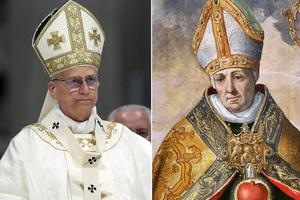
St. Augustine of Hippo knew these stories well. Trained in the classical tradition, he admired the literature of the ancient world and absorbed its philosophical questions. Yet Augustine also recognized something deeper within himself — the same restless longing that drives so many mythic heroes.
His Confessions read less like a heroic epic than like an unflinchingly honest spiritual memoir. Augustine recounts his youthful ambition, his search for pleasure, his intellectual pride, and his deep hunger for meaning. Like Odysseus, he wanders in search of home. Like Sisyphus, he strives endlessly for satisfaction. Like Oedipus, he pursues truth with relentless intensity.
Yet Augustine’s journey leads somewhere different. “Our heart is restless until it rests in You,” he famously writes. Unlike Odysseus, Augustine does not find his final home in this world. Unlike Sisyphus, he does not labor endlessly beneath a burden he cannot escape. Unlike Oedipus, he is not destroyed by the truth he discovers.
Instead, Augustine encounters something the myths can only hint at: grace. His journey is not from ignorance to knowledge but from self-reliance to surrender. Where myth celebrates heroic striving, Augustine discovers humility. Where myth often ends in tragedy or exhaustion, Augustine points toward conversion and redemption. In his story, the ancient odyssey becomes a pilgrimage, fate becomes providence, and the search for meaning becomes an encounter with the living God.
Why This Matters Now
Hollywood’s return to Greek mythology is no accident. These stories are visually spectacular, morally serious and emotionally compelling. They allow modern audiences to explore suffering, heroism and destiny without demanding belief or conversion. Yet this is also their limitation. Myth can awaken longing, but it cannot satisfy it. It can pose profound questions about home, fate, suffering and meaning, but it cannot finally answer them.
This is where Augustine (and ultimately Jesus Christ) enters the picture. Like St. Paul at the Areopagus, Christians can recognize that these ancient stories point toward genuine human questions. They gesture toward truths they cannot fully grasp. Christianity does not erase those questions; it fulfills them. It offers not just a compelling story but communion, not just meaning but a Savior.
For families and Catholic educators, the renewed popularity of myth presents a genuine opportunity. These stories awaken something deep in the human heart: a longing for home, for meaning, for truth. They raise questions about suffering, sacrifice and destiny that every generation must eventually face.
But myth can only take us so far. It can stir the longing, but it cannot fulfill it. Every myth ends with the hero still searching. Augustine’s story ends differently. His restless search finally leads him home, where we are invited to follow.
- Keywords:
- st. augustine
- classic literature
- movies

Brendan Towell Brendan Towell is the Director of Spirituality and Mission for Secondary Schools and Schools of Special Education in the Archdiocese of Philadelphia, where he lives with his family. His interests include Augustinian Studies, Ressourcement Theology and the theological legacy of Pope Benedict XVI. His website is BrendanTowell.com.