Jimmy Lai’s Daughter Speaks Out on EWTN: ‘Our Lady Is Protecting Him’
‘The government has no case. All they’ve proven is that my father is a good man, a man who loves God, a man who loves freedom, who loves truth, and loves his family.’
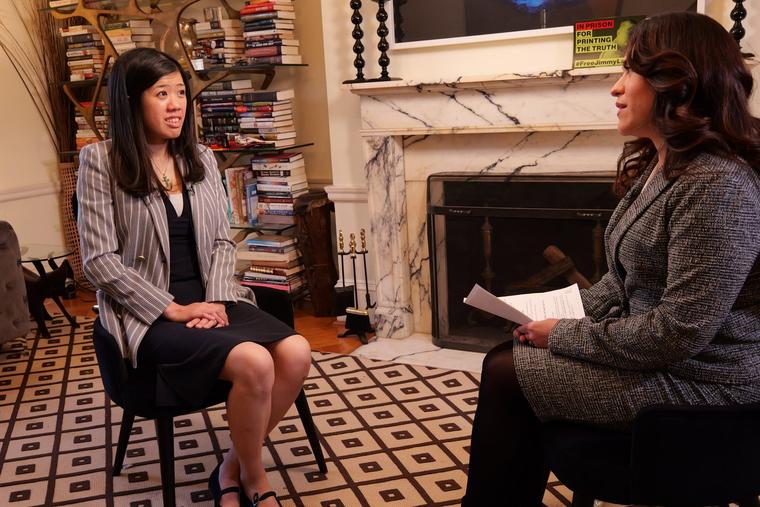
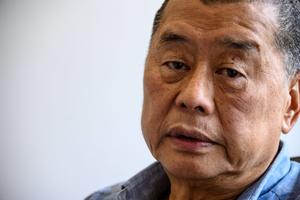
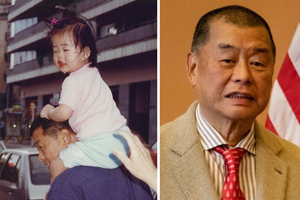
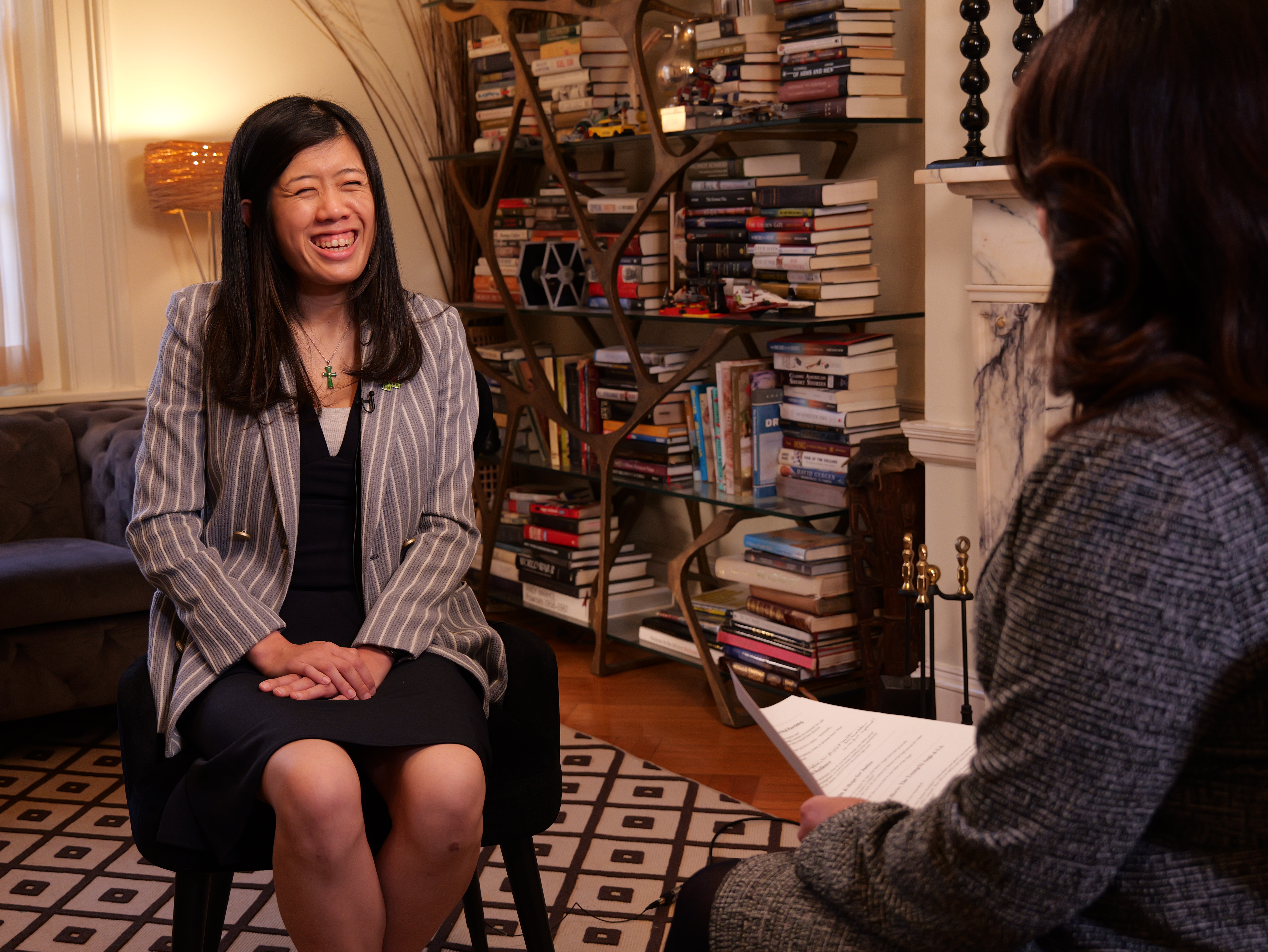
Editor’s Note: EWTN News President and COO Montse Alvarado conducted this interview with Claire Lai, the daughter of Jimmy Lai, a leading free-speech voice and Catholic who is currently imprisoned in Hong Kong on national security charges. The interview aired on EWTN News Nightly on Dec. 8. The transcript, in which Claire highlights the suffering and strong faith of Jimmy, as well as her brief visit with Pope Leo XIV, is below. Watch the interview via the link at the end of the transcript.
Claire, this is the first time that you’re coming forward to talk about your father’s imprisonment, to talk about his case. Why did you choose this moment? Why now?
Well, we are coming to the end of his trial. While we’re still waiting for a verdict, five years after he was charged, he is turning 78. We have waited a very, very long time for his cases to be resolved. And we do not believe that they will be through the domestic system. And our only hope is outside. And so that’s why I’m here now.
You have studied law, and you have been involved in your father’s case, witnessing in the courtroom with him, watching these proceedings. How has your legal training shaped the way that you understand the charges against him and the broader implications of his case?
So, as someone who grew up admiring the Hong Kong legal system, because it was a promising legal system, it has been heartbreaking to see the rule of law break down, but even more so to see my father and his cases at the helm of it. It feels like most of the bites taken out of the legal system have happened to him first. I mean, there’s an equal amount of outrage, but also, it’s a privilege to be able to be there and witness it as closely as I have.
What makes you a little bit different as an element within your family? Your family is not really known as one that worries. Your mom is a really strong staple of the faith. For those that know her, they admire her; they admire her devotion and tenacity and confidence. What makes you a little different, a kind of different element in this story?
Actually, my family used to say that because Mom and Dad, they’re not really worriers. That’s why I am very focused on details and I worry about the little things. But actually, in the last few years, it has helped me quite a bit. I noticed the little things like my father’s skin drying or his nails falling off or him finishing a book ... and little things like that or how long it has been since he last got Communion. So, yes, it’s a very annoying trait for other people, but it’s also been somewhat helpful in the last few years.
Your father turns 78 on Dec. 8. That’s a really important date for those of us in the Church, the feast of the Immaculate Conception. Wonderful, wonderful milestone in the beginning of the liturgical calendar. Given his deep devotion to the Blessed Mother, how does this convergence of date signal what the faith means to you and your family?
My father converted one year after I was born. Really, the only memories I have are of growing up in a very loving Catholic family. My father, he had quite an unconventional childhood. He came to Hong Kong when he was 12. He had nothing to his name, nothing in his pockets. But he was full of optimism, and he had a yearning for freedom. It was only later on that he understood that there was something, a higher force, guiding him all along, which was why he was able to go from child laborer to a successful entrepreneur and do so almost without fear. And it was later on that he understood that to be God. Actually, my father, he converted the year of the handover. So, of course, I was extremely young, but it was a time when people were filled with quite a bit of doubt [due to] the handover of Hong Kong from the U.K. back to China. People were filled with doubt, and people were filled with a certain amount of fear. And I think, as Our Lady has taught us, there is nothing that conquers doubt and fear except for the love of God.
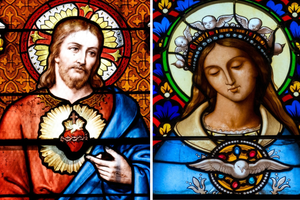
And that was a time when he was ready to receive it. And my father, he draws the Crucifixion and the Blessed Mother at the Annunciation, when she said “Yes” to archangel Gabriel. He started drawing it five years ago. And like our Blessed Mother, he is submitting himself to the will of Our Lord. Just like Our Lady accompanied Our Lord in his suffering, he wants to get closer to Our Lord in his own suffering and be able to devote it to him. Actually, right around the time he was banned from sending those drawings was the time when he started drawing the Pietà. Of course, it’s a much more complex drawing, so it took a bit of time. I mean, even Our Lady: He once told me of the time when he sat there drawing for eight to nine hours. But the drawing came out, and she looked too strict or too stern, so he wasn’t happy with it. Actually, one of the first books he asked for me to enter [for him to read] was Fulton Sheen’s World’s First Love. I think that demonstrates his reverence to Our Lady.
How have you seen his faith change over time, from the beginning when you first saw him enter in, where he had varying conditions of access to both reading as well as the ability to draw to where he is today with his physical condition?
I think there isn’t anything quite as much as suffering that opens your heart to God, you know, God’s love. We are so grateful that Our Lord has accompanied my father. He wakes up around midnight every night to pray. And before the crack of dawn, he would read the Gospel. At first, he would ask the guards if they could turn on the light so that he could read. For about the first six months, they said “Yes.” Afterwards, they just always said “No.” And so instead, he leans against the door. He has a window that’s maybe about this size [holds up hands in small shape], and he gets a bit of light from the corridor, and he uses that to make out the words. Obviously, he has his failing eyesight and his waist pains and his back pains; they’re not great for that, but it brings him a great amount of joy. If anything, his incarceration has just deepened his faith. Actually, I wanted to mention a few episodes. There was one occasion when he was in the showers. Because of his waist pain, he wasn’t able to get up. Even some of the guards came over and tried to help him up because no one wants someone just stuck there in the shower.
And it was right around the time that we were trying to enter the rosary. We tried on multiple attempts. Each attempt failed [Montse: To bring him a rosary?] to bring him a rosary. And he couldn’t get up. And so he pretended as though he had a rosary in his hand and prayed to the Blessed Mother. And then he was able to get up without pain. ... When you’re a daughter or a family member, and you hear stories like that, you wish you could yourself physically pull him up when he is in pain like that. But you find such great comfort in the fact that Our Lady is protecting him. We have typhoon seasons in Hong Kong. September is typhoon season, and the cells get wet, and almost everything in there gets wet. Once that happened, then the first thing he checked was his Bible, and it was the one thing that remained dry. We’re very grateful that Our Lord and Our Lady continue to watch over him.
Let’s talk about those prison conditions because there’s the spiritual aspect and then the physical aspect. He’s been denied basic spiritual supports, intermittent, if any, access to the Eucharist, as you mentioned; no rosary, having the inability to read because he doesn’t have light. How has the spiritual part affected him? How has he been able to continue to keep the faith under such severe restrictions?
As I mentioned, he continues to wake up in the middle of the night to pray. He continues to read the Gospel. He’s been denied Holy Communion for over two years and got it only very, very intermittently this year. It’s something that cost them nothing. It cost them nothing for him to get it, and it cost them nothing for him to get the rosary, and it cost them nothing to turn on the light so that he can read the Gospel. I mean, the lights in the corridor are already on. It’s just to prevent him from reading the Gospel. He draws a lot. Even after he was banned from sending them out, he continues to draw, and he continues to practice his drawing. I mean, for him, it’s a way to reflect the grace and mercy of Our Lord and the virtues of Our Lady. And before he was banned from doing that [sending out his drawings], he was actually using a lot of his friends; a lot of political prisoners who aren’t of the faith, also went to prison. I haven’t spoken to their loved ones, so I won’t mention the names. ... I still remember. It was May 2021, the first time. The way Dad described it was, it’s like a loop of grace. He said that, you know, almost 30 years ago, his life was enlightened because of God’s love and his mercy. It’s like he has to pass it on. On one side, he would have one of those drawings. On the other, he would have instructions, like to pray and so on, and answer any questions they have about the faith. He would send it to his friends because he knew that they were suffering, too. Some of them did convert by the end of the year. For him, it was also used as a way to evangelize people. I think that’s one of the big reasons why he was banned from joining them afterwards. Now, he’s practicing [drawing] the Pietà, so I hope we all get to see that soon.
Hopefully, they’ll actually let him send them out.
Yeah, or, hopefully, he will be out to show us.
When you think about the physical reality for him, you mentioned the typhoons. There are other physical restrictions: no sunlight, no access to fresh air, extreme heat. Tell us about what those conditions have been like for him.
The conditions he’s kept in have just gotten worse over time. They aren’t a natural byproduct of prison. In the prison cell, there is a window that leads outside that should give you access to sunlight. His is deliberately blocked so that he doesn’t have access. Usually, when you exercise, it’s in a court where you have access to sunlight. His is deliberately blocked so that he doesn’t. It’s even little things, because, at first, it was fellow prisoners who were in charge of serving him his meals. When one finished serving his sentence, he wrote to the next one to say, “Jimmy likes curry sauce. So on days where we have curry, please serve him extra curry sauce.” And it was intercepted by the security. And instead, they stopped serving him curry sauce altogether. It’s little things, little things like that. And because he’s kept in solitary, when there’s been a COVID variant called the Omicron, he was moved to a cell that was 40% smaller. And in summer, I mean, in summer, the heat can get up to 44 degrees Celsius. And that’s like 111 degrees Fahrenheit. I mean, to say that it’s sweltering is a massive understatement.
Everything gets wet in the cell, without any kind of air, without any kind of fresh air. ... He gets heat rashes all over his body, and they last until the middle of autumn. I mean, it is outrageous. It is outrageous, and it is torturous. And just a lot of it is just not a natural byproduct of prison, and he should not be subject to it.
How has his health changed over time? Jimmy, when he first walked in five years ago, was a very different man from who he is today. And what you have seen? How has his health deteriorated over the last five years?
When I talk about his health, usually I separate between the visible signs and the less visible signs of deterioration. Of course, the visible sign says, of course, you know, he’s lost a very significant amount of weight. In less than a year, he lost 10 kilos [22 pounds]. I mean, that was the most recent year, after already having lost a significant amount of weight the last few years. His nails are rotting. They’re turning purplish, greenish gray, and sometimes falling off. He has infections that last for months in spite of antibiotics. His limbs get swollen, very swollen and red, and they’re agonizingly painful. My dad is not someone who complains. He doesn’t even make faces. You know that when he does, it’s very painful. He has waist pain. Sometimes he can’t stand. There are times when, even from a distance, you can tell that he’s pale and he’s shivering. His skin is drying. We enter him lotion every single month, but it’s not helping.
Then there [are] the less visible signs that he’s obviously [sick]. He’s diabetic, and he’s had heart issues. Heart issues which ... he had a perfectly healthy heart before he went to prison. The way he described them was that every few days he would have heart palpitations, and they would be disabling. He wouldn’t be able to do anything.
You would hope that they send him to a specialist, but the memo we got said that they sent him to an ear, nose and throat specialist, which isn’t very useful for a heart issue. And they even got the prison wrong. My father has been in Lai Chi Kok for the last two and a half years. And they said that he went to see a specialist in Stanley, which he hasn’t been in since he started having those heart issues. ... And obviously, he has his failing eyesight, and he has his failing hearing, which in some of the medical, very redacted medical reports we get, they blame it on his days at the factory almost 65 years ago, which ... yes, he lost some of his hearing then, but he underwent significant hearing loss since his time in prison. And that cannot be blamed on things that happened over half a century ago.
Let’s talk about your dad’s case. How would you describe the case that has been laid by the government against him?
The government has no case. All they’ve proven is that my father is a good man, a man who loves God, a man who loves freedom, who loves truth, and loves his family. In this case, they basically attacked him for journalism, for some of his articles where he discouraged people from engaging in violence, encouraged people to use peaceful means to pursue universal suffrage. He was even attacked for basically sticking to his original mission, which was to give information to people who yearned for it.
In one of his opinion pieces of Dr. Li Wenliang — the doctor who, six years ago, tried to sound the alarm on COVID, and was prevented from doing so, and passed away from COVID — the bench basically asked him if he saw Dr. Li himself pass away and sound the alarm. And the prosecution made it sound as though Dr. Li was a completely made-up fictional character that came out of my father’s imagination.
Another charge is basically based on them profiling my father’s acquaintances and friends. And even people he didn’t know who just had different last names to him were picked out and profiled.
That is hardly becoming of a place like Hong Kong, which is meant to be a world financial center, where every day we interact with people with different surnames to us. And that should not form a basis of a criminal charge.
It doesn’t seem that there will be justice for your father within the legal system, but there might be something that comes from international advocacy. You recently had a short visit, pastoral visit with Pope Leo XIV. What can you tell us about that?
It was such a privilege and a blessing to have an audience with our Holy Father. We continue to support our Holy Father in our prayers, and we are extremely, extremely grateful that he was willing to see us and pray for us.
Did he say that? Did he share that he would be supporting you with his prayers?
[Smiles.] He did.
Claire, your father is a full British citizen. He’s a citizen of no other country. Where are the Brits in the negotiations to get him released?
I haven’t been as involved with the international advocacy until now. But I think our team has been very clear that my father should be included in any further discussion with the Chinese government.
My father is in jail. He is in prison for basically standing in defense for the freedoms he first came to know as a child in Hong Kong when it was still a British embassy [colony] and for basically hoping that they would keep the promise made during the Sino-British Joint Declaration, sovereign to sovereign. And that is how this situation can be solved, sovereign to sovereign.
There’s another sovereign who is in play here, which is Trump and his negotiations and conversations with Xi Jinping. The last time that he met with him at APAC, through EWTN’s reporting, we learned that he really did have a conversation about your father and mentioned his name. Do you have any hope that will bear fruit for your father’s release?
I mean, we are so extremely grateful to President Trump and his administration. I mean, they have a long record, a proven record of freeing the unjustly detained, and we hope that my father will follow soon. We are also very, very grateful for the House and Senate for the support they have shown to my father. There have been no efforts spared and no kindness spared in many corners. In many corners, much of that generosity has extended to our family whenever we have, myself and my brother, whenever we have met with certain members. We are extremely grateful.
We are also very, very grateful for members of the public. My father is sustained by your prayers, and so was I when I was in Hong Kong, and I continue to be. I hope that in your charity you do continue to pray for my father and spread the word so that he isn’t forgotten.
I’m sure that every Catholic who knows your father’s name prays for him. I would imagine that they would never want to be in a situation where their government is persecuting them for sharing the truth, which is very much a value of the Eternal Word Television Network. How do you think your father wants to be remembered as a businessman, as a journalist, a Catholic, a father, a fighter for freedom?
When he reflected on his earlier years, he said that even before he converted and before he opened his heart to the love of God, he was always guided by him, and even before he knew it. And I think that’s how he wants to be remembered: as a faithful servant of Our Lord.
As you share these stories and these images publicly for the first time, you speak of your father’s devotion from a daughter’s perspective. Your brother obviously has gone out and given a lot of interviews, but this is your first time. What is your personal message to the Chinese government?
I would say to do the only just ... to do the only just thing in this situation and to do the only honorable thing here, which is to release a 78-year-old man, my father, Jimmy Lai, against whom no case has been made — a man who represents everything good about Hong Kong, which is the financial crown jewel of China; you know, entrepreneurship, ingenuity, hard work. Don’t let him die a martyr behind bars. Don’t let him die a martyr in these conditions, in this health. It is a stain on your history that you will never be able to wipe off.
Well, Claire, I hope they hear your message loud and clear. Thank you for this interview.
Thank you for having me.
WATCH ON EWTN
- Keywords:
- jimmy lai