Gen Z Vocations: Connecting With a Generation That is Diverse, Devout — and Deeply Online
With the vocations landscape in flux, Father Ryan Rojo shares how the Church can tap in to the ‘Leo effect,’ online traditionalism, and shifting demographics.
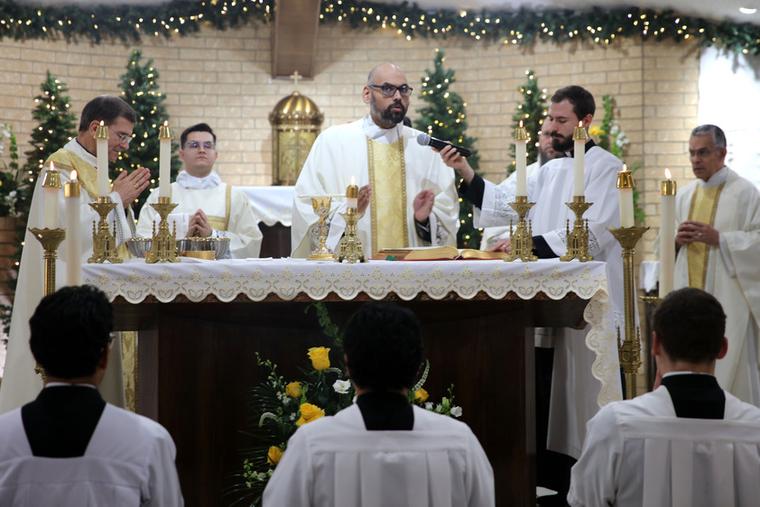
The Catholic Church in the United States is in the midst of seismic shifts — and so are the factors effecting vocations to the priesthood.
Vocations directors today work with a pool of potential future priests that is characterized by a unique combination of racial diversity, heavy online presence, and interest in traditional aspects of the Church’s liturgy and devotional life.
And judging by the most recent numbers, the Church has yet to crack the code. According to the Center for Applied Research in the Apostolate’s fall 2025 study, enrollment at major seminaries in the U.S. was down 8% last year, confirming a long-term downward trend of the number of men preparing for the priesthood.
But if anyone has insights into how to effectively respond to the shifting landscape, it’s likely Father Ryan Rojo.
Not only has Father Rojo, the Diocese of San Angelo’s vocations director, doubled the number of seminarians from six to 12 during his five years on the job in West Texas. But as a traditional liturgy-loving Hispanic American and digital native, the 37-year-old priest shares many of the same characteristics as the men the Church is increasingly trying to reach.
In part because of this, Father Rojo was recently elected by his peers to the executive board of the National Conference of Diocesan Vocations Directors, a reflection of what he described as the “evolving cultural and racial dynamics in the Church.”
Father Rojo spoke to the Register at length about the challenges of vocation work in the U.S. today. His remarks have been edited for length and clarity, with a focus on Father Rojo’s comments on addressing the “Hispanic vocations gap,” a possible “Leo effect” on seminary numbers, and how to work with potential seminarians who get most of their Catholic formation, including exposure to traditional practices, via the algorithm of social media.
Father Rojo, the recent CARA report indicated that vocation numbers are still continuing to decline. What’s your reaction to the report, and what should the Church’s response be?
I don’t have much to say about CARA’s report, since the drop has not been my experience in West Texas. I would be curious how this varies by region since the narrative about the South is usually always more optimistic.
I think the Church’s response should be what is tried and true, avoiding the temptation to wed ourselves to any secular or worldly movement. A firm commitment to our tradition is what every generation appreciates and values, since the shifting sands of the world have left entire groups of people wanting for something more. If Catholicism remains unapologetically true to itself, then it will weather these drops and trends with greater ease.
You mentioned success in San Angelo, and that includes success with men from the Hispanic community: About 80% of your current seminarian cohort is Hispanic. As you know, Hispanics make up about 40% of Catholics in the U.S., but less than 20% of recently ordained ministers. This disparity is a major riddle for a lot of bishops and vocations directors. What insights do you have that might be applicable elsewhere?
I don’t know what the secret sauce is. But I have a few ideas.
The specifically Hispanic piece is an intentional outreach to their families, their parents especially. Because I think it goes without saying, the Latino-Hispanic situation is familial. If you can get Mom, Dad, Grandma and the extended family to accept the idea of their son becoming a priest, that is in turn going to help with his discernment and, God willing, a decision for seminary.
I would also avoid the temptation to put all Hispanics in a box. If you have a large Hispanic demographic in your diocese, and they’re not responding, you have to understand them better. Parse it out a bit more. For instance, you have to distinguish between recent arrivals and second-, third- and fourth-generation Hispanic Americans. A lot of the guys I work with might speak Spanish, but they’ve assimilated pretty well into American culture. They’re living an “English” worldview. That’s interesting, because new immigrants tend to have reluctance about a religious vocation. I’ve had a lot more success in accompanying and discipling guys who still have a Hispanic cultural experience, but are second- or third-generation in the U.S.
Another piece to point out, and I don’t think there’s anything insensitive about saying this, is that it’s really helpful [if you have a potential vocation] to see priests and religious who look like you, who have similar tastes in food, similar culture. They know the music; they understand the dynamic of having a Hispanic mother or a Hispanic father. I think as we continue to ordain guys who are Hispanic, that’s going to continue to have a very positive effect in the culture of vocations in our dioceses.
But how do you think dioceses that have thriving Latino communities but not necessarily many Hispanic priests can get over this hump?
Not to sound cliché, but some of the best missionaries and evangelists have found themselves in a culture or a world that’s not their own. And they’ve had a lot of great successes.
Ministry involves taking a risk. If a priest finds himself in a cultural situation that’s not his own, I can make an effort to not just speak their language, but also understand their culture, their background, as much as possible. I have found that Spanish-speaking communities are some of the most receptive to priests from other backgrounds. In my experience, they are always just very appreciative of someone who is trying.
You’re a millennial. What do you see among Gen Z guys who are open to a vocation? What are they looking for?
Gen Zers, like millennials, are digital natives. It’s not uncommon for me to meet a guy who’s interested in seminary who says, “Everything I know about Catholicism, I learned online.” The reality is that the parish is not the locus where a lot of guys are receiving formation. They’re receiving formation from social-media figures like Bishop Robert Barron and Father Mike Schmitz.
What’s interesting is that the minute these guys start to show an interest in their faith online, the algorithm is doing the work for them. It’s populating their feeds with Catholic content and giving them a wider experience of Catholicism. For instance, I had a guy from a predominantly Hispanic parish, where a Spanish-language guitar Mass is most common, asking me about the traditional Latin Mass (TLM).
As a vocation director, I don’t know if guys being formed online is a good thing or a bad thing. Often, it’s a mixed bag. And some vocations directors might get spooked by it. But I think we need to accept it for what it is, and we need to pivot accordingly. It’s my job meet a guy where he’s at and to help him understand these different things he’s exposed to online in the greater narrative of the Church.
Regarding the interest in traditional devotion that young men drawn to the priesthood seem to be experiencing, how do you help them think about it in terms of being prepared to serve as pastors?
I think that’s the value of the propaedeutic year [a new, non-academic year of formation at the start of seminary]: getting these guys into our parishes and our apostolates to see the lived reality on the ground of our diocese. It might not be the attractive Instagram reel of the TLM, but this is the lived faith of God’s people in West Texas. It’s different than what you’ve seen online, but it’s born a lot of fruit.
At the same time, I’m excited that my guys are listening to Bishop Barron — and Father Schmitz’s Bible in a Year — because this is great stuff. And it’s also what our people in the pews are consuming, by the way. So that can be a point of connection and a way to relate to God’s people.
What do you make of the fact that it’s the liturgy in particular that seems to be drawing men to think about the priesthood?
The liturgy speaks to the masculine consciousness. Think about the things that men traditionally pursue: the military or the seminary. What these two things have in common is structure and discipline. And a lot of that is manifest in the experience of the Mass. It looks a certain way; it needs to operate a certain way.
My seminarians are interested in doing the liturgy and doing it well. They get excited about things like incense, nice vestments and nice chalices — not for the sake of things, but because they recognize that these signs and symbols can communicate the depths of the mysteries of God to his people. They might not use that language, but they intuit it.
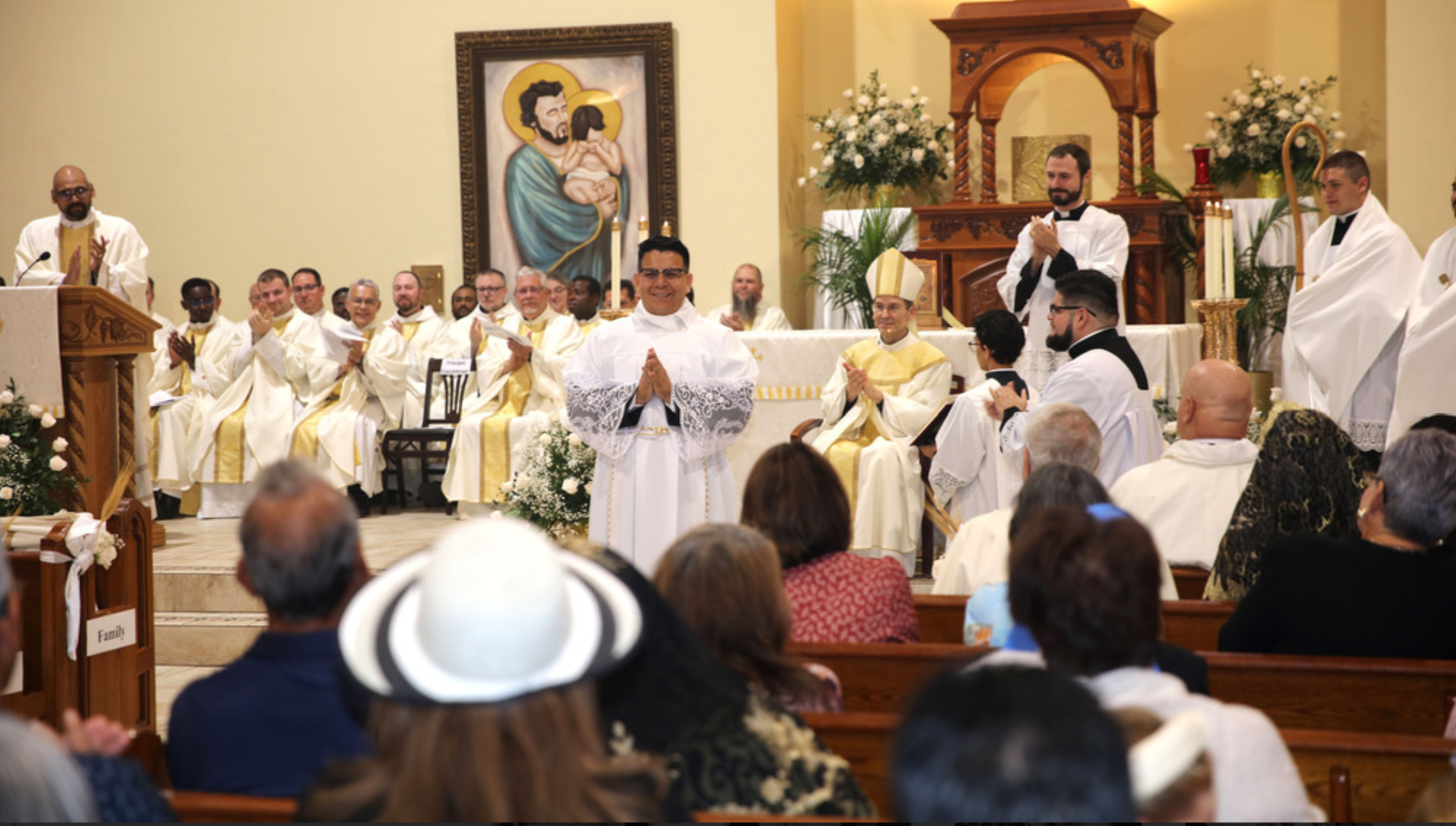
There might be a temptation in some spheres of the Church to say, “Well, it’s just a fascination with ‘what was.’” But that wasn’t my experience. At Conception Seminary College, we were with Benedictine monks, and they introduced us to things like the entrance antiphon at Mass. I remember thinking, “Why don’t we do this more often? God’s people could get a lot out of this.” For me personally, it was always grounded in, “I want other people to experience this.”
Now, I think a guy has to learn pastoral prudence. Is a community of faith that he’s working with really ready to receive that at this point? I think that’s always an open question, and I hope that nine years of seminary formation help our guys navigate those realities well. I hope that guys are appropriately discerning which signs and symbols are going to be particularly meaningful for the experience of the community of faith that they’re in and called to serve.
There can also be this dynamic of “We didn’t get this [liturgical tradition]!” in our upbringing. But I don’t think there are any bad players in why we didn’t get this. Pastors were just formed in a certain way. But seminary systems pivoted at a certain point, right? Over the last 10, 15 or even 20 years, you have a generation of clergy that are a consequence of this pivot. They’re not reading Rahner; they’re reading Ratzinger. That’s going to have a real effect on guys’ perspective. What do we do with that?
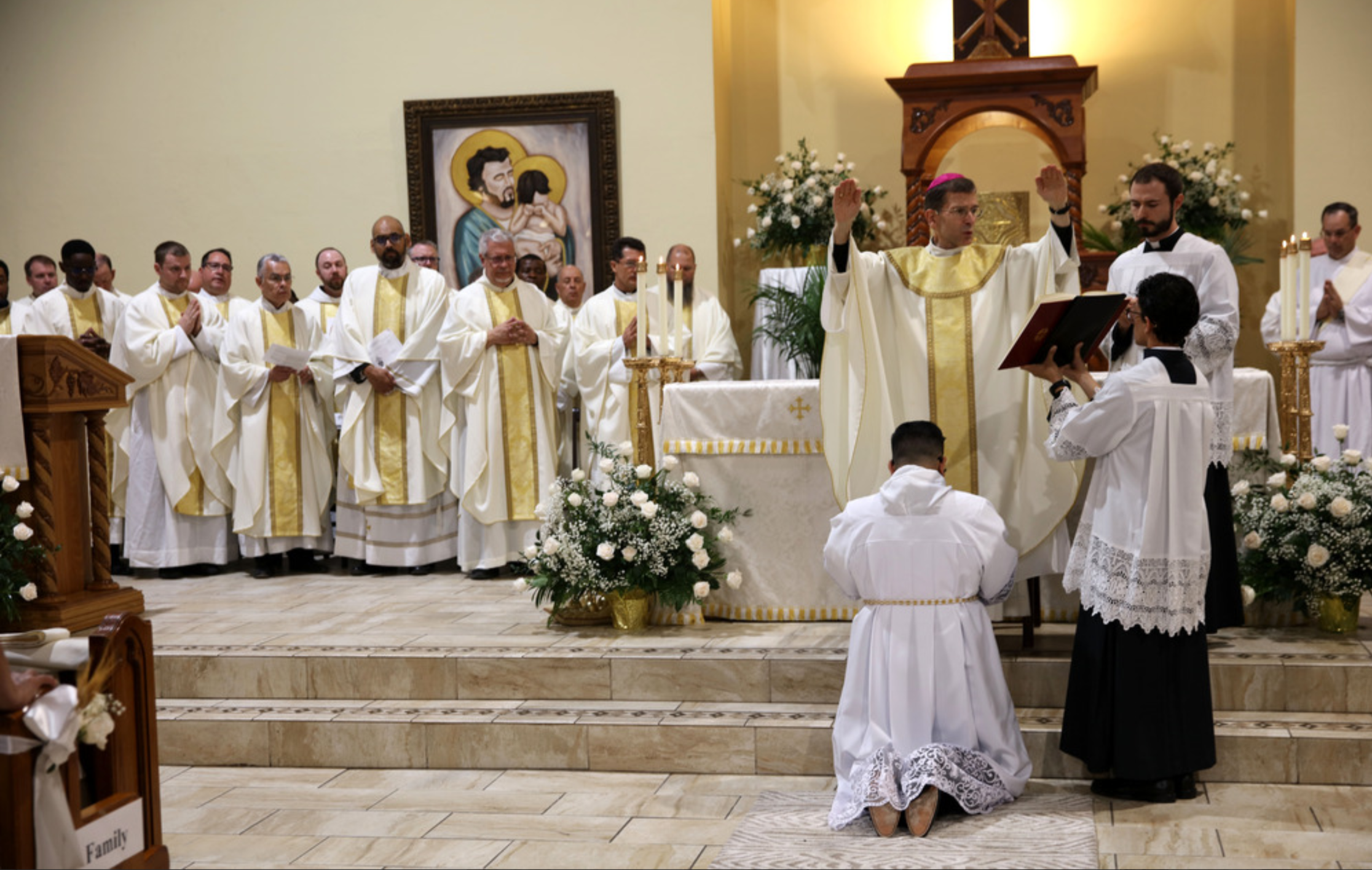
Speaking of how the seminary paradigm can shift at different times, we now have our first American Pope, Leo XIV. How do you think that will impact vocations in the U.S.?
You’re going to see Pope Leo on every single vocation poster around the country. He’s going to be front and center because we want to celebrate the fact that one of our own who made a decision for the priesthood is now serving as the successor of St. Peter. That’s pretty awesome.
I’m hopeful that there will be a “Leo effect” on vocations. He’s been in office now for about 150 days, and I think that the positive signaling he’s been doing is going to speak to this generation of Catholics who, again, are being formed online. I don’t want to get caught up in polemics, but Pope Leo comes out on St. Peter’s Basilica wearing the mozzetta and the stole. He seems to embrace traditional aspects of Catholicism. He’s singing the Mass.
These are the signs and symbols that I think my generation of clergy have really just come to appreciate and love. And so I think that as Pope Leo continues to embrace a certain liturgical commitment, that’s going to be particularly meaningful for vocations.
Father Rojo, it was a simple invitation from a religious sister teaching at your middle school that prompted you to consider a vocation. With that spirit in mind, what would you say to a young man out there who might be thinking about the priesthood?
I would say, “Stay in prayer.” I consider it a red flag if a guy is interested in the priesthood and he’s not praying. Some level of daily Mass, Eucharistic adoration — those things are definitely tried and true. I would also encourage guys to get a good spiritual director.
And then I would say, “Take a risk.” I think a lot of the time, guys just want to discern from the comfort of their bedroom. But their vocation directors, meanwhile, are just wishing that a guy would respond to the invitation to come to an event. It could be scary to put down your cellphone and get out there and meet people. But be on the lookout for those kinds of opportunities.
I think visiting a seminary is particularly helpful because you might imagine that it’s this place where guys are just praying all day, or are always serious. But when guys go to the seminary, I think they’re oftentimes surprised by the fact that the men there are just normal guys who have joys and sorrows like anyone else. Yes, they are striving for a common goal and are living a life of wholeness, but they are really just trying to pursue God’s will for their life. And while we say that there’s no “silver bullet” in vocations ministry, there’s really nothing quite like visiting the seminary to put flesh and bones on guys’ discernment.
- Keywords:
- priestly vocations
- praying for vocations
- gen z