Jubilee of Youth: How Can Gen Z Build Up the Church?
The Jubilee of Youth, which runs through Aug. 3, is an opportunity for the Church to connect with a generation that has a unique set of challenges and aspirations.
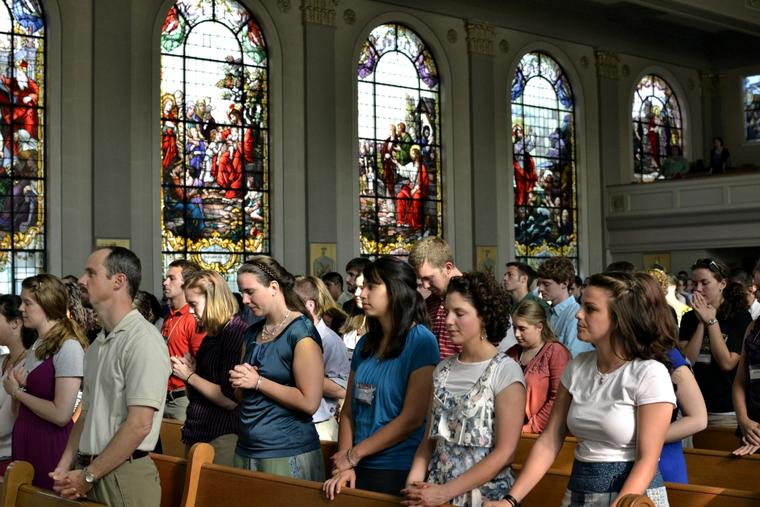
Thousands of young people from the U.S. and all over the world are converging on Rome this week for the Jubilee of Youth, a multiday celebration of faith, hope and joyful witness especially geared for those ages 18 to 35.
For those participating, it’s a once-in-a-lifetime chance to forge new friendships and experience the Catholic faith in a special way.
“I’m excited to see young people from all different parts of the world on fire for their faith,” Hillsdale College student and Jubilee of Hope pilgrim Moira Gleason, 20, of Charlotte, North Carolina, told the Register.
“There’s something powerful about being in the place where saints have walked,” added Emmanuel Varela, 20, a student at St. Mary’s University in San Antonio, who is attending the Jubilee of Youth as a member of the Knights of Columbus’ college advisory board. Seeing the “universality of the Church up close” is one of the things he’s most looking forward to, he said.
The Jubilee of Youth, which runs from July 28 to Aug. 3, is an opportunity for the Church, as well, to connect with a generation that has a unique set of challenges and aspirations.
“Gathering young people in the heart of the Church and seeking to show them the riches of our faith, the beauty of what we believe, is a chance for the Church to remind them that not only do they matter, but the way they are seeking answers. And truth is something the Church deeply cares about and wants to help them with,” Catholic radio host, speaker and podcaster Katie Prejean McGrady, of Louisiana, told the Register.
The Jubilee of Youth is not only an occasion for the Church to reach out to young people, however. It’s also an opportune moment to take stock of what members of “Gen Z” (loosely defined as those born between 1997 and 2012) can offer the Church.
In speaking with Gen Zers and those who work closely with them, what emerges is a picture of a generation that is creative, digitally astute, multicultural and socially aware.
Lucia Martinez, 21, another student at St. Mary’s in San Antonio and member of the campus’ Marianist Lay Community, who is also attending the Jubilee of Youth, believes that members of her generation have “the capability to provide a joyful and creative approach to the faith” that breaks away from the “we’ve-always-done-it-this way” mindset.
“Sometimes the old way of doing things hasn’t remained the best mode of teaching and evangelizing,” said Martinez, who works in the San Antonio development office of the Salesian Sisters of St. John Bosco. “Young people are well-equipped to adapt to our changing world and can help older generations also adapt.”
A Talent for Digital Community-Building
Gen Z is coming of age in a post-Christian world marked by cultural and political upheaval and rapid technological change. In response to these challenges, young people have developed an aversion to ideology and a knack for navigating polarization, bringing a verve, energy and outlook on life that is justice-oriented, hungers for beauty and seeks truth in a manner that doesn’t settle for trite answers, propaganda or the shallowness that social media can foster.
These traits come to life most vividly in how Gen Z evangelizes — often online. A growing cohort of Catholic creators are translating the faith into seconds-long reels, or memes packed with humor, conveying cultural commentary.
Carlo Acutis, set to become the first millennial saint this September, hosted a Eucharistic ministry online and is potent inspiration for young lay influencers.
“Gen Z’s curiosity, their desire to both consume and create content, and their growing up at a time when it is ridiculously easy to access nearly anything at any moment presents the Church a unique opportunity to engage with a generation of young people who are gifted, open and hopeful,” McGrady observed.
As Marina Frattaroli, 27, a Catholic convert from Protestantism living in New York City, put it, “We’re used to putting our worldview on our Insta story; because of this, Gen Zers are really great digital evangelists.”
At the same time, zeal combined with the digital world’s lack of guardrails can sometimes lead to fostering radical views. This calls for mentorship to guide this generation toward balanced, faithful action. Also, digital connectivity can’t replace real connection. Gen Z craves authentic community — and this must go beyond the walls of the Church.
“We’re very comfortable behind our internet accounts,” said Frattaroli. “It’s a constant temptation to withdraw. We have to be more intentional than prior generations.”
A Need to Feel Connected
Gen Z’s formative years have been marked by rapid change and upheaval and very little stability — from the major societal changes following 9/11 and the Great Recession, to the rise of the smartphone and social media, to COVID-19 and political polarization that surrounded the 2016-2024 presidential elections.
According to Barna, 39% of Gen Z feel anxiety and uncertainty about the future, more than double the rate of 16% found among their elders and the baby-boomer generation. Weakened community bonds and digital saturation have also led 1 in 3 Gen Zers to report always feeling lonely.
In response, dioceses are launching peer-led support groups, partnering with Catholic therapists, and marking “Mental Health Sunday.”
The same Barna survey also reports that 54% “strongly agree” in-person relationships matter more than digital ones, and 85% admit they spend too much time online.
Springtide Research Institute’s “The State of Religion & Young People 2024” found that better outreach is needed to help Gen Z Catholics engage with their faith.
They look for ministry that offers accompaniment, mentorship and meaningful engagement.
Ministries like FOCUS and Source of All Hope provide examples of this kind of engagement where youth can dedicate themselves to living in community, receiving formation and building friendships while serving the Church, either on college campuses evangelizing or feeding the poor through street mission work.
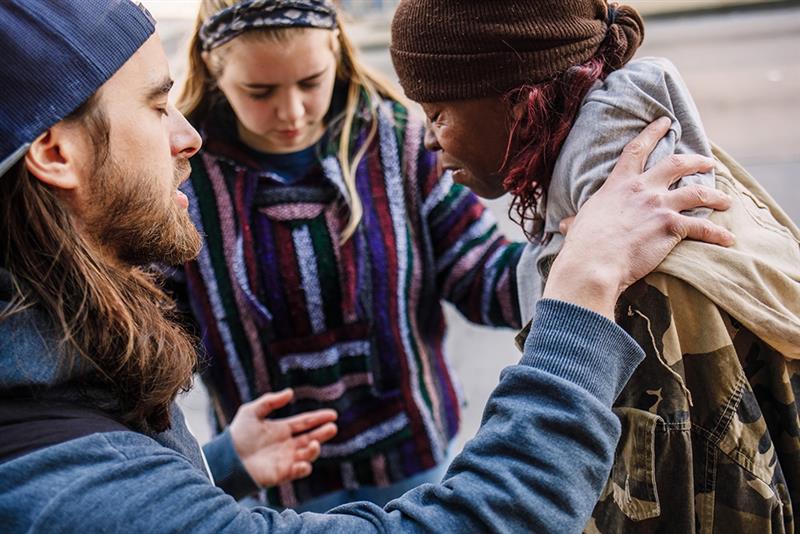
Some groups such as Young Catholic Professionals, Communion and Liberation and DC Social Collective offer organization models that have shown great success in fostering young-adult community in a manner that engages Gen Z’s longing for healthy opportunities with friendship, fun and mentorship.

A Hunger for Authenticity
According to Springtide’s “ The State of Religion & Young People: Catholic Edition, 2021” 42% of Gen Z Catholics distance themselves from the Church due to distrust in its people, beliefs or systems, while 51% feel they cannot be their authentic selves in parish settings, stressing how key authenticity is for this younger generation.
Members of Gen Z, and particularly converts, often prioritize raw, genuine expressions of faith over formulaic practices. Forced to navigate a world of curated online personas, they value vulnerability and honesty, which can inspire the Church to foster more open, heartfelt worship and community life.
“Gen Z cares deeply about authenticity, even if it comes off weird,” Frattaroli, a Columbia Law School graduate who became Catholic in 2022, said of her cohorts. “People want to figure out what is real for themselves rather than just assume what they were handed is the full picture.”
Regarding her conversion, the “Perpetual Pilgrim” on the Seton Route during the 2024 National Eucharistic Pilgrimage added, “it was the saints’ uniqueness that drew me — and I became more myself in the Church.”
Converts, in particular, often bring an intimate understanding of foreign ideologies, having wrestled with them before embracing faith. This puts them in a unique position to act as cultural translators between the Church and secular society or the various world religions.
Carlo Acutis and Pier Giorgio Frassati, who are being canonized together on Sept. 7, offer a witness to normalcy and yet uniqueness. McGrady relates that these two young men, who lived a century apart, “were their authentic selves. They had hobbies and friends and lived normal lives, but did so with heroic virtue, because they loved Jesus above all else.”
Arely Reyes, 21, another student from St. Mary’s in San Antonio and member of the Marianist Lay Community there, is traveling with Martinez to the Jubilee. Reyes emphasized the appeal of this witness: “The idea that surrendering fully to Christ brings true freedom and not restrictions is so powerful for the youth to embody and live out. This allows for others to see what true life in Christ is, free from ideological and polarizing trends that can trap us in narrow frames of mind and hinder us from seeking creative solutions that the fullness of our faith can offer.”
This authenticity even shows in Gen Z’s approach to work. They often prioritize more meaningful work and healthy life balance and personal development over climbing the corporate ladder, even if it means less money or status. This challenges the Church to rethink how it supports youth in integrating faith into work, empowering them to see their work as a calling.
A Wider Perspective of the World
Formed by livestreamed suffering from around the world, Gen Z’s instinct is solidarity. Rather than party loyalty, they prioritize the Gospel values of human dignity and the common good. Gen Z’s views on politics are often marked by disillusionment with institutional structures. At the same time, they are far from nihilistic, recognizing the knowledge and opportunity at their fingertips, and are often engaged in digital activism.
This age group has a breadth of perspective and knowledge not held by generations before them — though they still look to their elders for wisdom.
The youth, especially converts, are acutely aware of mainstream media’s biases and shortcomings. Having grown up with instant access to information and bombarded with emotional messaging during the presidential elections in their most formative years, they are skeptical of narratives that feel inauthentic and do not satisfy the demands of justice.
Gen Z’s preference for raw, unfiltered communication (think: X posts over Fox or CNN) helps the Church speak more directly, avoiding political landmines.
While older adults have sometimes developed a kind of moral callus after decades of partisan conditioning by 24-hour news, today’s youth are effective at forcing a reexamination of problems that may have become abstract talking points for previous generations.
Converts especially, who may have once consumed secular media uncritically, can offer insights into how the Church can counter false narratives. Their passion can push the Church toward a more prophetic stance, prioritizing the values of Catholic social teaching over partisanship and fostering dialogue amidst polarization.
The U.S. bishops’ pastoral framework “Listen, Teach, Send” (2024) explicitly names youth and young adults as “protagonists” in mission, urging parishes to give them real decision-making power.
A Hunger for Depth
Gen Z demonstrates a deep hunger for meaning and substance. These young people seek formation that is intellectually serious and satisfies this deep hunger.
These young Catholics recognize that Jesus in the Blessed Sacrament is the true, tangible satisfaction of their hunger. With such initiatives as the recently concluded National Eucharistic Congress and SEEK inspiring devotion among young people at scale, the youth are supercharged with a deep-seated confidence that they are loved and provided with an overflow of love ready to share with others.

Gen Z is also drawn to the beauty of the faith. Gregorian chant and classical architecture inspire awe, show vestiges of the Church’s musical and aesthetic heritage, and offer a sense of mystery and wonder — but this generation is also enamored by innovation in how faith is expressed, providing creative ways to make Catholicism accessible and comprehensible.
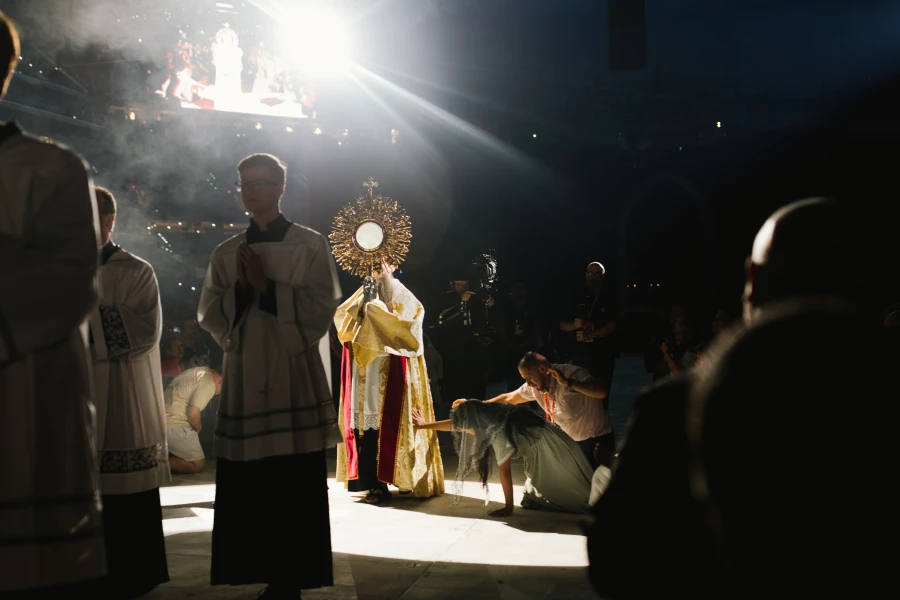
The youth are not just the future of the Church — they are its present, bringing energy, insight and a boldness in engaging the culture.
By embracing these gifts, the Church can not only reach younger generations but also be renewed by their zeal and perspective. The task for everyone else is to invite, mentor and make space for their creativity and Eucharistic passion.
Knight of Columbus Varela put it this way: “We’re hungry for something deeper, something that calls us higher. And the Church recognizes that. Events like this Jubilee are proof of it. The more we’re challenged, formed and sent, the more boldly and faithfully we’ll witness to the world.”
Andrew Likoudis is a young-adult community representative on the Archdiocesan Pastoral Council for the Archdiocese of Baltimore.
- Keywords:
- 'pope leo xiv'