Travel Through Michigan’s Upper Peninsula in the Footsteps of the ‘Snowshoe Priest’
Visiting the missions, shrine and cathedral that tell the story of Venerable Bishop Baraga reveals a landscape where faith once traveled by canoe, dogsled and snowshoe.

The Upper Peninsula of Michigan is renowned for the beauty of its vast forests, rivers, waterfalls and Great Lakes. It’s easy to imagine the extreme efforts of early missionaries traversing this wilderness hundreds of years ago. They include such well-known figures as Venerable Bishop Frederic Baraga and Father Jacques Marquette, both of whom have Michigan cities named after them.
Situated along Lake Superior’s southern shore, the city named for explorer priest Father Marquette is not only a beautiful and walkable city — it’s a perfect jumping-off point for learning about Michigan’s adventurous missionary priests.
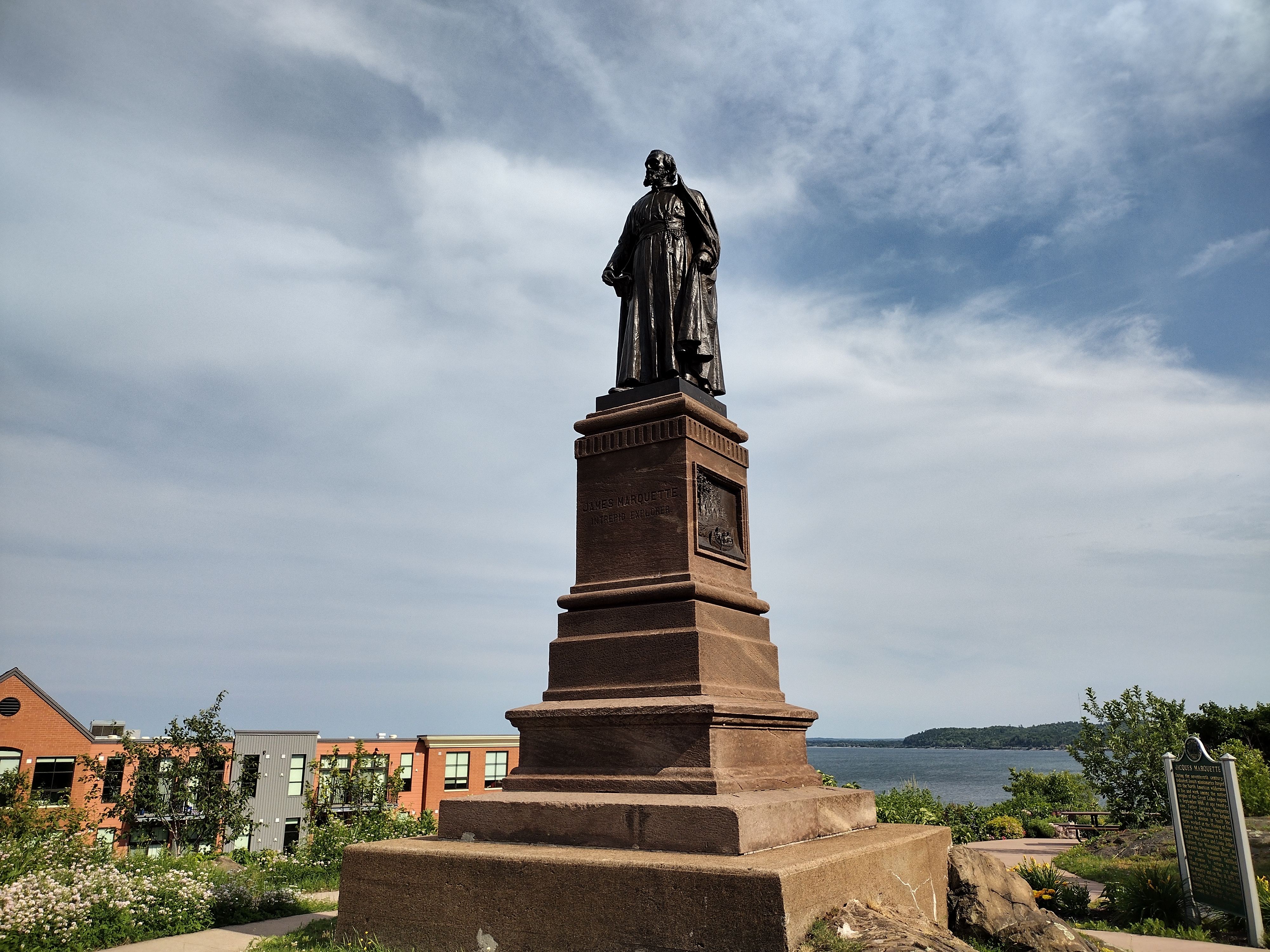
A statue of Father Marquette sits in an inconspicuous park overlooking Lake Superior near downtown. In addition to exploring the Mississippi River, Father Marquette befriended Native Americans throughout the Midwest and brought the Catholic faith to them. He established the Michigan mission of St. Ignace in 1670. He paved the way for later Catholic missionaries, such as Bishop Baraga.
Marquette is the home of several sites honoring Bishop Baraga. Irenaeus Frederic Baraga was born in present-day Slovenia on June 29, 1797. He studied law and was ordained a priest in 1823. In October 1830, he left his homeland for the U.S., working in (and founding) missions in Michigan and Wisconsin. In 1843, he came to the Upper Peninsula, founding a mission among the Ojibwe at L’Anse. He ministered from Minnesota, to Sault St. Marie, and Grand Rapids to Eagle Harbor.
For the remainder of his life, he served the Ottawa and Ojibwe Indians and the miners in the area, traveling by foot, canoe, horse, dogsled and snowshoe, earning him the nickname the “Snowshoe Priest.” At times, he snowshoed more than 700 miles between Native American villages in Michigan’s frozen wilderness, even sleeping without a tent.
Approximately an hour and a half southwest of Marquette, near Manistique, visitors can see the site of the first church established by then-Father Baraga alongside Indian Lake. The log-and-bark structure was established and blessed by Bishop Baraga on May 15, 1832, and “dedicated to the honor of God and under the patronage of his virginal Mother Mary.” A historical marker is located on the eastern shore of the lake. The site now has a replica chapel.
Just over an hour west of Marquette is the city of L’Anse, home to the Bishop Baraga Historical Shrine. The shrine features walking trails, a candle grotto, Stations of the Cross, historical plaques that tell of events in Bishop Baraga’s journeys, and a 60-foot “snowshoe” statue, depicting the bishop overlooking Lake Superior. Bishop Baraga holds a 7-foot-high cross in one hand and 26-foot-high snowshoes in the other. The statue rises from five teepees, representing Bishop Baraga’s five major missions.
The shrine is located here, as it was a place often traveled to by Bishop Baraga, and became his home base in 1843. In September 1844, Holy Name of Jesus Church was dedicated at the site known as Assinins, named after the Native chief baptized by Bishop Baraga. Ten years after establishing the mission in L’Anse, Father Baraga was elevated to bishop.
Bishop Baraga became fluent in the Native language and developed its written form. In 1832, his first Indian-language prayer book was printed in Detroit. Later, he created the first Ojibwe dictionary. His Chippewa grammar and language are still used today.
He became bishop of the Diocese of Sault Ste. Marie in 1857. The seat of the diocese was later moved to Marquette in 1865, as it is situated in the middle of the diocese.
He was beloved by his flock.
“I remember him as a small, slender man, exceedingly reserved in his demeanor, and with a very sweet, low voice,” C.D. O’Brien, a La Pointe, Wisconsin, resident, said of Bishop Baraga in 1867, noting all of the people who held him in great esteem. “Each seemed to have an intense and personal affection for him.”
Bishop Baraga died on Jan. 19, 1868. His cause for canonization was opened in 1952. He was declared “Venerable” by Pope Benedict XVI in May 2012.
Over the summer, my wife and I were blessed to attend daily Mass at St. Peter’s Cathedral, which is currently undergoing an extensive renovation of its twin bell towers, observable behind enormous scaffolding.
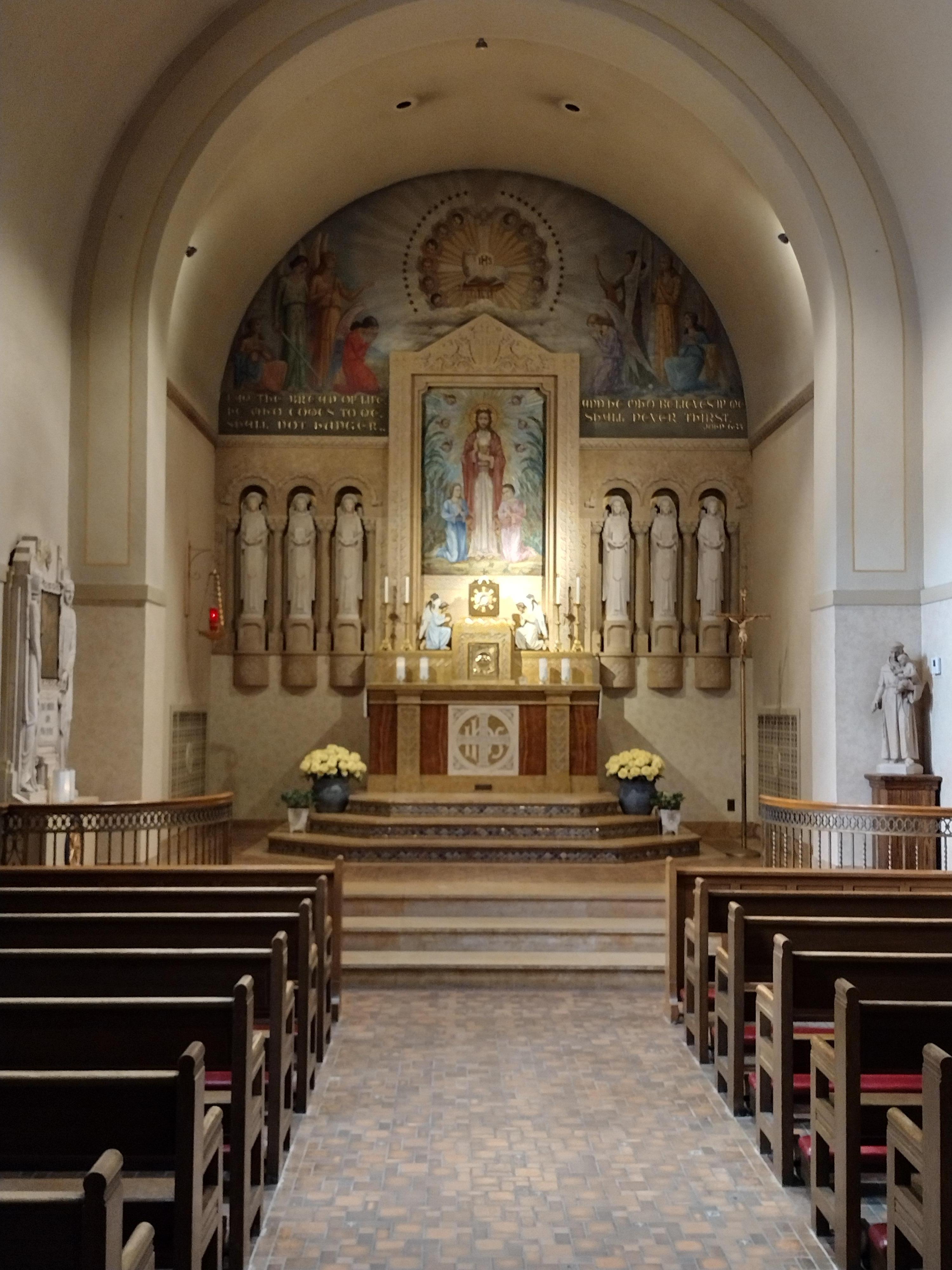
Situated on a hill overlooking much of Marquette and the southern shore of Lake Superior, the cathedral is home to the tomb of Bishop Baraga.
Bishop Baraga is interred in a space located to the right of the main altar. Here, the faithful will find large, colorful stained-glass windows depicting events in the life of the bishop. Above the sarcophagus, the window depicts the bishop with Ojibwe Chief Edward Assinins, the first convert at the L’Anse mission in 1844. A separate window depicts Bishop Baraga holding the Ikkitowini Masinaigan, the Ojibwe dictionary he created. The tomb is a quiet and humble space reserved for personal prayer and petition. We took time to kneel before Bishop Baraga’s tomb and offer prayers for our family and our adult children.
Bishop Baraga chose the site of the cathedral, which was dedicated in 1866. The original edifice was destroyed by fire in 1879. A new stone cathedral was dedicated in 1881. Another fire, in 1935, caused the roof and floor to collapse. Using the intact walls, the third cathedral was rededicated in 1939. It includes a mural above the sanctuary with a rendering of the apostles and Christ bestowing the “keys of the kingdom” on St. Peter.
The cathedral also features a crypt that is the burial place for Marquette’s other bishops. This was the original resting place for Bishop Baraga. A beautiful Eucharistic adoration chapel is located to the left of the main sanctuary.
Located just two blocks south of the cathedral is the Baraga Educational Center and Museum, home to the Bishop Baraga Association. It is the former home of Bishop Baraga and the site where he died in 1868. Visitors can see artifacts and relics, including vestments, his diary and chalice, and learn more about him, his priesthood and ministry to the peoples of the Great Lakes region.
In addition, located behind the home is a small prayer chapel that features a marble slab that originally was in the cathedral crypt where Bishop Baraga was first buried. Behind the chapel and the home is a wonderful space to visit and pray with children. It includes a Rosary walk, garden, Native American carvings and Stations of the Cross.
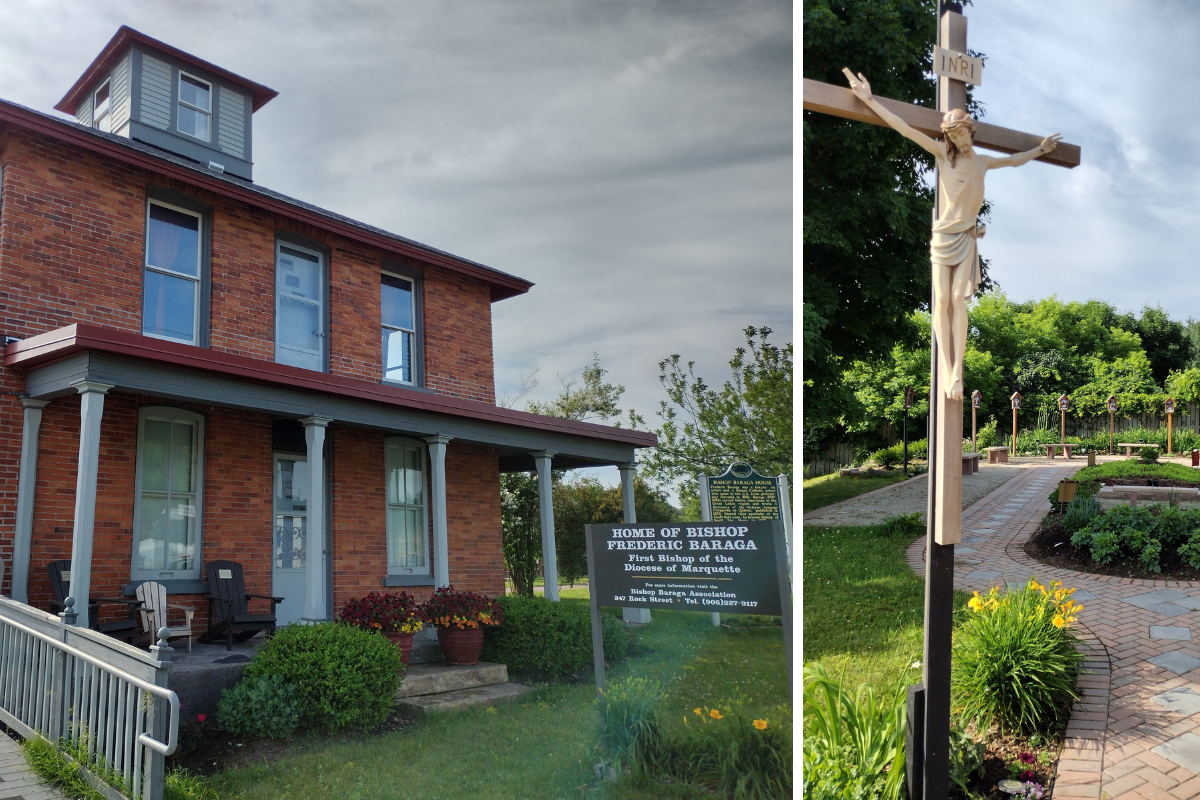
Contemplating Bishop Baraga’s life and the hardships he endured in bringing Jesus Christ to those he ministered to provided us with excellent points of reflection not only for our own mission in life, but also on the home we are journeying toward, as the good bishop knew well in his austere life.
“I have few comforts here, oftentimes barely the necessities of life,” wrote Bishop Baraga in his diary. “But what consolations, what grand rewards, what unspeakable joy will it be for me on the day of judgment. Some or hopefully all of these, my good children, may surround me and give me testimony before our final judge.”
- Keywords:
- venerable bishop frederic baraga