How Does Pope Leo Take His Coffee?
Coffee may not have originated in Peru, but the South American country is now among the top 10 global producers of java juice.
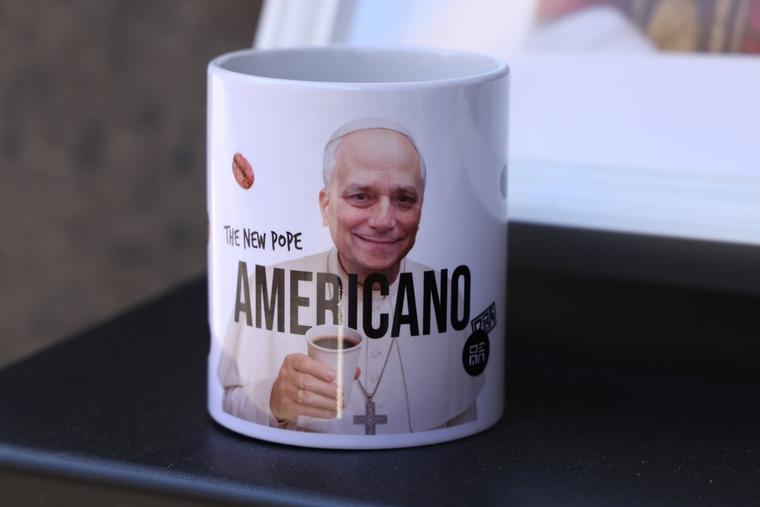
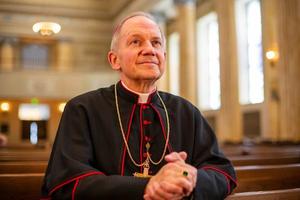
When Robert Prevost was the bishop of Chiclayo, Peru, he embraced the local culture.
His coffee order was no exception.
As the shepherd of the northern Peruvian diocese from 2015 to 2023, the missionary bishop didn’t seek out American-style frappuccinos (although there are two Starbucks located in Chiclayo, a city of about 700,000 souls).
Instead, according to the folks at the restaurant Trébol, where Bishop Prevost was a regular for breakfast, the Chicago-born prelate took his coffee in the local style: hot water poured into a cup of liquid coffee concentrate.
The concentrate — called “essence of coffee,” or esencia de café in Spanish — is often made with a contraption called cafetera de la abuela (literally “grandmother’s coffeemaker”). Another name for the device is gota a gota (“drop by drop”).
It works by pouring hot water into an upper chamber, which slowly trickles down into a basket of ground coffee. After passing through a filter, the resulting liquid is thick, dark and very strong — up to four times more so than normal drip coffee.
But the “essence of coffee” method allows everyone to customize how strong they want their coffee by how much hot water they add to it.
“That’s our custom here,” said Eduard Montoya Altamirano, Trébol’s owner. “We pass around the coffee and water, and you can add whatever you want.”
More water, weaker coffee; less water, a stronger brew. And Bishop Prevost was known to take his on the stronger side.
In fact, Montoya said that the local bishop never took his Peruvian coffee with milk.
“Only with water,” recalled the restaurant owner.
During Bishop Prevost’s time in Chiclayo, Trébol used coffee beans from the San Ignacio area of Cajamarca, a region in the northern part of Peru’s Andean highlands. The beans are grown at exceptionally high altitudes, as high as 1.3 miles above sea level, and produce a coffee known for its floral aroma and silky body.
Coffee may not have originated in Peru, but the South American country is now among the top 10 global producers of java juice.
At Trébol, Bishop Prevost often took his coffee alongside a plate of frito chiclayano — a local breakfast dish of marinated-and-fried pork, served with yuca and salsa. He also usually had a glass of juice, orange or papaya. According to Montoya, his episcopal patron wasn’t much of a coffeehouse chatterbox. Sometimes he would dine with diocesan priests or other guests, but otherwise, he kept to himself.
“He was a customer who wasn’t very demanding,” said Montoya. “A normal customer, polite, simple, and a good eater.”
According to Montoya, Bishop Prevost often sat at a table that overlooked Chiclayo’s Cathedral of St. Mary, which was just across the street. The restaurateur thinks it was so that the local bishop could maintain a sense of connection with the Church he served, even while he sipped his coffee.
Now as the Supreme Pontiff in Rome, those moments of quiet, caffeinated reprieve are probably few and far between — though it’s easy to imagine Pope Leo XIV starting his weekly “day off” at Castel Gandolfo with a tranquil cup of joe.
Of course, “essence of coffee” isn’t the preferred method of coffee making in Italy, where espresso reigns supreme.
But Pope Leo’s papal apartment housemates include Msgr. Edgard Iván Rimaycuna Inga, his Chiclayano secretary. And a group of Peruvian religious sisters are rumored to keep house for the Pope. Between his Peruvian secretary and the sisters, perhaps someone managed to bring a cafetera de la abuela with them to Rome.
Either way, with a papal trip to Peru all but confirmed for later this year, Pope Leo is expected to return to his beloved Chiclayo before long. And if he stops by a local restaurant for a cup of coffee, he’s likely to get it strong, with no milk added — just the way he did as the American-born bishop of the Peruvian diocese.
- Keywords:
- coffee