Pilgrimages Are Having a Moment
What’s motivating U.S. Catholics to journey to holy places?

Religious pilgrimages are arguably enjoying a level of popularity today that hasn’t been seen since medieval times when peasants and noblemen alike set out for shrines and holy places, on penitential journeys, to seek miraculous cures and indulgences, as well as for adventure and an escape from village life.
Today, American Catholics can be seen on the very same pilgrimage routes traveled centuries ago. And while their motivations for going vary, they share with their ancestors a desire to return to their everyday lives changed — and advanced a little further along in their spiritual journeys.
In 2024, nearly half a million pilgrims walked the Camino de Santiago in Spain, setting a record for the number of travelers to what tradition says is the tomb of St. James the Apostle.
And reports of a surge in the number of young people making a pilgrimage to Lourdes, of organizers having to turn away people trying to register for a pilgrimage from Paris to Chartres, and of sold-out trips to holy sites in Poland and Italy indicate an unprecedented interest in pilgrimages to sites associated with Catholic saints and holy places.
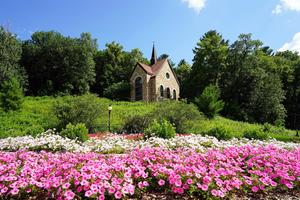
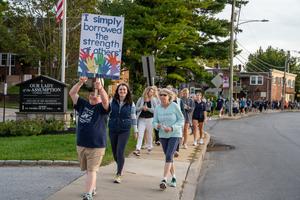
In the U.S., as well, pilgrimages are having a moment: More than 250,000 people took part in last year’s National Eucharistic Pilgrimage along four routes converging at the National Eucharistic Congress in Indianapolis. In 2024, the National Shrine of Our Lady of Champion in Wisconsin, the only Vatican-approved Marian apparition site in the U.S., saw a record 200,000 pilgrims.
The pilgrimage business is indeed booming, according to Milanka Lachman of 206 Tours, who has been organizing pilgrimages that cater to American Catholics for more than 40 years.
She has seen “incredible” demand despite economic uncertainty and the Israel-Gaza conflict, which has forced them to postpone travel to the Holy Land.
“Pilgrimages are here to stay,” said Lachman, whose clientele is almost entirely Catholic, as each tour is accompanied by a Catholic priest who celebrates Mass daily. “People want to travel with meaning rather than just travel for cultural experiences or beaches.”
‘To Pray, to Unplug’
A religious pilgrimage, especially a pilgrimage that involves walking 15 to 20 miles a day, sometimes for several weeks, offers a break from the routine that many Catholics today crave.
The busyness of everyday life makes it difficult — even for practicing Catholics — to live their faith fully, according to Arthur Brooks, best-selling author of books on the science of happiness, include Build the Life You Want: The Art and Science of Getting Happier, which he co-authored with Oprah Winfrey.
“It seems to me that the ‘pilgrimage renaissance’ is being driven by our busy world. Religious people are finding it increasingly difficult to devote serious time to their spiritual lives. Work is too hectic; family life is too jam-packed,” Brooks told the Register.
“And when there is time, growing evidence suggests that we use technological distractions (hello, social media, Netflix, and 24/7 news!) to anesthetize ourselves against the low-burning stress of nonstop life. Pilgrimages offer a reprieve from that doom loop: Work and daily life is paused, and distractions are shelved, so that we have time to discern the biggest questions in life. What does God have in store for me? How can I follow His will?” he said in an email.
Brooks credits going on his first pilgrimage with helping him when he was at a turning point in his career.
“At the time, I was the president of a big think tank in Washington, D.C., which had been my dream job; but nearly 10 years in, I was burned out and exhausted. I didn’t know what to do next with my life (or, put more accurately, what God had in store for my next phase of life),” he told the Register.
“A friend suggested I walk the Camino de Santiago to discern what was next, and so I did. During my journey, I prayed about how I could deploy my knowledge and skills in the best possible way, and by the end of the Camino, I had my answer. I would return to my roots by teaching at a university and use science and ideas to uplift all my students.”
“The experience was so moving that now, each year, my wife and I complete a pilgrimage together. I would encourage all your readers to do the same,” he said.
Father David Dufresne, parochial vicar at St. Charles Borromeo Catholic Church in Arlington, Virginia, has led several pilgrimages with members of his parish and can attest to the benefits received from being away from the cares of daily life.
Father Dufresne first went on a pilgrimage as a seminarian across the entire route of the Camino de Santiago over his Christmas break as he was discerning the priesthood.
“That dedicated time on the Camino was really that time to be confirmed in God’s call, in God’s election, also to feel the freedom of, ‘No, I don’t have to, but I want to.’ And that was very liberating.”
“At that point, I just became personally convicted of how powerful that experience can be,” he added. “And as a priest, I’m very blessed to have had the opportunity to share that with my parishioners.”
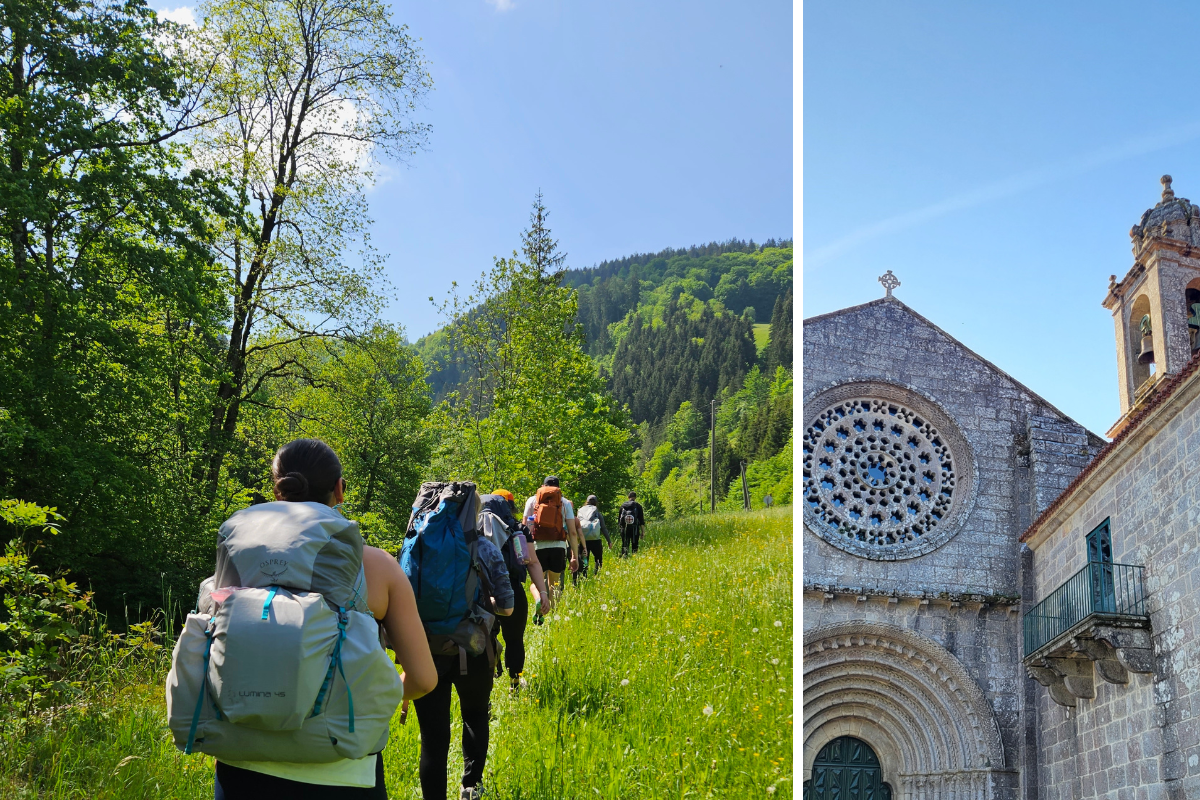
Father Dufresne has since taken groups on walking pilgrimages to the Camino de Santiago, to Mariazell Basilica in Austria, and on the Way of St. Francis in Italy.
Being away from technology, walking in silence for hours each day, and “embracing the discomfort of blisters and aches and pains and everything else” leaves space for hearing God’s voice, Father Dufresne said.
“It helps us to be disconnected from our routines, helps us to be disconnected from our distractions, and really allows that space where we’re a lot more open to God,” he said.
Christa Nuno, a 28-year-old nurse and parishioner in the Diocese of Arlington, Virginia, has taken part in three pilgrimages led by Father Dufresne.
She told the Register that she signed up for the first pilgrimage, a six-day walk on the Portuguese route of the Camino, because she felt she wanted to “home in a little bit more on my faith.”
“I thought, ‘This seems like a good opportunity for me to just kind of have this designated time to pray, to unplug, especially, and to just be outside all day.’ What more can you ask for? And in Spain nonetheless,” she said.
She has gone on three more pilgrimages since and is currently preparing to join 15 others from the parish on their most strenuous pilgrimage yet, a 12-day, 220-mile trek on the northern route of the Camino in Spain.
Making It Intentional
While on a pilgrimage, Nuno uses that disconnected time, she said, to pray for intentions, for herself and for others.
Shortly after her last pilgrimage, to Assisi, she and her boyfriend got engaged to be married. She brought that particular intention to prayer while walking the pilgrimage.
“I was just kind of like, ‘Well, Lord, he’s a good man, and if we’re supposed to get married, tell him to hurry up.”
She told the Register she would recommend going on a pilgrimage to everybody, especially every Catholic.
“Because the world is so noisy, and it’s just such a rare opportunity to just do this intentional trip where you are doing it because ‘I’m here to pray, to meditate, to be outside every day, exercise, and to really think about what’s going on in my life,’” she said.
Sue Spitz, 63, another Diocese of Arlington parishioner who is a repeat pilgrim on Father Dufresne’s trips, went on her first pilgrimage after the deaths of her father and close family friend, a particularly difficult time for her family.
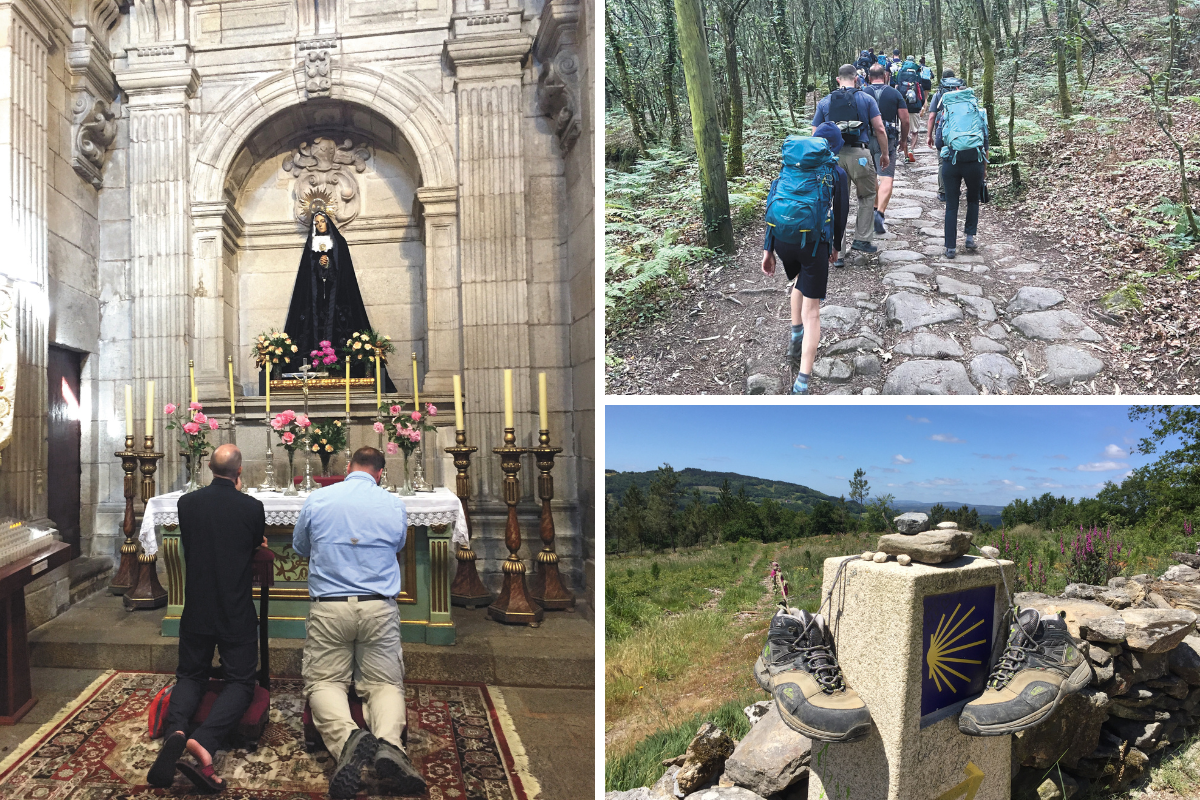
It was an opportunity to go on pilgrimage, with her sister, and to pray for her father, his friend and for her mother’s intentions. They brought some rocks from her father’s garden and placed them along the pilgrimage route and prayed for him.
“In that way, there was a meaning attached to this pilgrimage that was fairly unique,” she said.
Seeking Holiness in Sacred Places
There are also pilgrimages that involve visiting holy sites by car, van or bus.
Bret Thoman, a Third Order Franciscan, who leads small-group tours in Italy with his company, St. Francis Pilgrimages, says that most of the American Catholics who find him through his website or are referred to him want to walk in the footsteps of a saint or touch the ground where something holy took place.
“I think Catholics tend towards pilgrimage because we have a stronger focus on incarnation. That is God, Jesus Christ himself, the second Person of the Trinity, came down into the world, became incarnate, took on flesh and sacramentalized the world,” he said.
Thoman leads tours of the sites associated with St. Francis in Assisi, as well as St. Rita, Padre Pio, and the Holy House of Loreto, the Marian shrine believed to be the same house that St. Gabriel the Archangel visited in the Annunciation to the Blessed Virgin Mary.
Catholics go on pilgrimages today, he said, “to experience personally the holiness or the supernatural things that took place in these places.”
Many of his clients have a devotion to what he calls “heavy-hitter” saints, like St. Rita (the patron saint of impossible causes) or Padre Pio.
They go to “ask for a spiritual intervention, an intercession,” he said.
At the same time, he said, many want “just to get away,” he said.
“In the early days before modern tourism, people went on pilgrimages to do something different, to change up their lives in a spiritual way.”
A Desire for Community
Deacon Patrick McCay, 60, of the Diocese of San Diego, made his first pilgrimage three years ago, on the Camino de Santiago, and now leads pilgrimages to the 21 Spanish Missions (CaminodeCalifornia.org), stretching from San Diego to Sonoma, California.
Besides visiting churches and holy sites, and the challenge of doing something difficult, he appreciates the sense of being a member of a community that he experienced. Whether helping each other when they run out of water or offering a bandage when someone has a blister, the difficulties of the road bring people together.
“I think when you make that journey, it’s like life. In your life there are mountains to climb, there are injuries, blisters to heal yourself of. There are people that you meet along the way, people that help you,” he said. “Another important part of pilgrimage too is being there to encourage others and help people,” he said.
For Father Dufresne, community is an important aspect of pilgrimage as well, and the trips he leads are intended to strengthen the parish community. In fact, he has a strict rule that only parishioners or people “one degree of connection” to a parishioner, such as a relative or close friend, are allowed to participate.
“One of the primary fruits is we come back from pilgrimage and we see these people, again.
And we can continue that friendship and that relationship,” he explained, adding that the parish receives emails from people all over the world wanting to join the trips.
“On the Camino, you literally are sharing the road together and sharing that experience,” he said. The group goes to Mass together each day, prays together, and chants the Liturgy of the Hours together, he said.
“So for some of them, it’s the most intensely Catholic thing that they’ve done,” he said.
“Most people maybe are just used to Sunday Mass and maybe their private prayers. So this is unique for them as well, the intensity of living the Catholic faith in a public way.”
When they return, Father Dufresne said, they stay in touch, get together for dinner, and invite each other to join them for momentous occasions, like confirmations.
“It really is a great bonding experience, particularly here in northern Virginia. We’re a very transient community; I think that’s part of American culture in general, recently. But this area is just very, very transient — nobody’s from here; nobody’s staying here,” he said.
“So to make these connections that really go deep and really last, I think it’s a very meaningful element of growing and building and maintaining our faith. Pilgrimage is one of the best ways to make that happen.”
Preparing for a Pilgrimage
How should you find the right pilgrimage for you? It helps to first consider a few key questions:
Do I want to go on a walking pilgrimage or travel by van or bus?
Many walking pilgrimages involve hiking, sometimes up difficult terrain, for 20 miles per day. At least a month before the trip, it’s a good idea to set out on long practice hikes, working up to long distances with weighted backpacks (if you plan to carry your own pack).
If a walking pilgrimage is what I’m after, do I want to travel with a group that takes care of everything, including hotel reservations, meals, and transporting luggage to the next accommodation each day?
A less expensive and more physically challenging walking pilgrimage would require carrying your own backpack and making your own arrangements for accommodation.
How much time do I have, and what is my budget?
A tour operator might offer an 11-day walking pilgrimage (on the Camino in Spain, for example, for about $6,000, including airfare, accommodations or meals). Whereas, if you were to travel alone, total costs might be as little as $30 a day (not including airfare).
Once you have narrowed down the options, it’s important to ensure that your trip will be a truly spiritual journey rather than a vacation or nature hike.
Visit the websites for pilgrimage tour operators to see if a priest will accompany the pilgrimage and if there will be opportunities for daily Mass and confession. There are many group tours of holy sites that are geared towards the general population and are not particularly Catholic.
There are also pilgrimages taking place throughout the U.S. that only involve walking for a day or two, if a longer pilgrimage is not feasible. This might be a good way to get your feet wet. The upcoming Camino of Maryland (Camino-MD.org), for example (June 9-22, 2025) covers 218 miles from southern Maryland, the site of the state’s founding as a haven for Catholics, to the Shrine of St. Elizabeth Ann Seton in Emmitsburg. Pilgrims are invited to walk the entire Camino or just join it for a day or two.
— Zelda Caldwell
- Keywords:
- pilgrimages
- pilgrims