New Network Offers Lifeline to Converts From Islam to the Catholic Faith
Lay-run St. Nicholas Tavelić network quietly forms 300-strong underground community of ex-Muslims seeking sacraments, catechesis and a truly Catholic home.
A new support network for converts to the Catholic faith from Islam is flourishing as increasing numbers of Muslims turn to Christ, with many parishes struggling to offer the catechumens the help they need.
The “St. Nicholas Tavelić Network for Morisco Catholics” — TavNet for short — is a lay-run Catholic missionary network that since 2024 has served converts living in Muslim-majority communities or societies where ordinary parish structures cannot easily reach them.
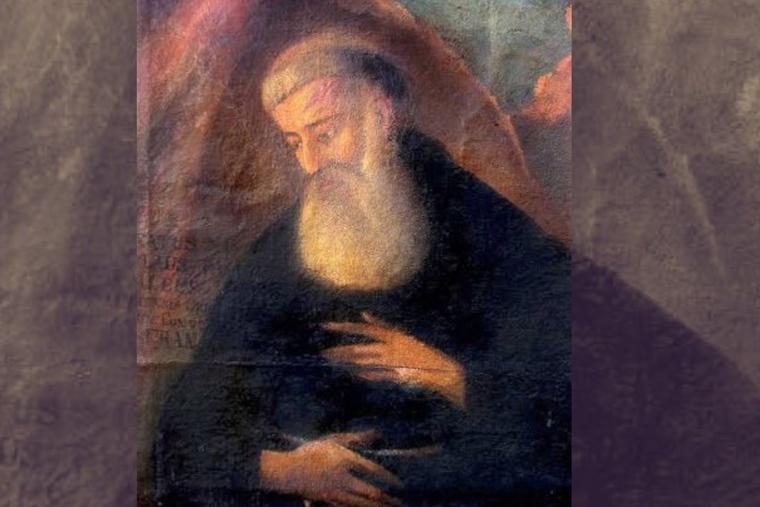
Named for St. Nicholas Tavelić — a 14th‑century Croatian Franciscan friar, priest and missionary who openly proclaimed the Christian faith before Muslim authorities, refused to renounce it, and was martyred with three companions in Jerusalem on Nov. 14, 1391 — its core purpose is to provide pastoral care, the sacraments and solid catechesis to often hidden or underground communities and to articulate the faith in ways that are intelligible within Islamic cultures while remaining fully orthodox and traditional.
The idea for such a network support grew out of “the sheer depth of that need” among ex-Muslims, said Hasan, one of TavNet’s founders.
Speaking to the Register, Hasan, 29, who was himself a former Shiite Muslim, said the network began as an informal online group of converts who connected with one another after their conversion “because the experiences of converts from Islam are quite unique.”
“We are effectively the only group providing a specifically Catholic, resource-based approach to supporting such people,” said Hasan, who went by his first name for safety reasons.
He said the community started through shared prayer, fellowship and the help of a missionary priest who was astonished by how many converts to the faith in the Muslim world are unable to receive the sacraments. They were also encouraged by Pope Francis, who sent them a letter on hearing how some Muslim converts, after being received into the Church, “experience exclusion and sometimes abuse from local Catholic communities.”
The network, which officially launched in August 2024 after a weeklong gathering in Canterbury, England, to define its structure and principles, now numbers about 300 members. All are undergoing regular formation, helped by priests and donor and volunteer support.
Barriers to Conversion
Hasan said what many find surprising is that the main barriers for Muslims to convert usually come from within the family rather than from the state, adding that the situation in diaspora communities in the West “is actually quite similar to that in many Muslim-majority countries.”
He described how Muslim girls from traditional families in Western countries often struggle to attend RCIA/OCIA or catechism classes, as they must explain their absence to parents. According to Hasan, some attend these classes after university, but after graduation, many must leave home and become independent, a difficult transition that often lacks adequate pastoral or psychiatric support.
TavNet tries to help young converts fulfill their obligations to honor their Muslim parents and pray for those who persecute them for leaving Islam. St. Stephen, the Church’s first martyr, is very important to their community for that reason, Hasan said.
Recruited largely by word of mouth, he said they vet prospective Muslim converts carefully “because there is always a danger of infiltration.” They also offer connection to accessible psychiatric care because some people can be spiritually or ideologically unstable.
Meanwhile, the Church and some Catholics can also be an obstacle to new converts from Islam. “Catholics can seem inconsistent with their own history and, from [a Muslim’s] perspective, seriously morally lax — and for religious Muslims, that is incredibly off-putting,” Hasan said. “It doesn’t look like liberation or religious freedom; it looks like consigning oneself to confusion and moral chaos.”
Instead, he said what attracts Muslims to the faith is “deep fervor” and communities showing Catholicism “visibly and properly lived.”
Also working against drawing converts, he added — although he was reluctant to “point fingers” — is that some parishes, while their formation for converts might be appropriate for Protestants or atheists coming to the faith, offer formation that is not attractive for many Muslims, and they can often find it difficult to be fully integrated into parish life. Muslims, he said, “are used to praying five times a day, not just going to church on Sunday. When that structure is lost, it can cause a deep sense of unmooring.”
To counter this, TavNet provides a public recitation of the Little Office and praying the Rosary and similar practices. “We try to help people keep that religious structure in the Catholic faith — to make the transition as seamless as possible from where they are coming from,” Hasan said.
TavNet also does not tolerate soft-pedalling of their former religion. “We want to express our differences with Muslims in a constructive way but without toothlessness,” Hasan said. “Too much interreligious dialogue feels like tea parties for their own sake.” They therefore stress similarities between the two religions while creating a “space for regular disputation about our legitimate differences.”
Hasan’s own journey to the faith came via Twelver Shiite Islam, the largest branch of Shia Islam, which he embraced as a teenager. Born to religious Shiite parents, he became zealous for his native religion and studied Christian theology and history to use it against Christians. But he discovered that Catholicism was far more coherent and serious than he expected. The decisive moment for him came during the consecration at midnight Mass in 2018. “I experienced an immediate, immanent certainty that this Jesus I had become familiar with was here,” he said, “and that God was here in a way similar to what I had experienced in Islamic prostrations, but infinitely more profound.”
Daniel, 24, one of the first members of TavNet’s U.K. chapter and from Iranian descent, grew up in a secular environment and came to the faith through reading philosophy, Stoicism, and especially Jordan Peterson. He learned the importance of critical thinking, seeking truth beyond politics, and approaching reality philosophically, which opened him to Scripture. A severe skin condition led him to reflect on the meaning of suffering and, after being captivated by the Beatitudes, he sought out the faith in the Church of England. But he “knew Henry VIII had started that church” and wanted to “belong to the Church that Jesus Christ himself founded.”
Mary’s Vital Role
Having found a local parish, he discovered the Holy Rosary. “That’s when I really converted,” he said, “and knew with certainty that the Catholic faith is true.” He highlighted Mary’s importance for many Muslim converts. “She is central both in our religion and in Islam,” he said, recalling how soon-to-be beatified Archbishop Sheen explicitly presented Mary — especially under her title of Our Lady of Fatima — as God’s chosen bridge by which Muslims can be drawn to Christ.
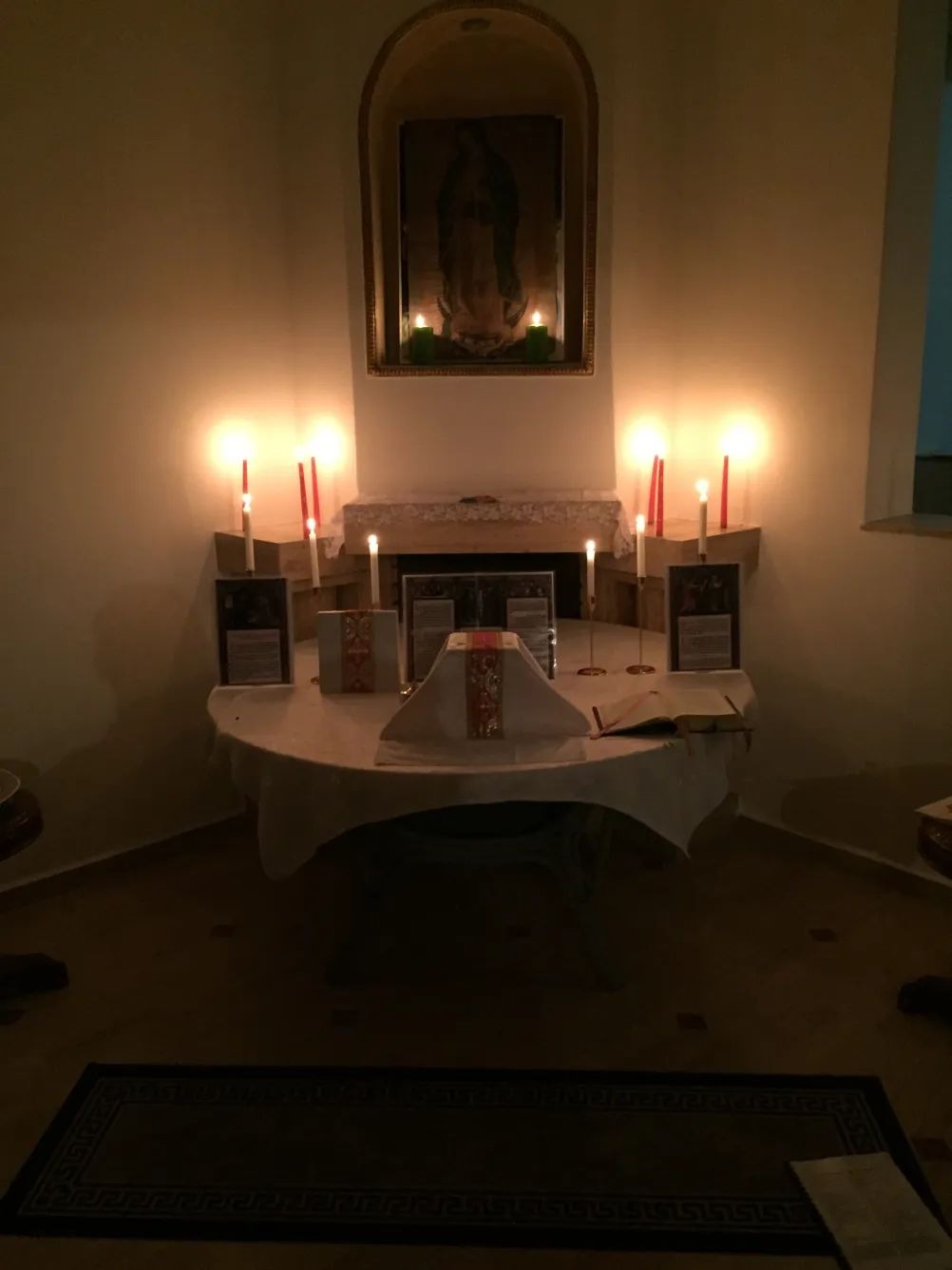
TavNet has a special devotion to Our Lady of Fatima, and members see themselves as “children of Fatima.” The town is said to have been named after a Muslim woman called Fatima who married a Christian nobleman and converted — the story has often been used symbolically as prefiguring Muslim-Christian encounter.
Additionally, both Hasan and Daniel said they consider the Eucharist to be the most important sacrament to them as converts from Islam.
Asked about whether he was aware of a reported quiet revival of Christianity in Europe and the West, Hasan replied: “Absolutely — it’s as if this huge network has grown up overnight: zealous young people who, together with Muslim converts, feel they’ve found people they can truly relate to, with a common religious sensibility.”
He also testified to a global phenomenon among Muslims, including ISIS fighters, of seeing Christ in dreams and converting to the faith, especially in remote, Muslim-majority states. Initially sceptical about it, after starting TavNet, his “skepticism vanished” as he estimated that more than half of TavNet’s members “have had not only dreams but, in some cases, waking visions.” Such phenomena, he added, are taking place “all over the world — London, Birmingham, Bosnia, Albania, Morocco and Algeria, Egypt, Saudi Arabia — and especially young people are experiencing visions and dreams.”
But he warned that this Christian revival is being “highly politicized” in some quarters. “Rather than simply speaking of the decline of Christianity and the rise of Islam, I think it is better to recognize, as Pope Francis said, that we are no longer in Christendom, that it is gone,” Hasan observed of the modern world. “We are living in a corpse inhabited by a different spirit, not the Spirit of Christ. We, and the Muslim newcomers, are, in a sense, competing to replace that spirit with something else.”
Referring to that politicization, Daniel noted that a “sense of charity and love of neighbor is not being taken as seriously as it should be.” Muslims are “not our enemies,” he said, and he recalled Pope Benedict XVI giving the example of treating a drug addict. “Benedict said if you truly love him, all you want is to get him off drugs, to rehabilitate him. In a similar way, we love Muslims, we pray for them, and we want them to come to the Catholic faith — the fullness of truth.”
“For us,” he said, “it is Christ first, charity first, not politics first.”
LEARN MORE
Hasan and Daniel said they would be very grateful for the faithful’s support, whether through prayer, especially the Rosary, fasting and mortification for their intentions, or directing converts or inquirers to them via the group’s website, to offer donations or volunteer.
- Keywords:
- muslim converts
- catholic converts

Edward Pentin Edward Pentin is the Register’s Senior Contributor and EWTN News Vatican Analyst. He began reporting on the Pope and the Vatican with Vatican Radio before moving on to become the Rome correspondent for EWTN's National Catholic Register. He has also reported on the Holy See and the Catholic Church for a number of other publications including Newsweek, Newsmax, Zenit, The Catholic Herald, and The Holy Land Review, a Franciscan publication specializing in the Church and the Middle East. Edward is the author of The Next Pope: The Leading Cardinal Candidates (Sophia Institute Press, 2020) and The Rigging of a Vatican Synod? An Investigation into Alleged Manipulation at the Extraordinary Synod on the Family (Ignatius Press, 2015). Follow him on Twitter at @edwardpentin.