Italian Bishop’s Call to Evangelize Muslims Wins Support From Converts’ Network
The St. Nicholas Tavelic Network backs his emphasis on charity and respect in proclaiming the Gospel to Muslims and the necessity of a visible Christian identity.
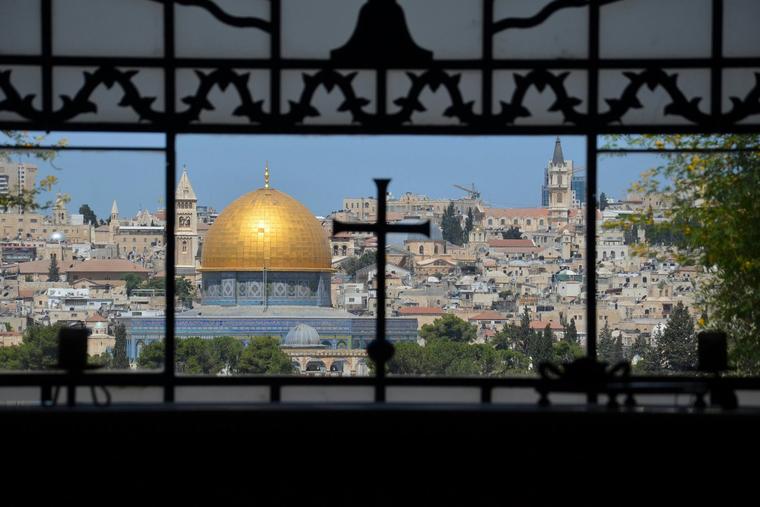
A missionary network of converts from Islam to the Catholic Church has warmly welcomed a pastoral letter by Bishop Antonio Suetta of Ventimiglia-San Remo, Italy, calling on his flock to evangelize Muslims.
The St. Nicholas Tavelic Network (TavNet), which provides pastoral care and support often to underground communities of converts, told the Register the bishop’s words had “greatly encouraged us,” adding that they agreed with the bishop that being silent about the faith “is not charity” and that a “clear and visible Christian identity is absolutely necessary to evangelize Muslims.”
Bishop Suetta called for evangelization of Muslims in a May 24 pastoral letter titled “There Is No Greater Love.” He said increasing numbers of Muslim migrants in the region had prompted unavoidable questions to be asked, such as what should be the Christian attitude towards them, and the need to balance respect for their faith with the need to proclaim the Gospel.
He has therefore decided to offer a “specific program of formation and occasions for encounter” in his diocese, committing itself to witnessing and proclaiming the Gospel “also to those Muslims who live in our own territory.”
“In this way we shall come to know better the faith and culture of Muslims, whom we meet every day,” Bishop Suetta said, adding: “We shall also learn, in a more conscious way, how to exercise our duty as baptized persons, which is a task of love and therefore of proclamation of Him who is the salvation of mankind.”
The presence of Muslim communities in traditionally Christian regions of the world has been on the rise in recent decades. Exact statistics for the growth of the Muslim population in historically Catholic Italy are unavailable, but approximate figures suggest it has doubled over the past two decades, from around 800,000 in 2006 to just over 1.5 million in 2023. Europe’s Muslim population has increased from 2% to 6% between 1950 and 2020 — 11 million to 45 million. In the United States, meanwhile, the number of Muslims has been rising steadily, from 1.5 million in 2000 to just under 4.5 million in 2026.
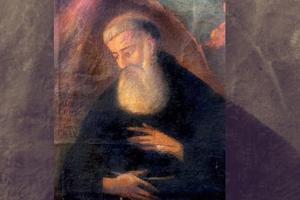
Bishop Suetta’s pastoral letter, subtitled “On charity and the proclamation of God’s love to the Muslims living in our territory,” coincides with the 800th anniversary this year of the death of St. Francis of Assisi, who famously met the Sultan Al-Malik al-Kamil in Egypt in 1219. The bishop also noted last year’s 60th anniversary of the Second Vatican Council’s interreligious declaration Nostra Aetate.
Recalling St. Francis’ meeting with the Sultan, Bishop Suetta said the saint instructed his friars not to “engage in quarrels or disputes” with Muslims, but rather confess their Christian faith, awaken faith in the triune God, and tell them they “should be baptized and become Christians” or they cannot enter the kingdom of God.
The friars were not to hide their own faith, Bishop Suetta continued, but, on the contrary, had to “manifest it, first of all through the witness of their life, which is more important than words, as the man of Assisi repeats in several writings.”
The bishop urged his flock to focus on “aspects we hold in common with Muslims,” especially in helping a world “drifting away from its Creator,” as this can create opportunities for collaboration in upholding a basic morality that secularized society often rejects.
Muslims arriving in Western countries, he observed, tend to identify public immorality with the Christian faith, and only when they meet Christians offering a coherent witness do they realize that “secularization is a corruption of Christianity.” With welcome and witness, “the proclamation has already begun,” he said, stressing the importance of speaking to Muslims of Jesus Christ in charity rather than imposing the Gospel.
Bishop Suetta also noted that, in the past, the mission of the Church was ad gentes — to non-Christians in countries with a non-Christian majority — “but now the time has come to assume this responsibility here at home and, for us, particularly towards Muslim immigrants.”
He reinforced the Church’s teaching that souls can only be saved through Christ, adding that neglecting proclamation of this truth would be to “scorn the saving cross and universal mediation” of the Lord, “betraying our mission as baptized persons.” The bishop used the analogy of not throwing a rope to save a drowning man, thinking that he might get out on his own and so feel freer, when in fact “the rope is liberation.”
“How many Muslims living among Christians will turn to them on the day of judgment and say: ‘Why did you not throw me the rope? Why did you not make me know the truth?’” he said. “For this reason we understand the urgency of the mission that made St. Paul exclaim, ‘Woe to me if I do not preach the Gospel!’”
He then outlined how this “rope” can be used, firstly, by awakening an interest in faith through living a life of Christian witness and love, and then by answering questions “with gentleness and reverence.”
“This comes as a surprise to a Muslim, who is used to seeing God as more distant, as one to whom we must submit, but whom we cannot know,” the bishop wrote. “Even though God is unreachable by natural human powers, Christians know that in Jesus we have the full revelation of his love.”
Then, he said, Muslims must be shown that following Jesus is not due to fear of punishment or for reward, but out of love; that Catholics are not slaves, but sons and daughters loved by God the Father through his Son. This very motive of love “leads us to share with others the great joy that the Son of God has come to save us and teaches us to love one another,” he said, adding that there is “only one way” to make others understand that God truly is love: by showing it with one’s own life.
“Love must be free,” he added, “therefore, the proclamation of the Gospel to Muslims must be carried out with delicate respect for their freedom.”
The faithful, he said in closing, must take seriously the Great Commission — to make disciples of all nations, baptizing them in the name of the Father and of the Son and of the Holy Spirit. And he concluded by entrusting to Our Lady, who is also venerated by Muslims, “this desire to pass on God’s love to all, with the joy and strength which Easter has brought us: Jesus Christ is risen, he is truly risen.”
Numair R., head of the network’s U.K. chapter of TavNet, welcomed the bishop’s words, telling the Register that many believe the mission to the Muslims will only take place in the Muslim world itself, “but in reality the mission is right here at our very doorstep.” He added that it should take place — as Pope Leo XIV exhorted last December — with “genuine respect and charity,” something he said TavNet has called for since it was founded in 2024.
Numair agreed with the bishop that being silent about the faith “is not charity,” adding that a strong Christian identity is “absolutely necessary to evangelize Muslims” who initially believe Christianity is the cause of moral degradation in the West.
He also concurred with Bishop Suetta that Muslims will only understand that “secularization is a corruption of Christianity through genuine evangelical encounters with faithful Catholics,” something Numair said he knows “firsthand from my own conversion.”
Joseph L., leader of TavNet’s French chapter, said they know from experience that many converts from Islam “do not need ambiguity and diplomatic niceties, but serious accompaniment, rigorous catechesis, the sacraments and a Catholic home.” Evangelization, he added, “must never be coercive, but neither should it be silent.”
Numair said: “Each of us associated with TavNet will be praying for His Excellency, the success of his pastoral plan, and that many other bishops will follow him.”
- Keywords:
- muslim converts

Edward Pentin Edward Pentin is the Register’s Senior Contributor and EWTN News Vatican Analyst. He began reporting on the Pope and the Vatican with Vatican Radio before moving on to become the Rome correspondent for EWTN's National Catholic Register. He has also reported on the Holy See and the Catholic Church for a number of other publications including Newsweek, Newsmax, Zenit, The Catholic Herald, and The Holy Land Review, a Franciscan publication specializing in the Church and the Middle East. Edward is the author of The Next Pope: The Leading Cardinal Candidates (Sophia Institute Press, 2020) and The Rigging of a Vatican Synod? An Investigation into Alleged Manipulation at the Extraordinary Synod on the Family (Ignatius Press, 2015). Follow him on Twitter at @edwardpentin.