In Remotest Zambia, Mary’s Meals Brings Blessings of Nutrition, Education — and Hope
Catholics in particular equate the charity with graces obtained by Our Lady.
KASAMA, Zambia — The dusty, undulating track of road, misshapen by the rainy season months ago, seems to never end as our local driver deftly navigates his 4x4 into remotest northern Zambia.
We pass the occasional man, woman and child strolling by the roadside, as well as isolated straw-roofed huts, each without electricity or water mains. The land and vegetation around us is mostly scorched by fire to aid farming production as the sun beats down overhead through the clear, arid air typical of the end of the dry season.
Together with a team of journalists and staff from Mary’s Meals, we’re on our way to visit a state-run school that has recently become one of the global charity’s many school feeding programs.
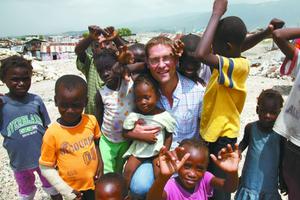
Founded by Scottish Catholic Magnus MacFarlane-Barrow after he met a Malawian boy during a famine who told him he just wanted enough to eat so he could go to school, Mary’s Meals supports school food programs in some of the world’s poorest communities, helping to ensure hunger and poverty are not an obstacle to education.
Since its founding in 2002, the charity has experienced phenomenal growth and now feeds an estimated 3 million schoolchildren in 16 countries. Its Zambian program alone is providing meals to 700,000 learners in more than 1,000 schools after 11 years in the country.
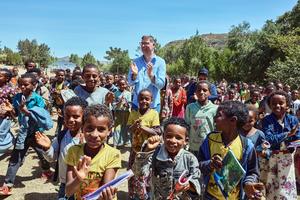
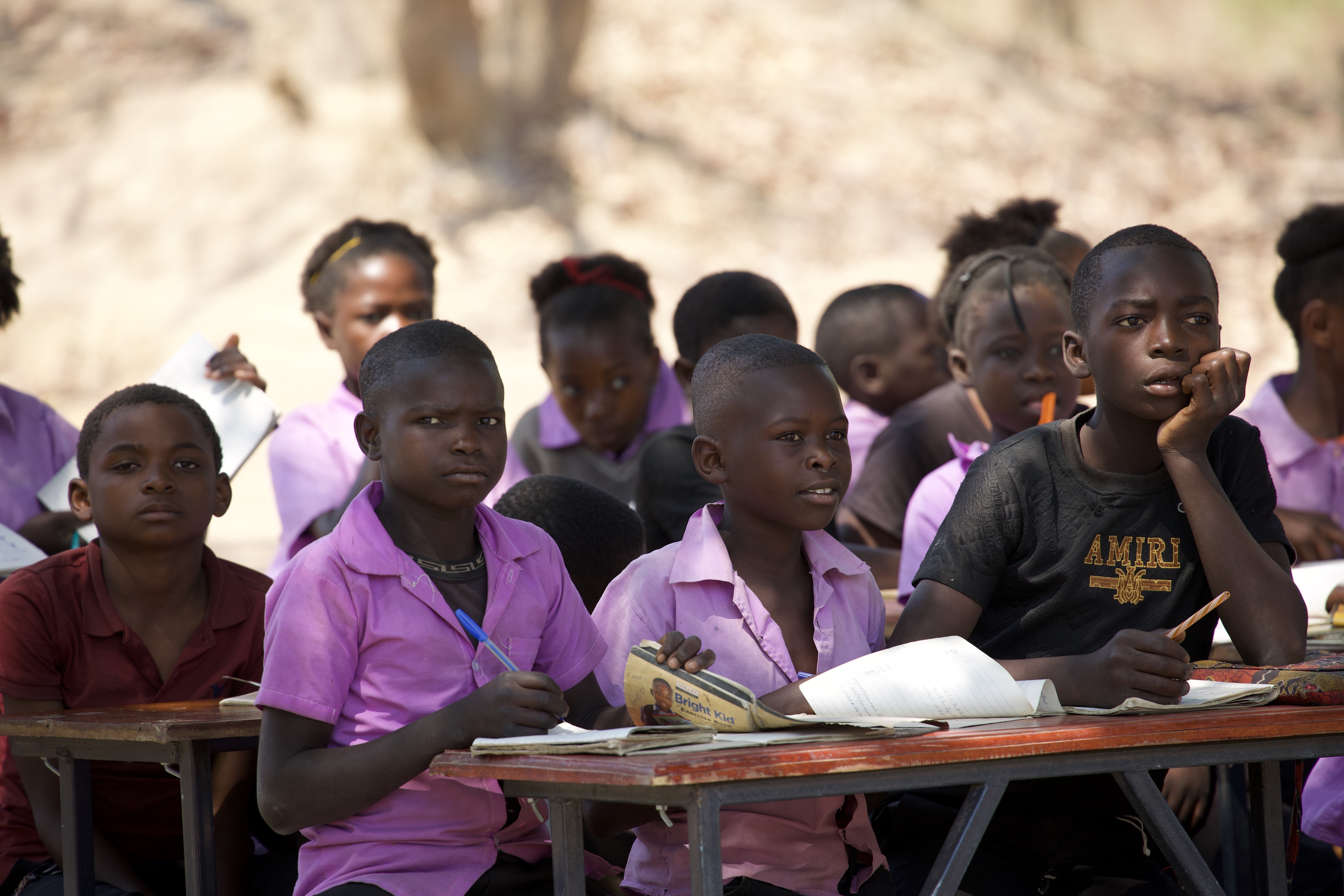
Melodic African birdsong greets us as we arrive at the Pontini School about 50 miles from Kasama, the nearest major city. The location is so remote that we are told many of the children may never visit the city during their lifetime. The school, comprising just one single-level building of two classrooms for 423 pupils age 7 to 18, began its own Mary’s Meals feeding program in June.
“It’s helped us a lot,” says Patrick Chileshe, a Catholic who heads the school’s parent- teacher committee. Already, he says, they are seeing positive results: “We now have no absenteeism, and the children are well motivated to learn.”
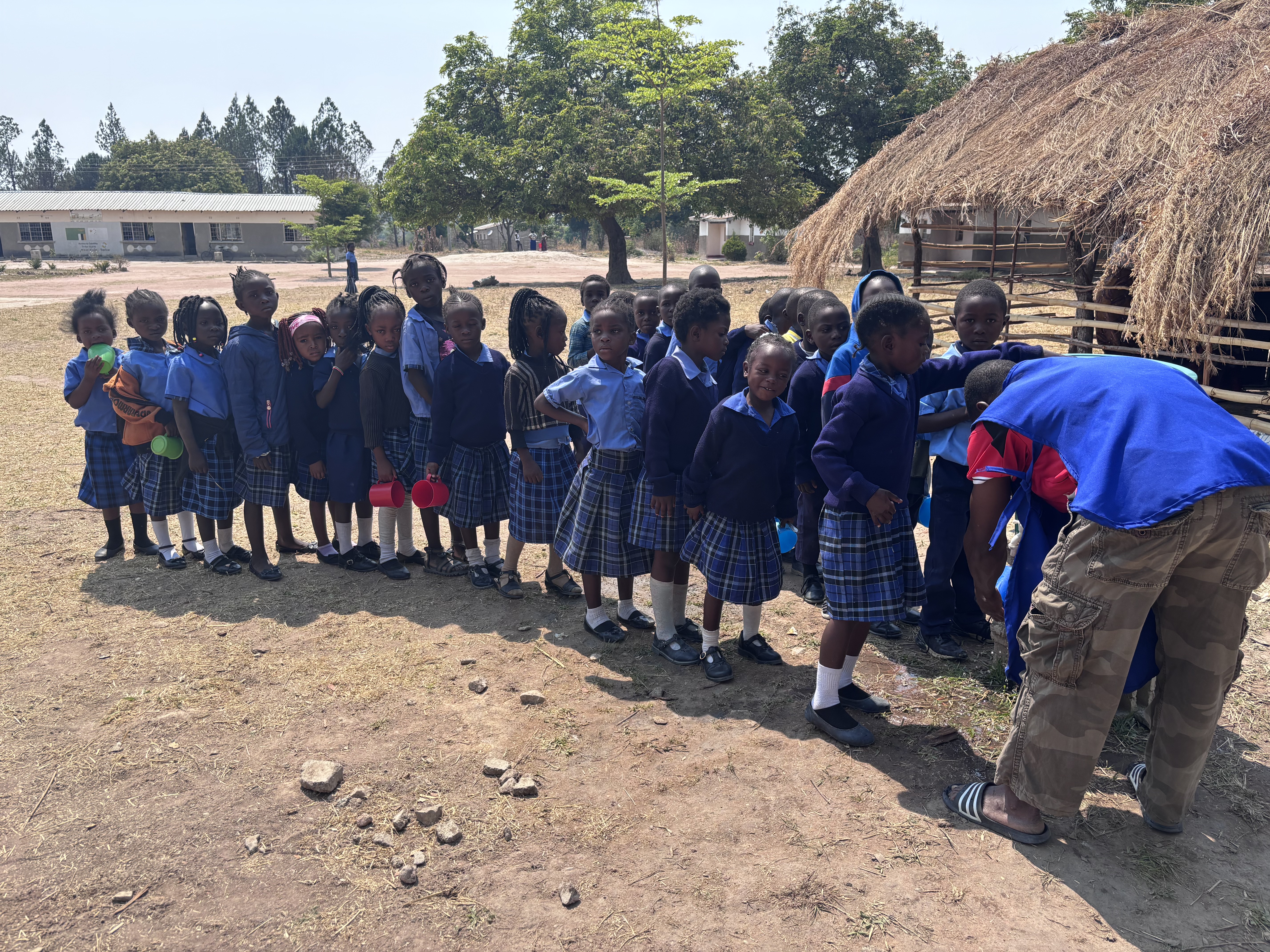
As we arrive, three volunteers, each mothers of pupils at the school, are busy preparing the first of two meals for the day. Corn soya, filled with nutrients, is mixed with water fetched from over a mile away and stirred into a porridge in large vats provided by Mary’s Meals.

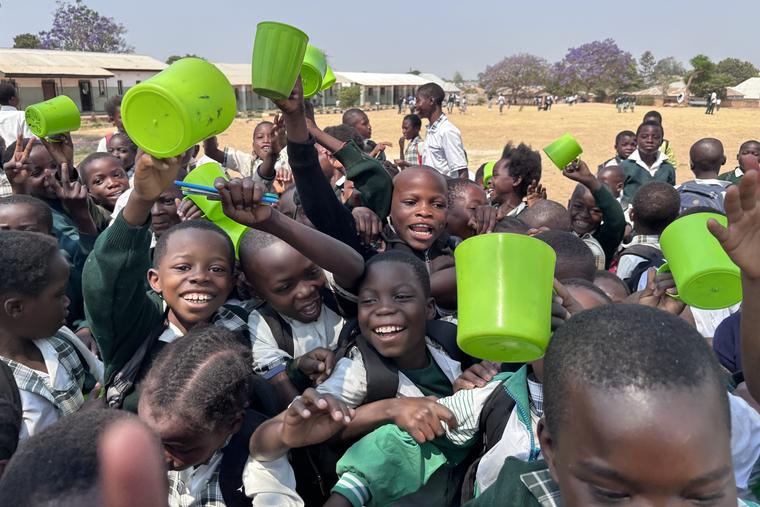
When the feeding time arrives, the children filter out of the school and regimentally line up to receive their porridge, each clasping his or her own plastic mugs, also provided by the charity.
“The children are very excited and happy — they don’t complain when they go home,” says one of the cooks, Teresa Mtali, 56, whose 17-year-old daughter Maureen attends the school and hopes to become a nurse. Even when Maureen graduates, Teresa says she will continue to make the porridge, as “education is very important for the children.”
“We have seen a marked improvement in concentration at school,” says Simon Chama, a parent at the Pontini school and a health and nutrition officer. “They no longer have to be forced to go to school: In just four months, we’ve seen a tremendous increase in the numbers of learners,” he observes.
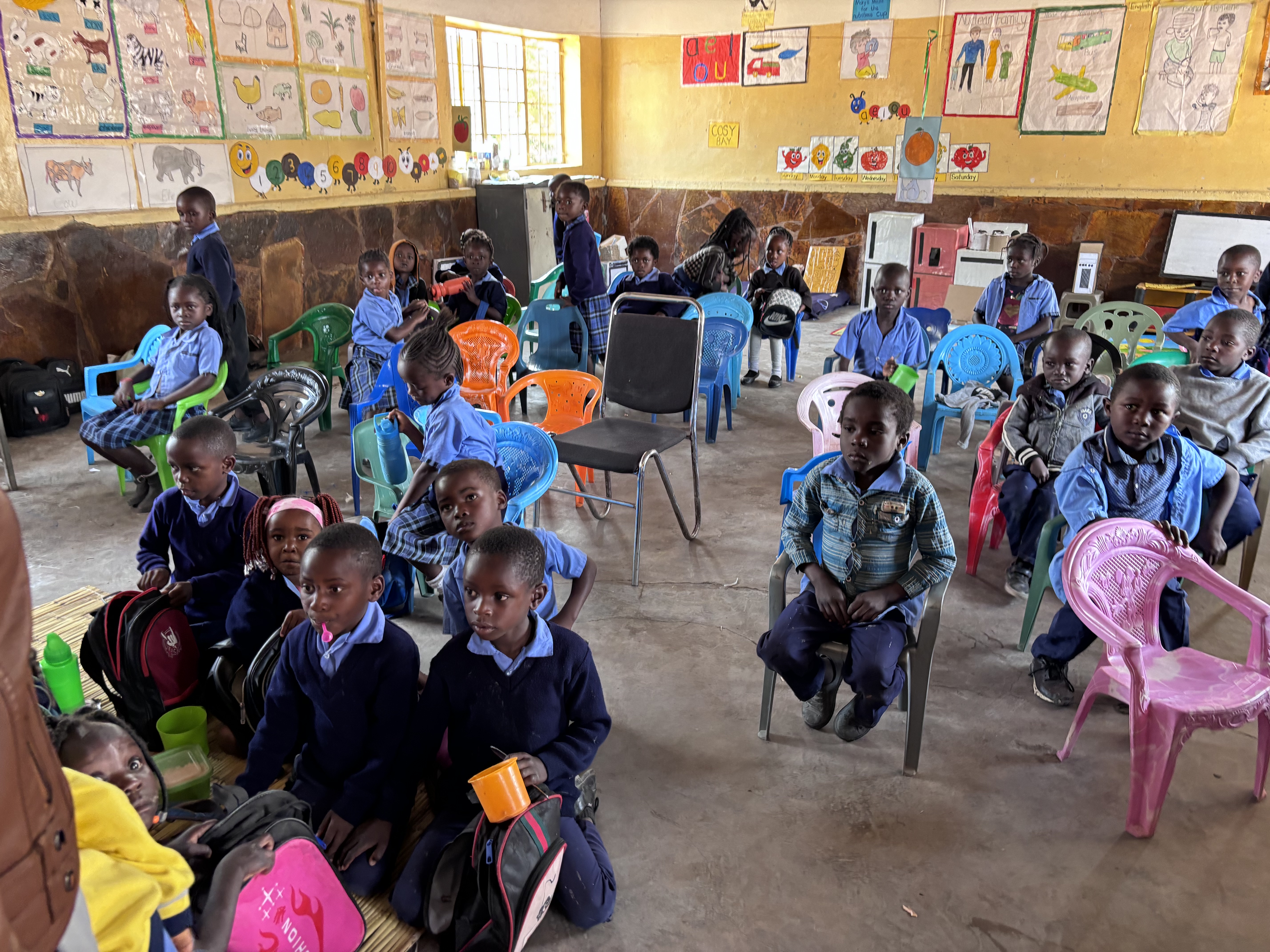
Similarly, at Kasama Primary School in the center of the city, which has more than 300,000 pupils, the children and staff have been celebrating the arrival of the feeding program that had begun just two weeks earlier. “We are expecting 100% attendance and performance,” says headmistress Emeldah Mwaba.
Breaking the Poverty Cycle
In each of the four schools we visit, we hear similar stories — how the program has drastically helped the pupils’ attendance and motivation, above all by offering them hope and helping to break the cycle of poverty.
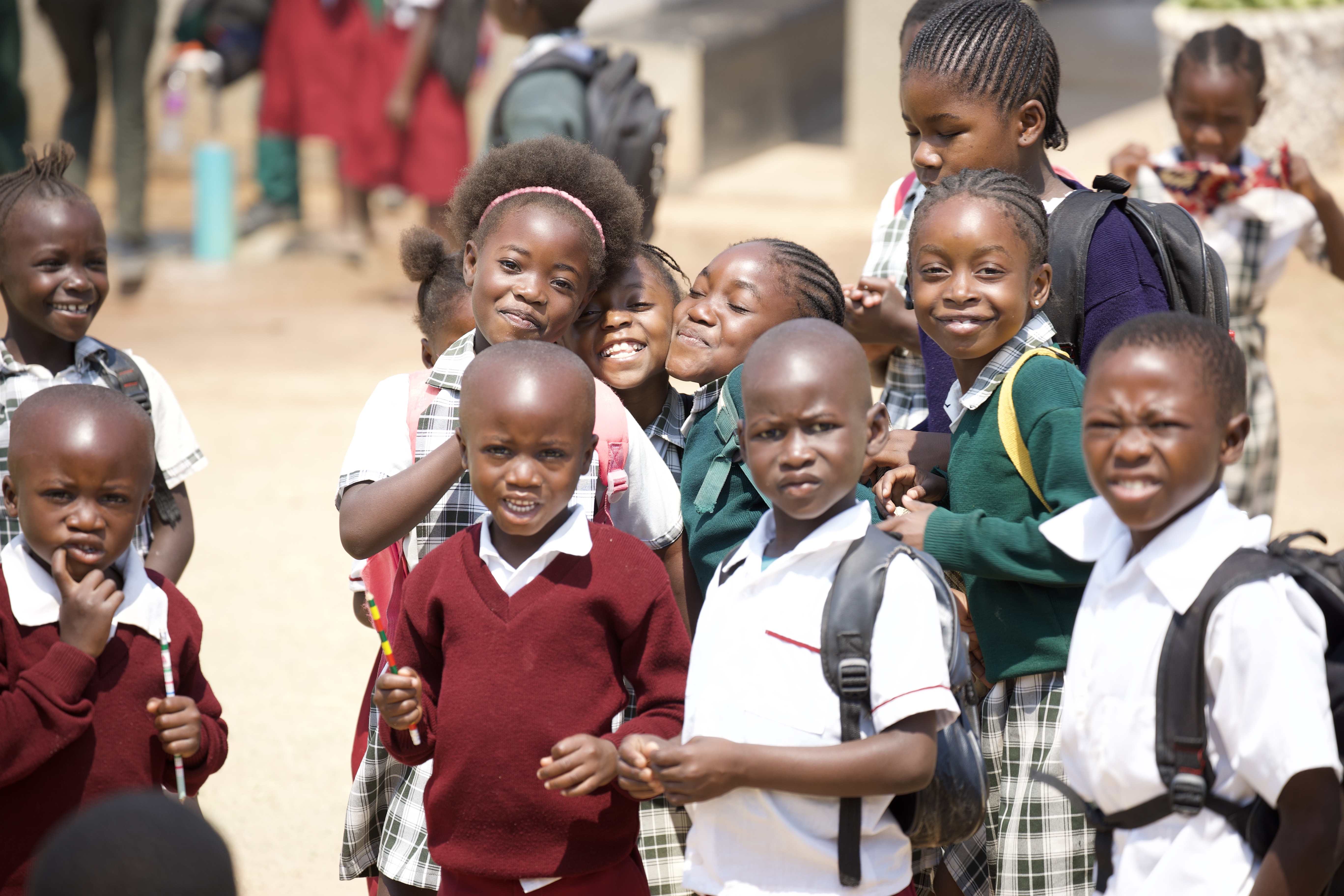
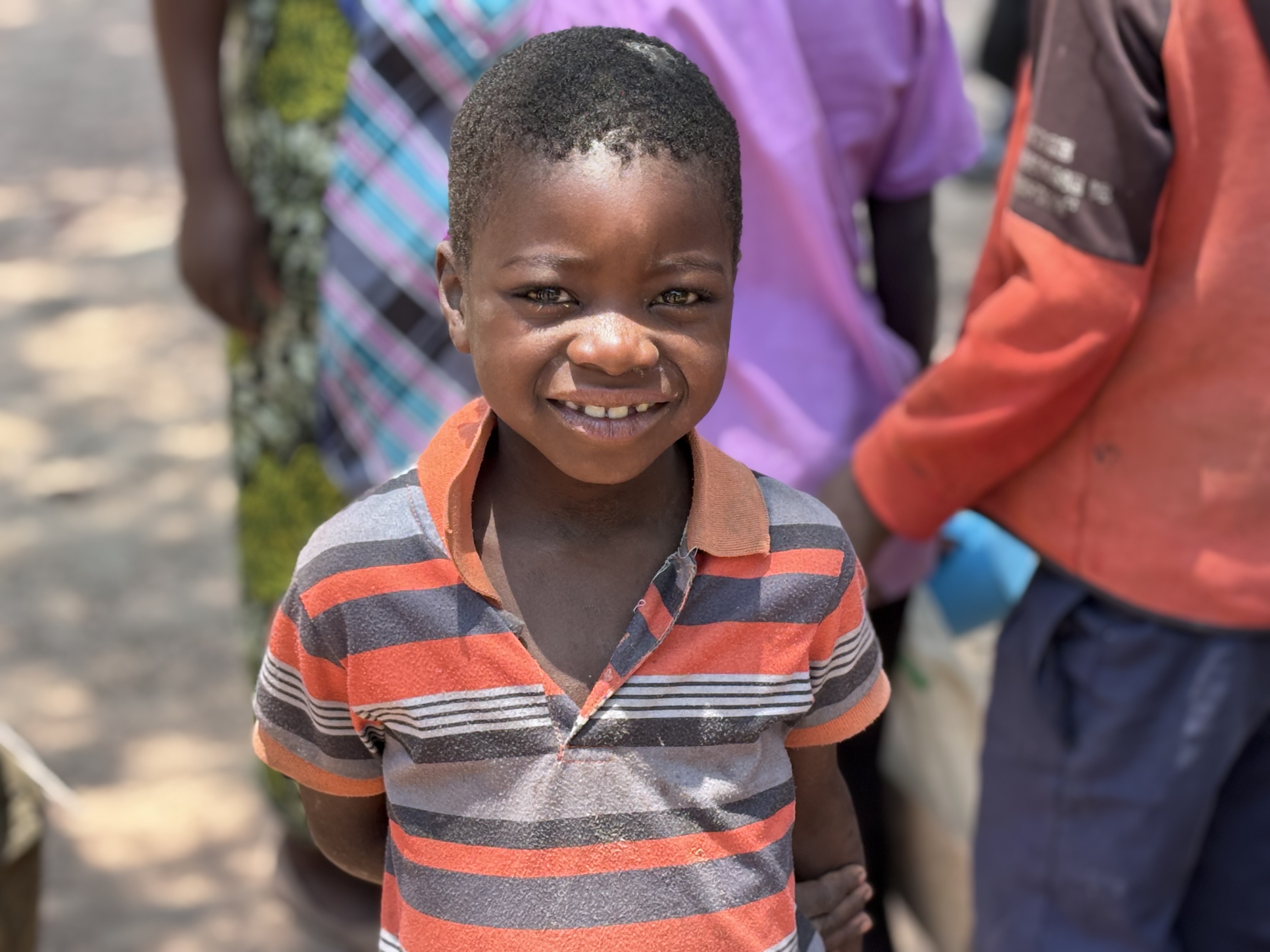
“I see myself becoming a teacher as long as I can eat,” says 12-year-old Anthony, whose favorite subjects are English and Bemba, the local language. “I was hungry until the porridge came, as there was little food at home.” Even “the little ones” are now eager to come to school, says Ruth Mwaba, 43, a mother of two who volunteers as a porridge quality-control officer.
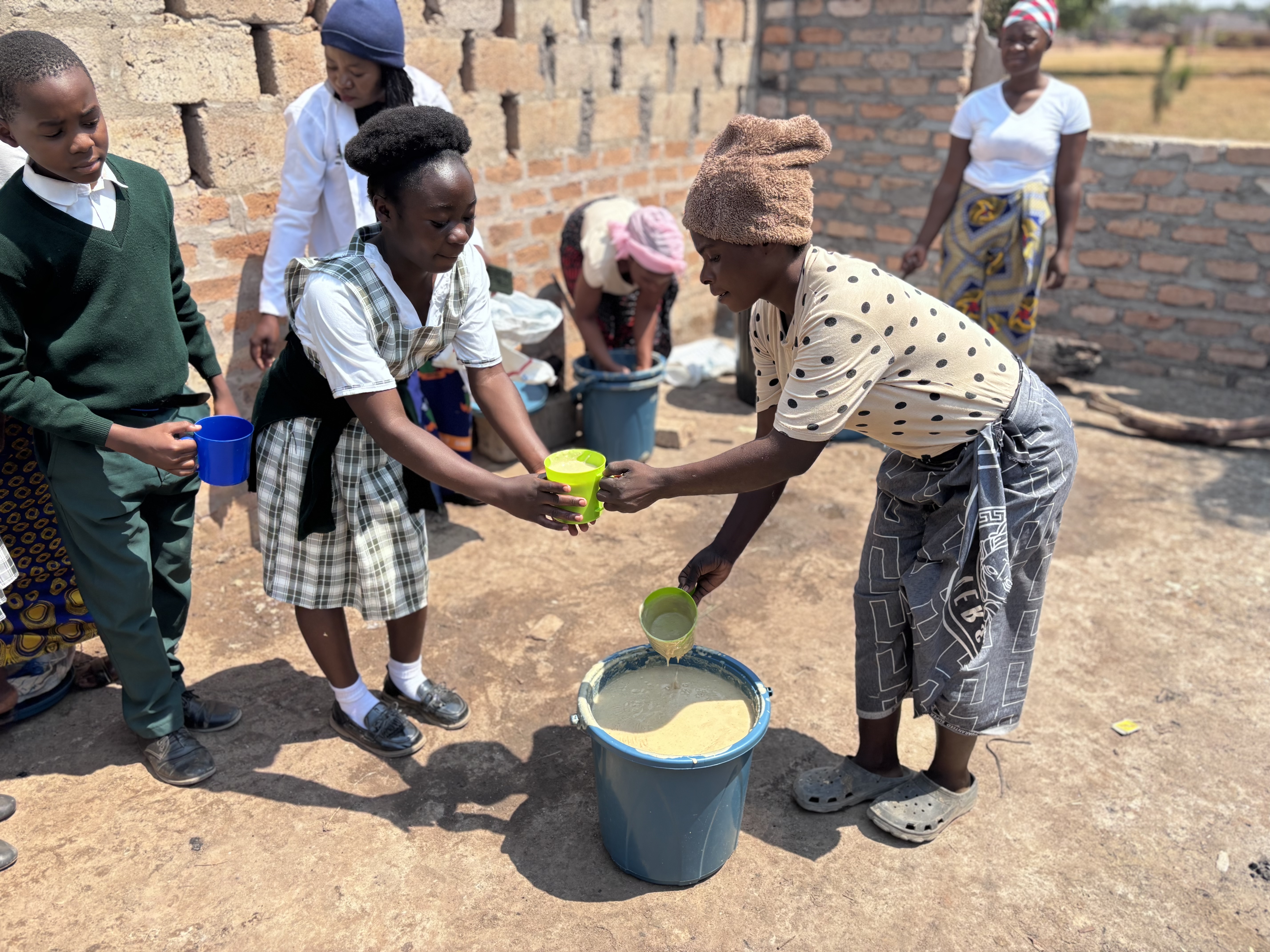
The charity says its feeding program acts as a “catalyst” for the community, providing a ripple effect of other benefits. Shona Shea, the charity’s head of media and content, says that by enabling parents to send their children to school and be fed, they don't have to provide a meal for them during the day with the little resources they have. “Those resources can go further, which has a knock-on effect on the health and well-being of the household as a whole,” she says. It also leaves the parents freer to work.
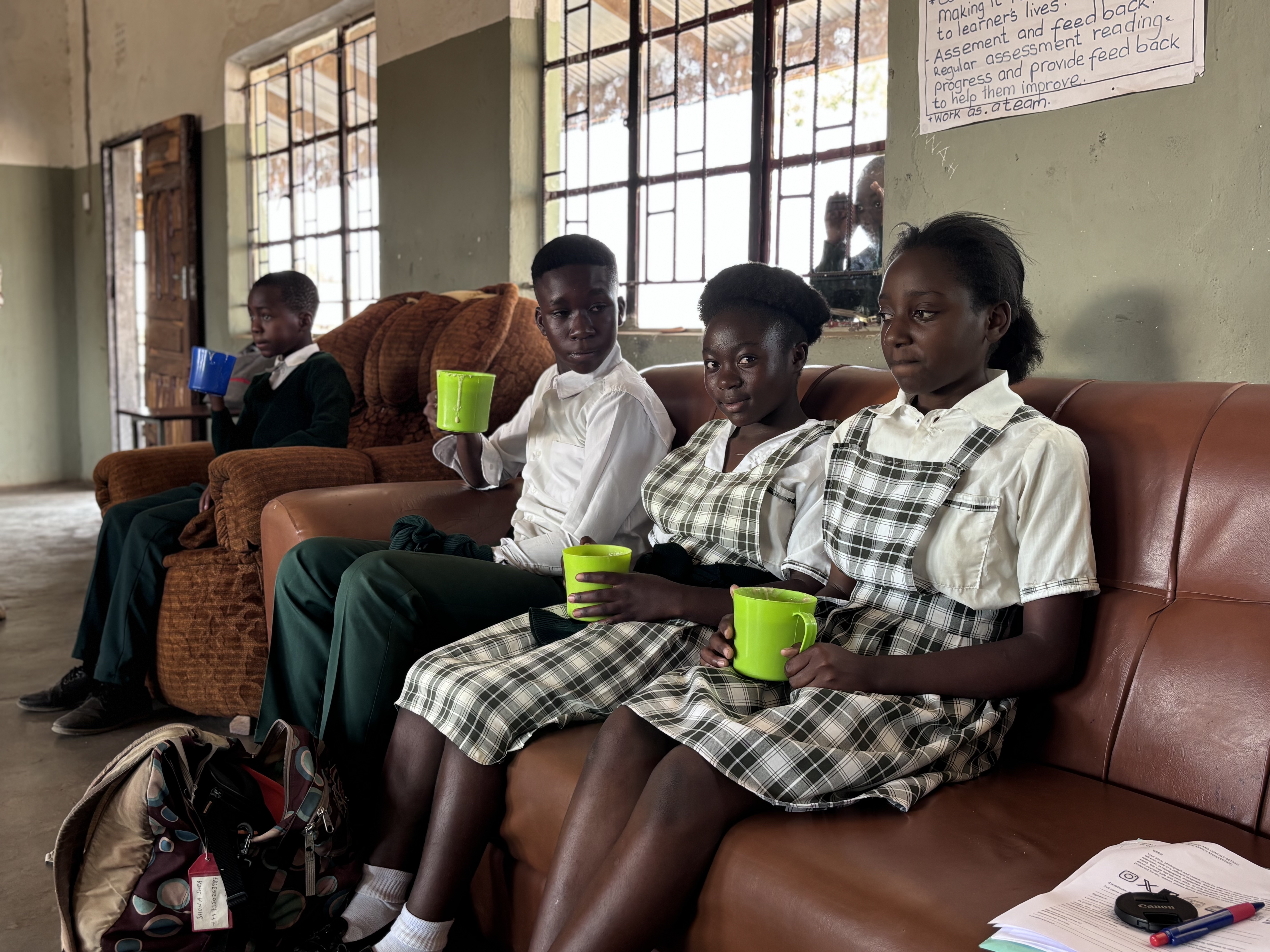
Back in Kasama, Catholic Archbishop Ignatius Chama informs us of the extent of severe food shortages in the region. Typically, he says, families have enough food only after the harvest, during the dry season from June to September, after which supplies diminish. “By the time the rain sets in, a lot of families do not have enough food to feed themselves,” he explains. “And I think it is worse for the kids who are going to school, because then they leave their homes on empty stomachs and come back only to eat that one meal which is prepared.”
He also highlights other challenges, such as rising food inflation, increasingly unpredictable weather patterns, and the fact that the schools are often separated by large distances. “Some schools are up to 7 kilometers apart, and the kids have to walk those 7 kilometers to go to these schools, so something like Mary's Meals helps a lot in that regard,” he says.
But can the school feeding program lead to overdependency on the charity and perhaps a denial of parental and state responsibility to feed the children?
Mary’s Meals staff are aware of the concern but stress the extent to which volunteers — usually local parents and civic leaders — are responsible for the program once it’s up and running. “It’s very much a partnership,” says Shea. “It isn’t about handouts; it’s about feeding these children together,” she says, adding that Mary’s Meals’ goal is always to be able to eventually hand the programs over to communities and governments after a few years.
Mary’s Meals is also committed to ensuring the donations are properly spent, with each serving costing just 15 cents; to feed a child for the entire school year is just $25.20. “Stewardship is a cardinal factor when it comes to how we use our resources,” says Mazuba Mwiinga, head of growth and communications for Mary’s Meals Zambia. “So if a partner comes along to support financially or materially, they are 100% assured that their resources will be taken to where they’re supposed to be.”
Mary’s Meals’ Marian Roots
Although Mary’s Meals is nondenominational, its roots are distinctly Catholic and Marian.
MacFarlane-Barrow’s passion for helping the poor derives from a 1983 family pilgrimage to Medjugorje, and then in 1992, when he was inspired to help drive a truck full of donations to help those suffering during the Bosnian War, close to the Marian shrine.
Wezzy Kalusambo Chomba, communications manager of Mary’s Meals in Zambia, says he clearly sees the hand of Providence in the generous acts of donors convinced of the need to “feed a person in a place they will never even go to.”
“So many have benefited, even people deep in rural areas, because one man one day woke up and said, ‘I want to contribute to somebody’s welfare,’” he says, adding that for him, as a Catholic, the charity represents “faith in action because it’s a noble activity that we do.”
Shea recalls how a 30-day novena earlier this year was followed by one of the largest donations the charity has ever received. Over the 10 years she has worked for the charity, Shea says she has witnessed “many, many examples” of other similar miracles. “The main thing is everybody can play an active part in the mission and really make a difference,” she says.
Mary’s Meals work is “sustained by prayer and powered by grassroots generosity, including strong support from across the United States,” says Paul McMahon, the charity’s U.S. communications director. Iowa is a leading region of support and an “inspiring example of how local action can drive global impact,” he says, adding that creative fundraising efforts in the U.S. “have been boundless.” Children have also run campaigns of their own, including sharing their pocket money to help feed their poorer peers across the world.
Mary’s Meals occasionally works with Catholic partners: Recently, it linked up with the Daughters of Charity in Ethiopia during the Tigray conflict. In Zambia, Archbishop Chama says the Church has its own feeding programs for Catholic schools, but he sees partnering with Mary’s Meals as a valuable opportunity for broader cooperation and coverage, especially in the northern region, which has a high concentration of faithful (60% of the population are Catholic). The Church’s community structure could facilitate participation and support for such programs, he believes.
Blessing From God
“When the Church kneels beside a leper, a malnourished child or an anonymous dying person, she fulfills her deepest vocation: to love the Lord where he is most disfigured,” writes Pope Leo XIV in his apostolic exhortation Dilexi Te (I Have Loved You), published during our visit.
Many of the parents we speak to recognize the love of God in the arrival of the charity at their schools, viewing it as a blessing, and Catholics in particular equate the charity with graces obtained by Our Lady.
“We strongly believe that, through faith, Mary has provided and answered our prayers,” says Bernard Mubanga, a Catholic elder who has grandchildren at Kashito School, also located in a very remote area of the northern region.
“Many Catholics will look at this as surely a blessing,” says Archbishop Chama, “to assist the people and especially the little ones, so they can focus on their education instead of focusing on, ‘Will I find a meal when I get home?’”
As we prepare to leave Kashito School, our vehicle is surrounded by ecstatic children waving their colored mugs, having received their daily porridge. Behind them is Village elder Michael Mulenga, 84, and his wife Elizabeth, praying the Rosary outside their small straw-thatched hut. The day happens to be Oct. 7, the feast of Our Lady of the Rosary.
“We’re delighted with the program,” says Michael, a father of nine. “The children are now encouraging each other to go to school.”
“The only way to live well,” he says, “is if one is educated.”
- Keywords:
- mary's meals
- feed the hungry

Edward Pentin Edward Pentin is the Register’s Senior Contributor and EWTN News Vatican Analyst. He began reporting on the Pope and the Vatican with Vatican Radio before moving on to become the Rome correspondent for EWTN's National Catholic Register. He has also reported on the Holy See and the Catholic Church for a number of other publications including Newsweek, Newsmax, Zenit, The Catholic Herald, and The Holy Land Review, a Franciscan publication specializing in the Church and the Middle East. Edward is the author of The Next Pope: The Leading Cardinal Candidates (Sophia Institute Press, 2020) and The Rigging of a Vatican Synod? An Investigation into Alleged Manipulation at the Extraordinary Synod on the Family (Ignatius Press, 2015). Follow him on Twitter at @edwardpentin.