In the Footsteps of Saints: Carlo Acutis and Pier Giorgio Frassati
For fans of the newest young saints, Milan and Turin offer a chance to follow in their footsteps, discovering where they studied, prayed and served.
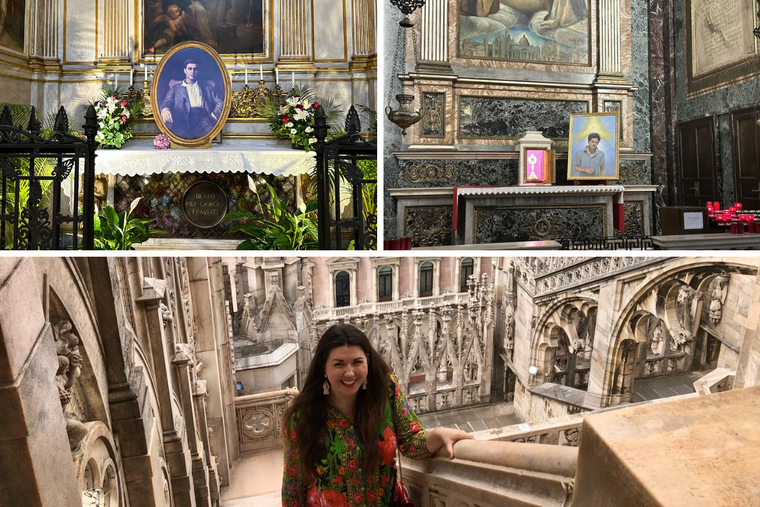
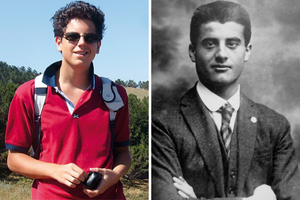
The canonizations of Carlo Acutis and Pier Giorgio Frassati have drawn a wave of pilgrims to their hometowns, an hour apart by high-speed train in northern Italy.
For fans of the Catholic Church’s newest young saints, Milan and Turin offer a chance to follow in their footsteps, discovering the places where they studied, prayed and served the poor.
Carlo Acutis grew up in Milan’s Porta Magenta neighborhood, a residential area near the Church of Santa Maria delle Grazie, home of Leonardo da Vinci’s masterpiece The Last Supper, a fitting backdrop for a teenager who called the Eucharist “my highway to heaven.”
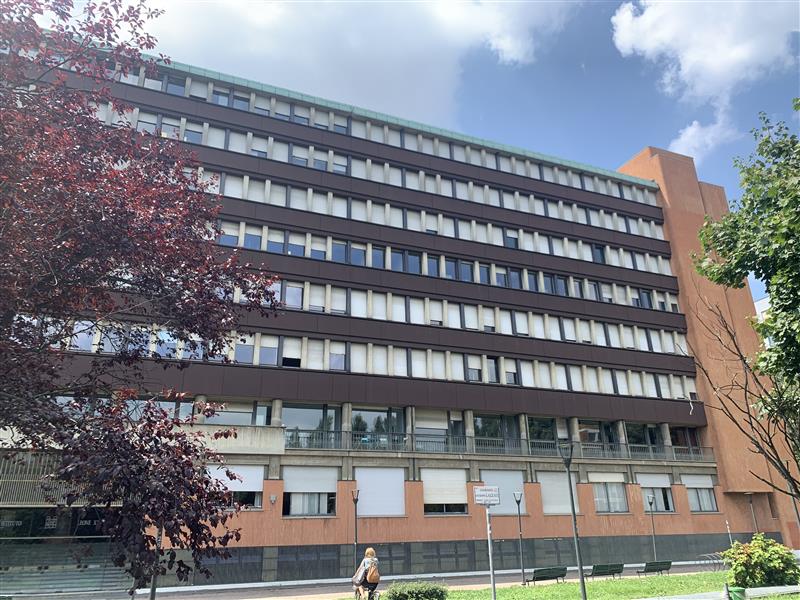
His parish, Santa Maria Segreta, became his spiritual anchor. The church’s name means “Holy Mary of the Secret,” a title that resonated with Carlo’s devotion to Christ hidden in the tabernacle. The proximity of Carlo’s parish, which was around the corner from his family’s apartment, allowed him to pause his homework or games to walk to Mass, often attending the parish’s evening daily Masses.
Msgr. Gianfranco Poma remembered first encountering 9-year-old Carlo there in 2000, kneeling alone before the tabernacle.
“So you come here sometimes to pray before the Eucharist?” the new pastor asked the young boy. Carlo replied simply, “Yes, every now and then I come to tell my things to Jesus.”
Today, pilgrims from Australia to Argentina have come to visit Carlo’s parish, which now houses a relic of Acutis’ heart. “It is the sign of his presence in this place he loved, where he encountered God and grew in faith,” said current pastor Father Maurizio Corbetta, who estimates that more than 7,000 pilgrims have come to visit his parish since Carlo’s 2020 beatification.
Across the piazza stands the Tommaseo Institute, the Catholic elementary and middle school run by Marcelline sisters, where Carlo spent eight years studying. Sister Monica Ceroni, his religion teacher, remembers Acutis as “a cheerful, lively and very normal boy … with a zest for life.” Carlo’s teachers also remember his generosity toward classmates, especially those teased or left out.
“There was a classmate that kids today would call a loser,” whom Acutis made a special effort to befriend when they were in middle school, Sister Monica said.
Later, at the Jesuit-run Leo XIII Institute, Carlo was known for helping his high-school classmates with homework, especially when computers were involved. Father Roberto Gazzaniga, the chaplain, recalled, “Carlo used to go to the chapel in the morning before entering the classroom and during breaks and would stop to pray. Nobody else did that.”
Carlo entered Leo XIII’s classical program with a curriculum focused on history, Latin, Greek, philosophy, biology, mathematics and Italian literature. However, his high-school studies were abruptly cut short when he died of leukemia on Oct. 12, 2006, at the start of his sophomore year of high school. Carlo “never concealed his choice of faith,” Father Gazzaniga said. “One could point to him and say: ‘Here is a happy and authentic young man and Christian.’”
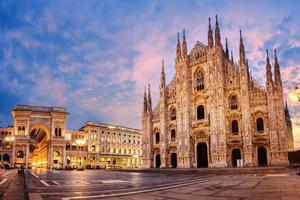
Beyond his neighborhood, Carlo was able to pray in some of Milan’s great churches, where he would have joined liturgies in the Ambrosian Rite, distinct to the city and linked to its patron, St. Ambrose. Nearby Carlo’s neighborhood is the Basilica of Saint Ambrose, where pilgrims can pray at the tomb of the fifth-century bishop of Milan who baptized St. Augustine. And the grand Duomo of Milan, the Basilica of the Nativity of Saint Mary, dating back to 1386, holds the tomb of another St. Carlo — St. Charles Borromeo.
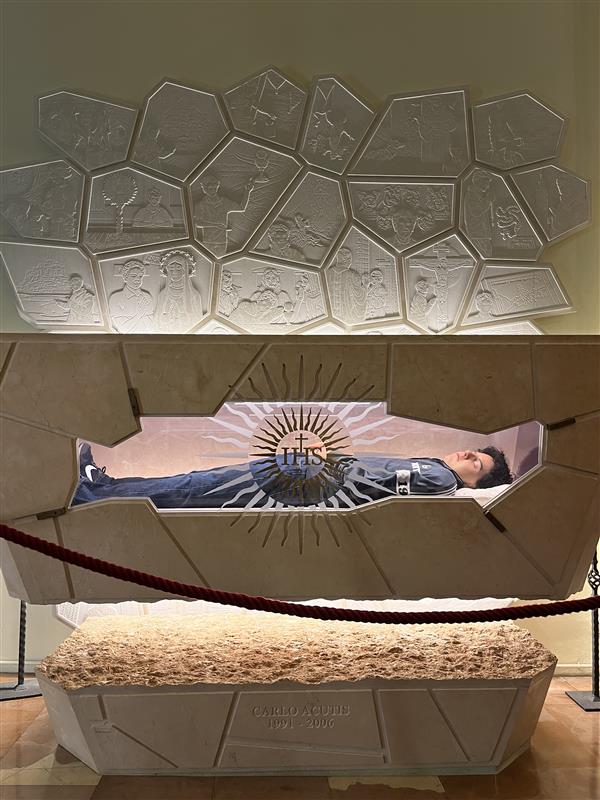
Yet you will not find Carlo Acutis’ tomb in Milan, but nearly 300 miles south in the place where Carlo felt happiest, the Umbrian hill town of Assisi, where the Acutis family had a summer home. His tomb is open for veneration inside of the Church of St. Mary Major, the spot where St. Francis of Assisi stripped off his rich clothes to follow Christ in poverty. Hundreds of thousands of pilgrims have visited Carlo’s tomb in Assisi where he can be seen dressed in jeans, a track jacket and sneakers.
Frassati’s Turin and Pollone
An hour west of Milan by train lies the city of Turin, Italy’s first capital and an industrial hub at the dawn of the 20th century. Sts. John Bosco, Joseph Cafasso and Dominic Savio and Blessed Giuseppe Allamano all called Turin home, and now Pier Giorgio Frassati can be added to the list of saints from Turin.
Frassati’s tomb rests in Turin’s Cathedral of St. John the Baptist, which also houses the Shroud of Turin. As a young man, Pier Giorgio often prayed at the cathedral, including each New Year’s Eve during all-night adoration vigils. At one such vigil, Frassati was so absorbed in prayer he failed to notice hot candle wax dripping onto his hair and clothes.
In the Crocetta neighborhood, the Parish of the Blessed Virgin of Graces marked milestones of Frassati’s faith — his first Communion, confirmation, and finally his funeral, during which Turin’s poor came to mourn him. The parish still preserves his baptismal and death certificates. The author of the guide book Frassati Tour, Alessandro Maria Greco, noted that his birth record shows a handwritten correction “because Pier Giorgio was born with breathing difficulties, so they chose to baptize him immediately, at home.”
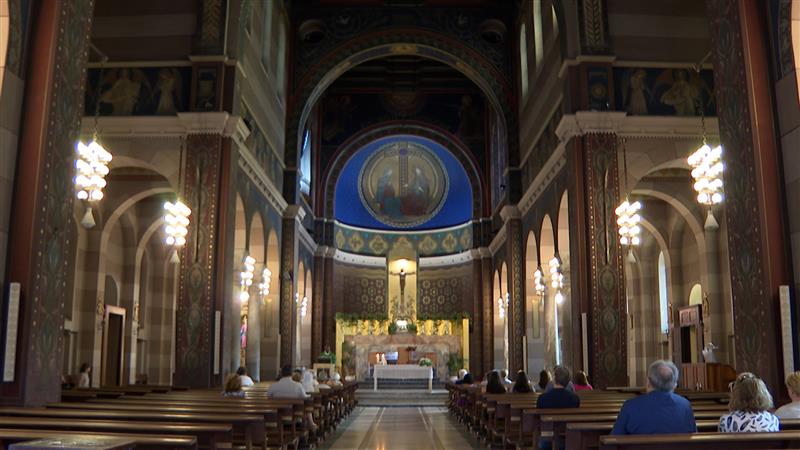
Frassati’s devotion to Mary led him to the Consolata Basilica (Basilica of Our Lady Consoler), where he joined in the annual May processions. At the Church of San Domenico, he discovered his vocation with the Dominican Third Order in 1922. At the Little House of Divine Providence, founded by St. Joseph Cottolengo, Frassati cared for the sick and impoverished — so much so that a pavilion there now bears his name.
But it was in Pollone, where his family had a summer home at the base of the Alps, that Pier Giorgio fell in love with the mountains. Villa Ametis, his grandparents’ house, still holds his bedroom with original furnishings — his bed, skis, hiking boots and letters. “In Pollone, Frassati rode his bike, rode horses, climbed the trees, climbed the mountains,” Christine Wohar of Frassati USA told the Register. “When he was older, he would go to Pollone to study for his exams. It was a special place for him throughout his life.”
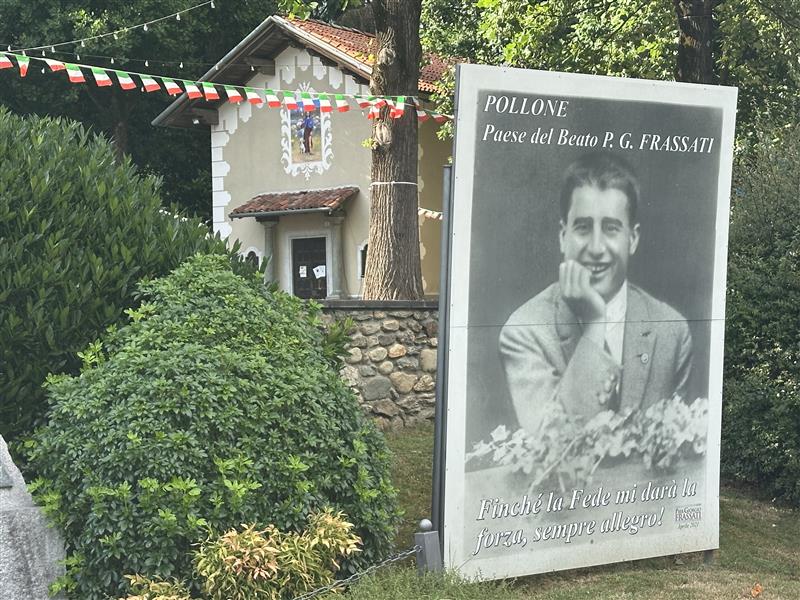
At Pollone’s parish church of St. Eusebius, where he attended daily Mass, a side chapel today houses a relic and his climbing ax. Above Pollone, the Sanctuary of Oropa was Frassati’s favored Marian shrine. His sister Luciana later wrote that “the Madonna of Oropa was his Madonna. He knew every minute detail of her story and all the legends and anecdotes about her image and the miracles that she had obtained.”
Pollone’s current pastor, Father Luca Bertarelli, has seen pilgrims arrive in the small town of Pollone from around the world. “I have met in these years thousands of pilgrims, especially young people,” he said. “And I have also seen tears that flowed from their eyes because of the holy life of Pier Giorgio.”
FURTHER READING
Find Courtney Mares’ book A Saint in Sneakers.
Pilgrim’s Guide
Milan — Carlo Acutis
• Santa Maria Segreta Church (Piazza Tommaseo): Carlo’s parish, where he attended daily Mass and prayed before the tabernacle. Relic of his heart available for veneration.
• Tommaseo Institute (Piazza Tommaseo, 1): Carlo’s elementary and middle school, run by the Marcelline Sisters; private but visible from the piazza.
• Leo XIII Institute (Via Leone XIII, 12): Jesuit high school where Carlo studied.
• Santa Maria delle Grazie (Piazza Santa Maria delle Grazie): Dominican convent with Leonardo da Vinci’s The Last Supper, a short walk from Carlo’s home. Reservations required months in advance.
• Basilica of St. Ambrose (Piazza Sant’Ambrogio, 15): Tomb of St. Ambrose, patron of Milan.
• Milan Cathedral (Duomo) (Piazza del Duomo): Carlo’s cathedral, where Mass is celebrated in the Ambrosian Rite. Free entry for Mass.
Assisi — Carlo’s tomb
• Church of St. Mary Major (Piazza del Vescovado): Carlo is buried here, at the site where St. Francis renounced his wealth. Pilgrimage site with daily liturgies.
Turin — Pier Giorgio Frassati
• Cathedral of St. John the Baptist (Piazza San Giovanni): Tomb of Pier Giorgio, as well as the Chapel of the Holy Shroud (although the shroud is rarely on display).
• Parish of the Blessed Virgin of Graces (Corso Einaudi): Site of Pier Giorgio’s first Communion, confirmation and funeral. A plaque marks his place of prayer.
• Sanctuary of the Consolata (Piazza della Consolata): Marian shrine beloved by Frassati.
• Church of St. Dominic (Via San Domenico, 0): Where Pier Giorgio discovered his vocation as a lay Dominican in 1922.
• Little House of Divine Providence (Via Cottolengo, 14): Still active in service to the poor. The “Frassati Pavilion” is named in his honor.
• Frassati Museum (Via Santa Maria, 4): A new permanent exhibition on the life of Pier Giorgio Frassati titled after his motto, “Verso l’Altro.” Admission to the museum is by reservation only via email at [email protected] or on the website VersoAltro.it.
Pollone — Frassati’s Family Home
• Villa Ametis (Via Pier Giorgio Frassati): Family home with original furnishings and memorabilia. Visits by request (email to [email protected]).
• Parish Church of St. Eusebius: Where Pier Giorgio attended daily Mass during summers in Pollone.
• Sanctuary of Oropa (Bielmonte, Biella Province): Marian shrine dedicated to the Black Madonna, a favorite pilgrimage destination for Frassati. Accessible by car or hiking trail.
- Keywords:
- carlo acutis
- blessed pier giorgio frassati

Courtney Mares Courtney Mares is a Rome correspondent for Catholic News Agency. A graduate of Harvard University, she has reported from news bureaus on three continents and was awarded the Gardner Fellowship for her work with North Korean refugees. She is the author of Blessed Carlo Acutis: A Saint in Sneakers”.