A Rose From Mary: What Our Lady of Guadalupe Taught Me on Pilgrimage
COMMENTARY: Visiting the sacred place where this apparition occurred was truly unforgettable.
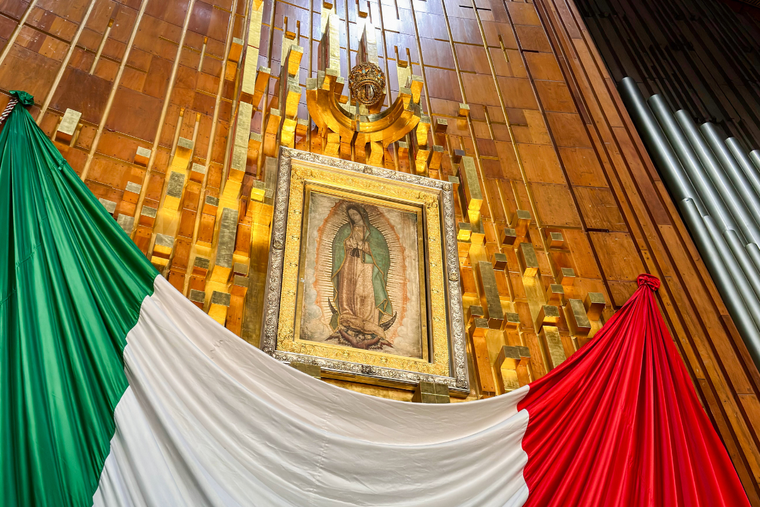
I did my consecration to Mary through the method of St. Louis-Marie de Montfort on the feast day of Our Lady of Guadalupe almost 10 years ago.
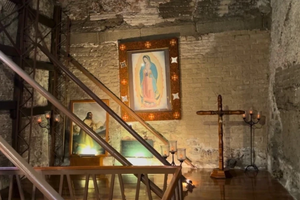
Ever since, I dreamt about the moment I’d be able to visit her “in person,” seeing the tilma with my own eyes and walking the holy site where she appeared to St. Juan Diego on Dec. 12, 1531.
The whole story of the apparition of Our Lady of Guadalupe and the inexplicable events surrounding the tilma (a type of cloak common in the region at the time) are, in themselves, miraculous: Testing has shown that the image is not painted on the fabric, but “hovers” over it; the microscopic reflection in the Virgin’s eye shows all of the people who were in the room when Juan Diego presented himself to the bishop; the position of the stars mark precisely how the sky looked on that December night in 1531; and musical notes are found in the image, as well as so many other things that could be mentioned. (The tilma remained intact from several attacks, for instance.)
But beyond my personal devotion, a fact I discovered weeks before my recent trip made me view the apparition of Guadalupe with even more admiration and a desire to witness the sacred place with my own eyes.
The idea of traveling to Mexico City for Thanksgiving weekend came with an invitation from my friend Cimela Kidonakis, who goes every year with her company Palomita Pilgrimages. Traveling with a group of fellow Catholics, including a priest, sounded like the perfect opportunity for me. A few weeks before the trip, I received the “pilgrim kit” with the itinerary and some useful items, including the book Guadalupe and the Flower World Prophecy, by Joseph Julián González and Monique González.
Much has been said about the symbolism and elements of Our Lady of Guadalupe that led to millions of conversions among the Mesoamerican peoples, but beyond what already seemed extraordinary, I discovered that the apparition was the fulfillment of an ancient prophecy that the Native peoples believed in and had passed down for millennia.
As the book explains (I highly recommend reading it to learn the story in all its depth), the Mexíca believed in the “flower world” as the paradise after death, imagining a place with much color, sound, joy and aroma; they believed only nobles and those “worthy” of such a reward could enter. To express their religion and traditions, these people used music and poems to tell stories and pass on beliefs from generation to generation, and children learned from an early age to sing and play instruments and memorize these tales.
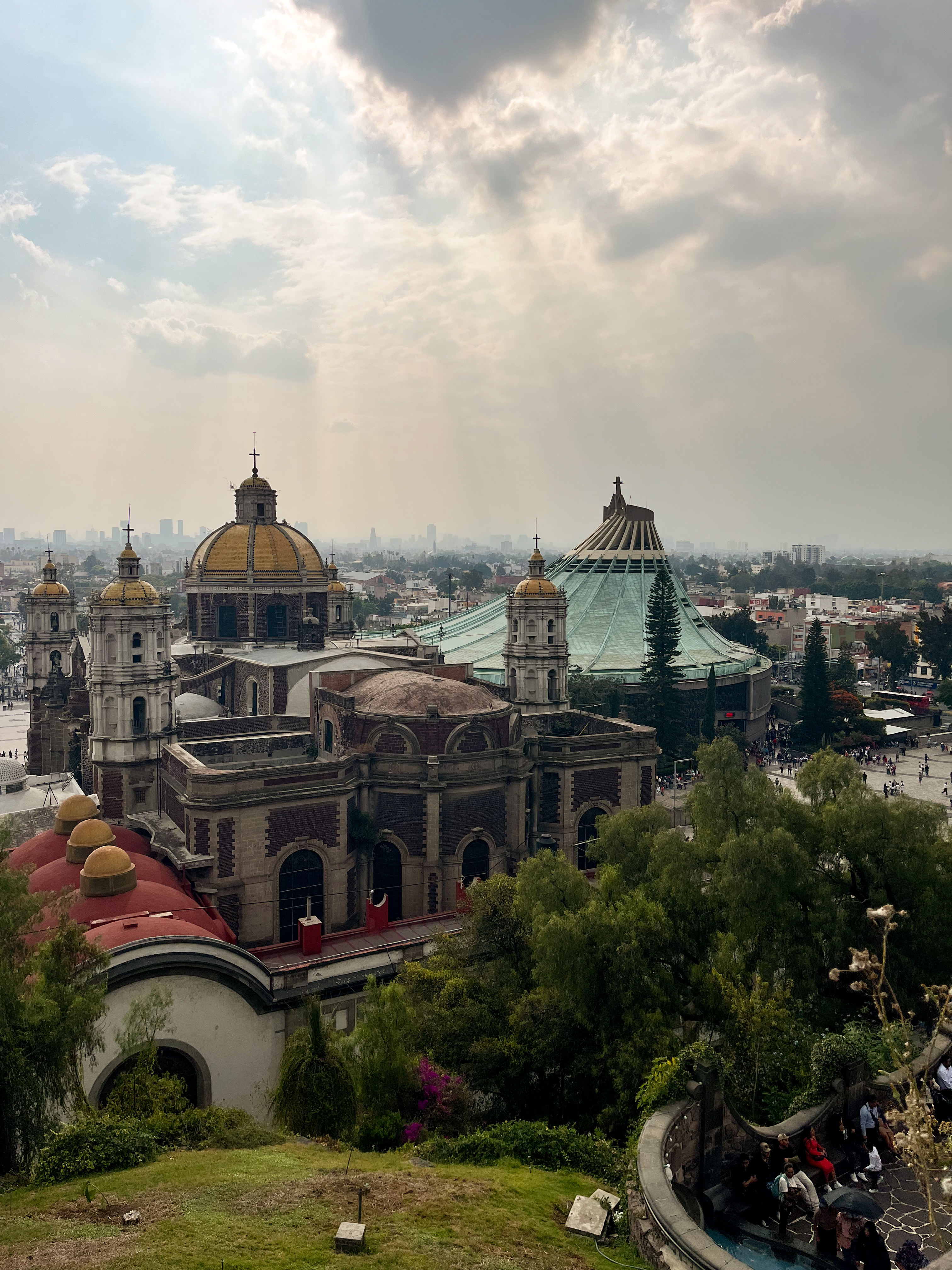
One of the most famous anecdotes of the Nahua people who lived in the region that is now Mexico was the Cuicapeuhcayotl (“Origin of Songs”), which recounts in the original Nahuatl language the story of a male singer who, walking up a hill, finds a hummingbird singing a beautiful song and asks it for help to find the flower world. The animal then tells him to climb to the top and gather the flowers in his tilma. Upon collecting the beautiful and fragrant flowers to present to the nobles, he discovers that, in fact, it was all a dream, and the beautiful flowers are not with him; he begins to cry, feeling that paradise was unattainable.
The story closely resembles the events surrounding the apparition of the Virgin of Guadalupe to Juan Diego, as told in the Nican Mopohua, the earliest known Nahuatl account. According to the historical document, Juan Diego was walking on the Hill of Tepeyac when he heard a beautiful melody, which led him to encounter the Virgin Mary, making him wonder, “Could this be the place my ancestors spoke of?” — suggesting he was likely familiar with the tale of the flower world and had learned to sing/recite the song/poem at a young age. Worth mentioning is that Juan Diego was about 54 years old at the time of the apparition and had already been baptized Catholic.
The message from Our Lady of Guadalupe to Juan Diego was that he should ask Bishop Juan de Zumárraga to build a chapel on that site. The bishop asked Juan for a sign of the authenticity of the Virgin’s apparition and her request. In a third apparition, Our Lady instructed Juan to climb to the top of the Hill of Tepeyac in the cold of December and gather flowers to present to the bishop. Upon opening his tilma before the bishop, not only did fresh and colorful flowers fall to the ground, but the image of Our Lady of Guadalupe was “imprinted” on the fragile fabric.
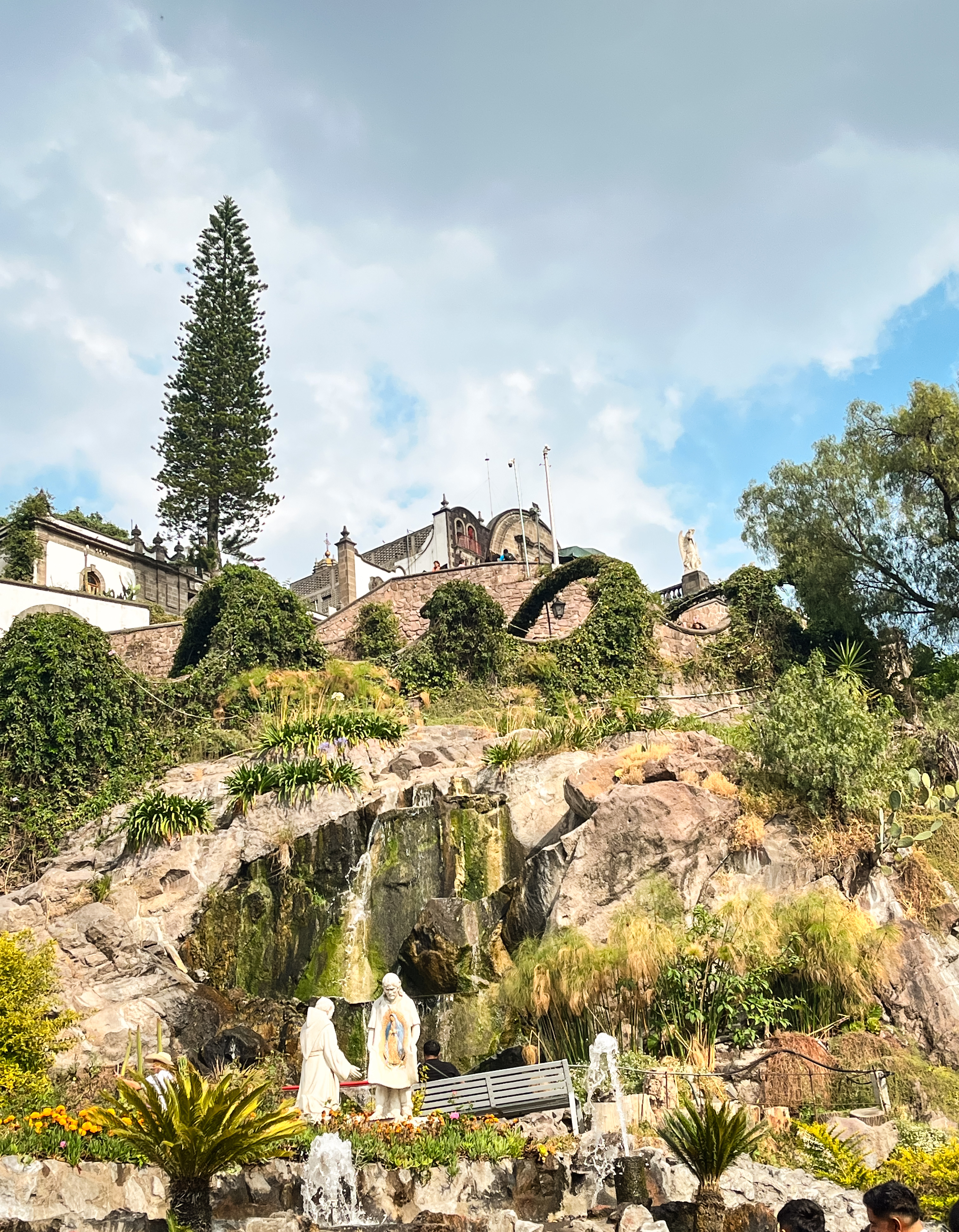
The narrative of the Guadalupe apparition began to be sung and recited among Native communities and quickly spread throughout Central America. People who had longed to reach paradise saw that Juan Diego, a Native and simple man like them, now had access to something that previously only nobles had, with baptism as the key. Everything they had always dreamt about was a sacrament away, and some historical research indicates that millions of Natives chose to be baptized.
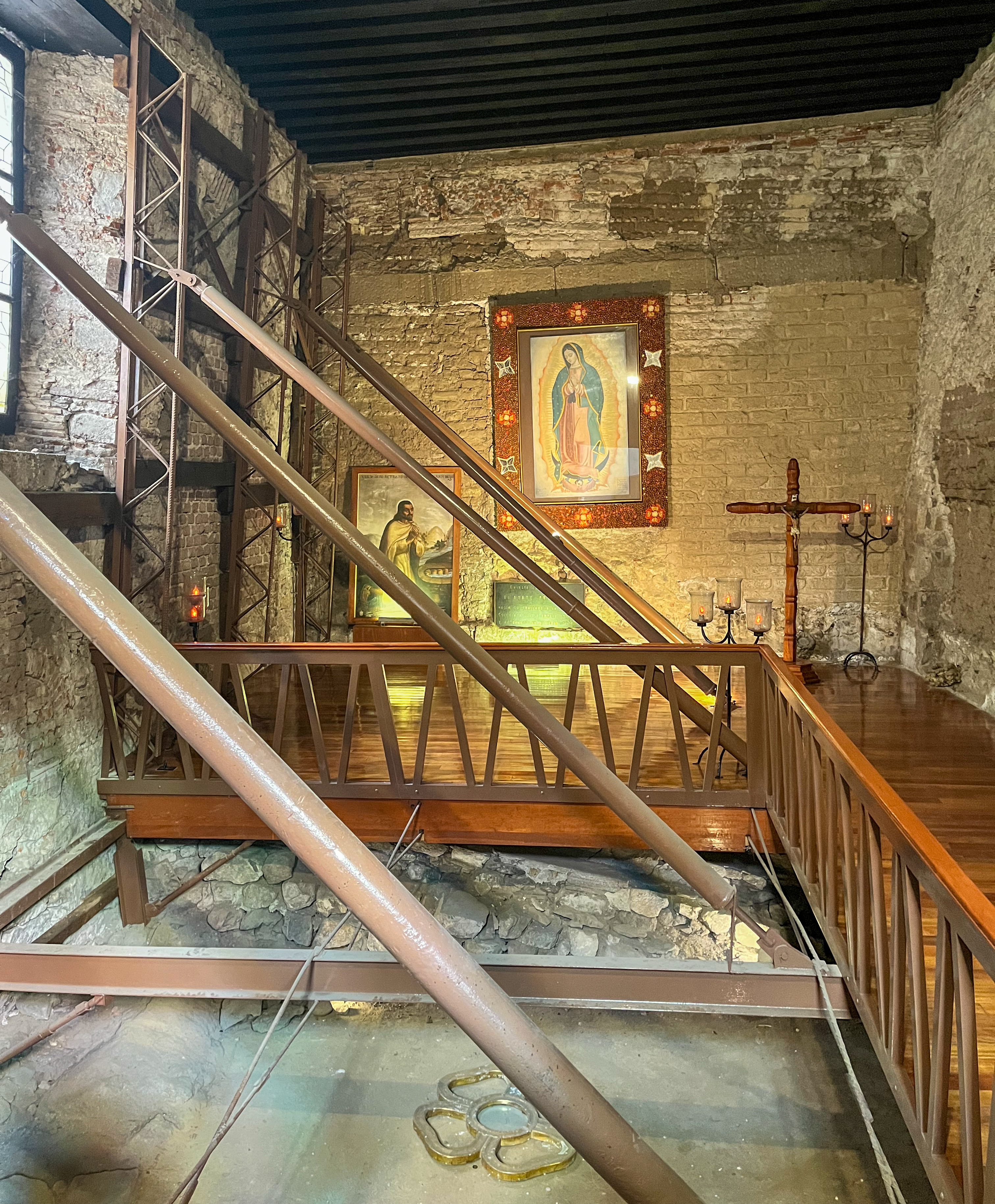
Knowing this magnificent historical context made me feel a profound gratitude to God, who looks upon each of his own with unique love. He, in his infinite wisdom, puts in the heart of every man and woman the deep desire to know him and, at the right time, the means to find him. And so many times, he goes out of his way to make sure we will. That is how he made it possible for millions of Mexíca to find him — but more than multitudes, God wanted each one of those souls. I once heard a wise priest say that God “doesn’t know how to count more than one,” meaning his love is infinite and individual for each one of us.
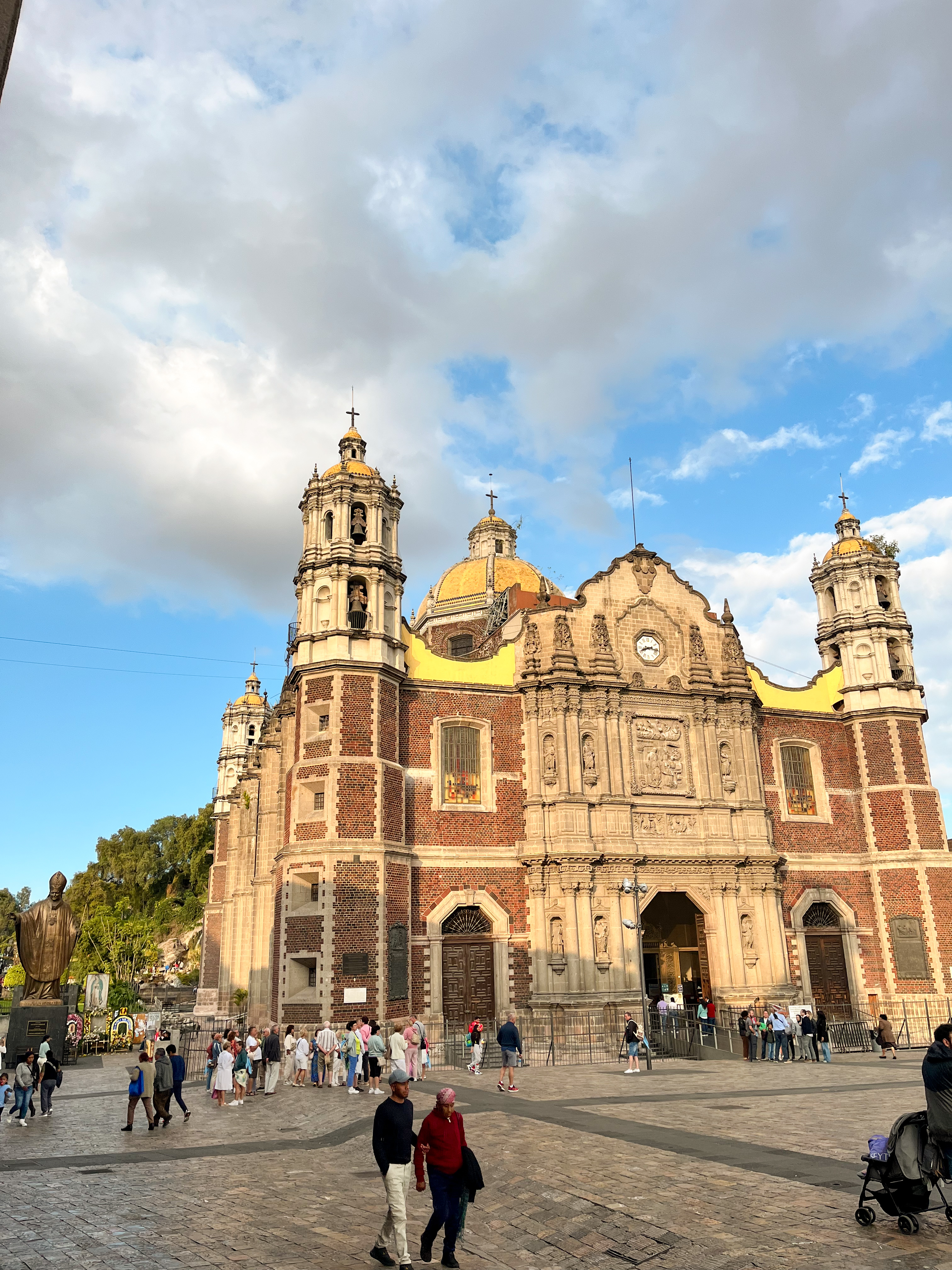
Moving Moment
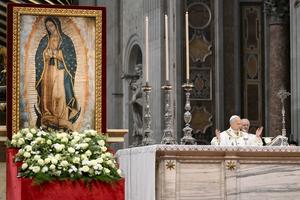
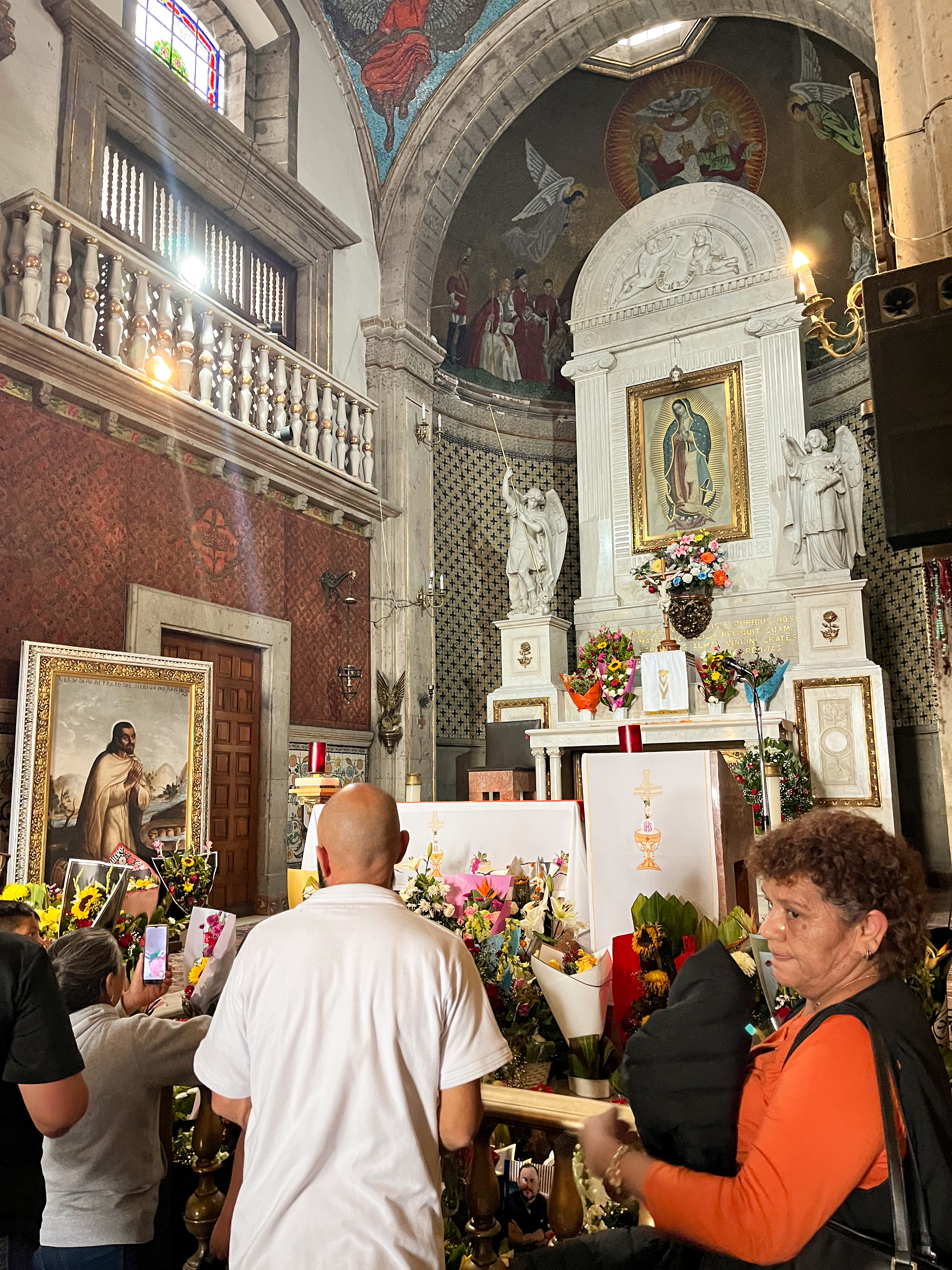
And indeed, this experience came true upon my arrival at the Basilica of Our Lady of Guadalupe. Seeing the tilma with my own eyes filled me with awe. I saw the altar overflowing with flowers brought daily by pilgrims. I smelled the vibrant aroma of roses. I heard the songs sung during the celebrations. I contemplated the colors and brilliance of the church and the typical Mexican attire of the thousands of faithful who visit. I could only think about how those ancient people, witnessing the prophecy fulfilled before them, must have felt loved and happy. It was as if, in a way, the prophecy was fulfilled for me, too.
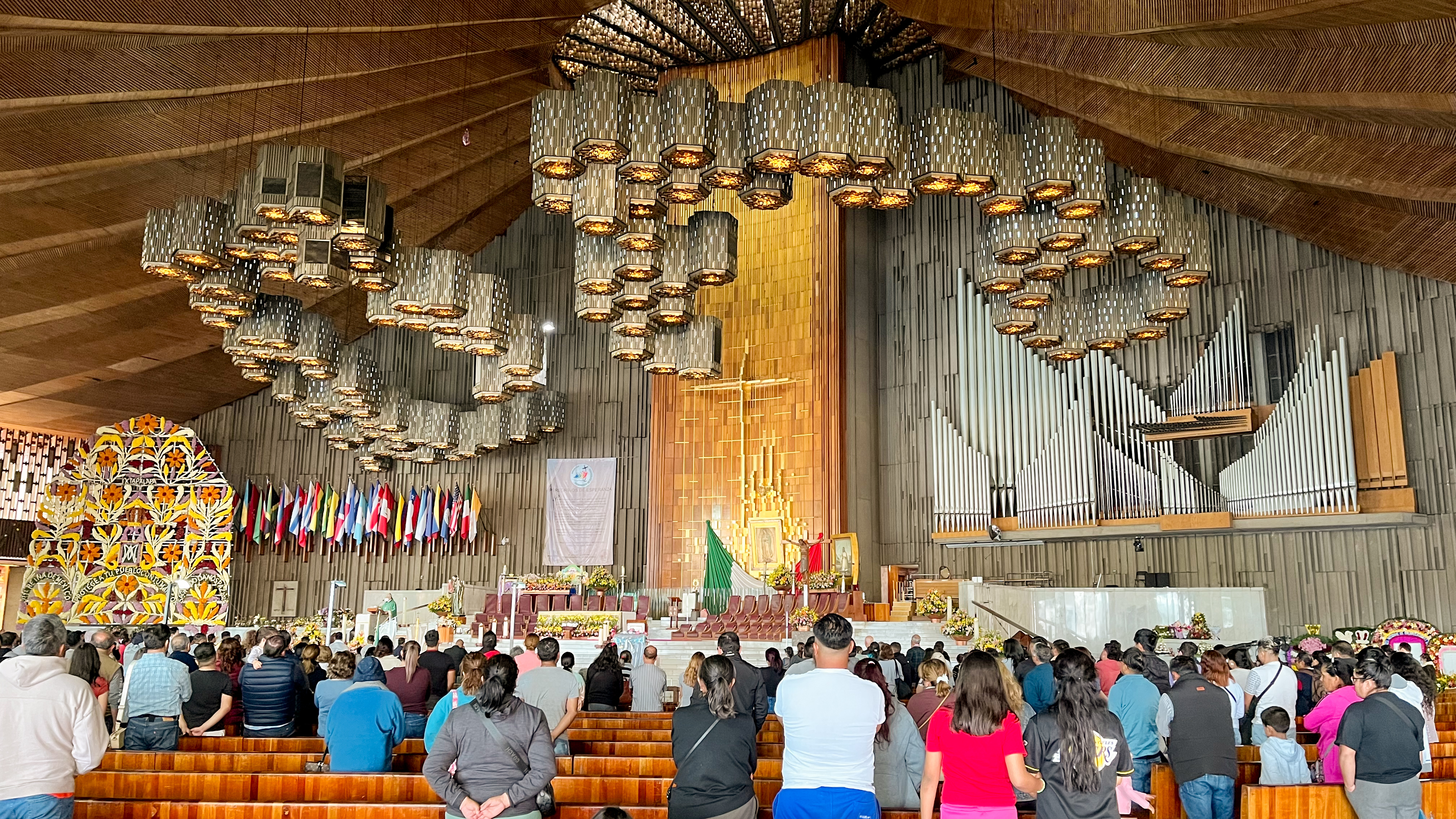
What great love God has for each of his children — and through his beloved Mother, he brings his message of love and truth to each one in a way that touches them personally. For some people, devotion to Our Lady of Fatima holds a special place in their hearts; others are moved by the apparition of Lourdes, and so on. Guadalupe, for me, was how the Virgin pointed out her Son, Jesus. Visiting the sacred place where this apparition occurred was truly unforgettable.
We also had the opportunity to visit the ancient pyramids of the Mesoamerican peoples in Teotihuacán, about an hour from Mexico City, and it was like stepping into a history book. Since within these structures many human sacrifices were made to pagan gods, our group walked between the pyramids, praying the Rosary for the many souls who cruelly lost their lives and asking God for mercy for the many people who died without knowing the truth.
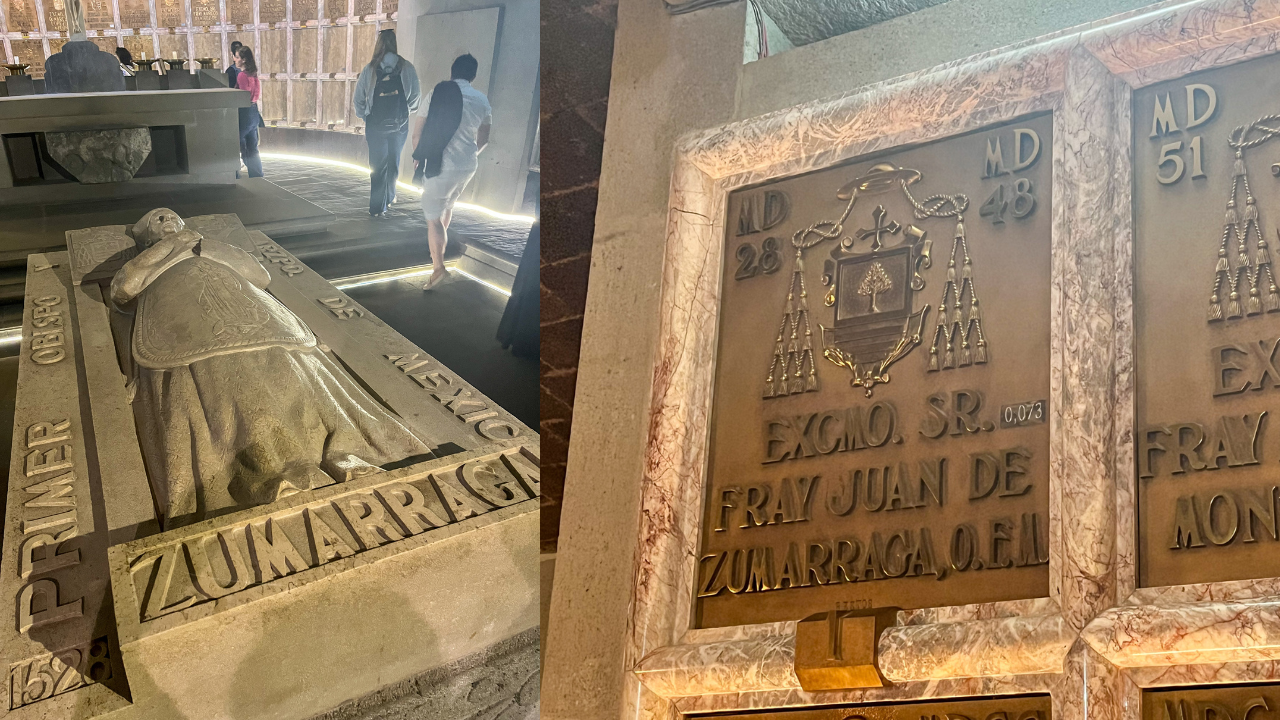
We also had the opportunity to visit the cathedral of Mexico City, where the remains of Bishop Zumárraga are located. Although some may find the Catholic devotion to saints, especially their tombs and relics, strange, there is certainly something sacred and powerful about standing before them. For me, praying before the crypt and statue of the bishop who saw the tilma with his own eyes and then contributed immensely to the devotion and evangelization of the peoples of the Americas filled me with gratitude. He did so much good for the Church, renewing my courage to also respond to what God asks of me today.
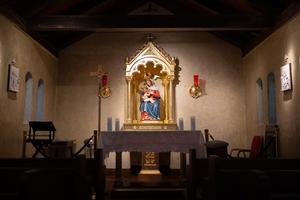
We had the grace to participate in Holy Mass at the main Basilica of Guadalupe and in one of the smaller chapels, celebrated by the priest who accompanied our pilgrimage, Father Richard McNeillie, vocations director for the Archdiocese of Houston. At the end, he gave me a rose he had received in the sacristy; according to him, priests receive one after celebrating Mass there. Receiving a rose from the Virgin, from his hands, was a little “wink” I didn’t know I needed. For so many years, the Virgin has heard my prayers, answered many requests, and always reminded me to return to Christ, not letting me be shaken by fears and worries.
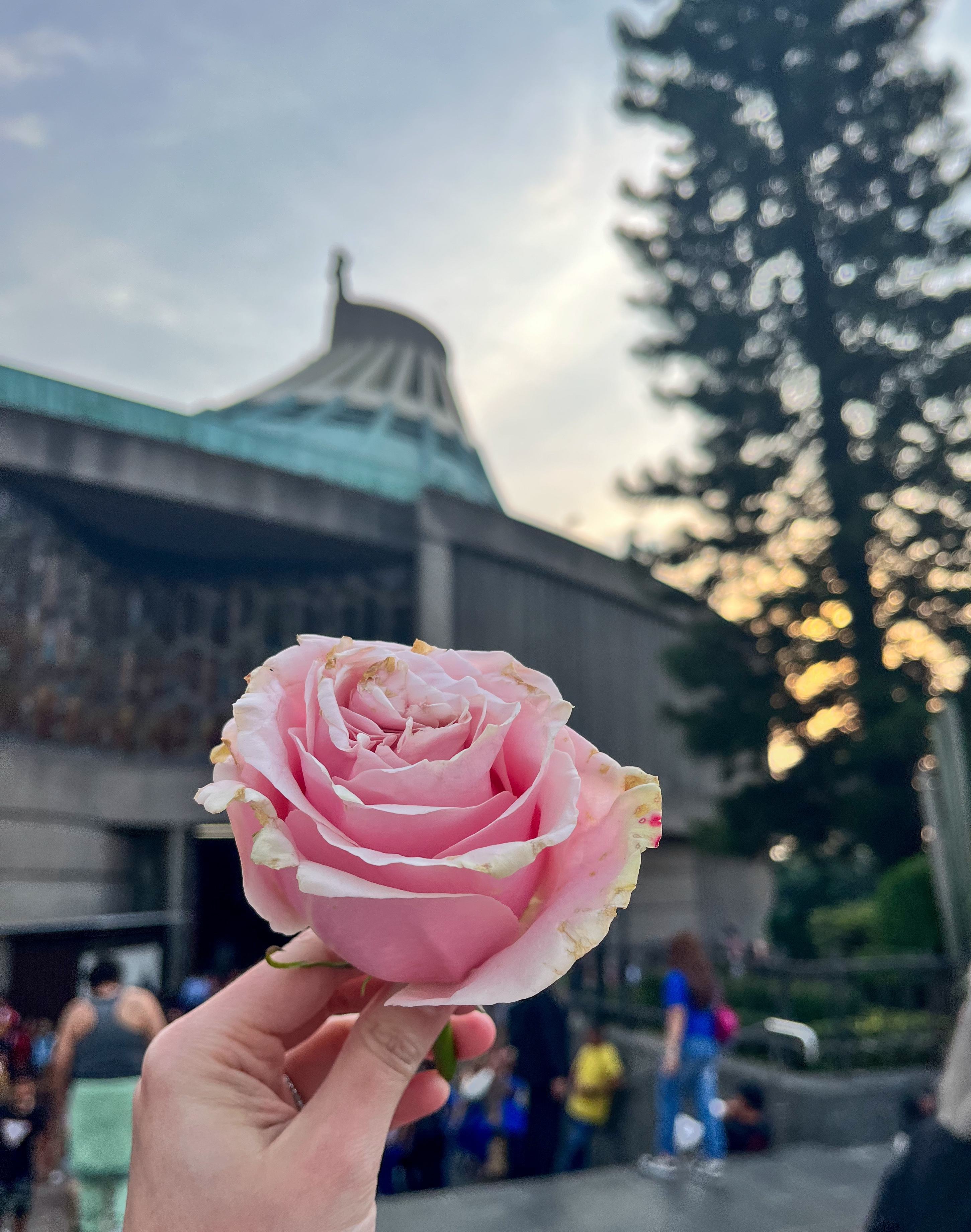
“Am I not here, I who am your Mother?” she said to me so many times, as she said to Juan Diego. Like a good mother, she always listens and is there for us, and the rose was just a sweet and concrete way of reminding me of that.