Defying Death: Catholics Caution Against the Transhumanist Quest for Immortality
A small sector of Silicon Valley is trying to live forever — literally — and Catholics are actively engaging with this growing ideology.
In the Roman Missal, one of the Prefaces prayed at Masses during Ordinary Time thanks God for having “fashioned for us a remedy out of mortality itself.”
Human beings attempting to fashion their own remedy out of mortality is, of course, nothing new. For centuries, searching for a way to live forever, humans have tried alchemy, mummification, witchcraft … and, increasingly, especially in modern times, science.
Nestled within the more expansive field of transhumanism — the quest to improve and enhance human beings through reason and technology — a new and high-tech effort is underway to entirely thwart the human aging process.
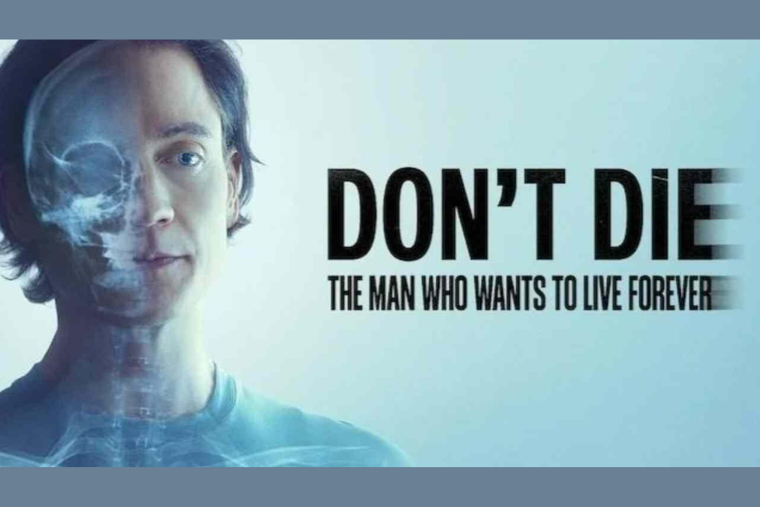
A poster child for this crusade is Bryan Johnson, a multimillionaire entrepreneur who has gained an almost cultlike following as the founder of a movement succinctly dubbed “Don’t Die.”
Johnson, 48, the subject of a recent and controversial Netflix documentary, claims to be not only the most studied human being in history, but also the “healthiest person on earth.” He broadcasts, in real time, almost every possible bodily measurement and vital sign on his website. He says he has optimized — with the help of algorithms and artificial intelligence — his sleep, diet and exercise routines and has reduced the “biological age” of his internal organs. He takes around 50 health-supplement pills a day. He’s tried numerous unproven and radical therapies in an attempt to reverse his aging, including plasma transfusions from his son. Johnson has said that he believes humankind currently possesses all the necessary technology — the complete “toolset,” he says, even if many of those technologies are still maturing — to reverse the human aging process.
Johnson, a fallen-away member of the Church of Jesus Christ of Latter-day Saints, has explicitly described his movement as a religion and has said he wants to make Don’t Die “the world’s most influential ideology by 2027.”
“Most religions are selling a version of ‘Don’t Die,’” Johnson asserted in an interview earlier this year. “Whereas before we had to make up stories, now, technically, it’s potentially possible.”
And Johnson is far from alone in this quest. For the past 20 years or more, gerontologist Aubrey de Grey has been a leading — if highly eccentric — player in the nascent field of techno-immortality. De Grey believes, and has insisted for decades, that humans in the not-too-distant future could live for thousands of years, on average.
The key for de Grey is — in his mind — a fast-approaching technological tipping point, what he calls the “longevity escape velocity,” whereby medicine becomes sufficient for humans to keep themselves alive indefinitely until the next technological advancement comes along and cures whatever may ail them.
Many Catholics likely have yet to personally encounter a follower of this kind of ideology. But a number of leading Catholic thinkers, including several who have engaged directly with proponents of the techno-immortalist movement, cautioned that this ideology will likely prove influential in the coming decades, shaping health care and public policy decisions, and may even necessitate adjustments in the pastoral application of the Church’s teaching on death.
Charles Camosy, a professor of moral theology and bioethics at The Catholic University of America, met with de Gray and other transhumanists in Silicon Valley at a recent seminar. Camosy said that while he believes that many in the techno-immortalist space are sincere in their quest for a radically lengthened lifespan, their motivations tend to be quite problematic from a Catholic perspective.
The Church teaches that one’s life is a gift from God and that humans are stewards of their lives and not owners, he said. Camosy, who has written extensively on the phenomenon of euthanasia and assisted suicide — also ways of inappropriately lording over life, he notes — said trying to “escape” from the body and indefinitely defer death plays into what he calls a “death-denying culture.”
“If one rejects the Christian idea that our lives don’t belong to us and instead imagine ourselves as autonomous, self-ruling masters, then this logic [of techno-immortalism] tends to make a certain sense,” Camosy told the Register.
“We live in a death-denying culture. … We push it out of our social consciousness. We push dying people out of our homes and out of our daily lives, to the point we really hardly ever get confronted with it. This [techno-immortalist ideology] could sneak up on a culture that is death-denying. … To try to infinitely defer death or defer death for thousands of years will play into this really unhealthy culture.”
That said, he went on, death is described in Scripture as an “enemy” to be defeated, and the Church, through its 2,000-year history of supporting and building the structures of the modern health care system, has always been in favor of using science and human reason to serve the common good of humanity.
Working to alleviate suffering and helping humans live healthier lives does not negate the fundamental importance of acknowledging and accepting death, he said.
“[Death] gives our lives a meaning as pilgrims on this earth. This is not our natural home. That’s another mistake of these movements, I think. They imagine that this is primarily the phase of our lives where we most belong,” Camosy said.
Stephen Umbrello, managing director at the Institute for Ethics and Emerging Technologies and a research fellow at the University of Turin, said he too has interacted personally with players in the techno-immortalist space, and he said he has found that many of them are motivated by compassion and grief; some, he said, appear open to dialogue with Catholics. The drive to alleviate suffering is a powerful shared value between Catholics and techno-immortalists, even if the proposed solutions differ.
Umbrello encouraged techno-immortalists to be open to learning from Catholics about the Church’s teaching on the dignity of death, as well as the importance of solidarity with the poor — keeping in mind the importance of ensuring that extreme longevity does not, someday, only become a privilege afforded to the elite.
He also cautioned that radical life extension of humans’ physical bodies is
not the only nascent techno-immortalist project that Catholics should be aware of. Leading futurists like Ray Kurzweil and others have advocated a push to invest in technology that would allow copies of a human mind to live on indefinitely through the use of computers and AI — in current tech-speak terms, “uploading yourself to the cloud.” Naturally, Umbrello said, such a technology could only ever crudely replicate a human personality and memories and could never truly duplicate a human’s immortal, God-given soul.
Going forward, knowing that longevity research is unlikely to slow down, Umbrello encouraged Catholics to pray for wise laws, fair access in health care, and protection for the elderly and disabled. He also opined that pastors will probably need to adjust their pastoral approach to death, perhaps by preaching more often on memento mori (“remember death”), the last things, and funeral catechesis.
Above all, “salvation by machine is a false promise. Christian hope rests on the Resurrection and a glorified body given by God,” he stressed.
‘A Good Life Over a Long One’
It’s clear that there are elements of the techno-immortalist mindset that Catholics can embrace — or at least not entirely reject.
Practices like a regimented diet, sleep and exercise can foster temperance and reflect the responsibility to care for one’s body as a “temple of the Holy Spirit,” said Legionary Father Michael Baggot, an associate professor of bioethics at the Pontifical Athenaeum Regina Apostolorum and an invited professor of theology at the Pontifical University of St. Thomas Aquinas and the Catholic Institute of Technology.
But while caring for one’s body is important and good, the quasi-religious aura that Bryan Johnson and other techno-immortalists have cultivated is not, Father Baggot continued. Catholics should avoid any illusory promises that Johnson’s movement offers about defeating death and should also avoid any unhealthy obsession with preserving physical life and well-being at the expense of their relationship with God and their neighbors, he said.
“Parents, members of religious orders, and anyone blessed to belong to a good Christian community know that the dynamic demands of mutual care and support can disrupt the optimized personal diet and workout routine. Ideal sleep patterns should sometimes be sacrificed to care for a crying baby or to console a sick patient,” Father Baggot noted.
“Preoccupation with biometrics,” he stressed, “should not exceed concern for virtue.”
Extremely long lifespans, if they ever become common, could dull the sense of urgency that people might feel to use their limited time on earth wisely and prepare properly for heaven. The Church should continue to emphasize that people’s time and skills are precious gifts from the Lord, which we are called to steward wisely, he said. The saints and those who live short but holy lives “teach us to prioritize a good life over a long one,” he added.
“For Catholics, extreme longevity is actually a sad substitute for the promise of eternal life,” he said.
“By helping the faithful maintain clarity about their ultimate heavenly destination, pastors of the Church help Christians better evaluate how to best use the time they have to pursue those activities that truly help them and their neighbors reach that destination,” Father Baggot said.
In terms of future developments to watch, Father Baggot cautioned that the techno-immortalist mindset will likely prove influential in health care, especially as concerns with emerging or maturing technologies — some of which the Church has already judged to be immoral — related to the beginning and end of life, such as in vitro fertilization (IVF), progress.
Brian Patrick Green, director of technology ethics at the Markkula Center for Applied Ethics at Santa Clara University, noted that the immediate scientific results of longevity research will likely prove beneficial for health care in general. But in his view, the idea that technology could ever affect anything like “immortality” is extremely unlikely.
Green said ultimately, in his estimation, the techno-immortalist movement is an attempt to remake the world without God. Their ideology is their religion — which limits the effectiveness of dialogue.
“There’s nothing wrong with extending human life. This is literally something that Jesus tells us to do. He tells us, ‘Go forth healing all kinds of injuries.’ … There’s obviously an opportunity here. There’s a hunger out there in society. [But] we need to look at this from the outside with great skepticism,” Green told the Register.
Green, echoing Umbrello, also warned of the possibility of a two-tier future where the wealthy and privileged have the chance to live radically long lifespans, while the poor and non-influential are excluded from the same benefits. Moreover, he said, the techno-immortalist movement is highly evangelical and is backed by numerous rich and influential people, meaning young people today will almost certainly need to contend directly with these kinds of ideologies in the future.
Green said: “I think people need to be aware of it. And if they start getting suspicious that something looks wrong with regard to these sorts of technologies, then they really should follow their nose and see if there’s something deeper culturally going on that might be worthy of addressing.”