Find Your Purpose After the Loss of a Loved One and Other Life Transitions
Learn how a retired widower manifests his gift of service in innumerable ways, for his good and the good of others, thanks to charisms.

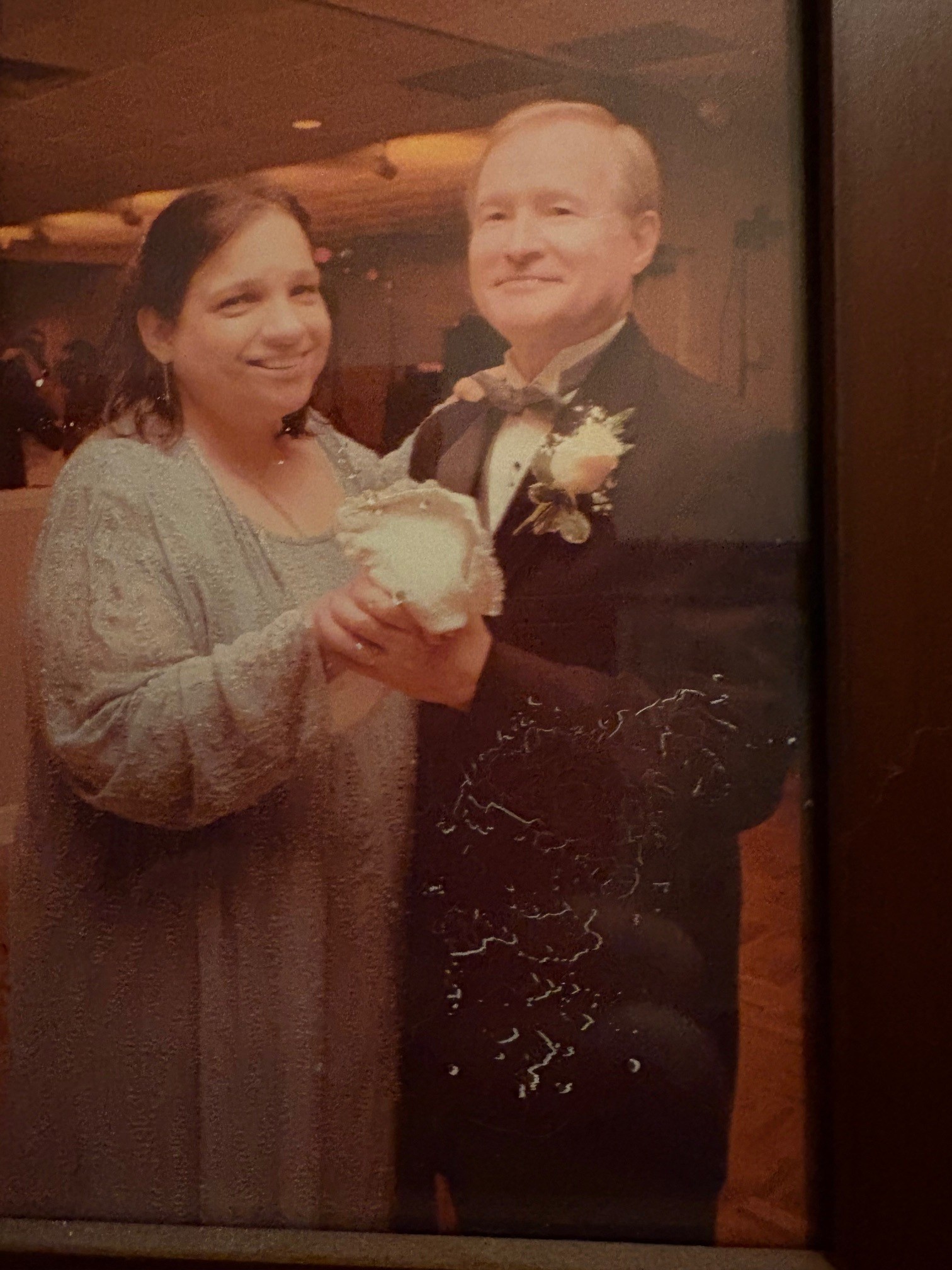
The day his wife died, Rick McKinney was scheduled to receive a lifetime-achievement award from a local library association, and he was preparing to retire from his career as a law librarian at the Federal Reserve Board. Although Theresa, his wife of 41 years, was hospitalized, McKinney was not expecting her to die.
What do you do when you lose your beloved spouse and your career?
Talk to McKinney, a faith-filled Catholic, and he’ll initially tell you about the consolations he received from God after his wife’s death. Driving to the viewing, he was blessed to see the only vehicle in Maryland with a license plate that said “Theresa.”
“I felt like God was saying, ‘I have Theresa in my hands, and I’ve got you too.’ I knew God was there,” he recalled. “It helped a lot in terms of adjusting to a life without my wife.”
McKinney is also blessed to have two grown daughters, and he initially spent time helping them cope. But during that first year, he learned that a workshop entitled “Called & Gifted” was being held by a Catholic group in his parish of St. John Neumann in Gaithersburg, Maryland. The workshop helps people discern their charisms, which the Catechism of the Catholic Church (799) defines as “graces [aka gifts, favors] of the Holy Spirit which directly or indirectly benefit the Church, ordered as they are to her building up, to the good of men, and to the needs of the world.” The workshop also included something called the “Catholic Spiritual Gifts Inventory.” McKinney wanted to know more, so he signed up.
What he learned can help anyone seeking meaning in life, especially during a challenging life transition.
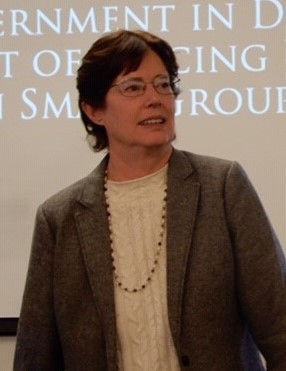
“The Catechism talks about all the ways a member of the Body of Christ is called to bear fruit that brings the love of God to other people,” explained Sherry Weddell, co-founder and executive director of the Catherine of Siena Institute (Siena.org) and author of the “Called & Gifted” charism-discernment process for Catholics (https://bit.ly/4nPQvCa).
“All Catholics are given charisms at baptism [and strengthened at confirmation], but they don’t manifest until their faith becomes personal. As we grow closer to Christ, we become greater and greater channels of God for others. It’s not about you. It really is for the sake of the other. God’s power and beauty and truth are passing through you, with your consent and cooperation, for someone else. All gifts are evangelizing in their own way. All gifts are healing in their own way. All gifts make the love of God present, even if we don’t use his name in an overt and public way.”
While charisms are pure gifts from God, we can cultivate them by receiving the sacraments, through prayer, reading Scripture, familiarizing ourselves with the Church, and by living our faith. However, Weddell said, “If we’re not walking with Jesus, these gifts don’t manifest themselves.”
“Even if you’re depressed, the impact of a charism remains,” she added. “The meaning of my life can transcend even things as terrible as losing one’s spouse or child, or any other great loss in life.”
When most people hear about this workshop, they can’t wait to take the Catholic Spiritual Gifts Inventory, where discerners take about 40 minutes to answer questions about their experiences to date. Here’s one: “I am energized when I have the chance to help a group working on a complex kingdom project. I enjoy organizing a group’s efforts and resources to make the mission happen.” The discerner is then asked to click on the word that best describes his or her experience with the above. The choices are “Never,” “Little,” “Some” and “Often.”
The quiz is thought-provoking, but Weddell sounded a cautionary note: “The inventory in and of itself is a tool in a larger discernment process, a quick-and-dirty way to sort through your life experience and identify a few best places to look first.”
To that end, the discernment process includes personally meeting with a trainer who listens to a person’s life stories in the areas in which they scored highest and helps people see patterns that indicate whether they have a particular charism, pick one with which to experiment over a month, and evaluate the fruits of their efforts.
McKinney is like a poster child for the discernment process. He says two of his multiple charisms (most people have between two and five) are the “Gift of Service,” which is more institutional and looks to helping a group or parish or organization with logistical needs, with bridging the gap to get things done, and the “Gift of Helps,” which focuses on helping an individual serve God and others more fruitfully, with helping others achieve their dreams and visions.
Shortly after taking the workshop, McKinney found himself at a church service where he began praying for the people in front of him. He told the Lord he believed a woman we’ll call Mary had limited means of support for her new ministry, and he prayed: “Bless her, Lord, because she has laid down her life for you.” But then he unexpectedly heard: “Would you lay down your life for her?” At the end of the service, Mary came to him saying, “I’d like to talk to you about supporting my ministry!” And McKinney said the one thing those with the “Gift of Helps” would say: “Yes!”
He also manifests his gift of service in innumerable ways. He’s part of the governing body of a school serving children from pre-K to eighth grade. He’s active in his parish’s vocations society, he participates in a program that encourages Catholic men to take their call and discipleship seriously, and more.
The “Called & Gifted” workshop can be used by anyone at any stage of life. Before taking the class in March 2020, Colette Souder remembers wondering what her place was in this world. “All my children had left home, and I had more time to devote to things outside of my vocation. At that time, I thought serving God was to be a reader, a greeter, an extraordinary minister, or volunteer in the parish office, but none of those things appealed to me. My pastor invited everyone on the pastoral council to an all-day ‘Called & Gifted’ seminar. Though I had no idea what it was about, I went, and my life was changed.”
“Understanding what my charisms were emboldened me,” she continued. “Formerly, I would think, ‘What authority do I have to say such things?’ Now I say or do things without apology or embarrassment. Before understanding charisms, I would notice something unique and extraordinary in others and think, ‘I can’t do what they are doing. Something must be wrong with me.’ Now, I recognize they are using their charisms and appreciate them instead of turning inward.”
Colette’s experience with the “Called & Gifted” process made such an impression, she went on to become a trained group leader for small groups in her parish. Today, she says: “Charisms are the glory of God shining through each of us.”
Said Weddell: “There is someone out there who is waiting for what you have been given to give. Their life hangs in the balance. You may not know who they are, but in God’s providence, you are the one, and it matters that you say, ‘Yes!’”
McKinney couldn’t agree more. “That quiz helped me focus on where my gifts were. God doesn’t need us, but he desires us. He empowers our participation. God wants to glorify himself in our current lives, whether in a nursing home or elsewhere.”
“God gives us gifts, and he expects us to use them,” he added. “In my opinion, we don’t have to be morose. We mourn with those who mourn, and we rejoice with those who rejoice, and that is enough for us. God is enough for us. That’s what I’ve learned as a widower. He is more than enough. It’s wonderful to be used by the Lord.”
Note: The Called & Gifted discernment process, which has been used by more than 225,000 Catholics in more than 1,000 parishes worldwide, can be purchased from the Catherine of Siena Institute for anywhere from $59 to $105, depending on whether you opt for the print or digital editions of the Fruitful Discipleship book and Called & Gifted Discernment Process workbook and whether you include the one-hour gifts interview with a person trained in this process. Find it here: https://bit.ly/3WiIYzM. After ordering, you’ll receive a link to the online learning platform and a password. There is also a number to call if you encounter any difficulties. If your group or parish is interested in this, email [email protected] or call (719) 2199-0056.
What Is a Charism?
According to the Catechism of the Catholic Church (799): “[C]harisms are graces of the Holy Spirit which directly or indirectly benefit the Church, ordered as they are to her building up, to the good of men, and to the needs of the world.” St. Thomas Aquinas refers to charisms simply as “gratuitous graces” (Summa Theologiae, I-II, q 111), while the late St. John Paul the Great wrote that each of us “… must be helped to embrace the gift entrusted to him [or her] as a … unique person, and to hear the words which the Spirit of God personally addresses to him [or her]” (Pastores Dabo Vobis, 40).
Charisms are mentioned in numerous places throughout the Catechism, including No. 801, which talks about the importance of proper discernment of charisms; No. 951, which references the “communion of charisms” in which the Holy Spirit “distributes special graces among the faithful of every rank” and quotes 1 Corinthians 12:7: “to each is given the manifestation of the Spirit for the common good”; and No. 2003, which discusses “charisms after the model of St. Paul’s enumeration of charisms.”
Lists of charisms also can be found in Romans 12, 1 Corinthians 12, and Ephesians 4.
- Keywords:
- life's purpose
- charisms
- life and death