Rome’s Ancient Marvels Gave These Engineering Students a Sense of Their Vocation
Each student became an expert on a specific site in Rome, exploring the history of its construction, how it was built, and engineering principles learned in academic work.
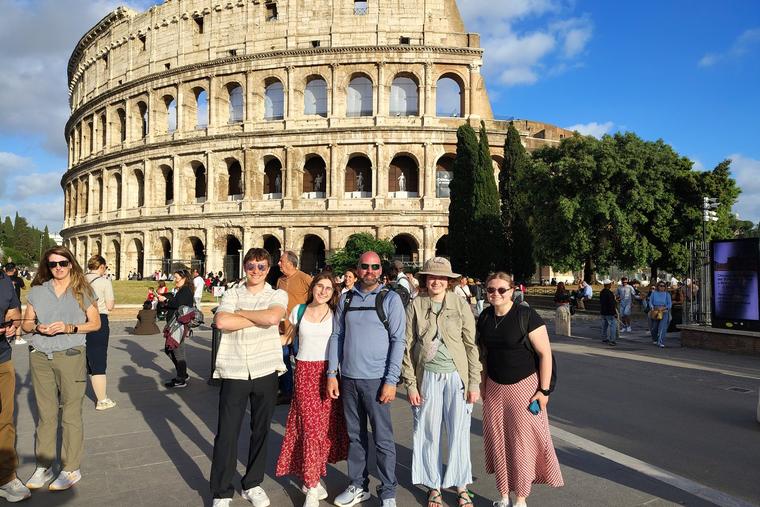
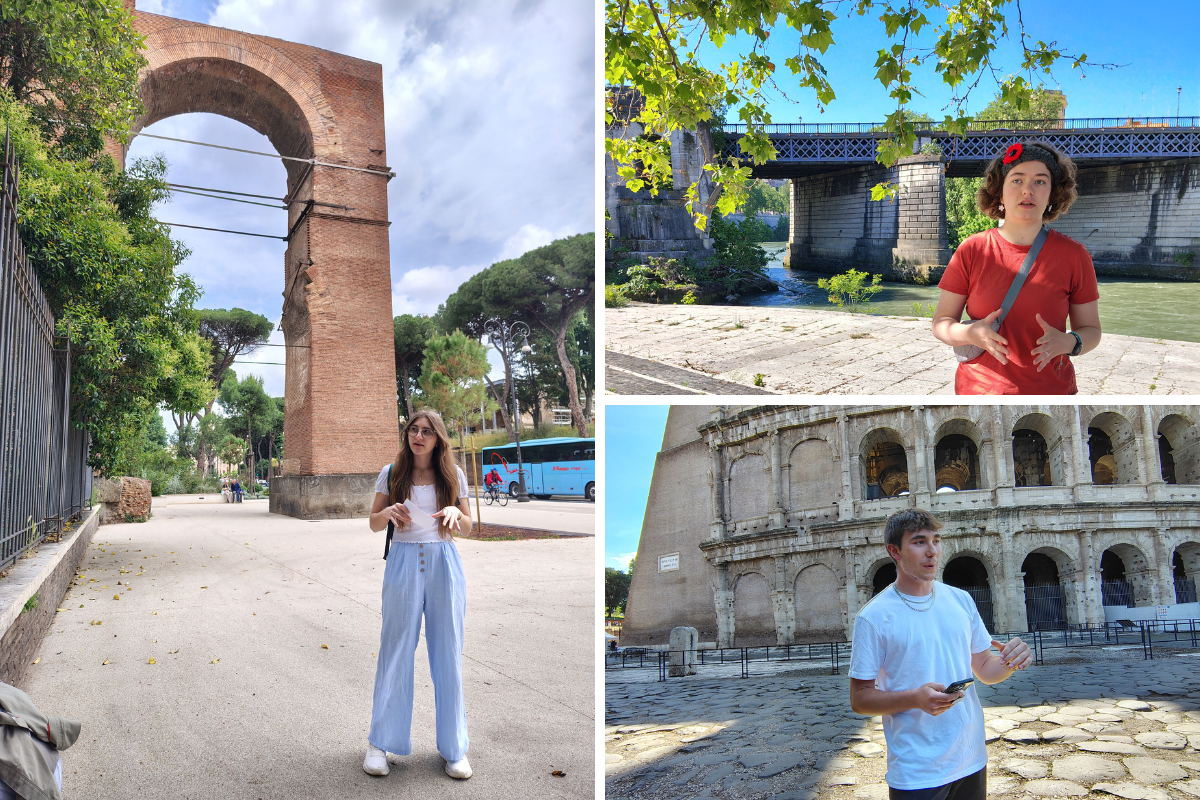
After spending the semester studying every aspect of Rome’s Colosseum, Colton Ruud finally had the chance to step inside the ancient amphitheater this May as part of a new engineering elective course at the University of Mary.
Standing inside the arena, the junior construction management major was struck by the sheer scale of the structure. For months, he had analyzed the engineering behind the nearly-2,000-year-old landmark. Now, he was steps from where gladiators once fought, mock naval battles were staged, and public executions took place.
But what really fascinated him, he admits, was the concrete.
Having worked summer jobs in construction, he marveled that the Romans’ composite material will still in place.
“It’s been over 2,000 years since it was built, and it was all done by hand without machines,” he said. “You didn’t have concrete trucks or concrete vibrators, yet somehow they were able to build these massive structures and have them still standing today.”
“That’s what I was most excited about. That’s the construction nerd in me,” Ruud told the Register.
Ruud was part of the first cohort to take the new class, “Innovative Engineering in Ancient Rome” offered through the Hamm School of Engineering at the University of Mary, a Benedictine university in Bismarck, North Dakota. The school is listed in the Cardinal Newman Society’s guide to recommended colleges and the Register’s annual “Catholic Identity College Guide.”
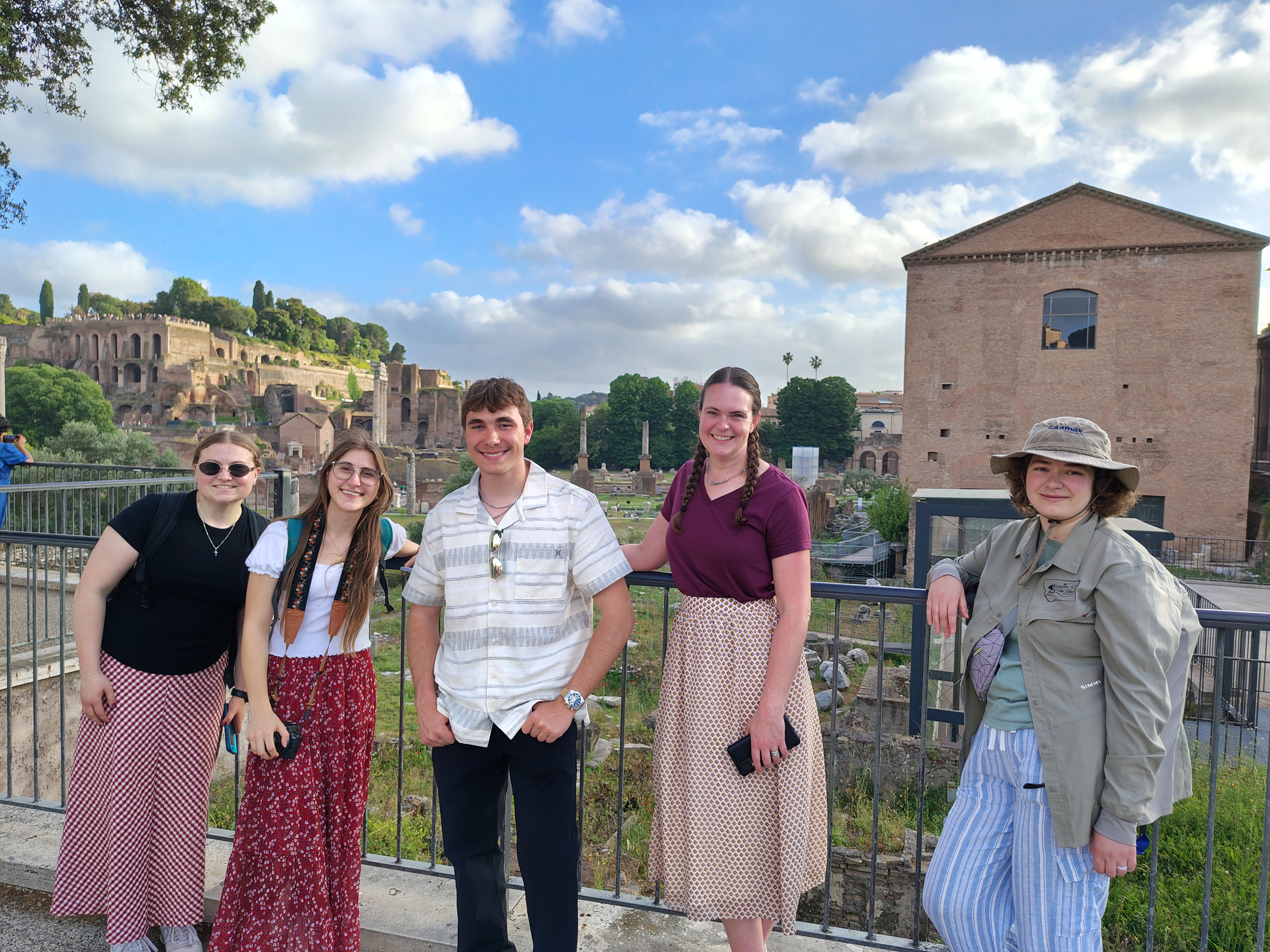
Over the course of the semester, each student became an expert on a specific site in Rome, exploring the history of its construction, how it was built, and engineering principles learned in academic work. The course culminated in a two-week trip to Rome, where they visited the sites they had studied in the classroom.
Unlike the students from the University of Mary who spend a semester or “Maymester” in Rome studying theology, art, Italian and Church history, this innovative program has a narrower focus: ancient Roman engineering.
Eleven years ago, Terry Pilling, dean of the Hamm School of Engineering, started the program at the University of Mary after engineering companies in western North Dakota approached Msgr. James Shea, the president of the University of Mary, to impress upon him the need for an engineering program in the area.
Today, Pilling said, they have 275 students in their program, and 100% of graduates find jobs in engineering.
“We call it the MIT of the Midwest because we are the best engineering program in the Midwest,” Pilling said. “All of our students make more money than their professors the year that they graduate.”
Originally, the plan was to offer the same courses in theology and art that students in the Maymester Rome program were offered, but then Michael Lombardo, the director of the Rome campus, suggested gearing the program specifically to engineering students.
“Lombardo reached out to me and said, ‘You know, why aren’t you sending your engineering students over here to do engineering courses? Because it’s really set up for that,” Pilling recalled.
Ruud became an expert on the Colosseum; the other three students in the class studied the Roman aqueducts, the Pantheon and Rome’s ancient sewer system. The students acted as tour guides for their assigned sites, sharing their findings with their classmates.
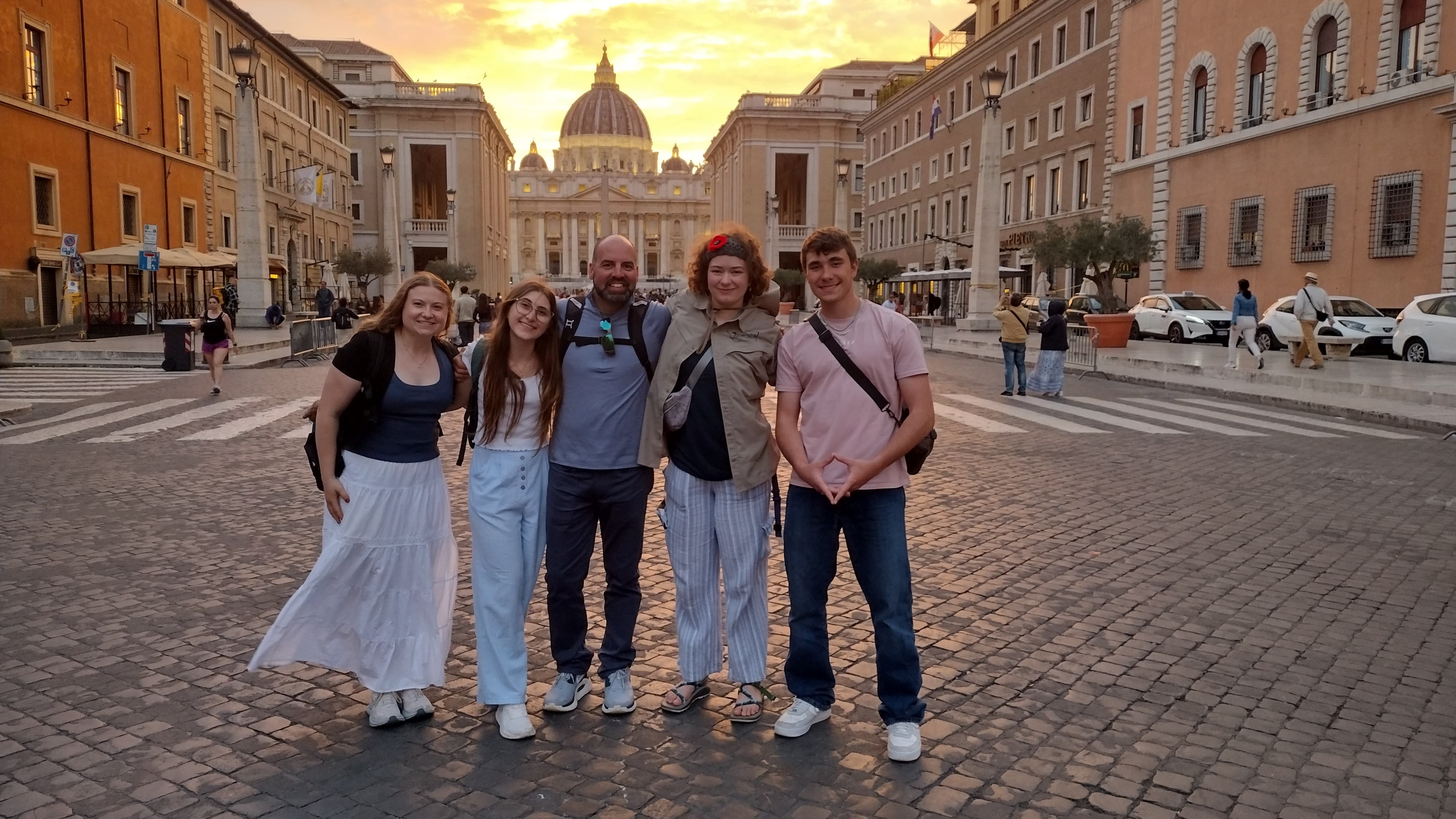
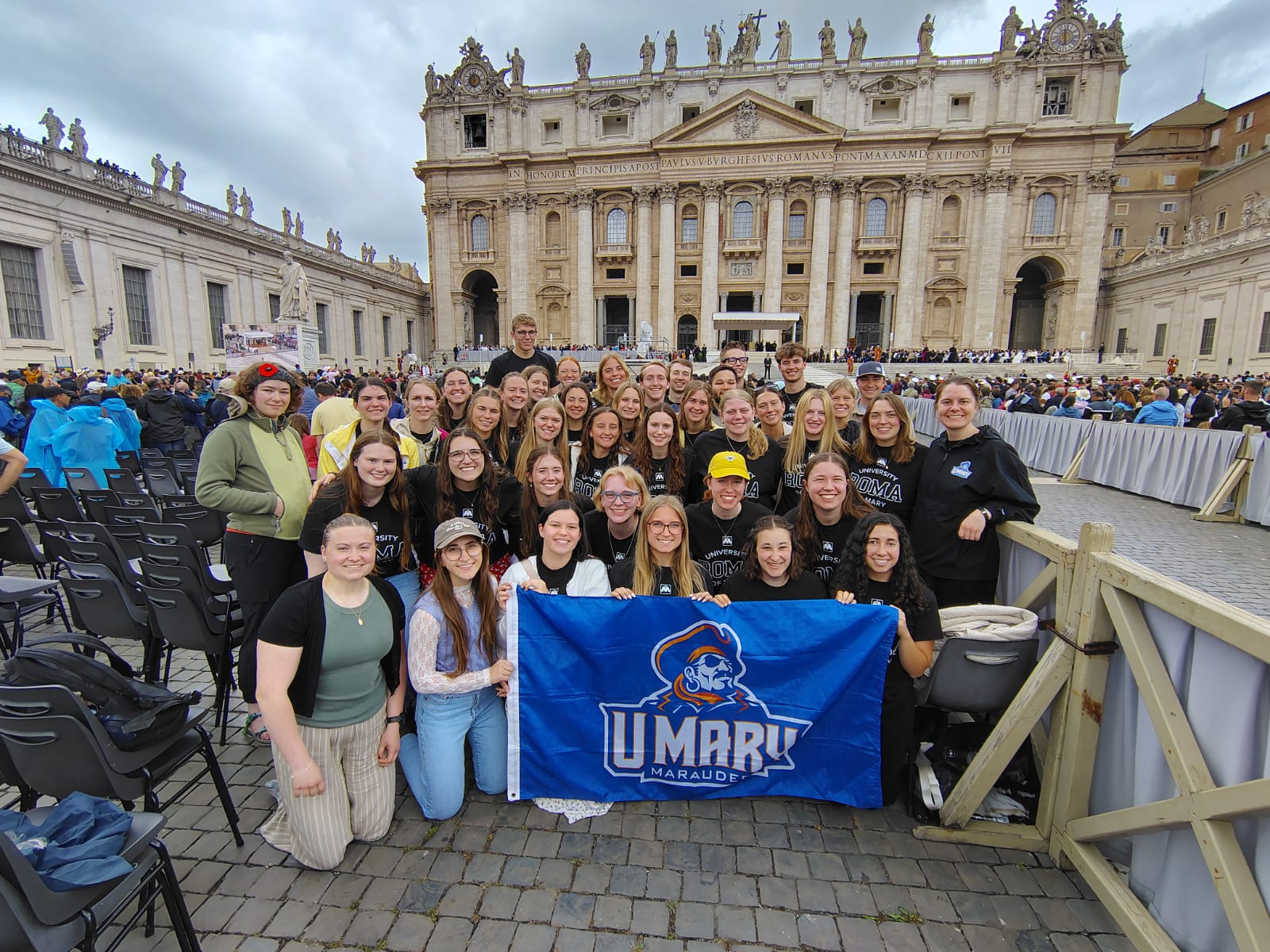
The students stayed at the University of Mary’s Rome campus, toured Rome, and visited St. Peter’s Basilica. They also made trips to Subiaco (where St. Benedict lived as a hermit and established his order) and Assisi.
Michael Douglas, chair of the construction management program at the University of Mary, told the Register the students conducted graduate-level research on their sites.
“We gave them specific information that we wanted them to research, including not just the engineering of it, but the history, what was going on politically at the time, the construction of it, the materials they used, and the logistics that were involved,” he said.
Madison Campbell, a senior, majoring in mechanical engineering, jumped at a chance to return to Rome, where she had spent a semester at the University of Mary’s Eternal City campus.
“I fell in love with Rome, so being able to go back and really dive into the engineering side, which is not what they focus on at all for that semester program, really intrigued me,” she said.
Given a list of sites from which to choose, Campbell selected the Roman aqueducts, marvels of engineering that relied entirely on gravity to bring fresh water from the countryside to the city.
In studying how the Romans built their aqueducts, Campbell was able to apply what she had learned in her coursework in the paper she wrote after returning from Rome.
“You can look at it and think, ‘All right, I’ve taken fluids, so I understand some of the erosion and fluid dynamics. I’ve taken solid mechanics, so I understand the stress, strain and load-bearing concepts.’ Looking at the structures and doing the calculations, I thought, ‘Yeah, this makes sense,’” said Campbell, who hopes to pursue a career in aerospace engineering after graduation.
Learning about aqueducts, she said, also taught her a lot about the people of ancient Rome.
“The Romans embraced water as part of their culture and it became a symbol of power for them,” she said, explaining that the word “pontiff,” a title for the pope, comes from the Latin pontifex, meaning “bridge-builder.”
Noting that the Romans used about 200 gallons of water per person per day, far more than the average American, she remarked, “The Romans really enjoyed their baths.”
The biggest discovery the students made, Douglas said, was learning that the ancient Romans’ approach to engineering relied on trial and error rather than the mathematical calculations engineers use today.
Describing it as a “paradigm shift,” he said, the course forced them to become more “detective-like” in their research, performing what he calls forensic engineering.
The Pantheon, the world’s largest unreinforced concrete dome, which was built around A.D. 126 during the reign of Emperor Hadrian, is an example of empirical engineering that has stood the test of time. It presented Samantha Sheridan, a senior majoring in mechanical engineering, with an engineering puzzle for the ages.
In her lecture to her fellow students, she shared that she discovered that the Romans used different-sized aggregate (the coarse, granular materials — such as sand, gravel and crushed stone — that are mixed with cement and water to form concrete) for different sections of the dome, with larger aggregate used in the lower portions and smaller, lighter materials used at higher elevations.
The Pantheon’s oculus, the opening in the center of the dome, was seen as a gateway to the gods when it was a pagan temple. The opening also, whether by accident or design, helped it to remain standing for more than 2,000 years: The hole in the ceiling removed the weakest part of the dome.
What lessons can these future engineers take with them after seeing how the ancient Romans constructed buildings?
Engineering Dean Pilling told the Register that learning how the Romans built these marvels of engineering without mathematical formulas and computer models gave the students a greater respect for craftsmanship.
“I think one thing that the Romans had that we don’t have as much anymore is that they had craftsmen and masons that were very close to their [craft], to what they were designing,” he said.
“What ends up happening is they can intuit better than we can what’s going to happen. A lot of times when you abstract things away in mathematics and in computer simulations, then your own brain doesn’t gain that intuition,” he said.
That lesson was reinforced, Douglas said, standing before the Pantheon. It’s okay, he said, to sometimes think empirically as an engineer.
Students also gained a greater appreciation for the importance of collaboration, Douglas said, by seeing how artisans, architects and engineers must have worked together 2,000 years ago. Students at the University of Mary’s School of Engineering, he added, are trained to collaborate across all engineering disciplines to avoid a “silo” mentality, in which teams are isolated from one another.
“We’re trying to give them the tools to help them be able to communicate to break those silos down. And, you know, ironically, you have to go to a country like Italy, and you have to go to a city like Rome, to have that slap you in the face, right?” he said.
The idea for the course — and the trip to Rome — came out of the engineering school’s philosophy that being an engineer is not merely a job.
The intention behind giving students the experience of standing beneath structures that have endured for thousands of years was to give the them a sense of their higher purpose as engineers.
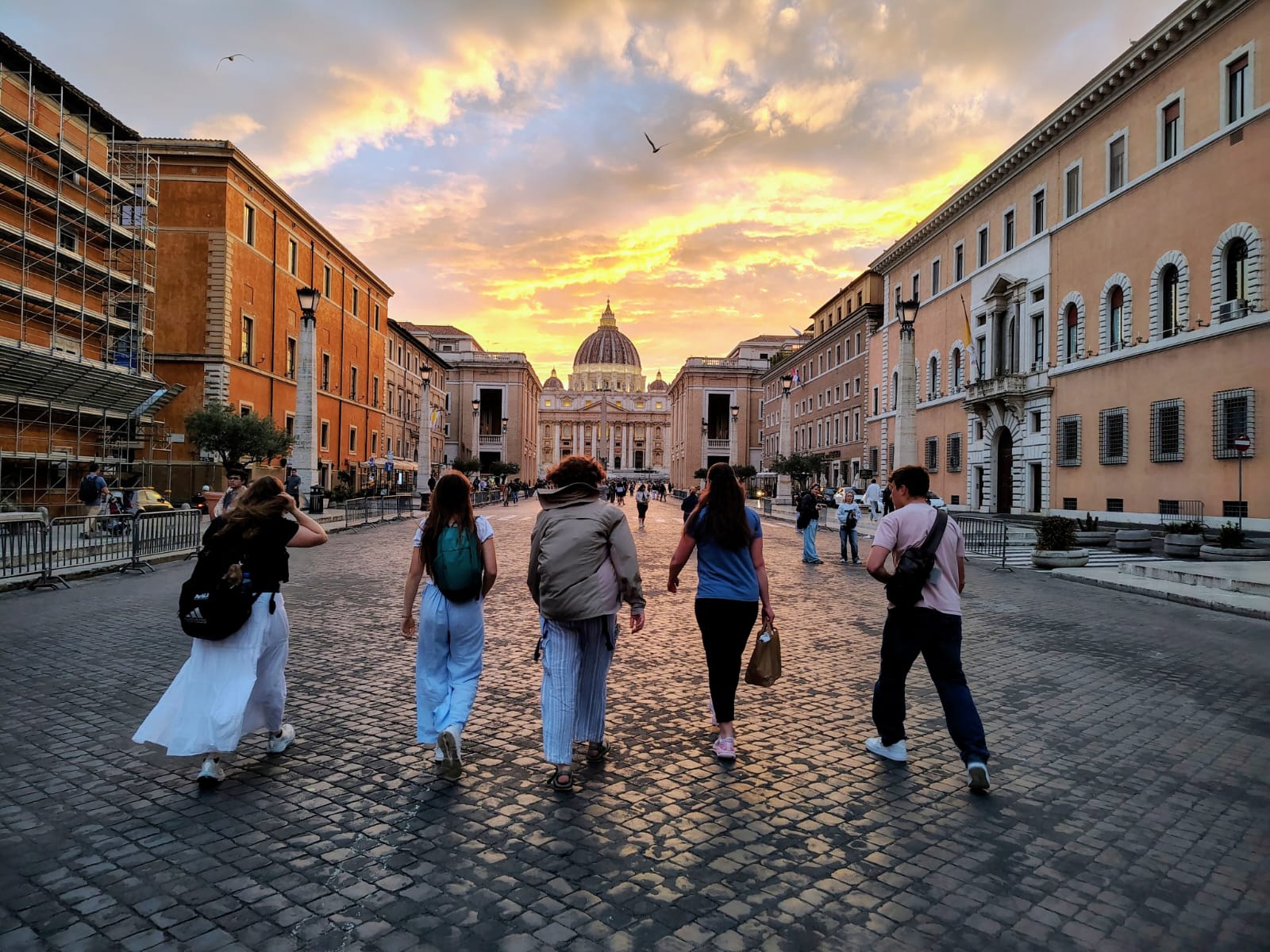
“This is a vocation. And with that comes great responsibility, to think about future generations and what you’re engineering and how it affects other people,” Douglas said.
For Ruud, who hopes to go into construction management after graduation, seeing firsthand how the ancient Romans built things to last has given him a greater sense of purpose.
“It’s something that has made me take a little bit more care when I’m doing things,” he said, noting that it’s not unusual to see modern construction ripped out after only 20 years.
Walking through Rome and seeing the work of its ancient engineers, looking hardly the worse for wear, is hard to comprehend, he said.
“It definitely makes me want to pursue construction and build things that are going to outlast me.”
- Keywords:
- catholic college students
- university of mary