The Architect Who Fought Modernism — and Inspired a Sacred Architecture Revival
Duncan Stroik hasn’t just designed iconic traditional churches — he’s helped build a movement.

One does not necessarily expect to hear the language of warfare coming from the mouth of Duncan Stroik while discussing sacred architecture.
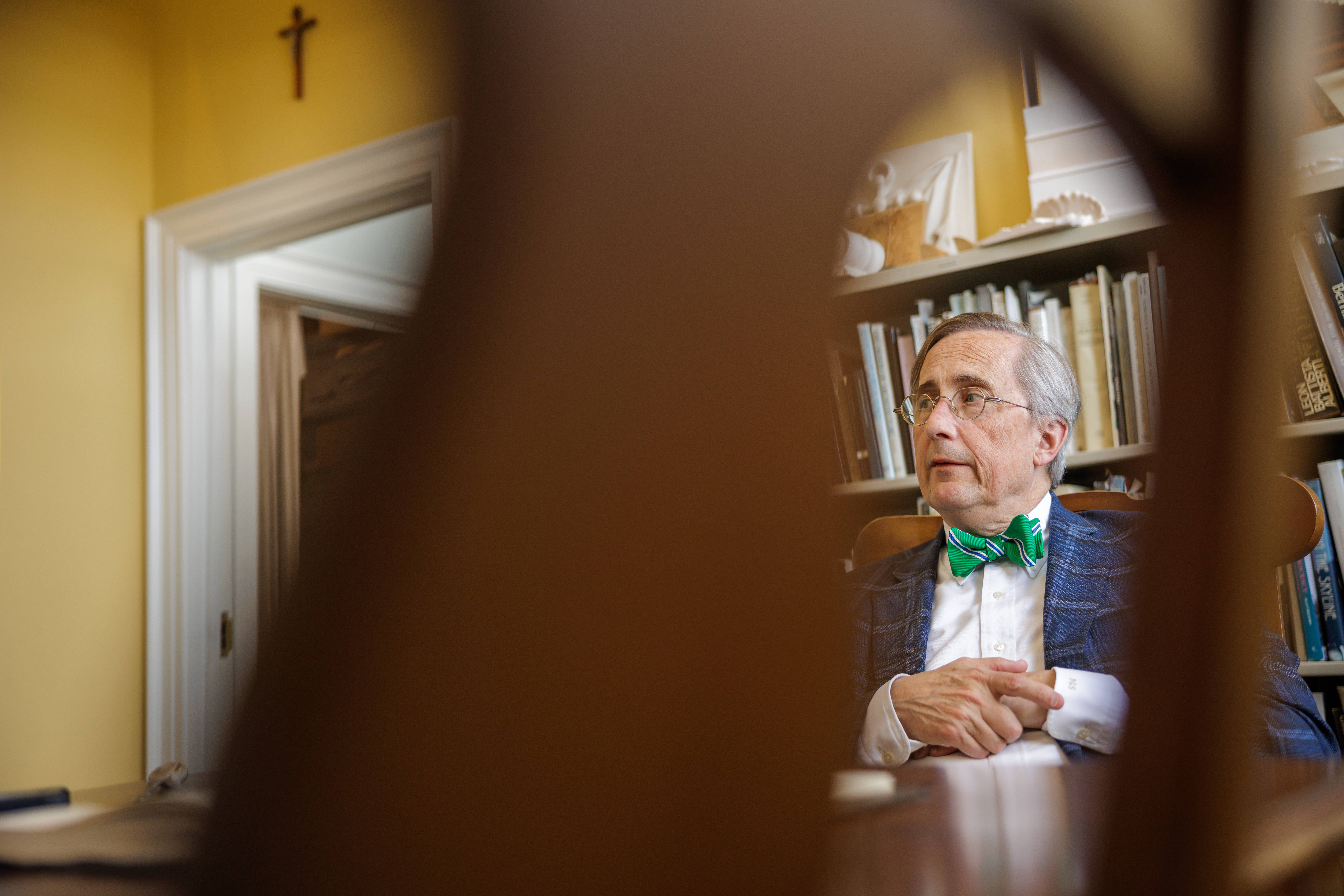
Bespectacled and bow-tied, the renowned church architect cuts the figure of the Yale-educated professor he is far more than any kind of combatant. And the 12th-floor office of his architecture firm in downtown South Bend, Indiana — covered in sun-dappled blueprints, portraits of iconic churches, and plasters of Greek columns — seems more like a retreat to Plato’s realm of the forms than any kind of arsenal.
And yet, the 63-year-old Stroik sees the effort to promote traditional forms of church architecture, a movement that he’s been at the fore of for decades, as a fight of epic significance: of the right understanding of worship against the wrong one, of beauty against mere utility, and of artistic humility against self-aggrandizing pride.
And by all accounts, his side appears to be winning — one traditionally designed sacred building at a time.
“We’re still fighting a battle against Modernism,” Stroik told the Register, referring to a long-dominant architectural movement that emphasizes functionality, minimalism and individual expression. “But, at least for sacred architecture in the United States, we’ve done a good job of turning the corner.”
Traditional sacred architecture doesn’t refer to a single approach but is instead a broad category. It includes Stroik’s signature Classical style — modeled after ancient Greco-Roman culture and the Renaissance — but also forms like Gothic and Baroque. In contrast to Modernism, which came into vogue in the 1950s, traditional forms of architecture emphasize the importance of accentuating the sacred, relying heavily on symbolism, verticality and liturgical orientation.
Once all but abandoned in the second half of the 1900s as outdated and impractical, the timeless architectural approach has made a significant comeback over the past decade or so, as a new generation of clergy, architects and lay patrons have sought to recover the beauty and reverence of traditional church design. Firms that specialize in this kind of work are busier than ever, and schools focused on more traditional design are attracting record interest.
And arguably no one has done more for the movement than Stroik, a popular Notre Dame professor and celebrated church designer in his own right.
“As far as I’m concerned, he is the intellectual and spiritual leader of the movement to restore and recover a sense of sacred architecture,” said Jesuit Father Richard Hermes, who collaborated with Stroik in the 2018 design of the Chapel of the Holy Cross at Jesuit High School in Tampa, Florida. “He is indefatigable and his enthusiasm is contagious.”
Building More Than Structures
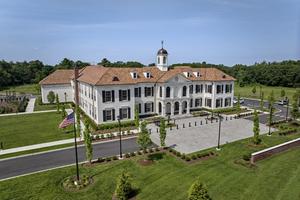
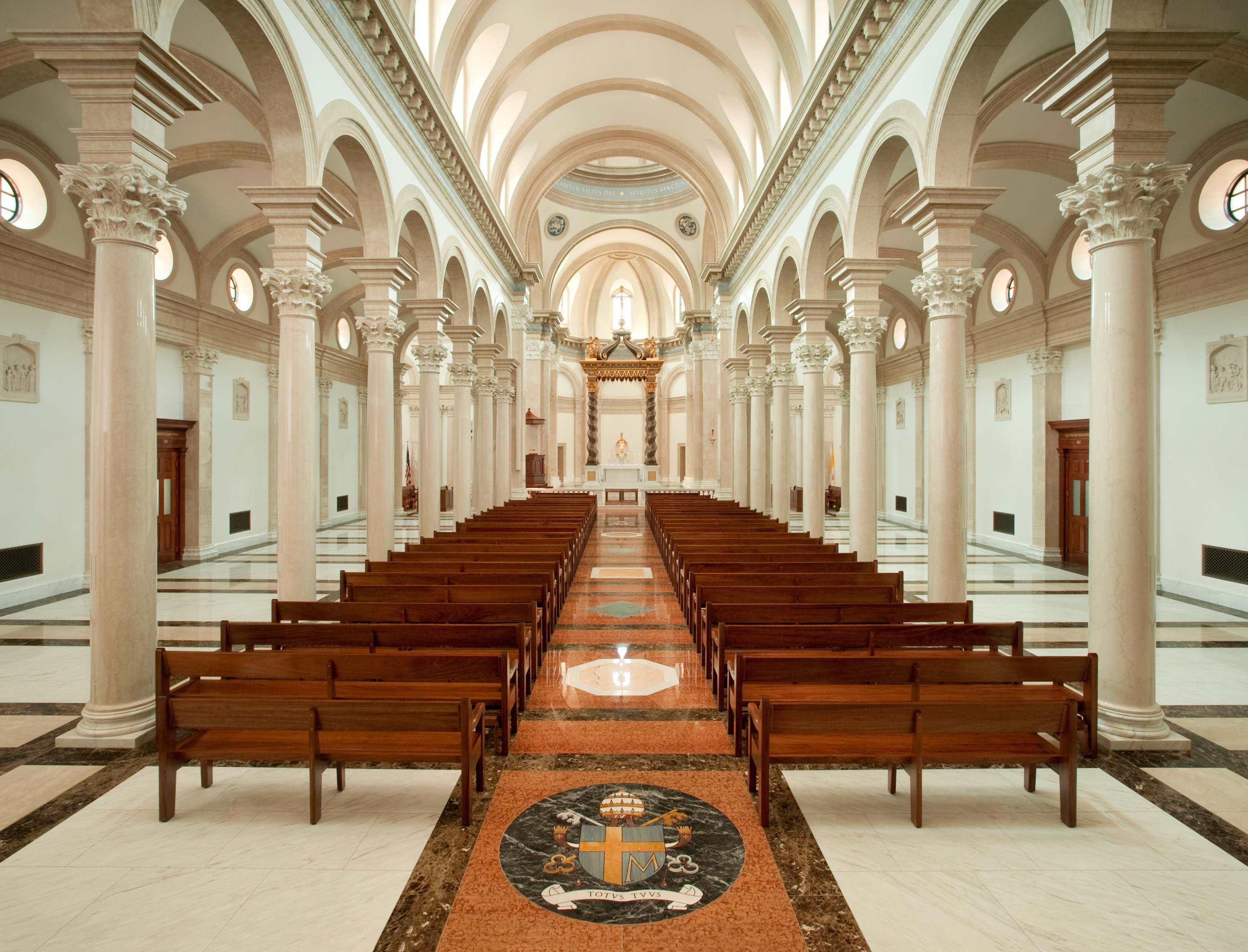
Stroik’s contributions to the cause have certainly come in the form of the iconic sacred buildings he has designed. There’s the Shrine of Our Lady of Guadalupe in La Crosse, Wisconsin, commissioned by Cardinal Raymond Burke.
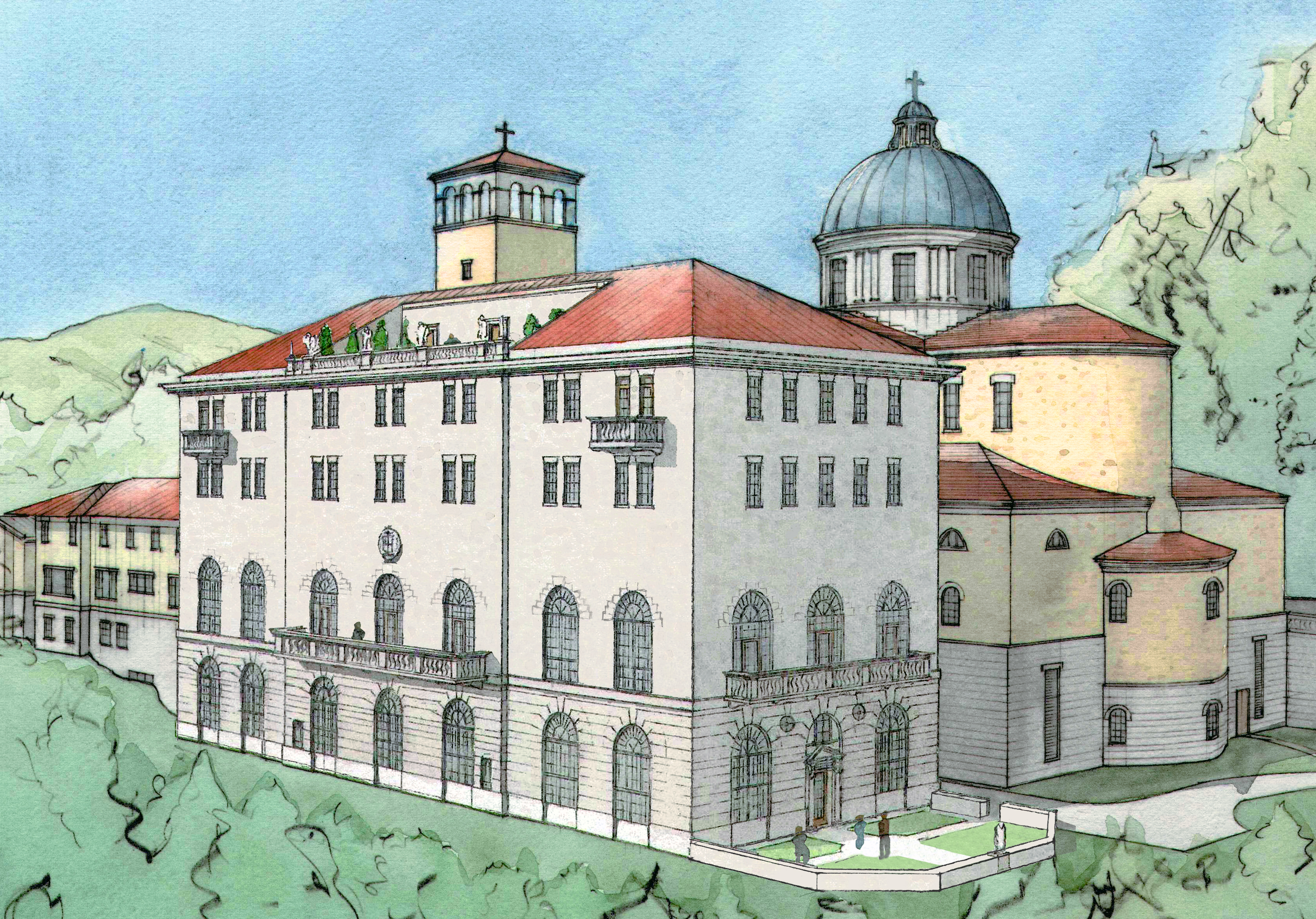
Or the Our Lady of the Most Holy Trinity Chapel on the campus of California’s Thomas Aquinas College (TAC), which earned Stroik two separate Palladio Awards from Traditional Building magazine and has been called “the most important U.S. Catholic building yet erected in the 21st century” by the Catholic commentator George Weigel.
But Stroik has also made the case for more traditional church architecture through words and ideas. He is the founder of the Institute for Sacred Architecture and editor of its quarterly journal, frequently writes on the topic for publications like First Things, and is the author of a 2012 book called The Church Building as a Sacred Place: Beauty, Transcendence, and the Eternal.
And perhaps most significantly, Stroik has shaped multiple generations of architectural students at Notre Dame’s highly touted and classically focused architecture school, who now carry the mantle forward in their own professional work.
“He made me think to myself, ‘If someone else is doing work like this, why can’t I?’” said New York-based architect Rodrigo Bollat Montenegro, whose studies under Stroik in graduate school counteracted the modernist formation he’d received in undergraduate studies. “He’s inspired more architects to step up to the plate and help lead the Church out of the dark ages of Modernism and into the vibrant renaissance of tradition.”
It wasn’t always this way. In fact, Stroik recalls that when he arrived in South Bend in 1990, there wasn’t a single sacred architecture firm in the country that he would’ve recommended to his students. His commitment to drawing designs by hand — which he says gives him a deeper connection with his work — was critiqued by colleagues, who said he’d be using a computer in five years.
Now, hand-drawing is once again heavily emphasized at some of the leading Catholic architecture schools, including The Catholic University of America and Benedictine College. And some of the very same students Stroik taught at Notre Dame have founded their own firms doing traditional sacred architecture or are passing on the same principles they received from him in their own classrooms.
Stroik remembers the moment he realized the tide had turned. About 10 years ago, he was speaking to a colleague who held essentially the opposite views on sacred architecture and had once been a go-to consultant for new Catholic church designs. When Stroik asked this colleague how his work was going, the colleague shared that he was doing projects for Jewish communities and Protestants — but none for Catholics.
“We’re winning because the Catholics aren’t hiring him anymore,” said Stroik. “[Non-Catholics] want his ideas, but we’re over that.”
Unplanned Inspiration
The Notre Dame professor may be a leading figure of traditional sacred architecture’s U.S. revival. But for a man whose profession revolves around careful planning before action, it certainly wasn’t part of his life’s blueprint. In fact, as an undergraduate architecture student at the University of Virginia, his muse wasn’t Andrea Palladio or Donato Bramante, but Thomas Jefferson.
Stroik’s pathway to sacred architecture involved two key moments.
The first was during graduate school in New Haven, Connecticut, when an architect critiquing his project used what Stroik joking calls the “b word”: beauty.
“You didn’t talk about beauty at Yale,” Stroik said. “But he said, ‘I can tell that you’re interested in beauty, and I think you should get closer to beauty.’ And the light went on.”
Stroik followed the light to D.C., where he worked for a few years for Allan Greenberg, a leader of the New Classicalism movement. Then, he came to Notre Dame to help shift the architecture school’s focus in a more traditional direction under the leadership of the new dean, Thomas Gordon Smith, who had been a mentor of Stroik’s at Yale.
In his early years of teaching, Stroik had his students submit designs for churches as part of a contest — and was unimpressed by the results.
“We need to know how to design churches,” Stroik recalls thinking. “So then I said, ‘I need to learn how to do it if I’m going to teach it.’”
And so he did, diving into designs of sacred structures from Solomon’s Temple to St. Denis Cathedral in France. At about the same time, Stroik began work on two small church projects. Although they were never constructed, he published the designs in a journal, which put him on the map as one of the few figures in the 1990s applying more traditional architectural approaches to sacred buildings.
“I always had wanted to do something for the Church as a Catholic architect,” he shared. “Looking back, I think you would have to say it was all just very Providential.”
Humility and Rebellion
Stroik’s openness to how his architectural vocation unfolded is similar to how he approaches good architecture.
He considers humility, not innovativeness, to be the most important trait of an architect. Instead of telling his students they’ll be the next Frank Lloyd Wright, as he was told when he was in studies, he tells them they’ll be part of something greater than themselves — a great architectural tradition, which is rooted in and is an expression of thousands of years of Western civilization.
At the same time, “traditional” doesn’t mean “formulaic” for Stroik. Instead, traditional principles of sacred architecture allow for a great deal of creativity and variety.
And with a trademark twinkle in his eye, Stroik acknowledges that he is “very rebellious.”
“But I hope I’m rebellious against that which is wrong, rather than just being rebellious,” he said. “I don’t want to be an architect who is a nihilist. I want to be an architect who is against that which is false.”
Taking the Next Step
Perhaps because of this, Stroik can relate to young people who have rejected modernist church architecture and seem increasingly attracted to more timeless approaches. He finds it unsurprising that in an era of flux and meaninglessness, many are drawn to the solidity of older forms of sacred architecture, which embody more traditional convictions about worship, the human person, and community.
“People are thirsting for something,” he said. “They’re looking for something more authentic or real.”
Even with the renewed interest, Stroik acknowledges that there are still challenges facing traditional sacred architecture in the United States. For one, people can be deterred by the cost. Relatedly, the quality of construction isn’t where it was in the 1920s, let alone in the Renaissance.
Stroik suggests there are ways to overcome these challenges, such as building incrementally. But ultimately, he says that a change in mentality, one that sees sacred spaces as worth sacrificing for, is essential to recovering the culture of beauty and transcendence that once defined Catholic worship.
For Stroik, the greatest payoff of his work is knowing it’s helped people encounter God — like it did for Sir Anthony Hopkins, who stumbled upon TAC’s chapel on a hike in 2012 and said he had “never seen such a beautiful place in my life!” Or a young woman at Hillsdale College, who recently told Stroik that the beauty of the campus chapel he designed drew her inside, where she discovered Eucharistic adoration and “found her faith.”
The Notre Dame professor acknowledges that his university teaching days may soon be coming to a close, but hopes to begin a European-style atelier, or workroom, for architectural-design students right out of his South Bend office.
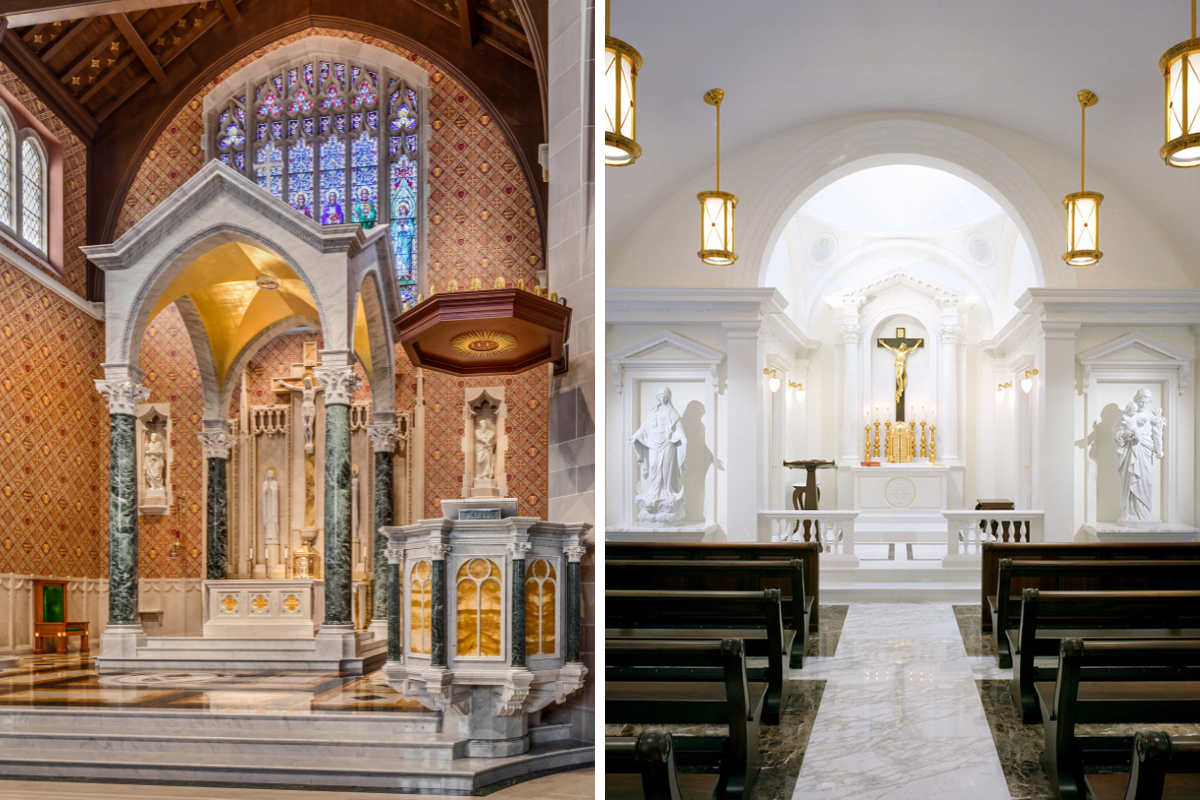
It’s all part of continuing to support the fight for reverence, beauty and tradition in sacred architecture — and against Modernism — that he’s championed for decades.
“Now we have to go to the next level, which is to build great stuff, beautiful stuff, big stuff, glorious things. Honoring the saints, honoring Christ, promoting the works of mercy, promoting devotions, promoting the Church. And we used to do it pretty well. And we can do it again.”
- Keywords:
- duncan stroik
- sacred architecture
- role of beauty