Traditional Pilgrimage to Chartres Revives Faith in the Heart of Europe
More than 19,000 young Catholics from around the world joined this year’s traditional pilgrimage — a beacon of hope for Christian revival in the heart of a secularized Europe.

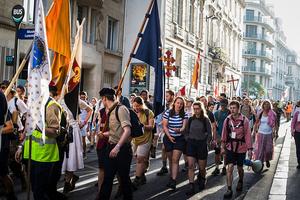
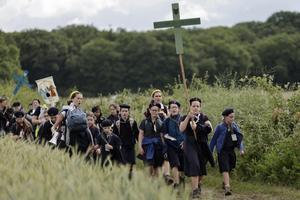
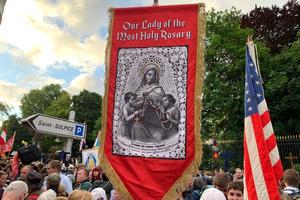
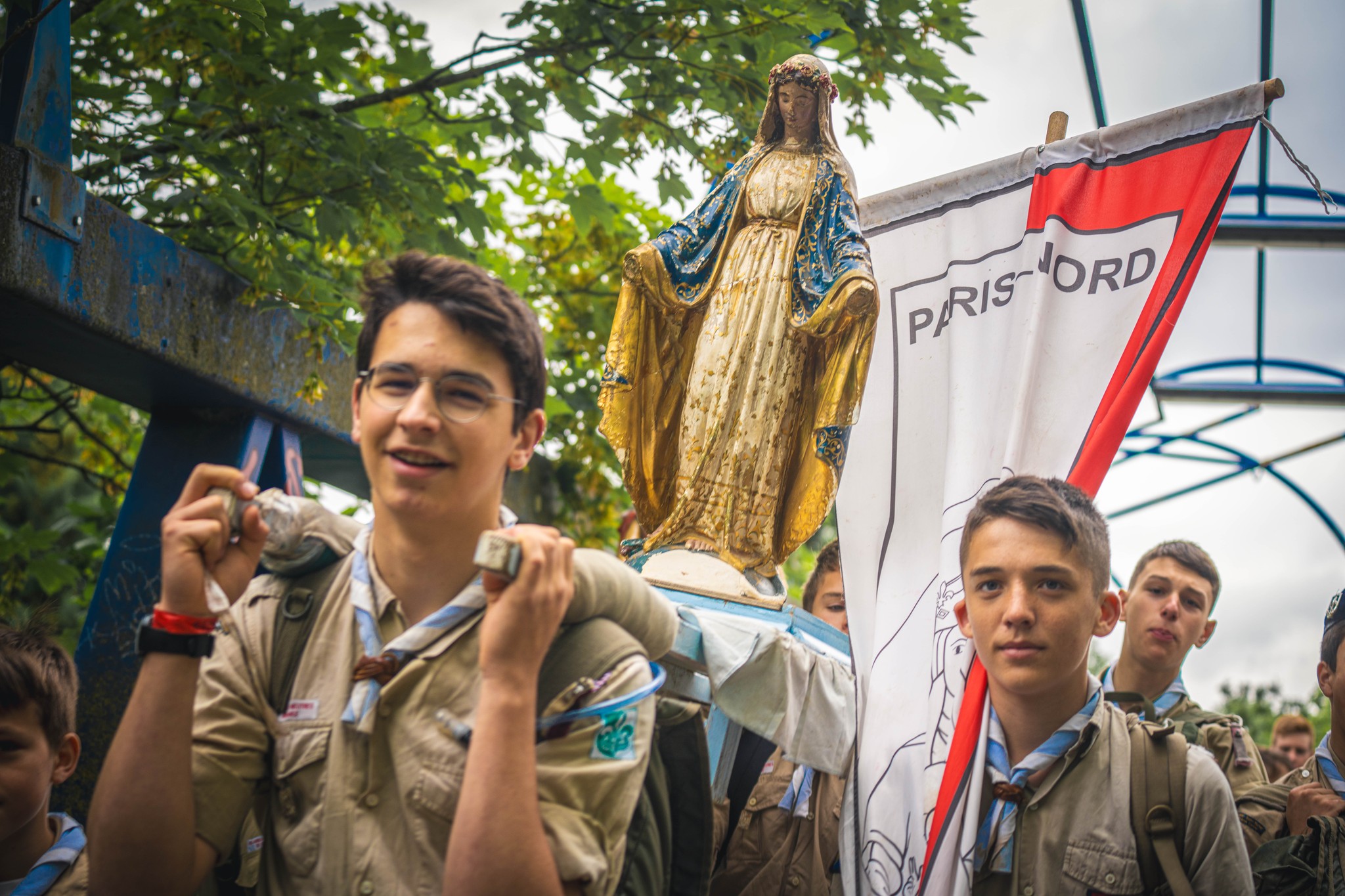
Equipped with flags and banners, and divided into chapters by countries or regions, international pilgrims walked for three days from dawn to dusk and spent nights camping at their daily destination. The days filled with Masses, cheerful pilgrim songs and chanted prayers — all the way from the French capital to the ancient cathedral of Chartres.
Organized by the French Notre-Dame de Chrétienté association since 1983, the three-day walking journey, which this year took place June 7-9, attracts thousands of pilgrims every year, many of them drawn by the Latin Mass. This year, the contingent was 19,000-strong.
The 2024 pilgrimage had seen a record turnout of around 18,000 participants in 2024 (up from 16,000 in 2023). This year’s registration filled up in just five days, with a new record level of participation, according to organizers.
The average age of pilgrims this year was 20 years old, according to the latest numbers.
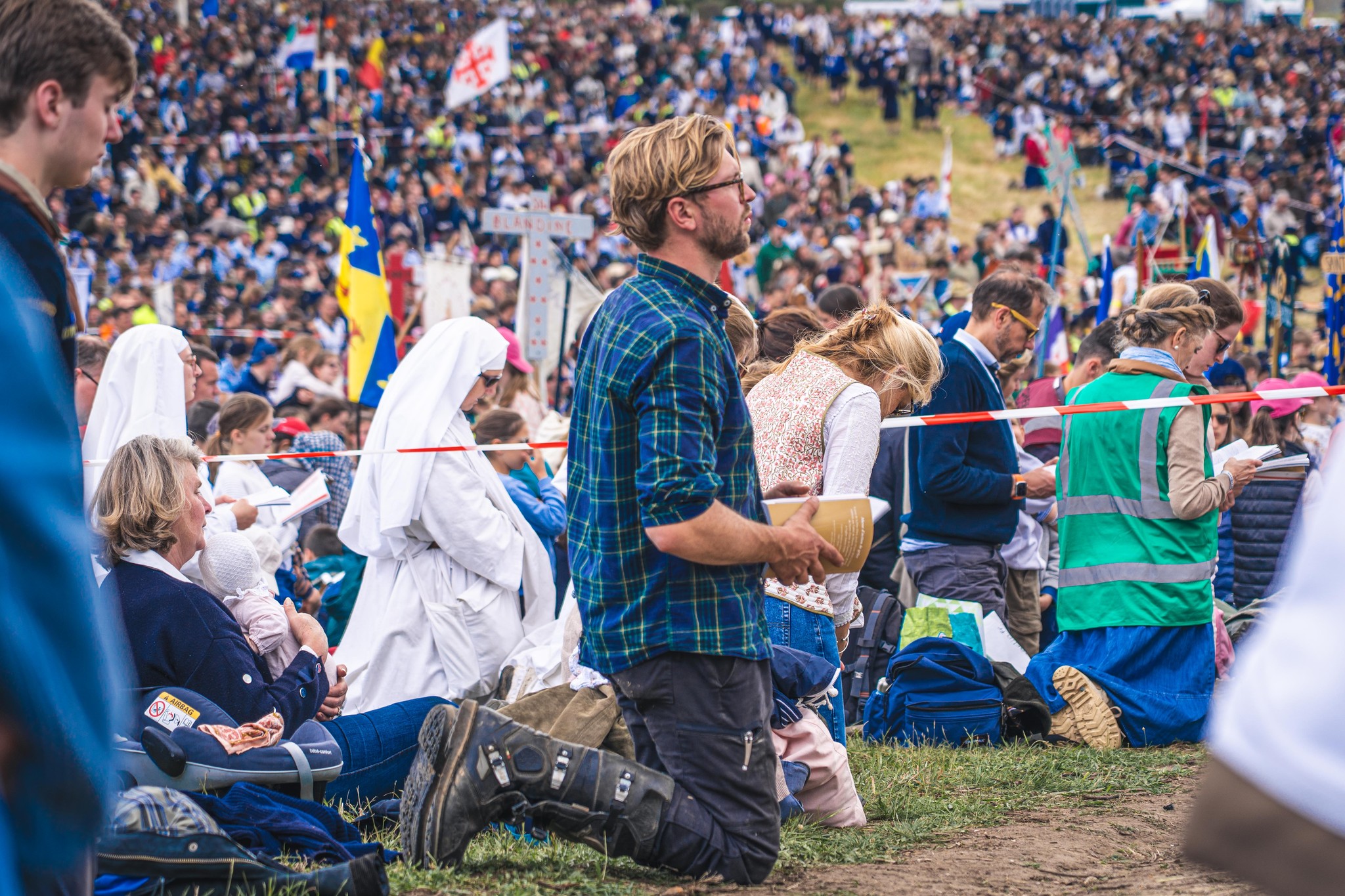
Robin Franssen, 19, from the Netherlands, was drawn to the pilgrimage by his “deep love for tradition,” which he argued “finds its best expression in the traditional Latin Mass.”
“These young men and women, including myself, have grown up in completely secularized societies where extreme ideologies have been pushed upon them,” Franssen explained to the Register.
“I simply think the young people go in the exact opposite direction as a direct reaction to that. A real spiritual awakening is happening in Europe, of which this pilgrimage is the showcase.”
Love for Tradition, the Mass and the Eucharist
Father Vilhelm Torbiörn, 34, from France, who made his first pilgrimage as a seminarian for the Institute of the Good Shepherd in 2018, explained to the Register that it was “his first time making the pilgrimage as a priest” this year, which made it a “very different experience.”
“As a priest, it was above all the opportunity to serve souls that drew me to the pilgrimage this year,” he said. “We were as though immersed in confessions and conversations, and because of that beautiful opportunity, time passed very quickly.”
Father Torbiörn shared that “the love for tradition, this love and reverence for the Mass and the Eucharist, the love for our Lord Jesus Christ that is present throughout the entire pilgrimage” was at the heart of what inspired him to first take part in the pilgrimage seven years ago.
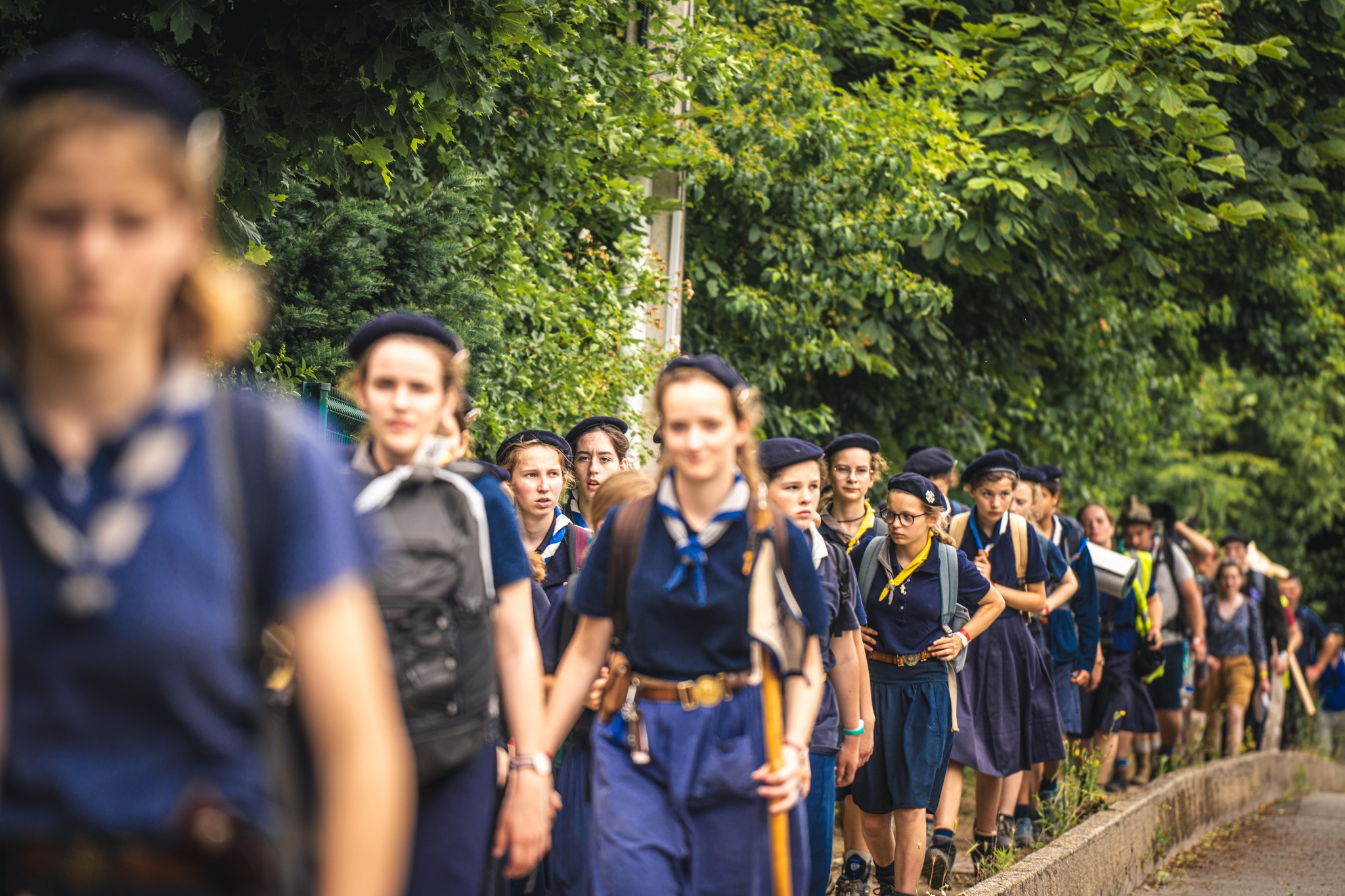
Returning year after year was never a question for him. “It’s difficult and quite intense, and even though in the moment we complain and have sore feet, we are happy to be back on this path ever year because we especially know the joy that awaits at the end and all the fruits it brings.”
‘That He May Reign, on Earth as in Heaven’
The 43rd edition of the pilgrimage was be held under the theme “That He May Reign, on Earth as in Heaven,” in honor of the centenary of Pope Pius XI’s 1925 encyclical Quas Primas — a deliberate choice, according to Bishop Athanasius Schneider of Kazakhstan.
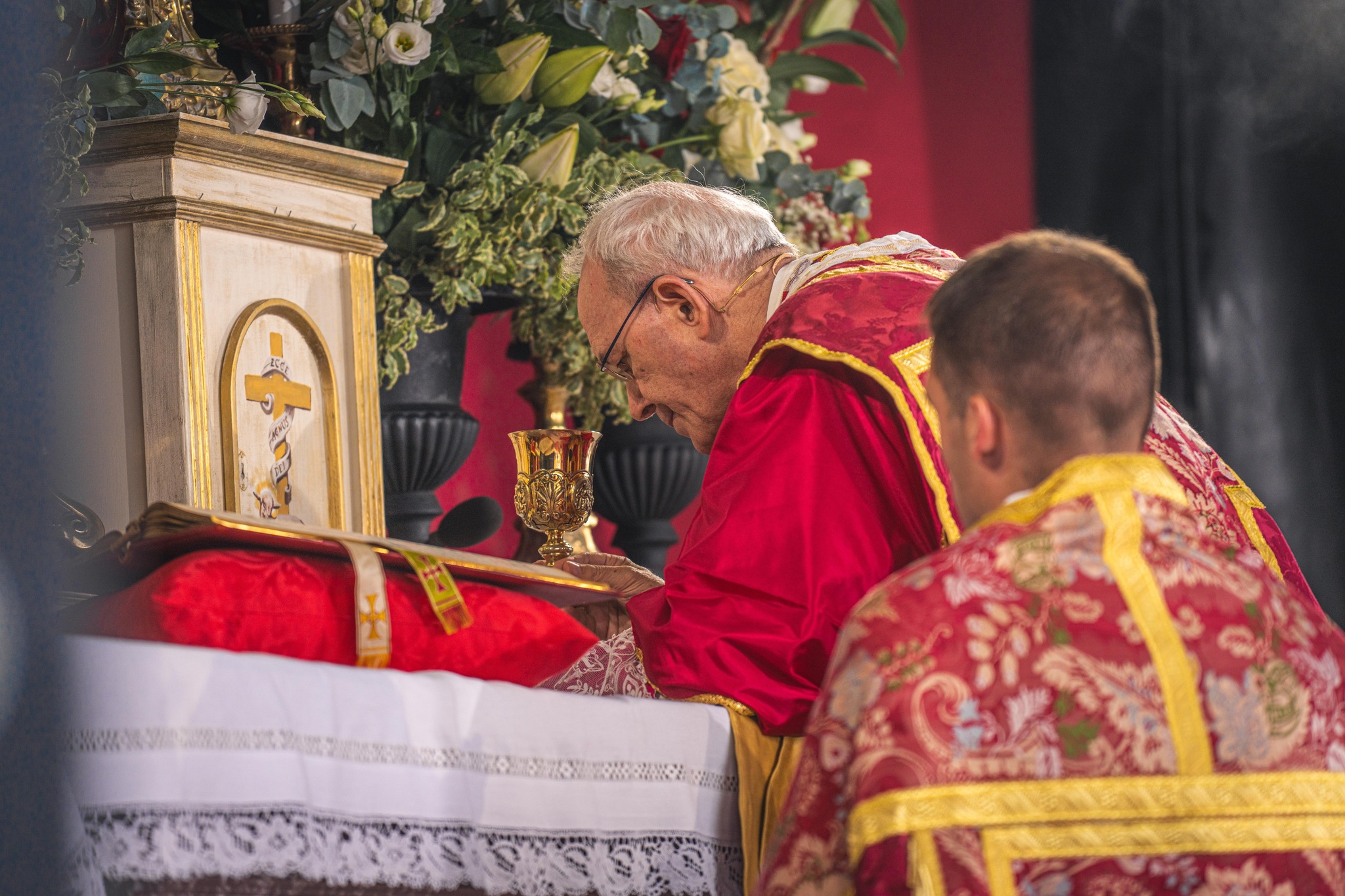
“The Son of God became man, to reign as King, as Truth, and as Savior over all human hearts, over all nations, societies and human institutions,” Bishop Schneider, who celebrated the Sunday Pentecost Mass, told the Register. “He does not reign by force, but by the power of his love.”
“There is a thirst to experience the spiritual beauty and firmness of the Catholic Church,” he added.
A Young Church Embracing Tradition
While the majority of the pilgrims are French, close to 15% come from abroad — another number growing each year witnessing to the European desire and hope for a Christian revival.
Ryan Hawkes, 24, a seminarian of the Diocese of Portsmouth in England, told the Register that “it was a great way to mark this Jubilee Year of Hope, as there was a palpable feeling of joy amongst the pilgrims. Surrounded by so many faith-filled young people and families, I had a real sense that the Church is alive and that her members are striving to be saints.”
Reflecting on the intensity of the three-day journey, Hawkes emphasized that it is “a pilgrimage in the truest sense: the Church en marche towards God.”
“In a world that’s often so fast-paced and disconnected,” he said, “those three days offer a radical alternative. You’re immersed in prayer, penance and beauty.”
“It’s clear that young Catholics are embracing tradition,” he added, “seeing it not as a burden, but as the gift that it really is.”
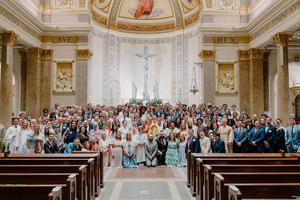
Max-Martin Skalenius, 27, founder of the Swedish St. Eric’s chapter — “the first Nordic chapter to ever join the Chartres pilgrimage” — told the Register that with nearly 100 pilgrims in their group, they too had to close registration early.
Although Catholics are few in number in Sweden, Skalenius suggested that “perhaps it’s not so surprising there are so many Swedish pilgrims and such strong enthusiasm for the pilgrimage.”
“In Sweden, God is removed from everything, and man is exalted, our own desires and wishes put at the center,” Skalenius said, noting that in the Chartres pilgrimage and “the traditional Mass, which offers a taste of heaven on earth, we receive the antidote to much of what we face in modern Sweden.”
“It draws young people — to see a Mass and a Church that transforms the world, rather than being transformed by it,” Skalenius added. “Because young people themselves want to be transformed, they don’t want more of what the world has to offer.”
‘A Return of Christianity to Hearts and Cities’
Looking ahead after the pilgrimage, French Father Torbiörn shared he feels “a deep peace and confidence,” adding that “seeing the torch of faith passed from hand to hand” fuels hope.
“We see that we simply need to live our faith, and there’s a kind of chain reaction: The good spreads, and it draws people in, especially young people. With their enthusiasm, vitality, fervor and joy, they attract others from outside like a blazing fire.”
Expressing his hope for “a return of Christianity to hearts and cities,” Father Torbiörn stressed that initiatives like the Chartres pilgrimage are “something that should happen all across Europe — the tired old Europe that needs to rediscover its faith in order to find again its joy of living, its reason for being, and its salvation.”
“What gives me hope,” English seminarian Hawkes said, “is that all of the thousands of pilgrims have now gone home to their families, their friends, their jobs, their schools. Each of them will now go out, empowered by the Holy Spirit and what they experienced during those days, to transform the world.”
Despite the usual intensity of the pilgrimage — with its fatigue, aches and challenges — the pilgrims all shared their enthusiasm, despite their tiredness, as well as their delight in reconnecting with people they see only once a year and their joy in making new friends across the world.
For Swedish leader Skalenius, there was an added joy: Upon arrival in Chartres, he proposed to his girlfriend, Elisabeth.
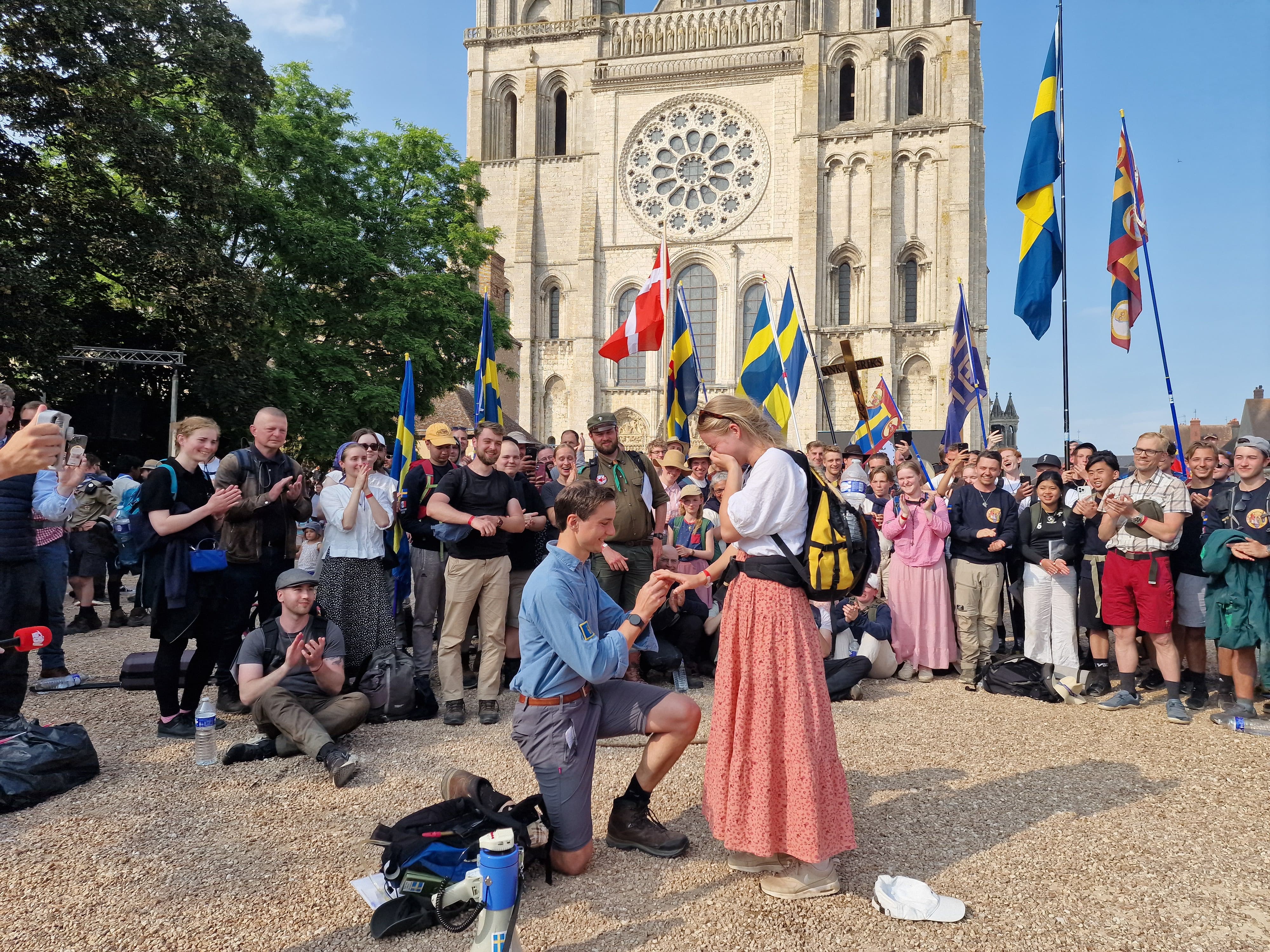
“We want to keep walking now,” Skalenius said, “and that’s what I told her when I got down on one knee — that even after this pilgrimage, I want to continue walking with her in life and towards heaven, together with Our Lady of Chartres — who brought us together — God, and all his saints.”