Why Vatican II Urged Catholics to Be the ‘Church of the Poor’
COMMENTARY: The Second Vatican Council reminded the faithful that in serving the poor, the Church encounters Christ himself — the Savior who became poor to make the world rich with grace.
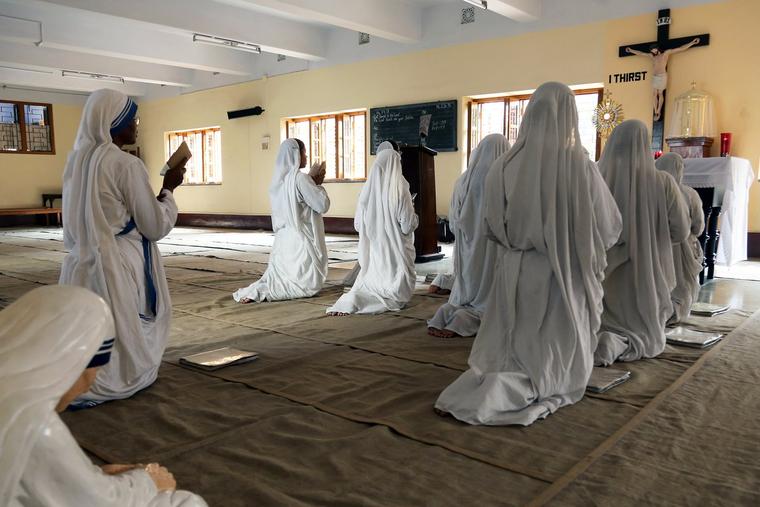
“The Church of the poor,” a phrase that continues to resonate on today’s World Day of the Poor, goes back to the period just before the start of Vatican II. On Sept. 11, 1962, exactly one month before the solemn opening of the Council, Pope John XXIII used the expression in an address on Vatican Radio.
In expressing his hopes for the coming ecumenical council and describing the universal scope of this assembly, he affirmed that the Church wants to present herself as, and wants to be, “the Church of all, and especially the Church of the poor.”
These words, “Church of the poor,” even if at times misunderstood, would come to express an essential aspect of the Council’s and the Church’s attitude toward the world. But how would the Council Fathers assimilate this message, so that the entire Church might truly manifest herself in this way?
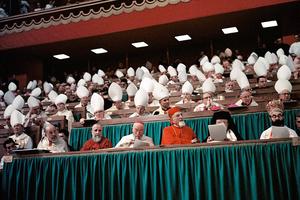
The question of poverty was not a major theme in the early stages of the Council’s debate on the topic of the Church, the debate that would eventually lead to the Dogmatic Constitution Lumen Gentium.
Nonetheless, in reflecting on the supernatural mystery of the Church and how to best express it, the Council Fathers could not ignore the pressing needs of the world which the Church has been sent to serve. The Belgian-Congolese Bishop Jan van Cauwelaert, speaking in the name of the Bishops’ Conference of Congo, called for the initial draft to be profoundly revised, to show that all persons are called to authentic fraternity in Christ. In this way, he noted, the Church might respond to the tragic divisions present in the world.
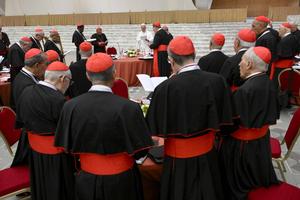
In reflecting on the Church’s own nature, in light of such contemporary concerns, the Council would come to recognize the need for the mystical body of Christ to more deeply reflect the humility and poverty of its founder. This sentiment was expressed memorably by the Italian Cardinal Giacomo Lercaro, the archbishop of Bologna, toward the end of the first period of the Council’s work, on Dec. 6, 1962.
The cardinal opened his speech by reflecting on the great task of the Council: to propose to the men of the time the “intimate mystery of the Church,” which is similar to “‘the great Sacrament’ of Christ, the Word of God, revealing himself, living, and working among men.” Lercaro went on to point to an aspect of the Church’s mystery which the Council had not given sufficient attention to, namely, the presence of Christ in the poor.
The Council could not satisfy the will of God and the desires of humanity, Cardinal Lercaro adamantly stated, unless it treated this topic as if it were the center and soul of the Council’s teaching. Sadly, he noted that the current age seemed to be one in which the poor were evangelized less, and in which their hearts seemed to be alienated and estranged from the mystery of Christ in the Church. No doubt Cardinal Lercaro was thinking of his own experience bringing the Christian faith to the working class at a time when communism had great influence.
The Italian archbishop went on to propose to the Council that the holy poverty of Christ in the Church should not just be a part, but a primary part, of its teaching. The Council was called to show, he continued, how poverty was a special sign and way of the saving presence of Christ among men. In the revision of its teaching on the Church, the Cardinal called on the Council to show the profound connection between this presence of Christ in the poor and his presence in the Eucharist and in the Church’s hierarchy.
Cardinal Lercaro further asserted that this doctrine on poverty needed to go beyond just theory: it needed to lead to a renewal of ecclesiastical institutions and the methods of evangelization. The Church was called to recognize, on one hand, the dignity of the poor, and, on the other, the ways in which ecclesiastical institutions might be better adapted.
More specifically, the cardinal called on the Church to limit her use of material means, especially those means which did not bear the appearance of holy poverty. He further called for a new style of bishops, to avoid the appearance of wealth, as well as for a renewed effort to live poverty among the religious and for a reform in the Church’s approach to finances.
The cardinal finished his speech with an impassioned call to make the evangelization of the poor a priority. Following this path, he stated, with the help of the Holy Spirit and of the Blessed Virgin Mary, the Council would find the authentic way of presenting, whole and entire, the “eternal and unchangeable Gospel of God” in the face of the various problems faced by the Church.
Cardinal Lercaro assured the Council Fathers that such a way of presenting the Gospel would facilitate the unity of Christians, as well as unite and more profoundly touch people, especially the poor, in whom the Church of Christ — echoing the words of St. Paul — recognizes him who “while being rich became poor, so that he might bestow on us his grace and glory” (2 Corinthians 8:9).
The Council Fathers responded immediately with applause. The cardinal had reminded the Council assembly of a truth which, while so fundamental to the Gospel, could easily be lost sight of among various other topics.
Lercaro’s words would not be lost on the Doctrinal Commission as it sought to revise the initial draft on the Church. The commission realized that the theme of poverty needed a place within the very first chapter of the constitution on the Church, since the topic belongs to the very mystery of the Church.
The reference to poverty would find a place in the paragraph dedicated to the visible nature of the Church, which later became Lumen Gentium 8. An initial revision of the text continued to affirm the visible and hierarchical dimension of the Catholic Church, as in the earlier draft, but complemented this perspective by referring to “evangelical poverty” as another perceptible aspect of the Church. Through such poverty, the revised draft affirmed, the Church “bears the testimony of the meek and humble Jesus.”
At the insistence of various Council Fathers, this description of the Church’s love for the poor would later be expanded significantly, to affirm more forcefully the Church’s preferential concern for those in need. As the final text of Lumen Gentium Paragraph 8 affirms, “Christ was sent by the Father ‘to bring good news to the poor, to heal the contrite of heart’ (Luke 4:18), ‘to seek and to save what was lost’” (Luke 19:10).
Within this Christological perspective, the Council articulated how the concern for the poor is an essential aspect of the Church’s own mission. As the text goes on to say: “Similarly, the Church encompasses with love all who are afflicted with human suffering and in the poor and afflicted sees the image of its poor and suffering Founder. It does all it can to relieve their need and in them it strives to serve Christ.”
Various other documents would give additional opportunities for the Council to express this same sentiment. Nonetheless, the debate surrounding the first chapter of Lumen Gentium would have a particular importance in bringing this topic to the forefront of the Council’s attention.
Vatican II’s concern for the needy was profoundly oriented to the real needs of our world, yet at the same time, it was never purely earthly and social in nature. Rather, Lumen Gentium reminds us that love for the poor stems from the very heart of the Church’s mystery, by which she shares in the charity of Christ, her founder.
- Keywords:
- vatican ii
- second vatican council
- poverty
- poor

Father Joseph Thomas Opus Dei Father Joseph Thomas, based in Princeton, New Jersey, is dedicated to ministry that focuses on college students. He writes regularly on theological topics and is the author of The Theology of Divine Grace (Scepter, 2023). He also serves as the U.S. representative for the Pontifical University of the Holy Cross in Rome.