Religious Leaders in Italy Sign Pact to Promote Dialogue and Coexistence
The pact aims to address polarization, extremism, the instrumentalization of religion to justify hatred, foster coexistence, and promote a culture of peace in the service of the common good.
Representatives of Italyʼs major religions signed a pact in Rome last week aimed at consolidating an initiative known as “The Italian Path of Dialogue: Religions in the Public Sphere and for Social Cohesion.”
The document was signed June 25 by Catholic, Jewish, Muslim, Buddhist, Hindu, Bahaʼi, Orthodox, and evangelical leaders, including the Italian Bishops’ Conference, the Assembly of Rabbis of Italy, and various Islamic and Buddhist organizations.
Following the signing, representatives of the various faiths were received at the Quirinal Palace by the president of the Italian Republic, Sergio Mattarella, to whom they presented a copy of the pact.
The document seeks to recognize religious freedom and share “the value and complexity of being believers and practitioners of different faiths in a postmodern, secularized, multicultural, and multireligious society, one wounded by conflicts and extremism, including those of a pseudo-religious nature,” the text states.
According to the Italian Bishops’ Conference, this agreement is the result of several years of meetings and collaborative work. Leaders from different religions have been meeting since 2023 to reflect on communion and peace.
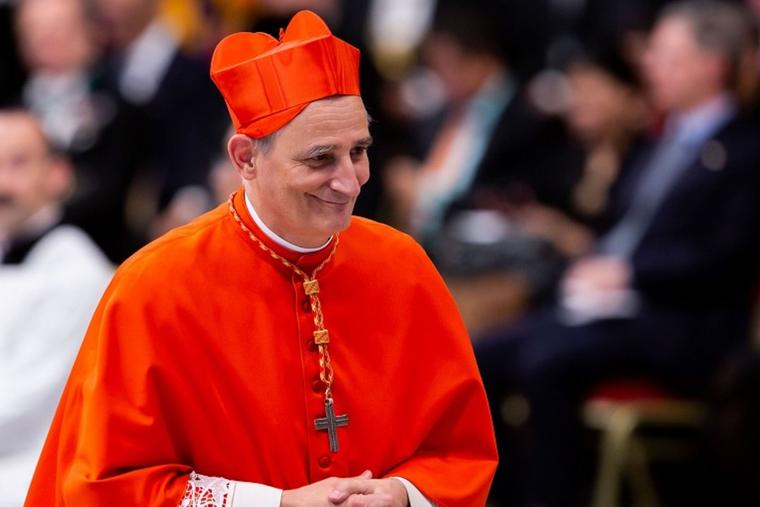
Cardinal Matteo Zuppi, archbishop of Bologna and president of the Italian Bishops’ Conference, emphasized his desire to “reflect openly on shared values in order to build a civil community that, even amid diversity, recognizes the sense of a shared commitment to a more just, welcoming, and inclusive society.”
The pact proposes nine commitments and lines of action to strengthen harmonious coexistence. Notable among these are the promotion of the equality of all religions before the state through constructive dialogue, the fostering of a culture of peace based on justice and compassion, the defense of the common good, and mutual respect and collaboration among the various religious communities.
Furthermore, the document aims to address the rise of polarization, extremism, and the instrumentalization of religion to justify hatred and conflict, and to “offer a serious and proven contribution to a society overly exposed to polarization and extremism, which drive people to view the other person who is different due to their faith or culture as an enemy.”
For its promoters, the pact represents a joint response to social challenges and the complex current geopolitical context, championing interfaith dialogue as a tool to strengthen social cohesion, foster harmonious coexistence, and promote a culture of peace in the service of the common good.
This story was first published by ACI Prensa, the Spanish-language sister service of EWTN News. It has been translated and adapted by EWTN News English.
- Keywords:
- italy
- italian bishops' conference
- Cardinal Matteo Zuppi
- interfaith dialogue
- interreligious dialogue