10 Fascinating Facts About the Mysterious Enoch
A closer look at the enigmatic Old Testament figure whose fidelity and fate have intrigued believers for centuries.
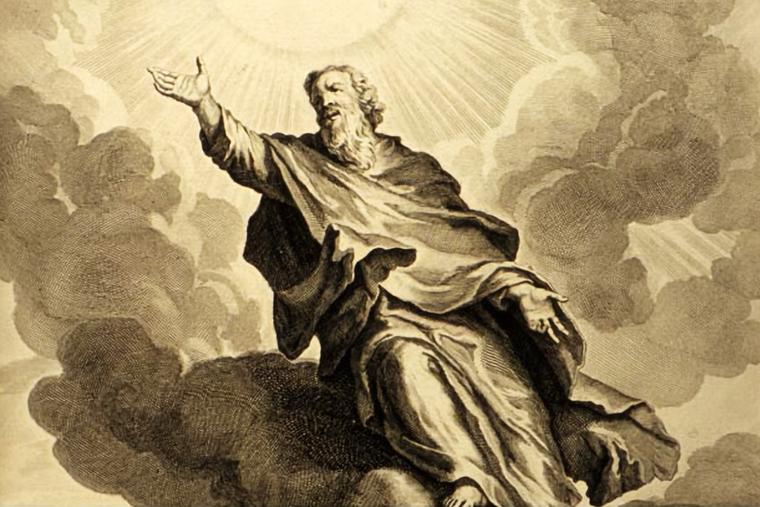
Enoch holds a special place in the Church as a unique example of a faithful servant. He lived in a wicked generation and among a rebellious culture that existed before the Great Flood, but is said to have “walked with God” and “was attested to have pleased God” (Hebrews 11:5).
The Church Fathers, such as Justin Martyr, Irenaeus, Clement of Alexandria, Origen and Tertullian, all spoke highly of him, and according to Sirach 49:14, “few on earth have been made the equal of Enoch.”
To add to your biblical knowledge, here are 10 interesting things related to Enoch:
1. Enoch Was the Great-Grandfather of Noah
While most have heard of Enoch, many may not be aware that he was the great-grandfather of the ark-builder Noah (and was also the father of Methuselah and the son of Jared from the line of Seth). Enoch, a mysterious early figure in the Bible of whom we know very little, was only a mere seven generations from the first man, Adam.
2. Genesis Mentions Two Different Men Named Enoch
The Book of Genesis mentions two different men with the same name, “Enoch.” One is the Enoch who is described above (from the line of Seth), and the other was the son of Cain (from Genesis 4:17-18). Due to the potential for confusion, references to Enoch often make clear which man is being referred to.
3. The New Testament Identifies Enoch as a Prophet, and Tradition Regards Him as a Saint
Although not explicitly identified as a prophet in the Old Testament Book of Genesis, Enoch is referred to as one in the New Testament Letter of Jude, where he “prophesied” about the Lord’s future judgment (Jude 14).
Enoch lived long before the Church instituted the canonization process, so like other Old Testament figures, he is not considered a saint in the formal sense (as he has not been formally canonized). Nevertheless, tradition considers him to be a saint in the Catholic Church.
4. Enoch Lived for 365 Years
While 365 years is a long time for a human being to live, it is well known that other Old Testament patriarchs introduced in the Book of Genesis lived much longer lives. For example, Methuselah, Enoch’s son, died at age 969, while Enoch’s great-grandson, Noah, lived to be 950 years old.
5. Scripture Says Enoch Did Not Experience Death
Many are familiar with the well-known passage that describes the prophet Elijah being taken up by God, but some may not be aware that Enoch had a similar experience. According to Genesis 5:24, Enoch was taken by God and “did not die.” Similarly, Hebrews 11:5 indicates that he “was taken up so that he should not see death.” According to Scripture, Enoch and Elijah are the only two men throughout all of human history who are said to have been “taken” by God and thus did not experience death.
6. The Ultimate Destination of Enoch Remains Uncertain
According to the Bible, we only know that Enoch was “taken up” (Sirach 44:16) to somewhere, although Genesis 5:24 more specifically informs us that he was taken to “God’s abode.” As far as we understand, before the coming of Jesus Christ, heaven was generally not open to those who lived before redemption (CCC 637). What we don’t know is whether Enoch represented an exception to the rule. The fact that Jesus himself said, “No one has gone up to heaven except the one who has come down from heaven, the Son of Man” (John 3:13), makes the current whereabouts of Enoch (and Elijah) not entirely clear.
7. The Book of Enoch Is an Ancient Jewish Text, Not Included in the Biblical Canon
The Book of Enoch, which is also known as 1 Enoch (as there are two later books), is an ancient Jewish apocalyptic text. It is considered by the Church as apocryphal, in other words, not considered divinely inspired and therefore not included as part of the Bible’s canon of Scripture. Scholars estimate that it was written in the third century B.C., or perhaps even earlier, but do not regard Enoch as the author. Fragments of it in the Aramaic language (which is thought to be its original language) were found among the Dead Sea Scrolls, which were discovered in 1947. For centuries, it was lost in Europe, but in 1773, a Scotsman named James Bruce brought the book back from Ethiopia, which led to increased attention on its content.
8. The New Testament Letter of Jude Quotes the Book of Enoch
Although the Book of Enoch is non-canonical, many may be unaware that it is referenced in the New Testament, in the Letter of Jude, in a passage that discusses religious impostors who lead people astray for their own gain (Jude 14-15). Enoch, who lived during a time of wickedness, is said to have prophesied about such “false teachers.” Its being quoted in the Bible creates many tantalizing questions to ponder.
9. The Ethiopian Orthodox Church Includes the Book of Enoch in Its Biblical Canon
The Ethiopian Orthodox Church includes the Book of Enoch in its canon. It was incorporated into their church — which was evangelized at an early date — from Ethiopian Jewish tradition, and is the only Christian Church that includes it as sacred Scripture.
10. Some Traditions Propose Enoch as One of Revelation’s Two Witnesses
Some believe that Enoch is possibly one of the “two witnesses” mentioned (but not identified) in Revelation 11:1-14. This has led some to propose Enoch as the other, as they both avoided death when they were taken by God. While it is definitely a great and curious mystery, perhaps a reason for their being “taken up” by God could be that our Creator intended for Enoch and Elijah to return to earth again at some point in the future.
Lessons and Legacy
According to Sirach 44:16, we are instructed that Enoch was “taken up” so that “succeeding generations might learn by his example.” While we know very little about him, the significance of his presence on earth is nevertheless quite clear. His life experience teaches us three important things: first, that intimacy with God is possible to attain; second, that it’s important to be faithful and obedient and proclaim truth; and third, that faithfulness is ultimately rewarded by God.
- Keywords:
- enoch
- old testament
- prophets