It’s Time to Add Old Testament Saints to the Liturgical Calendar
COMMENTARY: Elevating the Old Testament saints would enhance the Catholic sense of the unity of Scripture and serve as a timely reminder that God’s holiness was at work in creation even before the Incarnation.
With apologies to the Polish Catholics celebrating the feast of Our Lady of Częstochowa on Aug. 26: Blessings for the feast of Melchizedek.
Yes, that Melchizedek, from Genesis 14 and Hebrews 7 and Psalm 110 and hymned at a thousand priestly ordinations: Tu es sacerdos in aeternum, secundum ordinem Melchisedek (You are a priest forever, according to the order of Melchizedek).
Melchizedek is only one of many Old Testament figures who have feast days assigned in the Roman Martyrology, the Church’s official “catalogue” of the saints. When, at a canonization, the Holy Father says that the new saint should be “Sanctorum Catalogo adscribimus,” the martyrology is that liturgical catalogue.
In addition to Melchizedek, the Roman Martyrology includes Jeremiah (May 1), Isaiah (May 9), Job (May 10), Elijah (July 20), Samuel (Aug. 20), Moses (Sept. 4), Abraham (Oct. 9) and King David (Dec. 29). There are several others as well, perhaps most marvelously on Christmas Eve, which is assigned to Adam and Eve. There can be a delightful playfulness in the liturgy, and assigning Dec. 24 to “all the holy ancestors” of Jesus is just that.
These are real saints, enjoying beatitude in heaven, as Jesus makes clear in this past Sunday’s Gospel passage, speaking of “Abraham, Isaac, and Jacob and all the prophets in the kingdom of God” (Luke 13:28).
Yet this category of saints is not included in the universal or general Roman calendar, meaning that their feast days are not celebrated at daily Mass.
Salvation came for Old Testament saints in a different manner, without baptism or the other sacraments, but they were saved by the same Christ. The Roman Martyrology is a liturgical book, so the Old Testament saints are already included in the Church’s liturgy. But they’re not included in the most frequently encountered part of the liturgy — the Holy Mass — aside from that brief mention in the Roman Canon to Abel, Abraham and Melchizedek.
That is a pity, and ought to be corrected. Consider, for example, the Vatican decree last week establishing a particular liturgical calendar for the Apostolic Vicariate of Southern Arabia (AVOSA, which includes the United Arab Emirates, Oman and Yemen). Sts. Peter and Paul and Our Lady of Arabia are assigned as patrons for the vicariate. It’s common enough for countries or regions to have prominent saints who are not local to the area; the patron of Canada is St. Joseph and the Immaculate Conception for the United States.
Then any particular calendar includes local saints. The AVOSA calendar includes the sixth-century Yemeni martyrs Arethas and companions (Oct. 24); the Ethiopian King Caleb (May 15); Blessed Charles Deckers, a missionary priest in Yemen who was martyred in Algeria (May 8); and the Syrian soldier-martyrs Sergius and Bacchus (July 27).
It is likely that Catholics in the southern Arabian vicariate have never heard of these saints. Yes, they can learn, but what they learn about sixth-century Yemen may remain distant from them. That is not to argue against saints from antiquity. This week includes on the universal calendar Sts. Augustine (Aug. 28) and Monica (Aug. 27), both of whom widely inspire Catholics today — likely the mother more than the son, actually.
Happily, the AVOSA calendar also includes Moses, Abraham and Job. Everyone at daily Mass will know these giants of the Old Testament. Could that particular provision be a lesson for the universal calendar?
It’s a question of balance. There is no need to banish all obscure saints from the calendar; their very obscurity reminds us that holiness comes in exotic forms and in faraway places, and that the Communion of Saints does not only include people familiar to us. Nevertheless, obscure holiness is unlikely to inspire, or be called upon for intercession.
The saints of August are a good example of balance. It includes the recent additions St. Maximilian Kolbe (Aug. 14) and St. Teresa Benedicta of the Cross (Aug. 9), the former declared by Pope St. John Paul II to be the “patron of our difficult century” and the latter made an official co-patron of Europe.
There are saints a bit further back, St. Jean-Marie Vianney (Aug. 4) and Pope St. Pius X (Aug. 21). And mendicant heroes, St. Dominic (Aug. 8) and St. Clare (Aug. 11). A biblical saint, too — the martyrdom of St. John the Baptist (Aug. 29).
Yet, like all other months, there are no Old Testament feast days. Before the calendar reforms after Vatican II, there was a feast for the Seven Maccabee Brothers (Aug. 1) — and that was unusual.
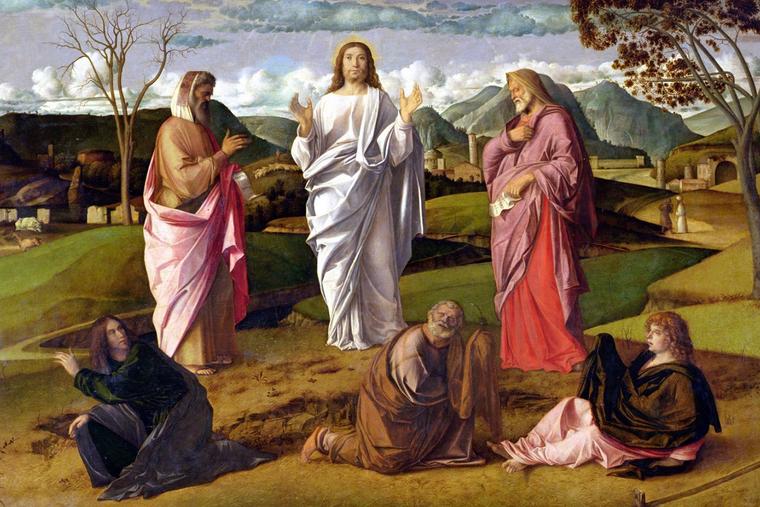
The Transfiguration (Aug. 6) includes Moses and Elijah, as well as the apostles Peter, James and John. The latter three have their feast days in the universal calendar. Why not Moses and Elijah? Knowing Moses and Elijah is even more important for a Catholic than to know any of the Church Fathers or medieval doctors who are scattered throughout the calendar.
Would not August be more complete, at least a bit more balanced, if parishes observed the feast of Melchizedek, king and priest?
Enormous energy has been devoted for over a century to enriching Catholic knowledge of the Bible. This has even found liturgical expression in the happy designation by the late Pope Francis of the Third Sunday of the year as “Sunday of the Word of God.”
Sacred Scripture records God’s revelation in both words and deeds, and God works through powerful instruments throughout salvation history. The liturgical calendar should lift up those figures, of whom the patriarchs, Moses and Elijah, have pride of place. Imagine celebrating Isaiah and Job on consecutive days in May — the great theological and philosophical wisdom of the Old Covenant presented together.
Some direction from the Vatican would be helpful here. Any saint in the martyrology can be celebrated (akin to a votive Mass) on any day where there is not another obligation. Given though that there are not specific Mass prayers for Old Testament saints, a priest would have to use the “common” prayers in the missal on such occasions. And that would be rarely done, if ever.
Rome could issue Mass prayers suitable for the Old Testament saints and designate their feasts on the universal calendar. There is something of a precedent for this in some religious congregations, and in the Holy Land, where there are particular Masses for the various shrines. For example, the feast of Moses (Sept. 4) is celebrated with great festivity on Mount Nebo.
Elevating the Old Testament saints would enhance the Catholic sense of the unity of Scripture, be a timely reminder that salvation comes from the Jews, and that God’s holiness was at work in creation even before the Incarnation. Liturgical piety does not begin with Jesus, but it began in the beginning.
Melchizedek, king and priest, pray for us!
- Keywords:
- moses
- elijah
- melchizedek
- old testament
- saints
- liturgical calendar