How the Post-Conciliar Classic ‘Bread Grows in Winter’ Speaks to Our Time
125 years after her birth, Ida Friederike Görres’ collection of essays, newly translated into English, reads like prophecy, according to one of the world’s foremost experts on her work.
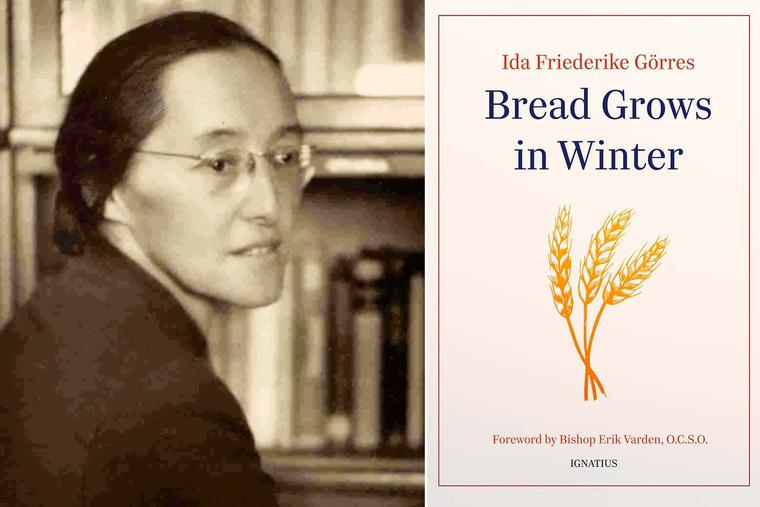
Some books succeed better than others in capturing the essence of an era. Rarer still are those that, decades later, take on a renewed — even prophetic — resonance.
That is increasingly how readers are describing Bread Grows in Winter, a collection of essays and lectures by Catholic writer Ida Friederike Görres (1901-1971). Originally written in Görres’ native German, an English edition was recently released by Ignatius Press with a translation by Jennifer Bryson and a foreword by Bishop Erik Varden of Trondheim.
Written between 1967 and 1970, during the turbulence that followed the Second Vatican Council, the texts collected in the volume reflect on themes that remain familiar today, from polarization within the Church, theological confusion and distrust of authority to liturgical upheaval and the fear among many Catholics that Christianity itself was losing its foundations.
For Hanna-Barbara Gerl-Falkovitz, one of Germany’s best-known Catholic philosophers, winner of the 2021 Ratzinger Prize and widely regarded as the principal interpreter of Görres’ work, the atmosphere in which Bread Grows in Winter was written is essential to understanding why the book resonates so strongly today.
Turbulent Years After Vatican II
“Naturally, after the end of the Second Vatican Council in 1965, there was a great sense of new beginnings,” Gerl-Falkovitz told the Register. “The laity in particular felt encouraged to participate more ‘creatively’ than before in the life of the Church, especially in the liturgy, and to adopt new positions, including in moral matters.”
Debates surrounding the role of women, authority, sexuality and doctrine intensified rapidly in the German-speaking Church of the time. In 1968, widespread protests erupted in Germany against Pope Paul VI’s encyclical Humanae Vitae, reaffirming the Church’s rejection of contraception.
“The sense of an autonomy of the mature conscience, even in opposition to the institutional Church, was strong,” Gerl-Falkovitz said.
At the same time, the revolutionary climate of 1968 transformed European intellectual life more broadly. “The student uprisings of 1968, based on Marxist theories, regarded Christianity as unnecessary,” she explained. “The generation of 1968 formed the left-wing underground in Europe for the following decades and quickly entered politics and legislation.”
Many priests left ministry at the time, and Catholic academies became places of intense ideological confrontation. Theological experimentation accelerated, especially in Germany and the Netherlands.
From Würzburg to Synodality
According to Gerl-Falkovitz, Görres understood very early that the crisis extended beyond questions of discipline or Church governance.
“A rapid and clearly perceptible theological change in Catholic doctrine, as well as in moral teaching, became evident,” she said.
She pointed in particular to the growing influence of theologians and exegetes who questioned traditional doctrines. Hans Küng wrote against papal infallibility while Herbert Haag argued against the existence of the devil and Eugen Drewermann reduced Christology to an emphasis on the “humanity of Jesus.” Some exegetes interpreted the miracles as unhistorical, and Rudolf Bultmann’s program of “demythologizing” the New Testament spread widely.
“Görres saw the foundations trembling, not merely individual parts,” said Gerl-Falkovitz. “The foundation at stake was not the Church itself but Christology: Christ’s humanity was separated from his divinity. In the background stood a new Arianism,” a reference to the early heresy that denied Christ’s full divinity.
Among Görres’ intellectual allies were Hans Urs von Balthasar and, from 1968 onward, Joseph Ratzinger, the future Pope Benedict XVI, who thought so highly of her that he would write her eulogy after her death. Though initially close to Karl Rahner, Görres grew distant from him as the theological landscape shifted.
These debates would not end with the Würzburg Synod. When the same Cardinal Ratzinger was appointed prefect of the Congregation for the Doctrine of the Faith in 1981, he would spend years contending with precisely the currents Görres had identified.
One reason Bread Grows in Winter has drawn renewed attention is that many of the tensions Görres described have reemerged in contemporary debates, especially in Germany. The Würzburg Synod of 1970 — during which Görres died, on May 15, 1971 — had already anticipated this.
“The Würzburg Synod of 1970 had already raised all the demands that the Synodal Path in Germany would also raise, beginning in 2021,” Gerl-Falkovitz observed, citing lay participation in Church governance, the abolition of celibacy, the female diaconate, and moral autonomy.
“The only issue absent in 1970 was the recognition of homosexuality as ‘willed by God,’” she added. “This topic was added only in 2021 during the Synodal Path.”
A similar dynamic had played out across the border: The Dutch Pastoral Council (1966-1970) raised many of the same demands and is widely considered a catalyst for the dramatic de-Christianization of what had once been one of Europe’s most vibrant Catholic societies.
Hope Without Illusions
This is precisely what makes Görres’ theses so prophetic, according to Gerl-Falkovitz. “She foresaw an exodus from the Church, particularly among young people,” she recalled, “caused above all by intellectual errors and moral breakdowns fueled by the spirit of the times.”
Yet her sensitivity to the Church’s suffering never turned into sentimentality, and her lucidity never hardened into cynicism. This same woman who so precisely identified the crisis never ceased to believe in the Church’s capacity for renewal.
Beyond her uncompromising diagnosis of the Church’s crisis, it is also the degree of hope she instilled that has allowed Bread Grows in Winter to remain as relevant as ever.
“She placed her hope in the faithful and their practice of prayer; she placed her hope in the saints; she placed her hope in the vital force of theology,” Gerl-Falkovitz said. “She hoped — no, she believed — in the invincible power of the Lord of the Church.”
This unshakeable faith in the Church of Rome finds its most accomplished expression in this famous passage from the book:
“Times of ascent and decay perpetually alternate — spring, naked, bleak, but bursting with buds, alternates with sterile, visually stunning autumn splendor. Time and again, ripeness changes into apparent death, and this breaks open into new life. The Church is the Phoenix.”
More than 50 years later, this image continues to resonate, offering itself as food for thought for every generation that might wonder whether the Church can survive itself.
For Gerl-Falkovitz, the greatest lesson to be drawn from the work is that “every generation must reclaim the Church.” But this task, she warned, requires “a clear Christology; evangelization; intellectual leaders such as [Romano] Guardini and Ratzinger; good and clear language; places and communities of prayer, especially adoration and the Eucharist ...” For, she concluded, “we must never lose sight of Whom we worship.”