Why Everyone’s Talking About ‘Rerum Novarum’ Again
COMMENTARY: A pope named Leo, a world in flux, and a Church seeking direction — the landmark 1891 social encyclical rises to meet the moment.
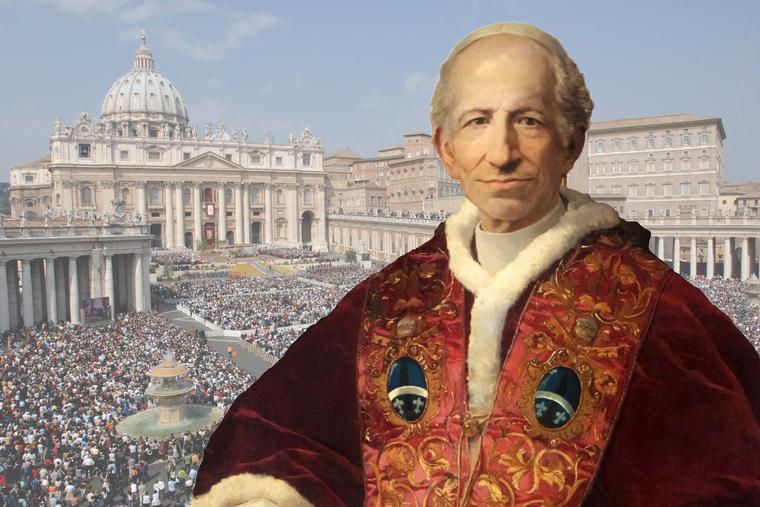
Pope Leo XIII was the spiritual leader of the Catholic Church from 1878 until his death in 1903. His pontificate of 25 years is the fourth-longest reign of any pope, surpassed only by St. Peter the Apostle, Blessed Pius IX and St. John Paul II.
His encyclical Rerum Novarum, which bears the English title, “On the Condition of Labor,” was the first time a pope had written a comprehensive encyclical concerning social justice. It was directed to all Christians, not just Catholics. At the time it was issued, on May 15, 1891, it was considered “progressive” and “ground-breaking.”
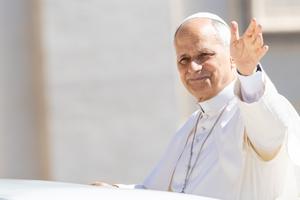
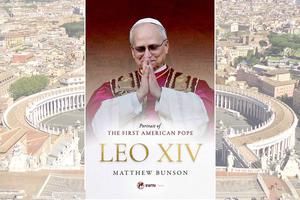
The fact that Cardinal Robert Prevost of Chicago took the name Leo XIV invites us to revisit the great encyclical written by his predecessor. It also suggests that the new Pope will be eager to apply at least some of the principles that guide Rerum Novarum, with a special focus on assisting the poor.
Pope Leo XIII opens his monumental encyclical by acknowledging how things had changed dramatically during the Industrial Revolution. He refers to “the enormous fortunes of individuals and the poverty of the masses.” He deems this an unacceptable situation and responds by saying, “There can be no question whatever that some remedy must be found, and quickly found for the misery and wretchedness which press so heavily at this moment on the large majority of the very poor.” But he does not find this remedy in socialism, which exploits the poor man’s envy of the rich and endeavors to destroy private property.
To those who mistakenly view the Church as solely concerned with salvation while ignoring the needs of the poor, Leo states, “Neither must it be supposed that the solicitude of the Church is so occupied with the spiritual concerns of her children as to neglect their interest temporal and earthly. Her desire is that the poor, for example, should rise above poverty and wretchedness, and should better their condition in life; and for this she strives.”
Pope Leo appeals to people to abandon excess concern for self and live by virtue. In this way men will have charity and seek justice for the poor. It is through virtue, and not through state interference, that help for the poor will be forthcoming. Leo refers to the ardor of brotherly love among the earliest Christians when those who were better off deprived themselves so that they could care for those in need. He cites Acts 4:34: “Neither was there anyone needy among them.”
Times change, and with change comes new challenges. But the “spirit of justice” should always prevail. "Those Catholics,” he writes, “are worthy of all praise — and these are not a few — who, understanding what the times require, have, by various enterprises and experiments, endeavored to better the conditions of the working people, without any sacrifice of principle.” He calls attention to the rights of the worker, just wages, decent working hours, and the right to strike. He condemns child labor and praises workman’s associations that strive for justice for the worker.
His treatment of “the right use of money” may cause some to be uncomfortable. It is one thing to have a right to have money. But does a person have a similar right to possess, for himself, a superabundance of money?
The same question may be applied to other possessions and even to talents. Leo makes his point clear: “Whoever has received from the divine bounty a large share of blessings, whether they be external or corporal or gifts of the mind, has received them for the purpose of using them for the perfection of his own nature, and, at the same time, he may employ them, as the minister of God’s Providence, for the benefit of others.”
Throughout the encyclical Leo points out in a variety of ways that we should live by charity and that charity illuminates the very meaning of life, which, essentially is to share what we have with others. With wealth comes a great responsibility, for man does not possess an absolute right to it. He is a steward; God is the supplier. He must share with others, “when others are in need,” as St. Thomas Aquinas teaches.
Rerum Novarum is an important encyclical and remains relevant to our times. It is hoped that the name Leo XIV will stimulate an interest in what Pope Leo XIII had to say about social justice, personal virtue and the poor in 1891. Times change — but truth endures. As a trustee for the truth, the Church remains faithful to its divine commission. It weathers storms from within and from without, but, as G.K. Chesterton has said, thunders through the ages, “the wild truth reeling,” but standing firm.
Three things are necessary for Christ’s message to be communicated: a platform, an audience, and the truth. As the Supreme Teacher of Christ’s revealed truth, Leo XIV has a platform. His audience consists of well over a billion Catholics. His message is the truth enunciated by Jesus Christ and what is contained in the Magisterium of the Church. We pray that, during Leo XIV’s pontificate, as he faces the challenges of a new Industrial Revolution and the problems associated with artificial intelligence, he will be faithful to his office and communicate the truth of the Catholic Church to all who hunger for it.