From John Paul II to Leo XIV: Four Popes, One Church
Leo XIV draws deeply from the Church’s past to guide its present mission and future hope.

To have come of age during such an extraordinary succession of popes has been a true grace in my life. Each pope I have known has brought something unique, not just to the papacy, but to my own experience of faith in Jesus Christ.
Now, with Pope Leo XIV, I see something beautiful unfolding: not a break from the past, but a remembering of it. To borrow an image from Cardinal Timothy Dolan, I see a continuation steeped in soul, mind, heart, and now … memory.
John Paul II — Our Soul
Pope St. John Paul II was the first pope I ever knew, and I remember the way my grandmothers would speak of him with awe, almost as if he carried the divine on his shoulders. I’ll never forget watching clips of him kissing the ground of every country he visited — a gesture that made you feel the sacredness of every place and of every person. He made the faith seem heroic to me as a child and was a true “father figure” for so many of us. His words “Be not afraid” weren’t just a slogan — they stirred something in our generation’s soul. Pope St. John Paul II taught us what we believe — but more than that, he made us want to believe it.
Benedict XVI — Our Mind
Pope Benedict XVI was the reason I became a theology major and Catholic educator. During my first year of undergraduate studies — the very same semester he was elected pope — I picked up his work for the first time. I was stunned. The clarity, the beauty, the depth — it stopped me in my tracks. I called my advisor (and then my mom) and switched majors that spring semester. It felt like someone had finally put words to questions I didn’t know how to ask.
Later, his Regensburg Lecture challenged the world to take faith and reason seriously. His encyclical Deus Caritas Est gave me one of the most beautiful definitions of love I’d ever read. He helped me see the coherence of our faith — that the Church doesn’t ask us to check our intellect at the door. Pope Benedict taught us why we believe.
Francis — Our Heart
I have to be honest — Pope Francis was sometimes harder for me to connect with. I’d come to value John Paul and Benedict’s coherence, and that wasn’t always his strength. I’ve always wrestled with ambiguity. Yet, over time, I did come to appreciate the beauty of his gestures — the washing of prisoners’ feet, the embrace of the poor, the insistence on God’s boundless mercy. Francis didn’t just talk about the Gospel but attempted to live it directly. He stretched me, challenged me to see past my comfort zone, and helped me grow in compassion. He reminded all of us that orthodoxy without charity is hollow. Pope Francis challenged us to live what we believe.
Leo XIV — Our Memory
Pope Leo XIV, an Augustinian friar, has been shaped by deep interiority and the theology of longing and memory. He personally engaged with all three of his predecessors — he worked under them, learned from them, and shared in their vision. He doesn’t inherit the papacy as an outsider but comes from inside the Church’s memory.
Catholics should never reduce memory to mere sentimentality. It is not the kind that clings to “the way things were.” Memory, certainly in the Augustinian sense, is a deep interior knowing, where the soul remembers its origin, its mission, and its destiny. As Augustine wrote in Confessions, memory is “a vast and boundless chamber,” where the soul stores not just images and facts but truths, longings and the presence of God himself.
“I come into the fields and spacious palaces of memory,” Augustine said, “and I rise above this natural power that is mine, and I soar towards you.” For Augustine, memory is not nostalgia; it is the interior cathedral where conversion begins.
This ties beautifully to something Pope Benedict XVI often emphasized — that to know the truth is to “re-cognize” it, literally “to think again.” Truth is not always discovered for the first time but awakened in us, remembered. This act of thinking again, of remembering rightly, is the very path to renewal. In an age that forgets easily and moves on too quickly, Pope Leo XIV will remind us who we are and whose we are.
We live in a distracted world. Yet memory, as Pope Leo XIV reminds us, is not just about looking backward — it’s the soil of identity. Memory is the space where God whispers his eternal truths and invites us to first love him and then love the world for his sake. With Pope Leo, the Church will rediscover its memory and, through it, its mission.
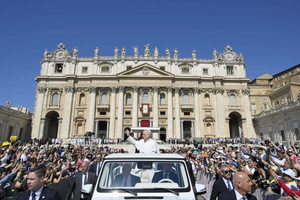
Indeed, he has already begun to show this. In his very first public words and gestures, Leo has reached deep into the Church’s treasury. He has invoked saints and popes from across the centuries, drawing them into our present moment as if to say: we are not starting over — we are building upon. In his first Sunday appearance in St. Peter’s Square, Pope Leo XIV did something strikingly rare in recent papal memory — he sang the Regina Caeli with the faithful, uniting his voice to the great Marian prayers that have echoed through the Church for centuries. It was a simple act, yet a profound signal: he intends to lead not just with words, but with worship; not just forward, but deeper.
In his inaugural homily, Pope Leo XIV emphasized unity and love, stating, “We are called to offer God’s love to everyone.” He spoke of the Church as a family, united in faith and mission, and highlighted the importance of walking together in love and unity. Later, during his formal assumption of the role of Bishop of Rome at the Basilica of St. John Lateran, he declared, “I am Roman,” emphasizing his commitment to the people of Rome and the universal Church.
Pope Leo XIV is not just leading us forward; he is rooting us more deeply in what endures. In this depth, and by following his example, the Church will find the strength to rise, to follow, and to flourish.
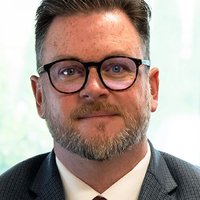
Brendan Towell Brendan Towell is the Director of Spirituality and Mission for Secondary Schools and Schools of Special Education in the Archdiocese of Philadelphia, where he lives with his family. His interests include Augustinian Studies, Ressourcement Theology and the theological legacy of Pope Benedict XVI. His website is BrendanTowell.com.