Ageless Children’s Literature for Childlike Hearts
Grown-ups enjoy children’s literature; it is only those who refuse to grow up, like Peter Pan, who think that they are too grown up for it.
It is said of William Shakespeare, in the words of his friend and fellow poet Ben Jonson, that he was “not of an age, but for all time.” What is true of arguably the greatest writer of all time is true of the greatest children’s literature. It is not of an age but for all ages.
This is true in the fullest sense, which is to say that it is true in both senses. It is true of the ages of a man and of the ages of men. Great children’s literature is for children of all ages and throughout all ages. It can and should be read by 7-year-olds and by 77-year-olds, and it could be read and should be read by every new generation, century upon century.
Take Aesop’s Fables, for instance. These were written about 600 years before the time of Christ and were probably not meant specifically for children. And yet they have been enjoyed by children (of all ages) for two and a half millennia. They are timeless because they are ageless.
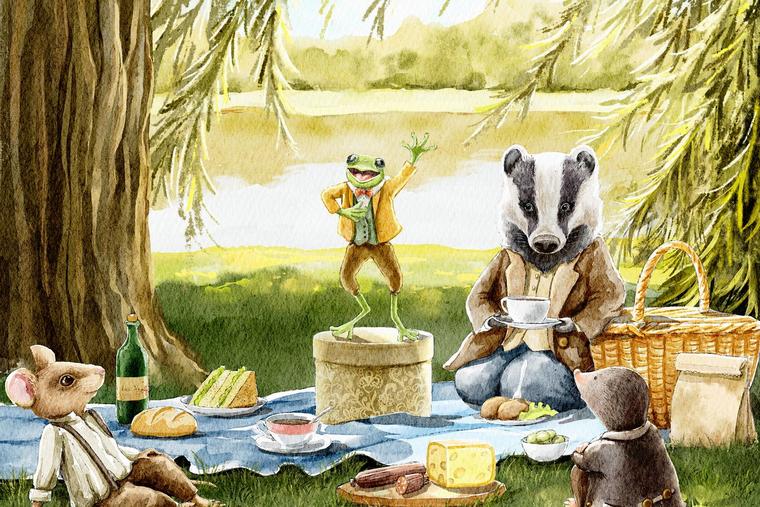
Whereas Aesop was writing stories for adults which have always charmed children, other writers have written stories for children which have always charmed grown-ups. This is true of the classic fairy tales, which have their roots in oral folk tradition, but is also true of more recent children’s books in which the author has one eye on the parents who might be reading the books with their children. One thinks perhaps of The Wind in the Willows, the elegiac feel of which is more likely to charm the world-weary adult than the spring-in-the-tail child. In that most beguiling of fables, the haunting appearance of the piper at the gates of dawn evokes the adult’s sense of this world being a land of exile and a vale of tears, a sense of deep melancholy amidst the dappled merriment, which is not an emotional response to reality experienced very much, or at all, by children in the arcadian days and halcyon daze of their unspoiled innocence.
Other writers of children’s literature are adept at entertaining young readers while winking knowingly at their elders, their stories entering the heads of children on one level, yet going over their heads on another. The delightful Freddy the Pig books by Walter R. Brooks fit into this category, as do Hilaire Belloc’s cautionary tales for children.
Take, for instance, the title of one of Belloc’s stories: “Algernon: Who played with a Loaded Gun, and, on missing his Sister, was reprimanded by his Father.” The unsophisticated reader, that is, the child, is likely to overlook the change of meaning caused by the subclause. The child reads that Algernon was reprimanded for playing with a loaded gun and nearly shooting his sister by accident. The adult reads that Algernon was reprimanded by his father for missing his sister when playing with the loaded gun!
Belloc’s uproariously rumbustious sense of humor is also present in the hilarious absurdity of the title of another story: “Charles Augustus Fortescue: Who Always Did what was Right, and so Accumulated an Immense Fortune.” Although, in this case, there is no devious subclause to bemuse the child and amuse the adult, the very idea that the world is full of billionaires who accumulated their great wealth by always acting virtuously is enough to set the grown-up giggling, even as the child looks at him quizzically.
Let’s conclude these brief musings on ageless children’s literature with a roll of honor for some great works which have truly stood the test of time. We’ll begin, however, by honoring in silence those that everyone knows already. There are so many of these, fortunately and felicitously, that we wouldn’t know where to start or stop. Instead, we will limit ourselves to ageless children’s literature, which is not as well known as it should be.
Beginning on the American side of the Pond, we’ll mention once again the Freddy the Pig books by Walter R. Brooks. These are truly delightful, filled to the brim with talking animals with finely sketched human characteristics. Awash with sardonic humor, the books also feature poetry which is so deliberately bad that it is delightfully funny.
Crossing the Pond to England, we will raise the flag, actually the Jolly Roger, for the children’s stories of Arthur Ransome. Beginning with Swallows and Amazons, the first in the series and the best known, these short novels are about children messing around on boats, from playing at pirates in the Lake District in England’s northwest, to saving wild birds from wild city folk on the Norfolk Broads in East Anglia.
Returning to where we started, having gone there and back again like Bilbo Baggins, we will reiterate that nobody is too young to have ageless children’s literature read to them and nobody is too old to read it themselves. Grown-ups enjoy children’s literature; it is only those who refuse to grow up, like Peter Pan, who think that they are too grown up for it. Such folk are so childish that they are no longer childlike. The former lack the maturity to enjoy fairy stories; the latter know that it is necessary to walk through the wardrobe of the imagination to enter the kingdom of heaven.
- Keywords:
- children's books
- literature