Jubilee Saints Carlo and Pier Giorgio Show a Holiness We Can Imitate
COMMENTARY: Devotion to Pier Giorgio and Carlo may not exceed that of 1925’s Jubilee Saints Thérèse of Lisieux and Jean-Marie Vianney, but many will be able to imitate their particular holiness.
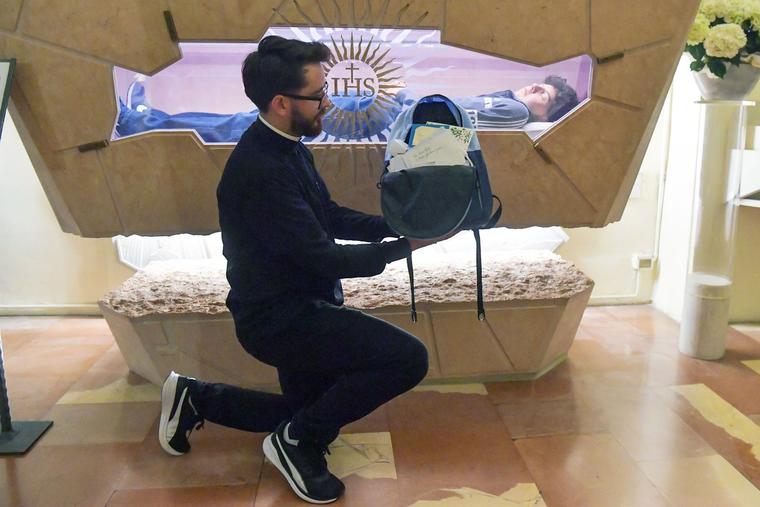
In the last weeks before Pier Giorgio Frassati died on July 4, 1925, he heard news of Jubilee Year saints from Rome: Thérèse of Lisieux and Jean-Marie Vianney were canonized in May.
Now Pier Giorgio and Carlo Acutis will be the prominent canonizations of Jubilee Year 2025. The two young Italians will be more important in the years ahead than the two French saints, for they propose a more easily imitated, accessible holiness.
Devotion to Pier Giorgio and Carlo will not exceed that of the Little Flower and the Curé of Ars, who have tens of thousands of churches, schools and shrines named after them, not to mention images in many more homes, seminaries and rectories, plus millions of Catholics who invoke one or the other in their daily prayers.
The Carmelite in her cloister and the curé in his confessional inspire many, but very few can imitate their particular holiness. As a parish priest, I find the example of the patron saint of parish priests inspiring. I have called upon his intercession and, yes, have his image in the rectory. But his life lacks a certain human appeal — the severe penances, the encounters with the devil, eight or more hours in the confessional at a time. There are better priests than I who would be capable and desirous of St. Jean-Marie Vianney’s life, but there are also quite a lot like me. He inspires me, but I cannot imitate him, except in a very pale way.
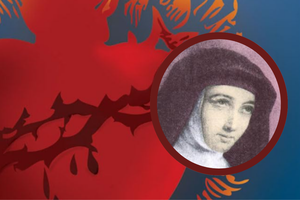
By definition, the life of a cloistered nun is not available to many. The spiritual genius of St. Thérèse was that she took lessons from the Carmel and made “the little way” accessible to tens of millions. Hence, the widespread devotion to her in every corner of the world — even among those who have never met a Carmelite.
Pier Giorgio and Carlo are different. Their holiness is accessible. Partly that is because both were young laymen, not priests or religious. Moreover, their style of life was agreeable even to a secular mindset.
Pier Giorgio and Carlo had friends who found their company convivial and saw in them traits worth imitating. The Little Flower was cut off from the world, and the pastoral exertions of the Curé of Ars excluded the possibility of even a modest social life. Indeed, a priest today who proposed to keep his schedule, with little sleep and a poor diet, would be advised against it.
The popularity of Pier Giorgio and Carlo is partly because they have great evangelical potential, most suitable for the New Evangelization. The lives of the Little Flower and the Curé are difficult to propose to those outside of the household of faith. Their lives — the cloister, the confessional, fasting and penance — make sense only within a radical decision to choose the things of God over worldly things.
Pier Giorgio and Carlo, in contrast, provide a path to the things of God precisely through worldly things — young friendship, including wholesome pranks; playing games; exploring nature. That was attractive to their contemporaries, who then began to ask whether their life of faith, of prayer, of worship might also have something to offer them.
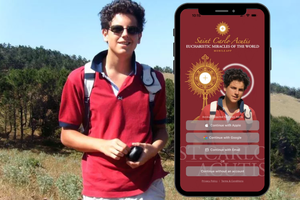
While I have been promoting the life of Pier Giorgio for decades, I was initially cool to the cult of Carlo Acutis. Everything I heard about him emphasized that he was a “gamer” — a player of video games — a “computer geek” who wore jeans and sneakers. If the pastoral goal is to make holier teenagers, Carlo seemed to be the man (boy). But given that video games are toxic for 90% of the teenage boys and young men who play them, it seemed that raising a “gamer” to the altars was foolish, no matter how holy he was.
I later learned, though, that Carlo shared my view of video games, observing that his friends were becoming addicted to them. My advice to all families and young men is not to play them, ever, as they are designed to addict. I would settle, though, for what should henceforth be called “The Acutis Rule”: Carlo limited his gaming to one hour a week. There are exceedingly few teenagers or young adults capable of Carlo’s discipline, so my total prohibition remains more practical — but nevertheless, when Catholic parents (or campus chaplains) are confronted with the argument that Carlo played video games, the Acutis Rule is the response: Fine, but only one hour a week.
In his first homily after his election, Pope Leo XIV spoke about how God incarnate “revealed himself to us in the trusting eyes of a child, in the lively mind of a young person and in the mature features of a man … [and] thus showed us a model of human holiness that we can all imitate.”
Holiness that “we can all imitate” is manifest in the life of Pier Giorgio and Carlo.
In that same homily, the Holy Father said that “the world’s response” is such that “there are many settings in which the Christian faith is considered absurd, meant for the weak and unintelligent.”
Christians cannot determine how the world regards the faith, but can at least try not to appear absurd, weak and unintelligent. Pier Giorgio and Carlo were not regarded as such — quite the contrary, they were attractive, successful and intelligent.
While it ought to be “normal” to be holy, in a fallen world it is not, and holiness is sometimes regarded as weird, perhaps even dangerous. Hence St. Paul’s disdain for worldly judgments upon him (cf. 1 Corinthians 4). Nevertheless, normal holiness is what has been preached by St. Francis de Sales, St. Thérèse and St. Josemaría Escriva — a bishop, a nun and a priest. The new saints, Pier Giorgio and Carlo, lived it.
- Keywords:
- carlo acutis
- pier giorgio frassati