This Thanksgiving, St. Elizabeth Ann Seton Reminds Us What Gratitude Looks Like
As families gather across the country, the first native-born U.S. saint offers a steady example of thanksgiving rooted in faith.

There is something comforting in an eerie but heartwarming way when one walks the grounds of the Catoctin Mountain Park in Maryland. You are not alone. The beautiful grounds of this place in northern Maryland sprawl across tree-covered vistas of an uninhabited land. But they give a person the feeling of being accompanied, even if walking alone with a dog. In hiking them, I stumbled across an old distillery used during the days of Prohibition in the 1920s, as the accompanying historical plaque claimed. But I now know that the friendship and prayers of another person were there with me: St. Elizabeth Ann Seton.
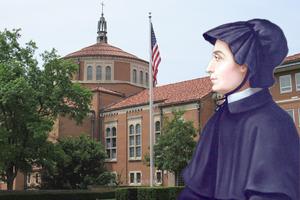
This year is the 50th anniversary of the canonization of this American woman, whose shrine is located in Emmitsburg, not far from the Catoctin hills. A wife and mother, St. Elizabeth Ann Seton knew the joys of married life but also the difficulties involved in becoming a widow and a person who dealt with persecution.
She was born an Episcopalian in 1774 to a wealthy family, but endured the loss of her mother at age 3. With a busy physician father, she came to see God as a Father who would always be there for her.
Her marriage to an affluent businessman brought her the happiness of five children. His death from tuberculosis left her a young widow, but she was strengthened by the Catholic faith she had embraced in Italy. Hard years of misunderstanding of her conversion caused St. Elizabeth Ann to move to Emmitsburg, Maryland, not far from the Catoctin Mountain Park.
It was in this area that she founded the Sisters of Charity of St. Joseph’s, the first community for apostolic, religious women established in the United States. St. Elizabeth Ann also founded St. Joseph’s School, and she is credited with starting Catholic education in the United States.
Canonized on Sept. 14, 1975, she was the first citizen born in the United States to be declared a saint. Today her remains are in the Basilica of her National Shrine in Emmitsburg, located near Gettysburg but not far from another Civil War battlefield — Antietam, in Sharpsburg, Maryland. St. Elizabeth Ann Seton is a symbol of true and lasting peace amid these two war sites where so many Americans lost their lives. Enduring persecution, she chose to deal with it positively by building up Christ’s Church where she could, through establishing the first Catholic schools far from her home.
The life of St. Elizabeth Ann was one of sacrifice for the common good. She chose to be a peacemaker by working where she could to strengthen the body of Christ, particularly for youth, in an atmosphere of love. And her decision to be influenced by the Catholic faith in Italy, a foreign country with a culture different from her own, shows the tolerance of this woman for people of different cultures.
I believe it is no coincidence that the location where she is buried is situated between two of the bloodiest battlefields in American history. I also believe it is no accident that her 50th anniversary is this year, when our country is even more divided. At this time, this anniversary reminds me of the virtues of this admirable woman, which I want to try and emulate.
St. Elizabeth Ann Seton chose to rise above the negativity shown to her in her hometown and work where she could allow harmony to flourish over the years for many. Her warmth is endearing and has had greater lasting effects through her congregation’s work today, and the American Catholic schools founded more than any dispute, large or small, over people’s dissimilarities. Let’s look to St. Elizabeth Ann Seton as a prayer partner each day for our country and as a model of self-mastery in peace and love.
- Keywords:
- st. elizabeth ann seton
- saints
- mother seton