In Mother Seton’s Footsteps: Pilgrims Walk 55 Miles to Honor America’s First Canonized Saint
About two dozen pilgrims, aged 16 to 78, set out Thursday, June 19, on the ‘Footsteps of Mother Seton’ pilgrimage — a four-day journey from the Basilica of the National Shrine of the Assumption in Baltimore to the National Shrine of St. Elizabeth Ann Seton in Emmitsburg, Maryland.

Sharon Burtner isn’t Catholic, but that didn’t stop her from traveling from Hertford, North Carolina, to Baltimore to join a 55-mile walking pilgrimage through blazing June heat honoring a Catholic saint.
After her sister gave her a relic of St. Elizabeth Ann Seton, she decided to visit the saint’s national shrine. And when she heard about a pilgrimage in Seton’s honor, she decided to join.
Burtner felt inspired to take time to strengthen her connection to her friend in heaven, and she called the four-day trek “the perfect way to nourish body, mind and spirit.”
She was one of about two dozen pilgrims, aged 16 to 78, who set out Thursday, June 19, on the “Footsteps of Mother Seton” pilgrimage — a four-day journey from the Basilica of the National Shrine of the Assumption in Baltimore to the National Shrine of St. Elizabeth Ann Seton in Emmitsburg, Maryland.
The pilgrimage marks the 50th anniversary of the canonization of Elizabeth Ann Seton, the first U.S.-born saint, founder of the Sisters of Charity of St. Joseph’s, and a trailblazer in American Catholic education.
Seton, a convert to Catholicism from Episcopalianism and mother of five, moved from New York to Baltimore in 1808, a few years after her husband’s death, at Bishop John Carroll’s invitation, to open a Catholic girls’ boarding school — what would later become the first free girls’ school in the United States.
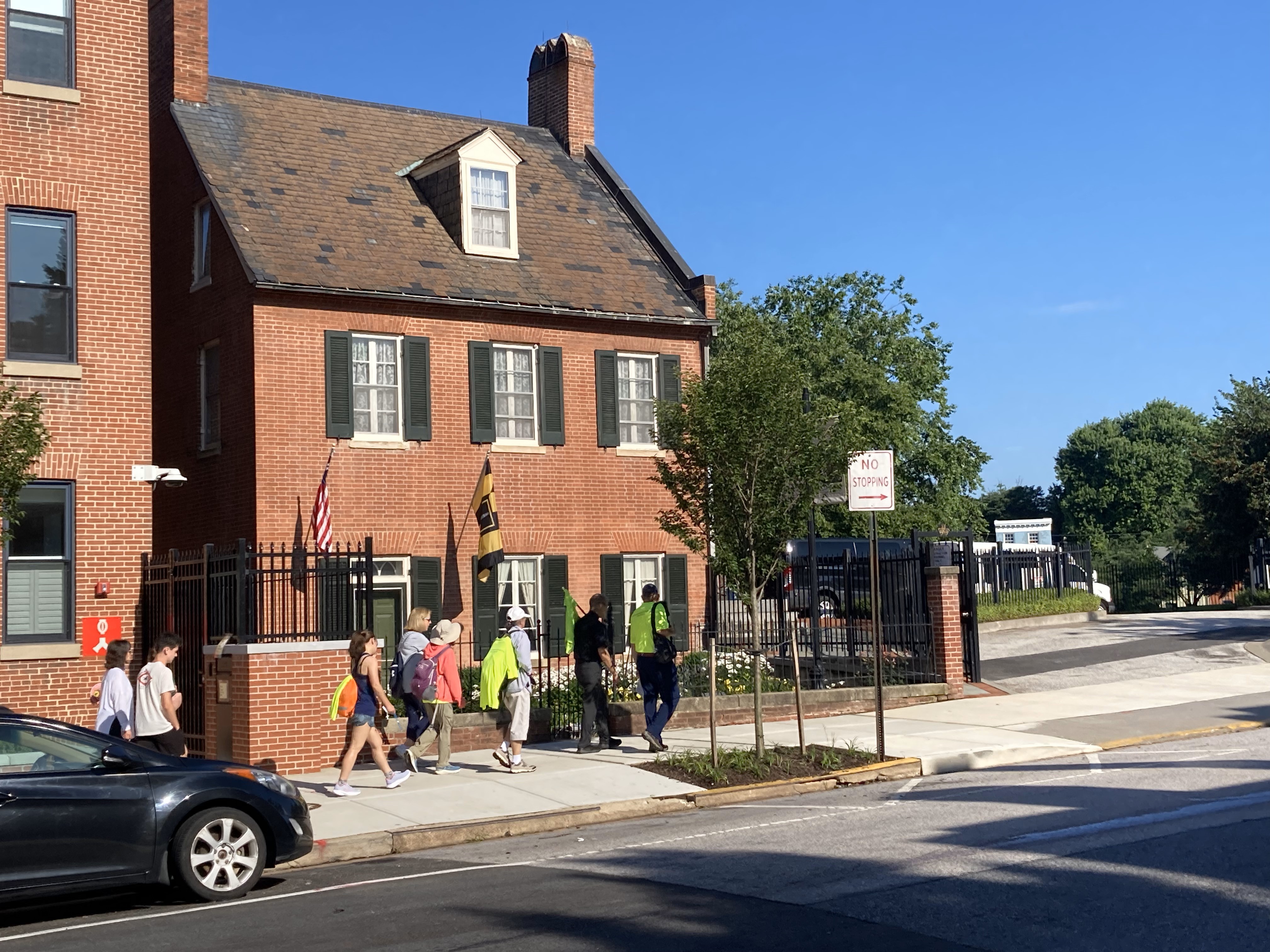
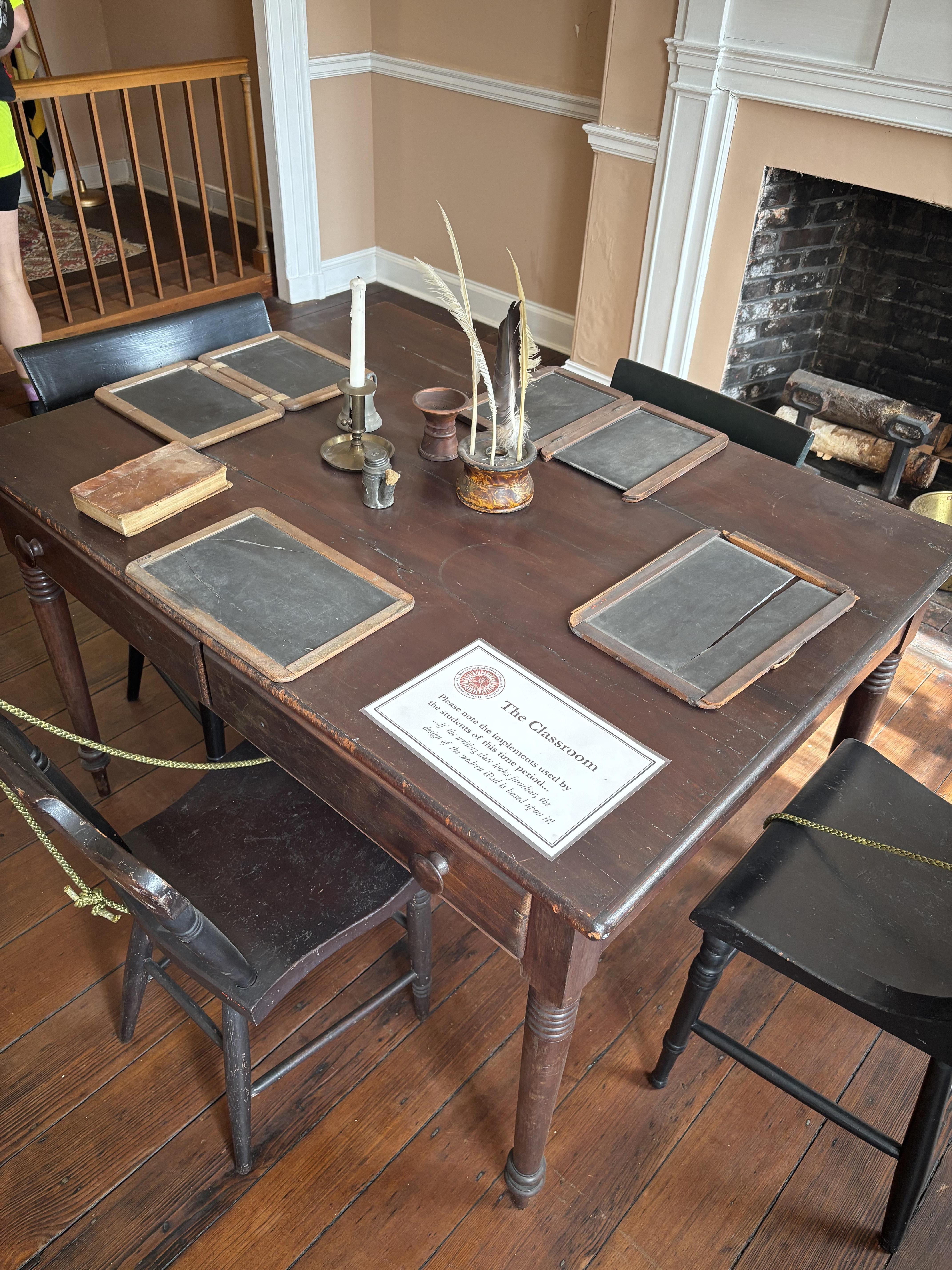
The house where the school was located, often simply referred to as the Seton House, is part of the St. Mary’s Spiritual Center in Baltimore and is the original location of St. Mary’s Seminary, the first Catholic seminary in the United States, founded by the Sulpician order. She only lived there for a year, before moving in 1809 to Emmitsburg. There, she established a school and religious community, laying the groundwork for Catholic parochial education in the United States. The shrine built in her honor, and nearby grotto, has become a place of prayer and pilgrimage for Catholics both nationally and internationally.
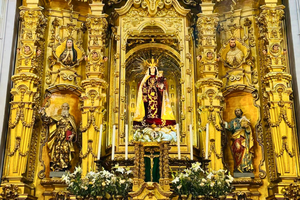
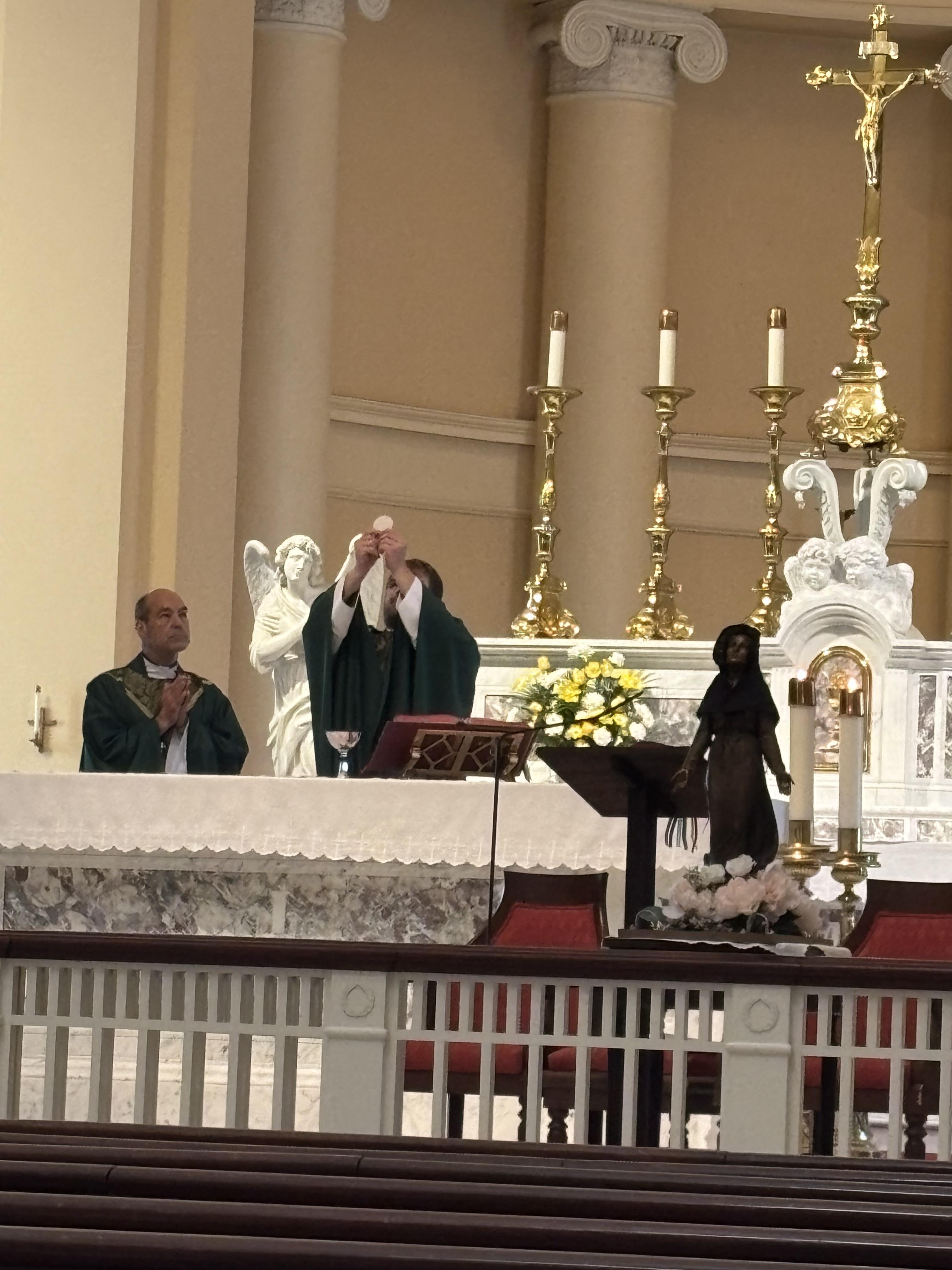
The pilgrimage began on June 19, with 7 a.m. Mass at the Baltimore Basilica, formally known as the Basilica of the Assumption, concelebrated by Father Brendan Fitzgerald and the pilgrimage chaplain, Father Jack Lombardi, and ends Sunday at the Seton Shrine on the Solemnity of Corpus Christi. Along the way, pilgrims were scheduled to make stops at three sites designated special places of pilgrimage as part of the ongoing Jubilee of Hope, along with four parishes, including the National Shrine of St. Alphonsus, the National Shrine of St. Jude, and Sacred Heart Parish in Glyndon and Seton House.
The pilgrims showed their dedication Thursday by braving 95-degree weather. The pilgrims were thankful, however, for the rest stops and water refills on the hour, which were facilitated using two vans, which also transported weary travelers as necessary.
One of these travelers was Sister Dolores Keyser, from Wheeling-Charleston, West Virginia, the oldest pilgrim on the route at 78 years and a member of one of the newest branches of the 400-year-old Eudist order. Formalized in 2003 by Bishop Rafael Romo Munoz of Tijuana, Mexico, the Eudist Servants of the 11th Hour, is dedicated to prison ministry and primarily accepts widows and those aged 45 to 60. It was fitting that she participated, the sister noted, since both she and St. Elizabeth Ann Seton were widows who joined religious orders later in life.
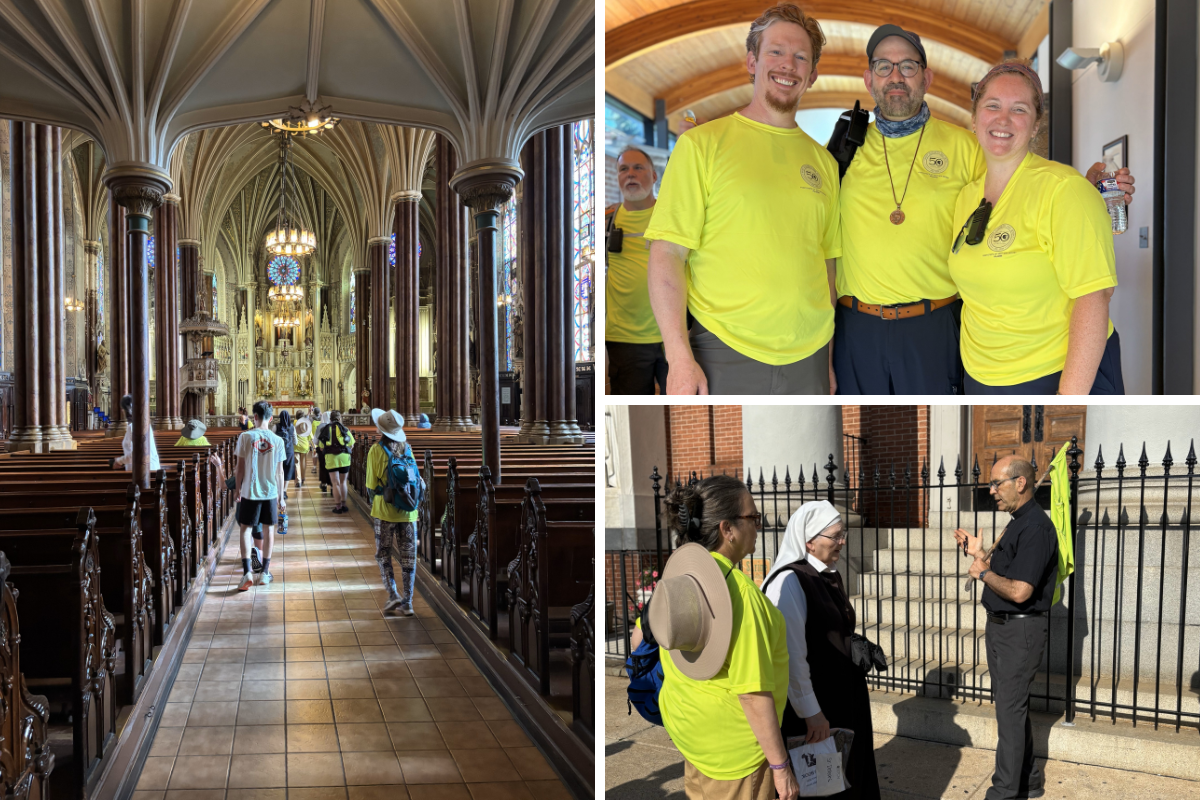
One pilgrim, Jeanne Gaetano, noted how “a pilgrimage is like a moving retreat, except without the silence.” She added that “one way it’s different is that on retreat you usually pray and discern for yourself,” while on this pilgrimage she is “praying for others,” whose prayer intentions she had written down and intended to bring to the shrine in Emmitsburg.
Soon after she said this, Father Lombardi reflected when the group made a stop for a prayer and to catch their collective breath on Retreat Street. He noted that this is now around his 20th pilgrimage.
Alicia Passmore, 29, a native of Baltimore, had never been on a pilgrimage before. A recent revert to the faith preparing for confirmation next Easter, she chose Elizabeth Ann Seton as her confirmation name. She spontaneously decided to join the pilgrimage after discovering it online while researching the saint. Her top takeaway from the pilgrimage has been visiting the house of the saint, which she said, for her, “was very emotional,” as well as the increased opportunity for prayer. She added that “adoration hits different when you’re physically exhausted. The mental chatter disappears.”
Emily Roy, a mother from Frederick, Maryland, first heard about the pilgrimage through a local tourism board and was motivated in part because she has a daughter named Elizabeth Ann. She also was excited to get outside and enjoy the summer weather, noting her appreciation for the historical character of the neighborhoods in Baltimore that the group passed through.
For David Judge, son of the Seton Shrine’s director, Rob Judge, and the youngest pilgrim, at 16 years old, it was the people they encountered who made the deepest impression, noting that he was inspired by the “all the positivity” the group received from those they stopped to greet and pray with along the way.
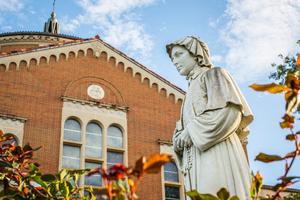
The pilgrimage also features a statue of Elizabeth Ann Seton sculpted by Rick Casali, an Annapolis-based visual artist, for the Seton Shrine, inspired by the bonnet and shawl Seton wore, which was recently brought out of a historical archive in New York and is now on display at the shrine’s museum since its opening in September 2024. Ray Buchheister, the concept artist and creative director behind the project, spent a year and a half researching Seton’s life and appearance and is carrying the statue along the pilgrimage route.
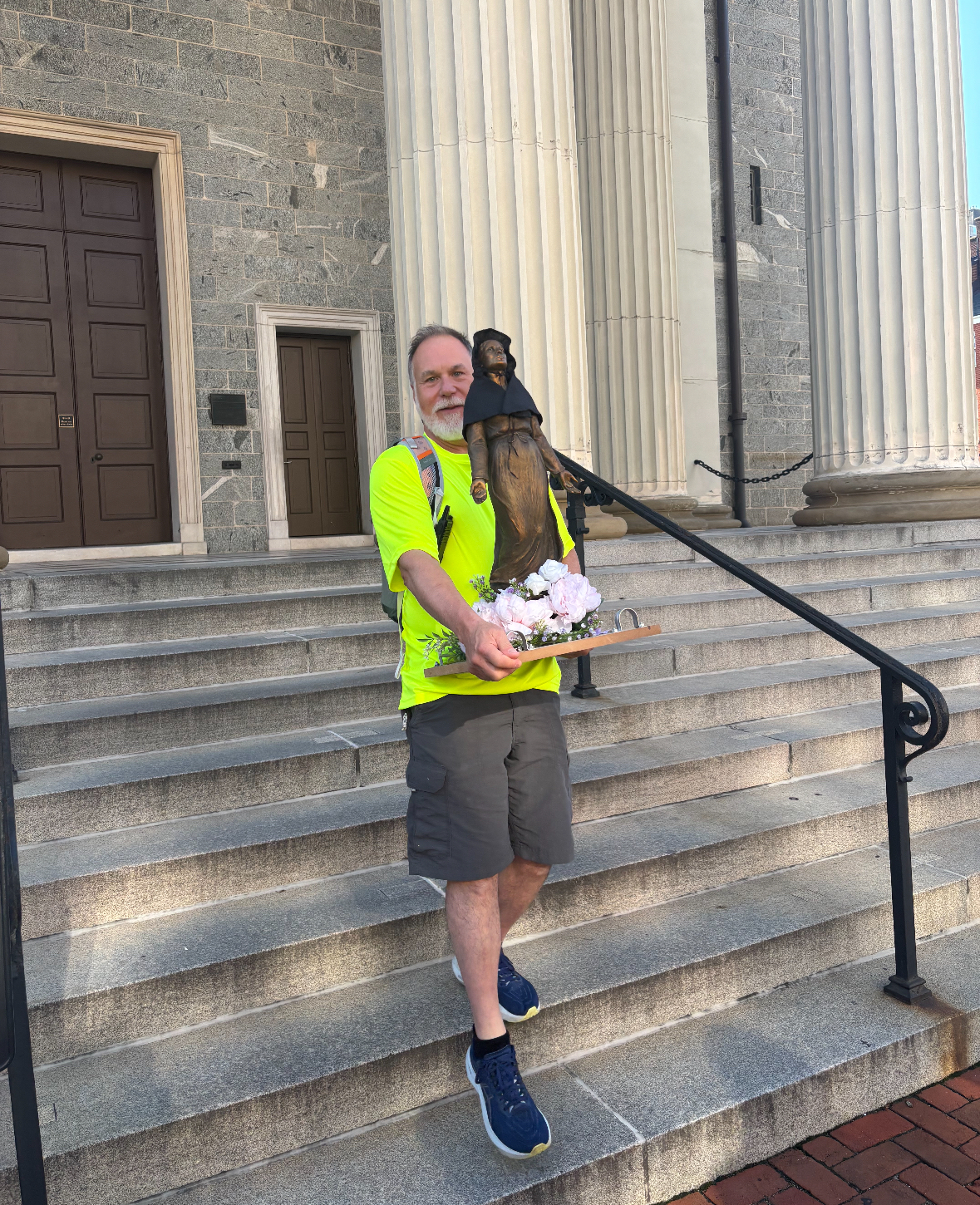
Rob Judge, who helped organize the event, recounted along the way the history of the saint, her travels from New York where she was raised, and her family tragedies. He noted that the shrine is constantly receiving pilgrims from around the world.
“Catholics have always made pilgrimages,” he said.
“Going on pilgrimage is analogous to our life’s journey,” he added. “We’re born, we have so many years, and then, eventually, as faithful Catholics, we’re on our way to heaven. And that’s a journey! Pilgrimage gives you a chance to contemplate where you are in life, you can bring your special intentions along, and, hopefully, along the way, as we’re praying and walking, and doing something a little bit arduous for the Lord, he will draw us closer to him.”