Hamas’ War on Women: Survivors Detail Horrors of Captivity
‘There wasn’t a moment when we weren’t abused.'
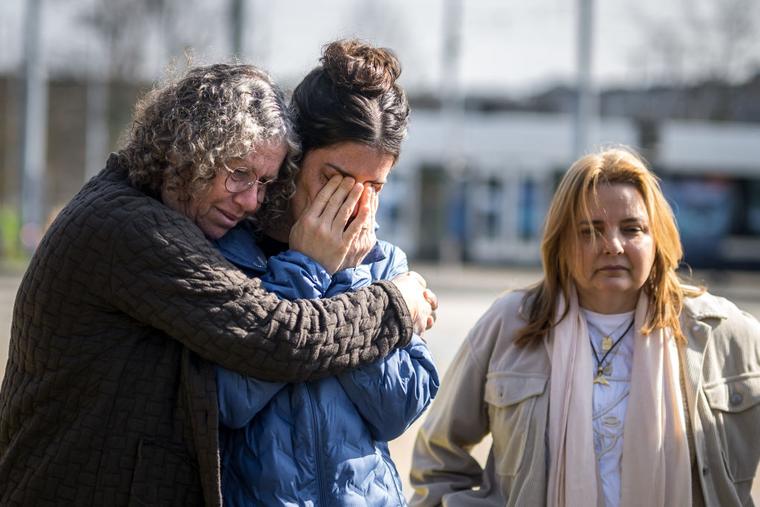
She was twenty-seven years old, kidnapped from the Nova music festival on Oct. 7, 2023. She didn’t survive. Her body was returned to Israel two years after she was taken. The last known female hostage held by Hamas.
“There wasn’t a moment when we weren’t abused,” said Aviva Siegel, one of the first women to be released. She was held for 51 days.
What happened to Israeli women in Hamas captivity was not the collateral damage of war. It was deliberate. Their treatment followed a logic of humiliation and subjugation. Women’s bodies were used as weapons of propaganda, objects of conquest, and instruments of psychological warfare. This is how Hamas fights. Their war strategy dehumanizes women in service of a larger mission: the destruction of the Jewish people.
On Oct. 7, 2023, Hamas terrorists breached Israel’s border and carried out the largest mass killing of Jews since the Holocaust. Along with murdering 1,200 people, they kidnapped more than 250, including women and children. Some were raped and filmed. Some were burned. Others were paraded through Gaza half-naked and bleeding. These acts were not spontaneous. They were recorded, distributed, and celebrated.
On Nov. 24, 2023, during the first truce, Hamas released 13 Israeli women and children. More followed in the days ahead. Many had been kept in isolation. They were assaulted, and denied food, medicine, clean clothes, light, and human contact.
In January 2025, a broader ceasefire brought more women home. President Trump helped secure the deal. On Jan. 19, three civilian women were released. On Jan. 25, four female IDF soldiers followed. On Jan. 30, another soldier, Agam Berger, was freed. These young women had spent over a year underground. They were starved, beaten, moved constantly, and forced to serve their captors. Some were stripped and filmed. All were humiliated.
Naama Levy, 19, had last been seen in a Hamas video — barefoot, bloodied, and bound. She was held for 477 days. Mia Schem, shot during her abduction, was filmed pleading for help as her captors withheld painkillers. She was held for 55 days. Noa Argamani was taken from the Nova festival screaming and rescued after 245 days.
The final ceasefire agreement was brokered on Oct. 8, 2025. It was the most far-reaching of all the deals, secured through President Trump’s mediation. It brought home the last group of living hostages. All of them were men.
And then came Inbar.
Her body was returned to Israel on Oct. 15. She had been missing for over 700 days. She had been killed in captivity. Her death was never announced by Hamas.

The violence against women in this conflict cannot be dismissed as random or opportunistic. It follows a pattern Hamas has used before. Sexual violence. Forced nudity. Public humiliation. Coerced statements. These tactics exist to terrorize communities, to shame entire families, to assert domination over the human body itself.
The abuse of women in captivity was part of a broader campaign to destroy the Jewish people, an effort Hamas has declared openly and repeatedly. Their 1988 charter is explicit: “Israel will exist and will continue to exist until Islam will obliterate it.” Hamas frames the very presence of Jews in the land as a theological violation and demands their extermination.
The Oct. 7 massacre was not the beginning of this ideology, it was a continuation. For decades, Hamas has bombed buses, restaurants, marketplaces, synagogues, and schools. In 2002, they claimed responsibility for the bombing of a Passover seder in Netanya, killing 30. In 2014, they kidnapped and murdered three Israeli teenagers. These acts form a pattern: sustained, ideologically driven violence against Jews.
The United Nations defines genocide as acts committed with the intent to destroy, in whole or in part, a national, ethnical, racial, or religious group. These acts include killing members of the group, causing them serious bodily or mental harm, deliberately inflicting conditions of life intended to bring about their physical destruction, imposing measures to prevent births, and forcibly transferring children.
Hamas’ ideology promotes extermination. Its practice includes rape, torture, sexual slavery, mutilation, public executions, and the intentional targeting of civilians. Together, these form a body of evidence.
The world needs to see this clearly: the genocidal campaign against Jews includes the deliberate violation of their women. The violence was systematic, intended to destroy both life and dignity.
The women of Oct. 7 were part of that message. What was done to them reveals exactly what Hamas is and what it believes.
The violence against them was not only an assault on their bodies but on their humanity. As Catholics, we honor them by telling the truth, by naming what was done and who did it, and by ensuring that truth, not evil, has the final word.
- Keywords:
- hamas
- israeli christians
- jewish people