Discovering Who My Uncle Really Was
COMMENTARY: A childhood portrait of a difficult man gives way, years later, to the discovery of faith, sacrifice and a heart shaped by grief.

When I was growing up as a young boy along the Atlantic Coast north of Boston, I thought I knew who my Uncle Tony was. I saw him as a cranky curmudgeon who especially disliked children and conspicuously shied away from large gatherings of people.
Conversations with my mother and older sister before they passed away gave me an entirely different perspective of my tall, heavyset uncle, whose stomach preceded him. It proved what writer Robert Greene said: “We see people not as they are, but as they appear to us.”
I had always assumed that he was not a particularly religious person because of his reluctance to attend Mass with the rest of the family. I vividly remember many scenes when my mother strongly urged my uncle to dress and to accompany the rest of the family to Sunday Mass.
His usual reply was, “Leave me alone, Liz!” Or, “Stop nagging me, Liz!”
When I later spotted two rosaries in his bedroom — a place I had been sternly admonished never to enter by my uncle — I became aware, even as a young boy, of a conflict between his reluctance to worship at Mass with the rest of the family and his preference to remain secluded in his room to pray.
Decades after my uncle’s death, my mother and I mutually concluded that her beloved brother probably suffered from a social anxiety disorder that explained much of his behavior.
A lifelong bachelor, Uncle Tony courted a lady whom I vividly remember because she always brought candy for me when she visited our home over several years. It was the only period of my uncle’s life that I saw a smile on his face. It was a delight to see.
There were a few times when my uncle and his fiancée thought they were alone in the living room that I saw them holding hands and heard them talking about wedding plans. It was one of the few times I saw my uncle in a genuinely happy mood.
My uncle, who had attended Wentworth Institute in Boston, worked as a high-skilled technician for the General Electric Co., which manufactured aircraft during World War II. He had a passion for his work. In one of his few exchanges with me as a young boy, I remember him telling me, “Dicky, always remember — whatever you choose to do in life, be sure you love it!”
Everyone who knew him was struck by his keen intelligence. Little wonder his inventive mind produced a number of improvements in the combat planes the company manufactured during World War II. He never patented even one of his inventions.
Years later, when my mother asked him why he didn’t file for patents — which would have made him a wealthy man — his reply did not surprise her: “I did not think it was ethical to enrich myself while others died for our country.”
As a young boy, I remember his display of patriotism. One night at supper, my older brother, Jerry, said something critical about the U.S. Navy failing to adequately protect our cargo ships along the Atlantic Coast during the early phase of World War II.
My uncle, flushed with anger, leaped out of his chair and left the table. “You don’t know what you’re talking about!” he yelled.
From that moment, my parents urged my siblings and me never to say anything critical about our armed forces in front of our uncle. We heeded their admonitions.
Ignoring my uncle’s repeated and explicit instructions to stay out of his bedroom, one day I waited for him to go to work and slowly walked up the steps to his bedroom. My mind raced. I asked myself, “What will I discover? What terrible secret is he keeping from the rest of the family?” My face felt like it was on fire. The palms of my hands felt as if I had washed them but forgotten to use a towel to dry them.
The white porcelain knob on his bedroom door invited me to turn it and enter. Taking a deep breath, I turned the knob and entered.
What greeted me was the stench of smoke and nicotine. My chain-smoking uncle had succeeded in changing the color of the wallpaper from light blue to hues of yellow and brown.
I found no dark secrets. Instead, one of my discoveries was confirmation of my uncle’s profound patriotism. Two huge wartime posters were tacked to the wall behind his bed. During World War II, posters could be seen everywhere —schools, buses, stores, banks — but those displayed over my uncle’s bed were especially distinct.
One depicted an American airman in the cockpit of a fighter plane saying, “You knock ’em out. We’ll knock ’em down.” At the bottom of the poster, it read: “More Production.”
I laughed hysterically when I saw the other poster, which featured Hitler, Mussolini and Emperor Hirohito — leaders of the Axis nations — depicted as bowling pins smashed by a ball labeled: “More Production.”
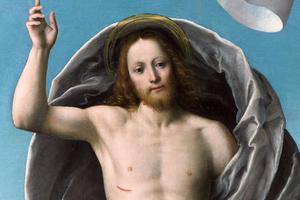
On my way out of the room, I noticed a well-used rosary next to a faded picture of Jesus Christ on his desk and another rosary hanging from the knob of a bedpost. The image of Christ was so worn that his body blended into the silver cross. What I had discovered was that Uncle Tony was not only a genuine patriot but also a deeply religious man who regularly recited the Rosary. Later, I learned that the faded picture of Jesus Christ had belonged to my grandmother, who brought it with her when she emigrated from Poland to the United States.
The saddest part of my uncle’s life was the death of his fiancée. He was on the cusp of marriage when she was diagnosed with cancer. She died a few months later.
After her death, my uncle’s persona changed. He never recovered from his loss. His brisk gait was replaced by a slow trudge. He withdrew further into himself, no longer allowing anyone to touch his heart — not even my mother, whom he dearly loved. He shunned conversation with everyone in the family. His replies to questions were reduced to a quiet “Yes” or “No.”
He went through the rest of his life in lonely solitude, which became his best friend.
Years later, on my way to my Uncle Tony’s funeral, the words from 1 Samuel 16:7 coursed through my head: “For the Lord does not see as mortals see; they look on the outward appearance, but the Lord looks on the heart.”
At the funeral Mass, the priest, a friend of the family, said many kind things about my uncle. He ended the eulogy with an apt quotation from Psalm 34:18: “The Lord is close to the brokenhearted; saves those whose spirit is crushed.”
- Keywords:
- grief
- loneliness
- depression
- rosary