Why Josef Pieper Wanted ‘Every Theology Student’ to Read This Essay
COMMENTARY: ‘On the Spirituality of Studying Theology’ by Ida Friederike Görres is now available for the first time in English.
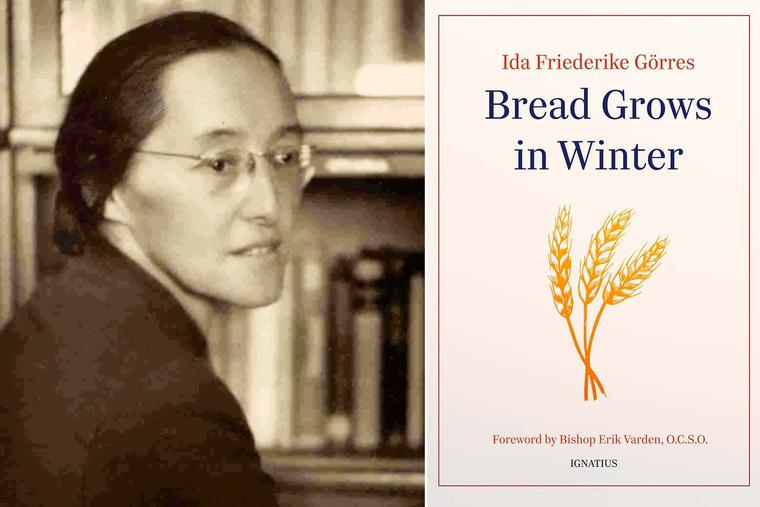
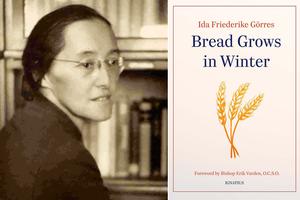
The essay Josef Pieper wanted “every theology student” to read has just been published for the first time in English translation in the book Bread Grows in Winter by Ida Friederike Görres.
In 1969, the tumult following the Second Vatican Council had become a way of life, not least of all in seminaries and universities, augmented by the onslaught of the 1968 revolution. Not even the study of theology was untouched. In fact, some of the enthusiasts of the new zeitgeist saw theology as a priority target.
In that environment, Josef Pieper wrote in 1969 that he wished “every theology student, especially ‘lay’ theologians” would read one particular essay. This great Catholic philosopher, then age 64, had spent his whole scholarly life reading many works. Yet, this one essay was the one he wanted in the hands of “every theology student.” And the essay was not entirely gung-ho about the expansion of the laity in theology. Pieper, himself a layman, however, agreed. His remarks about this essay appear in a letter he wrote to Hans Urs von Balthasar in 1969.
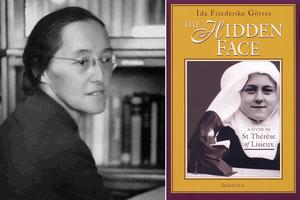
The essay Pieper wished “every theology student” would read was “On the Spirituality of Studying Theology” by Ida Friederike Görres. This was a lecture she had delivered in Germany in 1967 to lay theologians. Görres and her work were well known to both men.
For example, in Pieper’s autobiography, he recalls hearing of her death in 1971 from Joseph Ratzinger. Hans Urs von Balthasar and Ida Görres had corresponded for years. Von Balthasar knew about this particular lecture because he had been scheduled to lecture at this event. Von Balthasar, however, had to cancel; Görres was asked to fill in. She published her lecture in a festschrift in 1968. After reading this, Pieper wrote to von Balthasar on Feb. 16, 1969:
Do you know the heartfelt essay by Ida Fr. Görres on The Spirituality of Studying Theology ...; I wish it were in the hands of every student of theology, especially ‘lay’ theologians.
On Feb. 20, 1969, von Balthasar responded: “I know the piece by Görres and would like to print it.” In 1970, the essay was republished in the book Im Winter wächst das Brot from a publishing house founded by von Balthasar. In November this year, Ignatius Press released this in English as Bread Grows in Winter (full disclosure: translated by me).
In “On the Spirituality of Studying Theology: A Presentation to Lay Theologians” (chapter 4 of Bread Grows in Winter), Görres addresses the implications of the surge of laypeople studying theology in the 1960s, the direction enthusiasts of the new zeitgeist are taking this development, and the shift of this academic field increasingly away from theology — seeking knowledge of God — to what, today, we call “religious studies.”
Görres opens the lecture by identifying ways that problematic aspects of the new expansion of access to theology mingle with positive developments. For example, some are starting to confuse the study of theology with the practice of the faith; that is, some talk as if theology could replace practice, while others imply that the absence of “doing” theology outright debilitates one’s capacity to practice the faith (a claim more than a few saints’ lives belie).
Yet, she observes, theology, traditionally, “only concerned very few directly.” She asserts we should be careful not to demean “the man … with implicit faith” — devout, pious, but not up on the latest academic dispute. Also, while she sees “much that is healthy and joyful” in the rise of expanded adult education and formation programs in the Church, she cautions that “other, murkier drives are mixed in with the pure thirst for knowledge” and that what is going on “is far from being lay theology.”
Part of the emerging peril she flags is a trajectory implicit in some of the new efforts to expand or even universalize the study of theology. Mixed in with the “healthy” (though “ambiguous”) drive toward “maturity” of the laity, she sees a shadow side, which she identifies as “the resentment that unfortunately also colors this movement.” (Her best description of this resentment against authority and the traditions associated with it, along with the impact of this, is found in her book from 1971, What Marriage Binds Forever.) Görres explains how this resentment is fueling deconstruction in the Church rather than suitable, beneficial reforms. She observes how the breakdown of hierarchies and structures due to the “growing individualism” of past decades is now giving way to an unrealistic drive for universalism that would undermine not only what the study of theology is but also foster a fundamental paradigm shift in the Church.
“Some individuals,” she observes, “no longer want any gradation of roles in the Church; they want everything ‘as well’; they want everything ‘themselves.’ They no longer want to be represented, neither in rituals nor in thought.”
So then, what is needed for the study of theology? Why did Pieper wish he could get this article into “the hands of every student of theology?” To discover this, the best I can advise you, the reader, is to read “On the Spirituality of Studying Theology” yourself.
Görres skillfully describes what was going on in 1967 and continues in some similar ways today as well, and then offers a wholesome course-correction. Moreover, with her tremendous command of language as well as keen mind and pious soul, she does so with striking language and rich insight.
It would be a disservice for me to try to summarize her key takeaways in a few words. Instead, the best I can offer is to agree with Pieper that I wish I could put this book with this essay “in the hands of every student of theology.”
Jennifer S. Bryson, Ph.D., is a fellow in Catholic Studies at the Ethics and Public Policy Center (EPPC) in Washington, D.C. She lives in Lincoln, Nebraska.
- Keywords:
- ida friederike goerres
- joseph pieper
- Ida Friederike Görres
- catholic intellectual life
- writers
- literature