Norwegian Bishop: Ida Friederike Görres Is ‘A Crucial Voice for the Present Moment’
Long overlooked in her native Germany, Görres’ sharp mind and deep faith are gaining new readers in English translation.

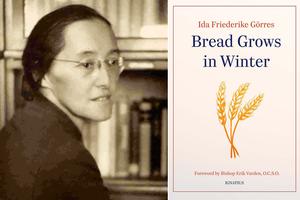
Ida Friederike Görres (1901-1971) was a prominent mid-20th century Catholic author, especially well known for her renewal of hagiography, her writings on the Catholic Church, and her guidance for Catholics navigating the modern world and the crisis in the Church.
Father Joseph Ratzinger (later Pope Benedict XVI) gave the eulogy at her funeral. Today, her work is being rediscovered, with previously untranslated works now being published in English.
Because her voice was largely pushed aside after her death by those advocating for a progressivist orientation in the Church in Germany, few know of Görres’ work today. An exception is Bishop Erik Varden, of Trondheim, Norway, who has been encouraging attention to the work of Görres for several years now and quoting her work in his, such as in his book Chastity and in the list of "Summer Reading" in 2024 in the UK Catholic magazine The Tablet, his recommendation was The Church in the Flesh by Görres.
In this interview, Bishop Varden discusses his interest in Görres, who died May 15, 1971, and her relevance for Catholics today.
How did you first discover the work of Ida Friederike Görres?
When a friend of mine, a German Dominican nun, told me to read Görres’ life of Thérèse of Lisieux. I must have been about 20 years old.
Which are your favorite works by Görres and why?
Bread Grows in Winter (to be published by Ignatius Press in late 2025) is extremely topical and interesting. I also very much appreciate Görres’ correspondence with Father Paulus Gordan, a Benedictine of Beuron. Letters were her form of expression par excellence.
In a post about Görres at your blog “Coram Fratribus,” you wrote, “Hers is a crucial voice for the present moment.” What do you find “crucial” about Görres’ voice for Catholics today?
I like the fact that she is analytical, utterly unsentimental, yet acutely sensitive. A learned, intelligent woman, she was conscious of the riches of Catholic tradition, delighting in them; and she sought ways of making these known to her own times, proposing thoughtful answers to contemporary queries. She was lucid about the reforms of the 1960s, wary of facile optimism. Her notes from those years are a help to a serious, uncynical, hopeful rereading of history now.
Which work by Ida Görres would you most like to read next?
What Binds Marriage Forever (to be published by CUA Press, in late 2025).
For those who have never read anything by Ida Görres, are there any works by her you recommend for an initial foray?
I’d start with some of her essays, whether on the Church, on saints, or on literature. A piece of which I am particularly fond is her essay on Sigrid Undset’s conversion novels (The Wild Orchid and The Burning Bush), a helpful and pertinent piece these days when there is something of an Undset revival. I live in the hope that someone might one day write a really excellent biography of Ida Görres.
Jennifer S. Bryson, Ph.D., is a fellow in the Catholic Women’s Forum of the Ethics and Public Policy Center and a translator of the works of Ida Friederike Görres from German to English. She lives in Lincoln, Nebraska. To learn more about Ida Friederike Görres, visit IdaGoerres.org.
- Keywords:
- Ida Friederike Görres
- Bishop Erik Varden
- catholic intellectual life
- literature
- catholic writers