Finding the Faith Beneath the Frights
Halloween’s earliest traditions point not to fear, but to the Catholic faith.
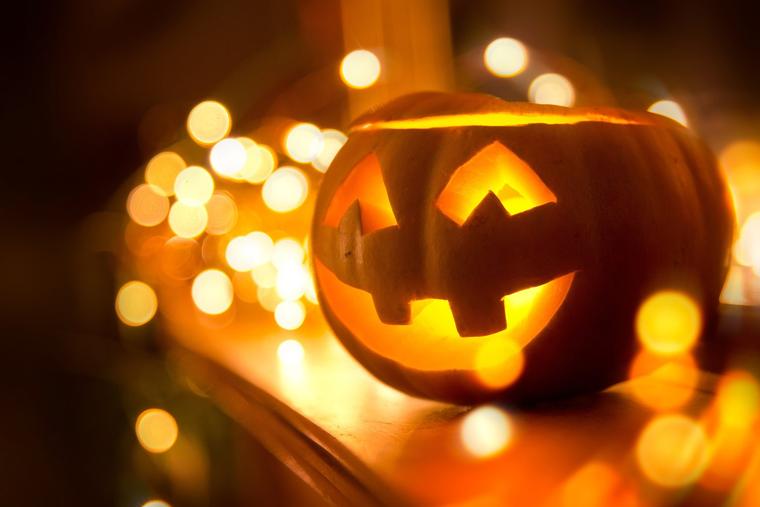
Halloween, the eve of All Saints, is often said to be irredeemably full of pagan traditions — but is it really? While many of its trappings trace back to ancient Roman or Druid customs, many originated with or were adopted by Catholics. It’s worth taking a closer look at how some of Halloween’s most familiar customs are rooted in Catholic culture.
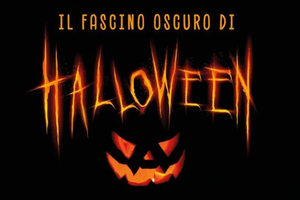
Jack-O’-Lanterns and Trick-or-Treat
Certainly, the jack-o’-lantern has its roots in folklore, but this tradition did not remain exclusively pagan. Adopted in part to replace the old custom of “mumming” — in which participants disguised themselves so evil spirits would not recognize them and went door to door begging for food — Irish Catholics put their own spin on the tradition. They began carving vegetables, especially turnips, turning them into lanterns for their children as they went “souling,” an early form of trick-or-treating. Instead of the traditional cry of “trick or treat,” medieval neighbors might have been greeted with a song:
A soul! a soul! a soul-cake!
Please good Missus, a soul-cake!
An apple, a pear, a plum or a cherry,
Any good thing to make us all merry,
One for Peter, two for Paul,
Three for Him who made us all.
The song was a plea for cake, apples, or even ale; in return, the beggars would pray for the deceased loved ones of those who gave. Handing out treats and receiving prayers for the faithful departed — now that’s a win-win!
Hocus Pocus
While Hocus Pocus may evoke memories of a popular Disney Halloween film, the term actually has an unfortunate history in the Church. Dating back as early as the 17th century, the phrase was believed to be a derogatory derivation of the Latin words hoc est corpus meum — the words of consecration, “This is my body.” While many historians remain skeptical about this etymology, the Archbishop of Canterbury, John Tillotson, once claimed:
Transubstantiation, the impossibility of that doctrine, ‘hocus pocus’ supposed to be a corruption of ‘hoc est corpus,’ in contempt of this absurd doctrine.
Tillotson did not believe in transubstantiation, yet even he himself seemed to believe the popular phrase had Catholic connections. Over time, “hocus pocus” became an exclamation used by magicians and charlatans — especially around Halloween.
With this in mind, we would do well to avoid using the phrase altogether, remembering that the mystery of the Holy Eucharist is not a trick, but really, truly and substantially the body, blood, soul and divinity of Jesus.
Skeletons
Skeletons and skulls are common decorations at Halloween — but did you know that Catholics have been using these chilling symbols for centuries? They were often a way of embracing the meaning of the Latin phrase memento mori, or “remember your death.” Far from being a morbid catchphrase, this motto was embraced by monasteries and convents as a reminder that they would one day die, and thus ought to prepare for eternity. To keep this meditation ever before them, Catholics often incorporated skulls and skeletons into their art.
One of the most striking examples might be La Cripta dei Frati Cappuccini — the Capuchin Crypt in Rome, Italy. Adorned with the bones of some 3,700 friars, this Franciscan chapel served as a vivid reminder of the monks’ mortality. Yet lest their chapel be too focused on death alone, the crypt also includes a “Crypt of the Resurrection.” Contemplating death for its own sake is meaningless; as St. Paul reminds us, “Indeed, we felt we had received the sentence of death. But this happened that we might not rely on ourselves but on God, who raises the dead” (2 Corinthians 1:9).
In other words, to dwell on death alone is meaningless unless we also remember the Resurrection. The Crypt of the Resurrection stands firm on this belief — through death, we have the hope of eternal life.
Perhaps it’s time to recover a new spirit of Halloween — one that celebrates the richness of the Catholic faith. Whether it’s baking soul cakes with loved ones while praying for the souls in Purgatory, or taking time to contemplate eternity, we would all do well to follow the example of our ancestors and make our own Halloween a little more Catholic.
- Keywords:
- halloween
- all saints day

Allison Barrick Allison Barrick is an active member and volunteer catechist at Christ the King Parish in Ann Arbor, Michigan. In her free time, Allison is usually trying out a new hobby or recipe, working on her Etsy shop, hanging out with friends, running (or at least attempting to), or reading a book on some obscure topic. You can find more of her work at alliebeecreates.com, follow her on Instagram at @alliebeecreates, or shop her creations at alliebeecreates.etsy.com.