5 Reasons to Go Big on Celebrating the Council of Nicaea’s 1,700th Anniversary
COMMENTARY: Each of us is called to stake our life on what we profess — just like the first Christians did.

The Catholic Church this year marks the 1,700th anniversary of the First Council of Nicaea, the first ecumenical synod in the history of the Church, convened by Emperor Constantine in what is now the Turkish city of Iznik.
The council, which began May 20, 325, was summoned only a dozen years after Constantine had legalized Christianity. During the 250 years of anti-Christian persecution, when professing the Christian faith often led to martyrdom, theological disputes were minimal. Christian existence was a matter of life and death and only those adults who were ready to profess their faith in blood were baptized.
Once Christianity was legalized, however, the cost of believing and proclaiming the Gospel was greatly reduced. Theological conceptions that had often remained under the surface were now able to metastasize.
In Alexandria, Egypt, one of the intellectual capitals of the ancient world, a priest named Arius began to challenge Jesus’ divine nature, origin and relationship to God the Father. He argued that Jesus Christ was not really divine — uncreated, eternal and of the same nature as God the Father — but rather made by the Father before time, undermining not just the Christian understanding of the Son of God but of the Trinity.
The Arian confusion began to spread fast. Patriarch Alexander of Alexandria tried unsuccessfully to suppress Arius’ errors and the harm they were causing to the faith of multitudes. Constantine, trying to remedy the political instability and division flowing from the dispute, wrote letters and sent an emissary to try to help resolve the dispute, but Arius persevered. So Constantine convened the first universal council, bringing together 318 bishops to resolve the controversy and restore order.
The main result of the Council was the condemnation of Arius’ ideas and the formulation of the Nicene Creed.
In its section on Christ, the “Symbol” (Creed) became a direct response to Arian ideas, confessing Jesus as “Lord,” “Light from Light, true God from true God” and “consubstantial (homoousios) with the Father.” The Nicene Creed would be expanded at the second ecumenical council, held in Constantinople in 381, to include a section on the Holy Spirit, the “one, holy, Catholic and apostolic Church,” and other Christian teachings that had been occasionally challenged in the interim — such as the resurrection of the body, the nature of eternal life, and the importance of baptism for the forgiveness of sins.
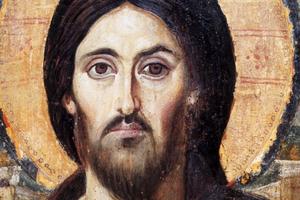
To celebrate the 1,700th anniversary of the Council of Nicaea is, first and foremost, to celebrate Jesus Christ, the eternal Son of God, who, by the power of the Holy Spirit, assumed our human nature and was born of the Virgin Mary.
There are still many false ideas about Jesus today. Pope Leo XIV spoke about them in his first homily in the Sistine Chapel the day after his election.
“Today, too,” he noted, “there are many settings in which Jesus, although appreciated as a man, is reduced to a kind of charismatic leader or superman. This is true not only among nonbelievers but also among many baptized Christians, who thus end up living, at this level, in a state of practical atheism.”
In daily life, the new Holy Father declared, Christians often fail to live as if they believe in Jesus’ divinity and that he, God-with-us, is still very much with us. As C.S. Lewis once famously quipped, Jesus is either Lord — truly who he says he is — or a lunatic who crazily believed he was God, or a liar who mendaciously and deliberately claimed to be God.
Pope Leo noted in his first homily that it is essential not just for him as the successor of Peter but for the whole Church to proclaim with Peter that Jesus is the “Messiah and Son of the Living God.” We do that, objectively, every time we proclaim the Creed. But we must do so “subjectively,” and that’s why the Church has us proclaim it not in the first person plural but singular. Each of us is called to stake our life on what we profess — just like the first Christians did.
I’d like to give a few suggestions about how we might appropriately celebrate this milestone.
The first is by the way we profess our faith on Sunday. In many parishes, the proclamation of what we believe has become routine and lifeless. Many mouth or mumble the words on autopilot, not only not praying them but not even thinking about what they’re saying.
How great it would be for us to slow down and profess, with joy, gratitude and enthusiasm, each of the Creed’s 12 articles like those who would be ready to give their lives in defense of them and the Trinitarian God in whom we believe. It might also be the year to start singing the Creed, as centuries of Christians have done, adorning the words with great beauty.
The second is to study the Creed so that we know with greater precision what we’re proclaiming and why it matters. The Nicene Creed was formulated in response to ancient challenges. Not everything we believe as Catholics is in there — like, for example, six of the sacraments, the importance of prayer, and the entire moral treasury of the Church — but what is in there matters and provides the crucial foundation for the whole faith of the Church.
A great place to start would be the first section of the Catechism of the Catholic Church, which is dedicated to fleshing out what we profess in the Creed. Those looking for more could turn to the April 3 document of the International Theological Commission, “Jesus Christ, Son of God, Savior: The 1700th Anniversary of the Ecumenical Council of Nicaea (325-2025).”
The third is to speak with clarity about the Creed with others and try to help them understand it better, too. We can give renewed focus to it in religious education in our parishes, to children, to teens and to adults young and old, and speak about it with children, grandchildren and godchildren. We can bring up the anniversary, and why it’s important, with colleagues and friends at work, school and elsewhere, in the hope that it might stoke the interest of others.
Pope Francis said in 2024 that the proclamation of this faith is “the fundamental task of the Church”; and this important anniversary, with the Holy Spirit’s help, can generate a new phase of mission and evangelization.
The fourth is to live the Creed, which means to live in the communion of the Blessed Trinity, conscious of God the Father’s love, the Son of God’s remaining with us in the Holy Eucharist, and the Holy Spirit’s guiding us, leading us to life and trying to make us prophets through whom he speaks. It means to fight for unity in the Church and for holiness, and to grasp that — because the Church is catholic and apostolic — we have been sent out, just like the apostles, to try to help everyone come to the knowledge of the Triune God and to become one with us, growing in the image and likeness of God, who is holy, holy, holy. It’s to live out the full meaning of our baptism. It’s to regard our bodies as temples of God meant to be raised forever. It’s to live with hope in expectation of an eternal life of loving communion with God in the Communion of Saints.
The last suggestion is to celebrate this anniversary with parties and feasts, manifesting to ourselves and everyone that the 1,700th anniversary is not just a historical footnote but something we take seriously and regard with joy and gratitude.
Why not have “Nicaea 1700” parties in our parishes, houses and back yards? We can invite not just our fellow Catholics, but our fellow Orthodox and Protestant brothers and sisters, most of whom profess the Nicene-Constantinopolitan Creed on Sunday, too. We can even invite non-Christians to this celebration so they might come to know something of what Christians say “Amen” to — and what we commit ourselves to building our lives upon, as the Hebrew verb suggests.
Happy 1,700th anniversary!
- Keywords:
- council of nicaea