During WWII, Peter To Rot Chose Martyrdom Over Polygamy and Silence
SAINTS & ART: When Japanese forces outlawed Christian worship and promoted polygamy in Papua New Guinea, a young lay catechist refused to abandon the faith.

One of the problems in talking about art in relation to modern saints like Peter To Rot (1912-1945) is that there often isn’t any. Yes, being painted could be a vanity project for some, but once upon a time, people had their portraits made because there were no photographs. One can hardly imagine what they might have thought of the modern phenomenon called the “selfie.”
Peter To Rot has, however, been memorialized in a somewhat neglected modern art form: the postage stamp. He’s appeared on two series of stamps from his native Papua New Guinea, the large island north of Australia.
Stamps are an art form. They’re not just utilitarian vehicles to get a letter from A to B. Sometimes, stamp-issuing jurisdictions even focus on the artistic merit of their stamps because they are revenue-raising: a lot more people buy Falkland Island stamps for their depictions than natives with an urgent need to send mail. Being the engraver of a stamp is a particular artistic talent.
Stamp collecting was once a very popular hobby, one by which especially young people often learned geography and about exotic places and lands. Philatelists (stamp collectors) often specialize, sometimes by country, sometimes by topic.
Religion, especially Catholicism, is one such specialization. There’s a whole country (the Vatican) issuing stamps that have religious content. But many countries — including some you might not expect — issue religious stamps. They might simply be celebrating local traditions or showcasing artwork that happens to be religious. They might just be celebrating Christmas: the United States has for many years issued two stamps at Christmas, one “religious,” one “holiday.” Or, as in the case of (not just) Papua New Guinea, they might be honoring local saints.
Maybe you’d like to consider that old hobby?
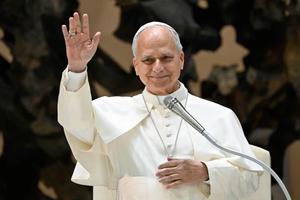
Papua New Guinea’s post office clearly regards Peter To Rot as local-boy-made-really-good. These stamps were issued to commemorate Pope St. John Paul II’s 1995 pilgrimage to Papua New Guinea and his beatification of Peter To Rot. One depicts the Pope, his hand extended in blessing; the other Peter To Rot, “martyr catechist.” Papua New Guinea later issued additional stamps in 2012 (the centenary of Peter’s birth) depicting To Rot, including his preaching to people and his martyrdom in the Japanese camp. See here.
So, who is Peter To Rot?
Technically, Blessed Peter To Rot, because he won’t be canonized until Oct. 19 this year. Probably as few people have heard of him as of his country: Papua New Guinea.
Papua New Guinea is an island country in Oceania, north of Australia, east of Indonesia proper. Its remoteness and isolation meant there were tribes that never contacted the outside world until the last century. It’s said there were parts of Papua New Guinea where, not that long ago, cannibalism might have existed.
The main portion of Papua New Guinea is an island (divided almost evenly between the Papua New Guinea state, independent from Australia since 1975, and territory annexed to Indonesia). There are “smaller” (though not necessarily “small”) islands off its coast, one of which — New Britain — is the focus of our story.
Focus of European colonial competition in the 19th century, Christian missionaries were also active in Papua New Guinea. Catholic missionaries successfully converted Peter’s father, a local chief, in the late 1800s. He brought along many of his people. His son, Peter To Rot, was born in 1912.
Peter considered the priesthood but his father was not fully supportive, so instead, he trained as a catechist and returned to his native village. People noted him for his zeal and commitment, his active propagation of the faith throughout the 1930s. Catechists were vital because Papua New Guinea is vast and, in many places, difficult to access, and there just weren’t as many missionaries as the need would demand.
Japan invaded Papua New Guinea during World War II and, in the course of its three-year occupation, sought to wipe out the local Catholic Church. Priests, especially foreign missionaries, were put in internment camps, leaving the sustenance of the faith to catechists like Peter. He not only kept preaching and praying with people, but he also baptized them. When the Japanese continued their anti-Western campaigns and insisted on banning public Catholic worship, Peter took his prayer meetings underground.
Finally, in an attempt to uproot the young Catholic influence in the country, the Japanese went after marriage. People will often compromise their faith when it comes to marriage. The Japanese encouraged the return of polygamy, a bridge too far for Peter. His opposition eventually landed him in an internment camp, too, where in the summer of 1945, he was given a toxic injection (“medicine”) by a Japanese physician and killed, his body left for his village. Almost immediately, the cult of the “martyr catechist” sprang up. It comes full circle this fall with Peter’s canonization.
- Keywords:
- blessed Peter to rot
- saints & art