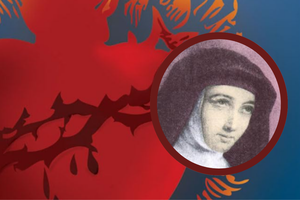
32 Martyrs of Orange Guillotined in Roman Theater During French Revolution
They died singing hymns and refusing to renounce Christ. The Blessed Martyrs of Orange gave their lives on an 1,800-year-old stage.

America celebrates the Semiquincentennial of the United States in less than a year. The struggle of the United States for liberty was a defining feature of its national psychology, especially in its early years, which led to conflicted attitudes about the French Revolution that began in 1789.
On the one hand, France had been an ally without whose help the young American Republic probably would not have wrested independence from the British. But the French Revolutionaries were also rebelling against a king they claimed violated their liberties and the Protestant Americans also wanted to hold the Catholic French at arm’s length. As the French Revolution ground down into terror and anti-religious violence, Americans were further alienated from it.
Catholics in the United States generally also have a somewhat superficial knowledge of the French Revolution. Yes, they recognize that it quickly took an anti-Church turn and that priests and nuns were victims of the Reign of Terror. But beyond those generalities, what U.S. Catholics know about how greatly priests and nuns suffered is vague. They may have heard of the Carmelite nuns of Compiègne — mostly thanks to Bernanos’ Dialogues des carmélites — guillotined in 1794 for holding to the faith. But they were not the only victims. Blessed André Grasset, born in Canada but who returned to France, was gouged to death as a priest.
And then there are the 32 Blessed Martyrs of Orange.
It’s a special year for them, because 2025 marks the centennial of their beatification by Pope Pius XI.
Orange is a city in southeastern France, near the Mediterranean. It’s an ancient city, dating at least to 100 B.C., and has a Roman open-air theater. It sits in that delightful climate belt of France where the cooler airs of the southern Alps blend with the warm breezes of the coast shared by Nice, Cannes and Monaco.
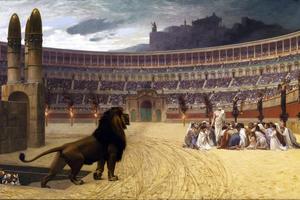
In the space of a little over a month, from late June to late July 1794, 332 people were decapitated on a guillotine set up in the old Roman theater. Given that the Romans often carried out their religious persecutions in such places, even outside the Italian peninsula (e.g., St. Blandine, a little further north in Lyons), it was paradoxical that the French Republican tyranny set up its killing machine in the old Roman theater. More than 300 people died there on suspicion of threats to the Republic. Those killed included 32 nuns. The youngest was 24, the oldest, 75.
That meant they all grew up and entered religious life in a Catholic France when religious life was normal. All that was turned upside down under the rash secularists of the French Revolution. The government arrogated the right to nullify religious vows, disband religious communities and disperse their members. Many of the nuns continued to live together clandestinely even after the state officially dissolved their communities. Outward signs of religion were forbidden. Eventually, association with the Church made one suspect. This is laîcité in its most militant form — the same mentality that, in some francophone areas today, goes into anaphylactic shock at the sight of a cross around somebody’s neck in public.
The Revolutionaries, of course, observed the procedural formalities of “trials,” though the verdicts and sentences were never in doubt. Their victims were expected to apostatize or at least denounce their religious vows and affirm loyalty to the great Republique. Those who wouldn’t swear allegiance were deemed “fanatics” and slated for execution.
They represented many different religious congregations: Ursulines, Blessed Sacrament sisters, Cistercians and a Benedictine. The stories of the victims are inspiring.
One nun, brought a broth soup to her jail just before her execution, said that she had been faithful to Friday abstinence throughout her life and was hardly going to break it on her last Friday on earth. One priest hid in a house along the way to the guillotine, giving absolution to victims on their way to death. One kissed the guillotine; another wrote a hymn about it. One nun gave sugared almonds to other women accompanying her to their deaths, encouraging them to enjoy the sweets as prefiguring the “wedding feast of the Lamb” to which they were going.
One nun’s reply to the “court” that they could not make her not be a nun resulted in a priest who had earlier told the court he would swear allegiance to renounce that intention and ask forgiveness. One prayed to die on a Saturday, because it was Mary’s day; that was the day she was condemned. Another gave her life on July 16, the Feast of Our Lady of Mount Carmel. One bequeathed another woman her hairshirt as “my most beautiful jewels.” One family sacrificed an aunt with three nieces. Victims were buried in mass graves covered with lime to accelerate their decomposition.
By the end of July, the whole affair ended because Robespierre, the architect of the Reign of Terror, was himself executed. That probably saved at least 10 more nuns.
The Diocese of Avignon is conducting their cause and collects testimonies to advance to the next stage of canonization. The prayer for their cause and contact with their postulator is here. Here is a playlist of their biographies.
For more information, read here (in French).
- Keywords:
- martyrs of orange
- martyrdom
- saints