As America Celebrates 250 Years, Rising Religious Illiteracy Threatens to Spoil the Party
A look at the growing unfamiliarity with Christian ideas and images and the efforts underway to correct America’s religious literacy deficit.

The United States of America is marking its 250th year of independence. But in the face of growing ignorance about the religious influences that shaped the country, some worry that many Americans might not appreciate what’s being celebrated – or be prepared to keep it going.
Recent studies and reports from the frontlines of American education and society indicate that religious illiteracy is on the rise. The terms refers to a lack of understanding about the history, beliefs, and practices of major religions, including Christianity.
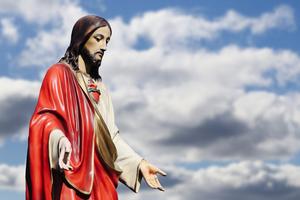
For instance, basic biblical questions such as “What are the names of the four Gospel accounts?” or “What was Jesus’s hometown?” appear to be increasingly hard for the average American to answer.
The issue isn’t one of religious belief, but of civic competence. Given the centrality that Christian thought played in shaping America’s founding institutions and ideals, some worry that the rise of religious illiteracy imperils American’s understanding of their own national story — and even their ability to fully participate in the political experiment that the Founding Fathers kicked off two and a half centuries ago.
“[I]t is hard to appreciate even basic truths about the Western political inheritance without grasping the ways in which thinkers of the past reacted to, or against, the Christian faith,” wrote Princeton political scientist Gregory Conti, an atheist who nonetheless lamented widespread unfamiliarity with “the most basic features of Christianity” on college campuses. in a May 2026 Washington Post op-ed.
Recent studies back up the trend Conti identified. For instance, a 2026 study from the American Bible Society found that less than 50% of Americans have read even half of the Bible, prompting one commentator to quip that the average church-attending Christian today knows less about Scripture than atheist Founding Father Thomas Paine.
The religious knowledge dearth has been a long time in the making. In 2019 Pew Research issued a 32-question religious knowledge questionnaire, which included specifics on Judeo-Christian beliefs. On average, respondents could not answer even half the multiple-choice questions correctly. Perhaps relatedly, a 2019 Pew Research poll found that only 8% of American students said they had ever had a teacher read the Bible as literature.
Severing Our Roots?
Educators like Conti worry about America’s religious illiteracy problem precisely because the country’s religious roots run so deep.
An oft cited American Political Science Review article found that American political thought in the late 18th century was steeped in Scripture, with the Bible accounting for 34% of all citations in the political literature of the day. Enlightenment-era thinkers, by contrast, accounted for only 22% of citations.
Pope Leo XIV emphasized this point in his July 3 speech accepting the Liberty Medal. While the Declaration of Independence’s assertion of inalienable human rights may be “couched in the language of the Enlightenment,” the America-born pontiff said the “claim is ultimately grounded in an understanding of the human person inspired by the great biblical vision of man and woman being created in the divine image.”
Christianity’s influence on western politics isn’t limited to just the American Founding. In his op-ed, Conti pointed out how Christianity is the backdrop against which the West’s centuries-long conversation about liberty, rights, and good governance has played out. Even landmark political thinkers who pushed back against the religious orthodoxies of their day, such as Locke, Jean-Jacques Rousseau and Karl Marx, become almost unintelligible to readers who don’t know the basic tenets of the religious traditions they were challenging.
Mark Noll, a retired University of Notre Dame history professor, noted that shared religious understanding once gave Americans something of a common store of symbols to pull from. This included everything from Abraham Lincoln’s scriptural references in his Second Inaugural Address to enslaved blacks referring to their slave owners as “Pharaoh” during the Revolutionary War — the same reference from the book of Exodus that colonists applied to King George III.
“Knowledge of the Bible’s King James Version once came close to giving Americans a shared civil language, and well into the 20th century,” Noll told the Register.
The concern is that growing unfamiliarity with Christian ideas and images makes present day Americans ill-suited to continue that same conversation.
Religious illiteracy can also render important chapters of American history unintelligible to many today. For most of its history, the nation’s struggles for equality drew heavily upon Christian morality and ethics. From Frederick Douglass’ critiques of slavery to Dr. Martin Luther King’s stirring speeches, Christian imagery was threaded through the movements for abolition and civil rights.
Open to Distortion
But poor religious literacy doesn’t just undermine American’s ability to understand their country’s political foundations. A failure to understand the religious landscape can also make citizens susceptible to distorted uses of Christian imagery and language.
Boston University religion professor Stephen Prothero is the author of Religious Literacy: What Every American Needs to Know — And Doesn’t. He worries that a citizenry who knows less about the Bible is vulnerable to bad faith actors.
“The problem with religious illiteracy in the United States always arises out of the gap between how quick politicians are [to] use the Bible to support their policies and how little voters know about it,” Prothero told the Register. “The less we as a society know, the easier we are to exploit.”
Biblical references have been a staple of American rhetoric going back at least as far as John Winthrop’s 17th century “City on a Hill” sermon. But if Americans today are less acquainted with religion than previous generations, why do their politicians still lean on Christian language, imagery, and beliefs, even as the religious “nones” account for nearly a quarter of the population?
Part of the reason might be that some people think of Christian symbols as social identifiers, even if they’re not practicing the faith.
“Christian labels are now losing their theological meanings and becoming cultural and political monikers for tribes, which are motivated to fight other tribes rather than focus on their own discipleship and sanctification,” said Mark Tooley, president of the Institute on Religion and Democracy, a conservative Christian thinktank in Washington, DC. “Many now identify as ‘Christian’ without understanding the spiritual commitments that go with it.”
Tooley diagnoses this particular strain of religious illiteracy among practicing Christians to weakening institutional and denominational affiliation. Even among Catholics, he said, attachment to the Church as an institution is replaced by self-curated online spiritual resources. Outside of Catholicism, an increasing number of Christians identify as nondenominational, attending congregations which, Tooley says, “preach from the Bible but maybe don’t offer much doctrine or wider social teaching from Christian tradition.”
“Even religious people, not to mention non-religious people, are more individualized and more prone to create their own reality in their own silos,” said Tooley. “Clergy and church institutions have less influence, having been displaced by online influencers who lack guardrails and are incentivized to be provocative and disruptive.”
Reviving Religious Literacy
In recent years, however, efforts have been undertaken to correct America’s religious literacy deficit.
The Classic Learning Test (CLT), an SAT/ACT alternative, is one effort to correct course. Since its creation in 2015 more public universities and service academies — over 300 according to its website — now accept the CLT, which includes textual analysis of writers from the Western Judeo-Christian tradition: early Church fathers, medieval saints, and various Christian authors from the early modern period up to the present.
More broadly, the classical education boom indicates there are Americans who are eager to restore and preserve civilizational memory, of which religion is part and parcel. The Catherine Project, a volunteer-run reading program centered around philosophical and literary works, has experienced rapid growth since it was founded in 2021 — from around 300 applications to over 3,000 in 2025. Although they discuss pre-Christian classical thought, they also read works that are heavily influenced by the Judeo-Christian tradition.
In June, the Texas Board of Education approved a required reading list for public school students that includes Bible passages. Advocates insist it has to do with improving students’ historical and literary understanding, while critics have said it promotes proselytizing.
Conti and those in his camp do not believe that institutions of learning have to rid themselves of all contact with religion in order to maintain their secular status. Doing so, he contends, may actually be a hindrance to not only subject mastery, but good citizenship.
“The future leaders of American society need to be fluent with its major religious traditions and idioms,” the Princeton professor wrote, “so that they can understand their believing fellow citizens, and so that they can draw on the full wealth of moral insight that civilization has passed down.”
- Keywords:
- america at 250